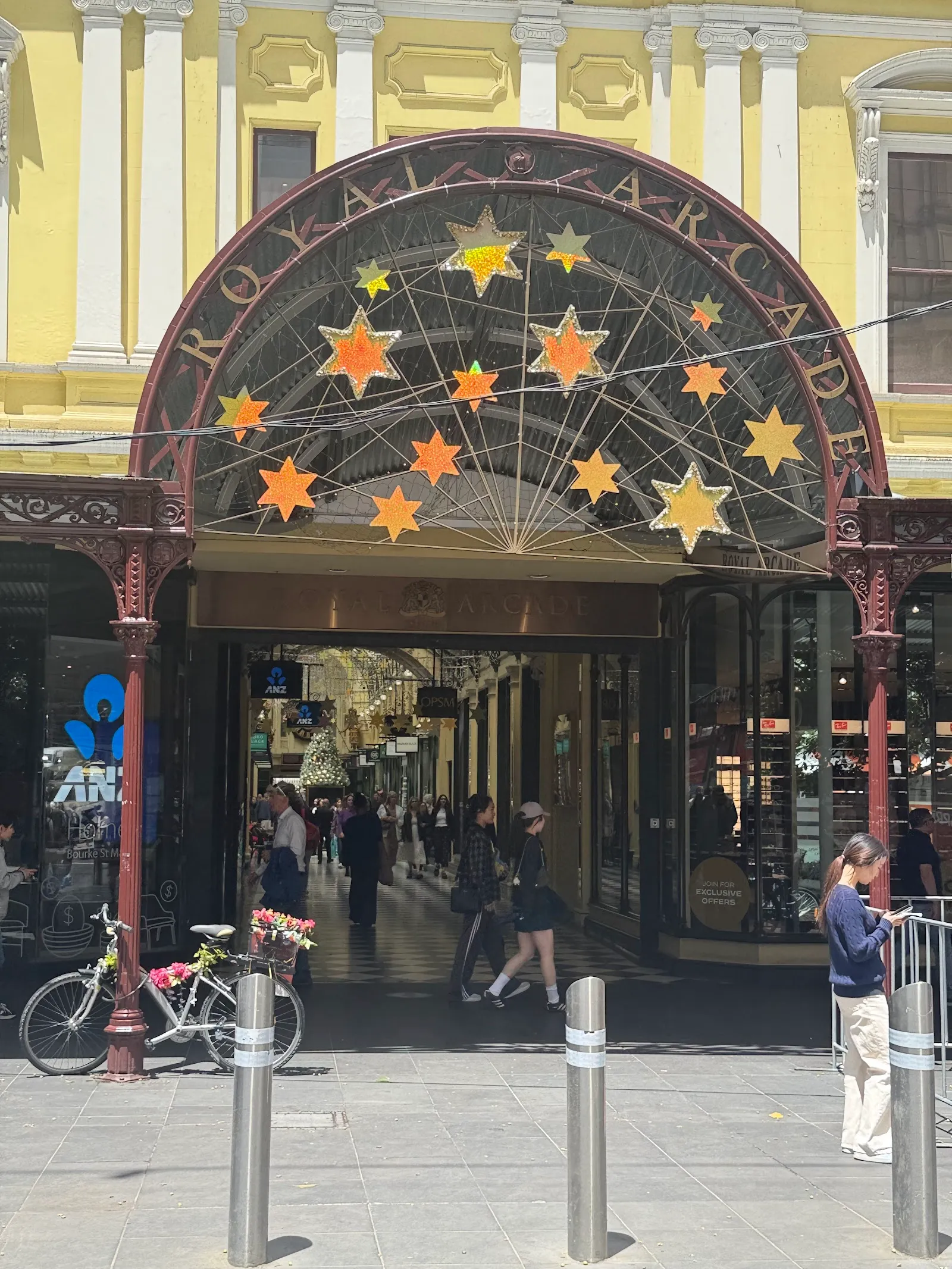
Royal Arcade is a historic shopping passage in Melbourne’s CBD, linking Bourke, Elizabeth and Little Collins streets. Opened in 1870, it is the oldest surviving arcade in Australia. Look up to the glass roof and ornate details, then follow the black-and-white tiled floor past independent boutiques and specialty shops. The centrepiece is Gaunt’s Clock, flanked by the figures Gog and Magog, whose bells mark each hour. Shops range from chocolate and pastries to jewellery, gifts and vintage goods, so it works for both a short architectural stop and a browse.
An arcade built for central Melbourne
Royal Arcade opened in 1870 and is Australia’s oldest surviving shopping arcade. It connects Bourke, Elizabeth and Little Collins streets, creating a pedestrian route through Melbourne’s CBD. The arcade was designed by Charles Webb in the Italian Renaissance Revival style, with Italianate details and French and English influences noted in its design.
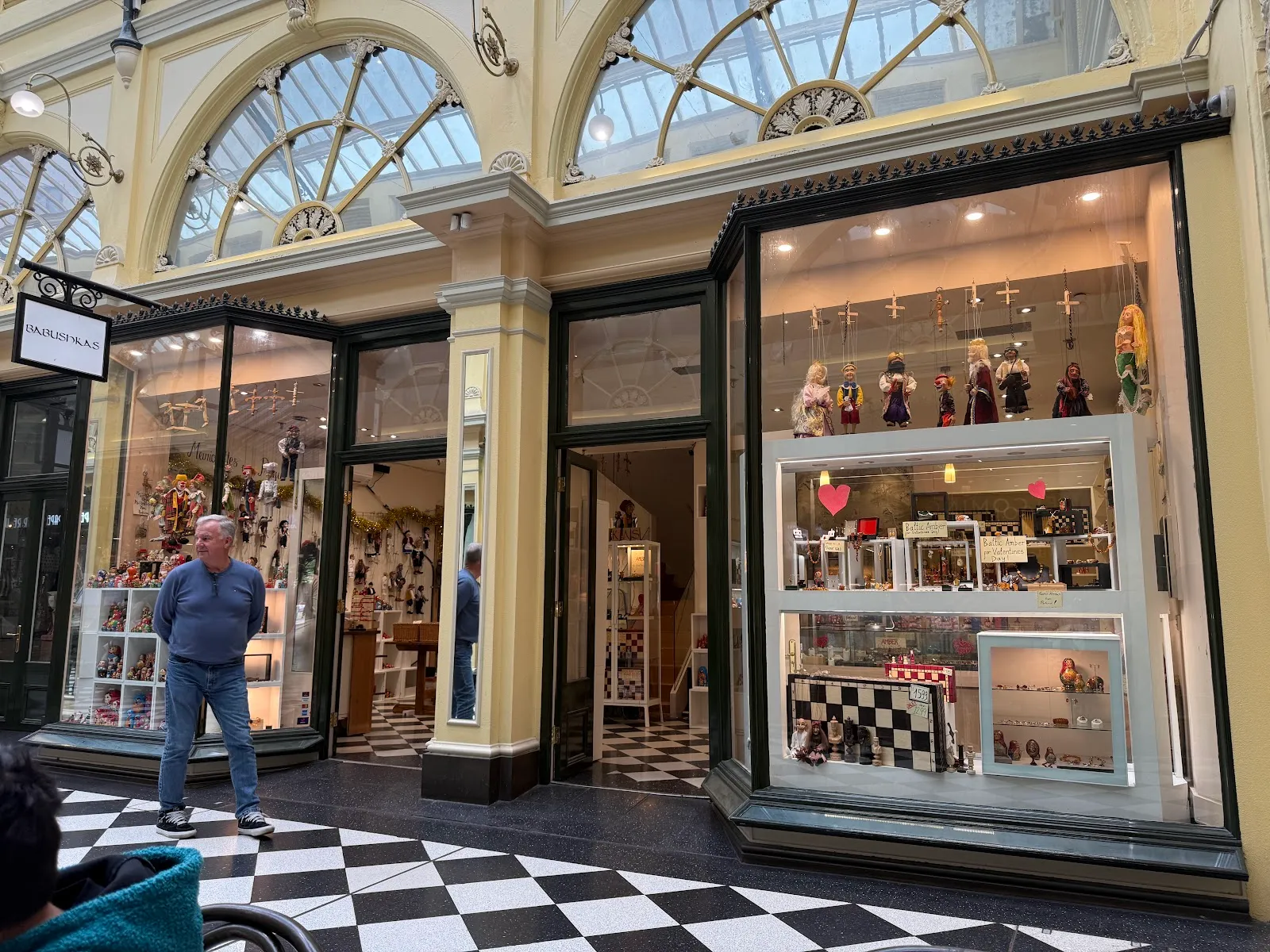
Its role as a shopping passage continues today. The shops are small and varied, from fashion and jewellery to confectionery, toys and specialist goods. A walk through the arcade can be a brief detour between streets or a slower browse through its shopfronts.
Look up, then follow the tiled floor
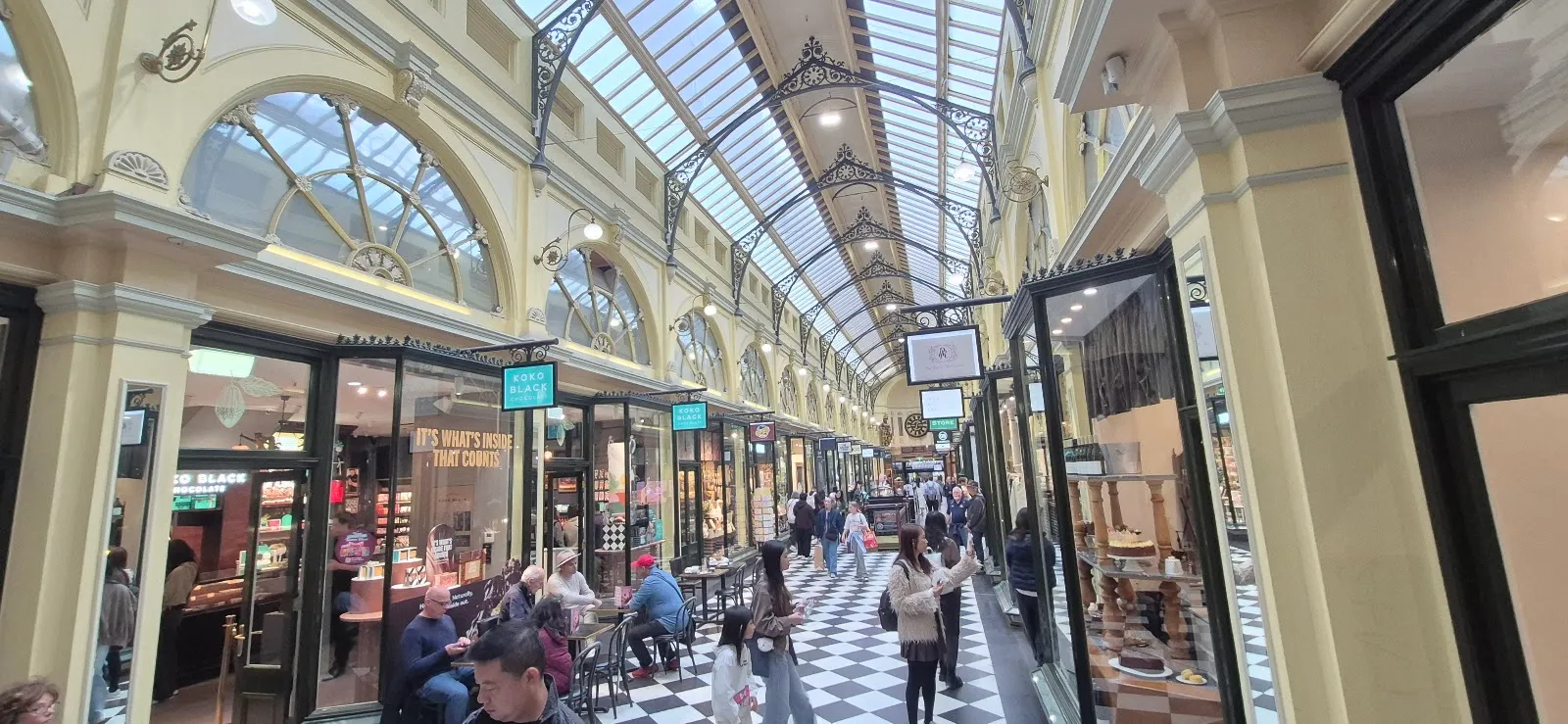
The high glass roof brings daylight into the passage, while arched windows and decorative details give the interior its distinctive character. Underfoot, the black-and-white floor forms a bold checkerboard pattern. Together, the roof and tiles make the arcade’s long interior easy to appreciate as you walk through it.
The building has been altered over time, but its historic character remains visible in the roof, shopfronts and interior finishes. Take a moment to look along the arcade as well as straight up: the repeating floor pattern and high ceiling are part of what gives the passage its formal, old-fashioned appearance.
Gaunt’s Clock and its figures
Gaunt’s Clock stands at the Little Collins Street end of the arcade. The clock was added in 1892 and is flanked by the large figures Gog and Magog. Their bells mark each hour, a small piece of theatre amid the shops. If you want to see the figures in action, time your visit for the hour and pause near the clock.
The clock is associated with Thomas Gaunt, a Melbourne clock-maker and jeweller whose business once traded in the arcade. The figures and clock have become its most recognisable feature, and they are easy to include in a short visit even if you are not planning to shop.
What to find in the shops
Royal Arcade’s tenants cover a broad range of specialist retail. Koko Black sells chocolates, while Agathé Pâtisserie Petite is known for pastries, including croissants. Other shops include jewellery, vintage goods, handcrafted gifts, toys and magic-related items. Spellbox sells products connected with contemporary witchcraft, and Canturi is among the jewellery retailers.
The mix changes the feel of the arcade from one shopfront to the next. It is a useful place to look for a small gift or browse distinctive stores, though some goods are expensive. You can also stop at a café for coffee or tea before continuing through the CBD.
Perguntas frequentes
Where is Royal Arcade in Melbourne?
It is at 335 Bourke Street in Melbourne’s CBD, connecting Bourke, Elizabeth and Little Collins streets.
What is Royal Arcade known for?
It is Australia’s oldest surviving shopping arcade, with a glass roof, checkerboard floor and Gaunt’s Clock, flanked by Gog and Magog.
When do Gog and Magog strike the clock bells?
The figures strike the bells each hour. The clock is at the Little Collins Street end of the arcade.
How long should I allow for Royal Arcade?
Allow about 30 to 60 minutes to see the architecture, watch the clock and browse the shops.