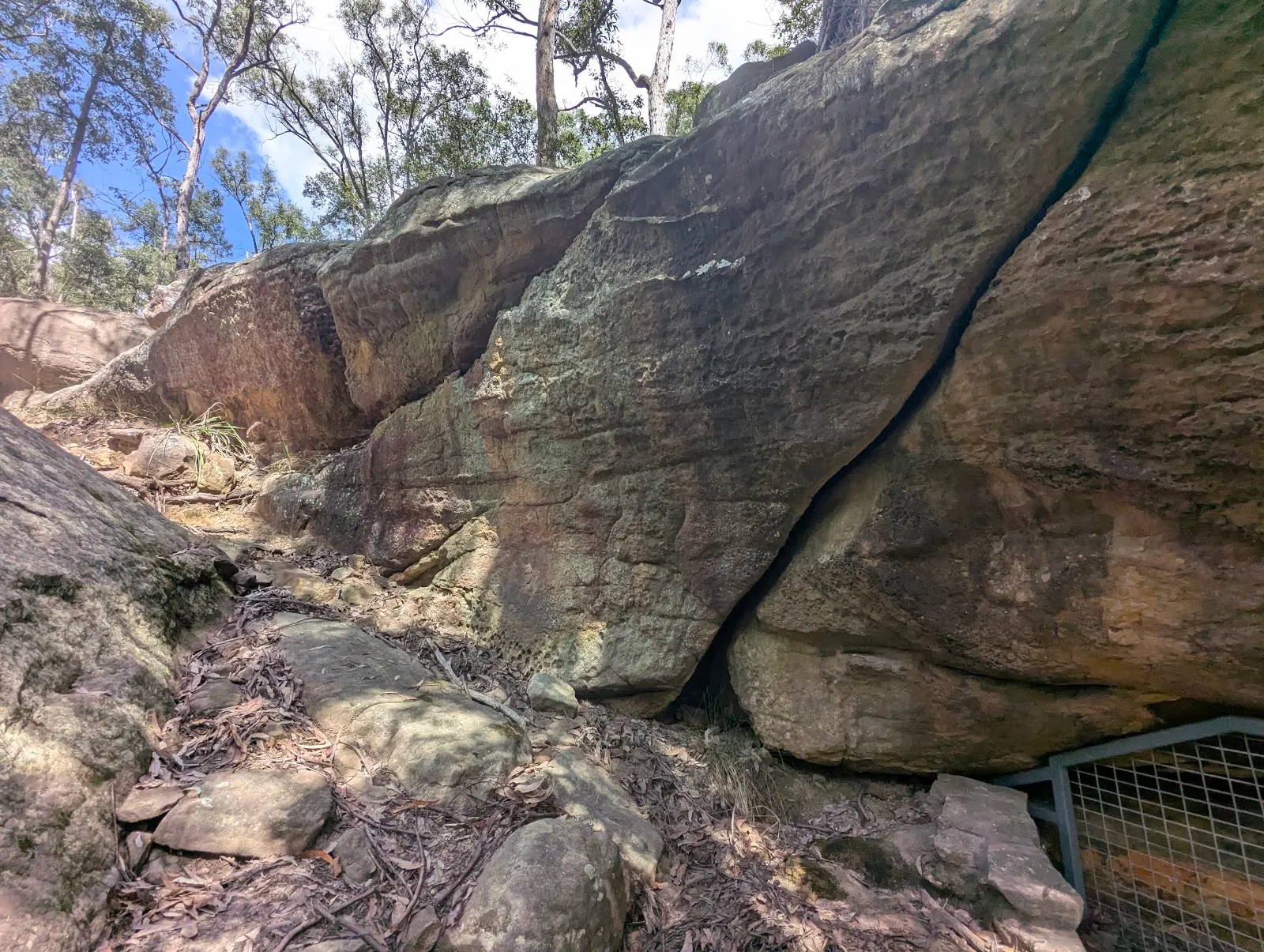
Red Hands Cave is an Aboriginal site in the Blue Labyrinth, reached by walking trails near Campside Creek in the Blue Mountains. Its rock shelter holds hundreds of hand stencil paintings, dated in one account to between 500 and 1,600 years old. You can take a longer creekside walk or use the shorter route from the car park. Look for axe-grinding marks along the creek, then consider extending the outing on the Oak Trail or cooling off with a swim at Jellybeans Pool.
The hand stencils
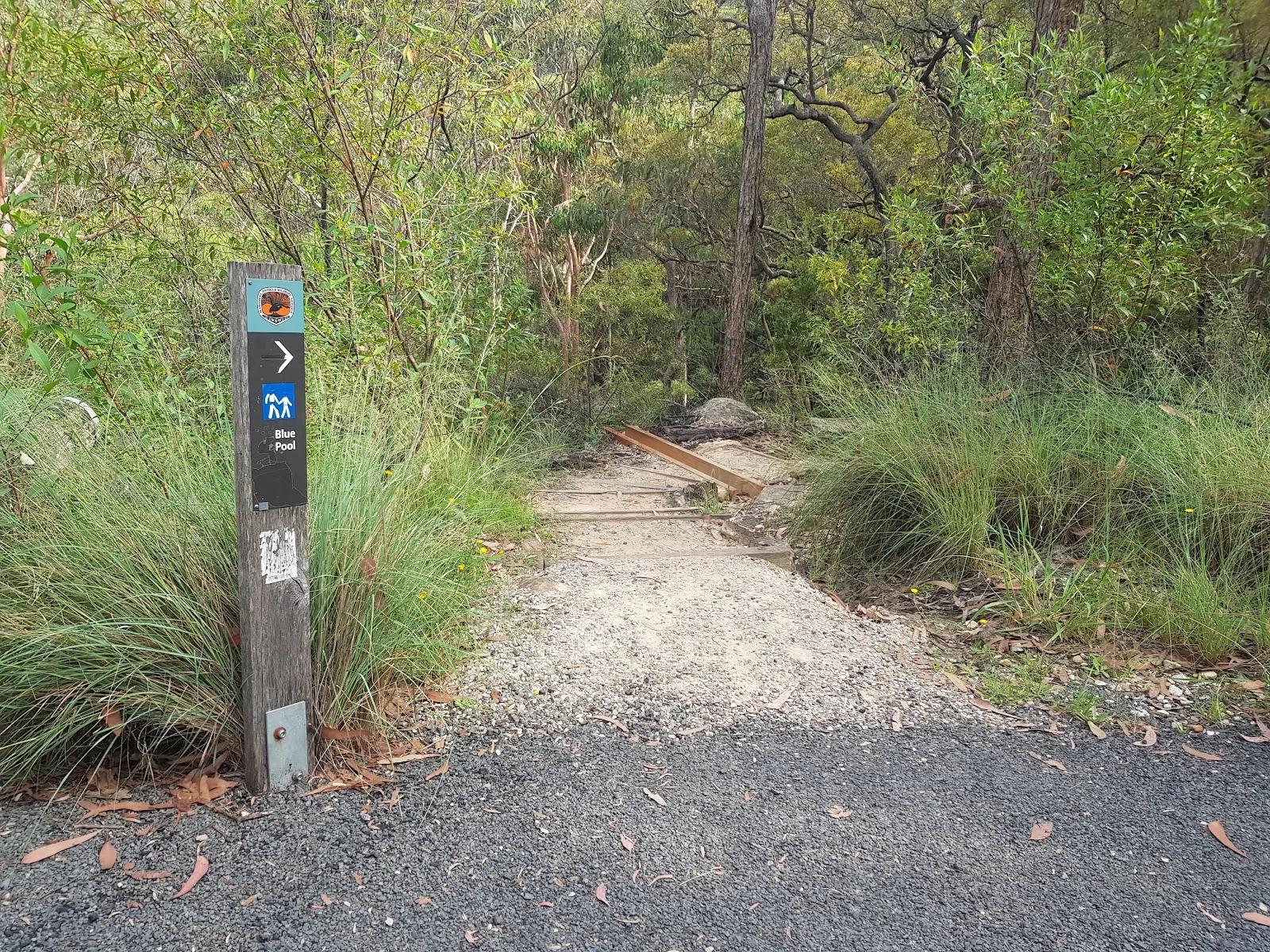
Red Hands Cave is a rock shelter with hundreds of hand stencil paintings. The art is associated with the Darug people, and one account dates the stencils to between 500 and 1,600 years ago. The images can be seen from a distance within the shelter.
Treat the site with care as you view the art. The cave is the focal point of a walk through the surrounding bushland, not a place to touch or mark the rock.
Walking routes by Campside Creek
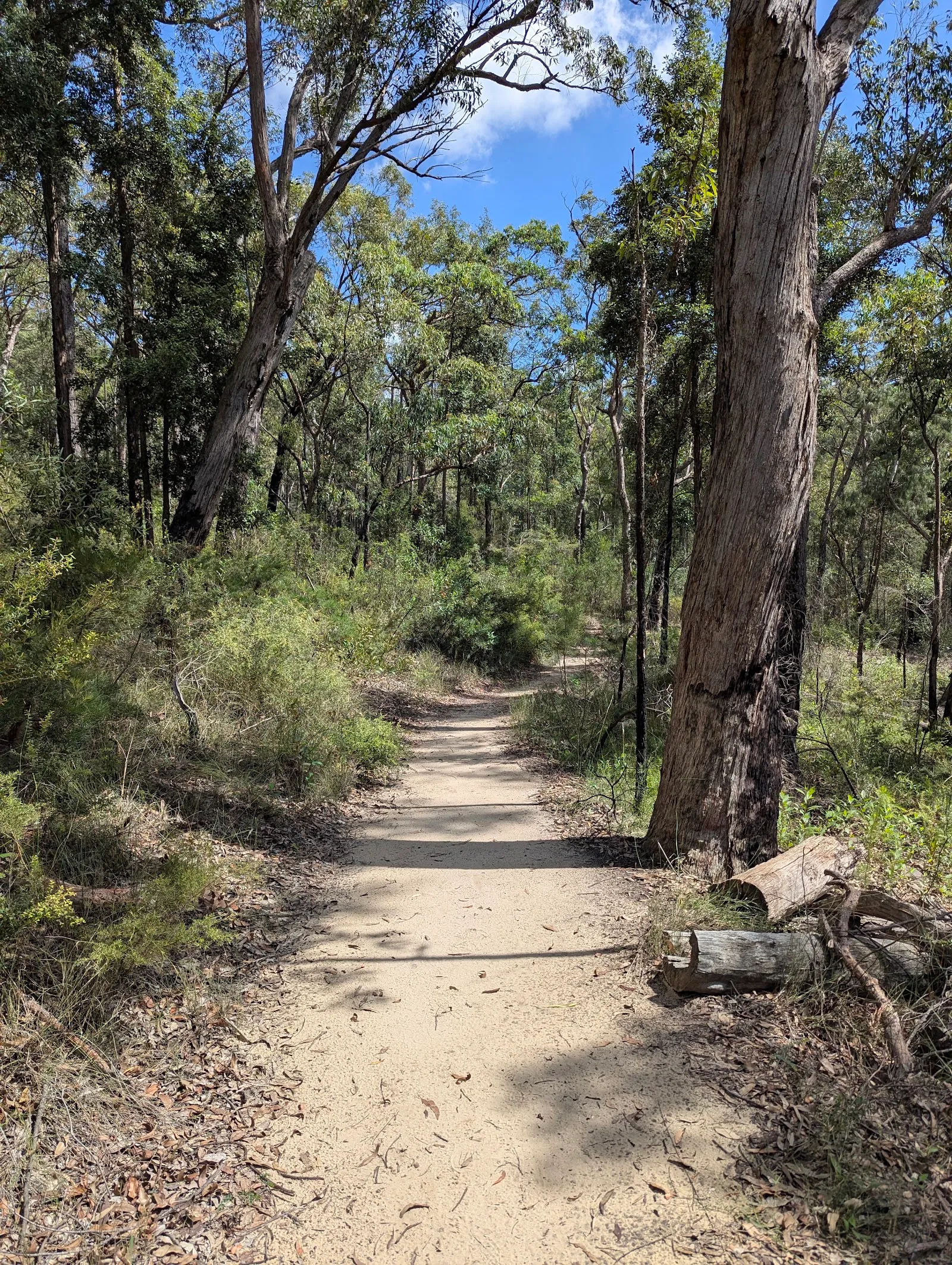
A creekside loop of about 8 kilometres passes Red Hands Cave and follows Campside Creek. Axe-grinding marks can be seen in the rock along the creek. A shorter route from the car park is about 1 kilometre return; longer walk descriptions vary, so check the route details before setting out.
The trail is shaded in places and includes an incline. Bring water and snacks if you choose a longer walk. The Oak Trail can extend the outing, while Jellybeans Pool is a swimming option mentioned at the end of some walks.
Perguntas frequentes
How long is the walk to Red Hands Cave?
A shorter route from the car park is about 1 kilometre return. The creekside loop is about 8 kilometres.
What can you see at Red Hands Cave?
The rock shelter contains hundreds of hand stencil paintings. Axe-grinding marks can also be seen in rock along Campside Creek.
Can you swim near Red Hands Cave?
Jellybeans Pool is a nearby swimming option mentioned as part of the walk.
Can you extend the walk?
Yes. The Oak Trail can be joined to extend the walk.


