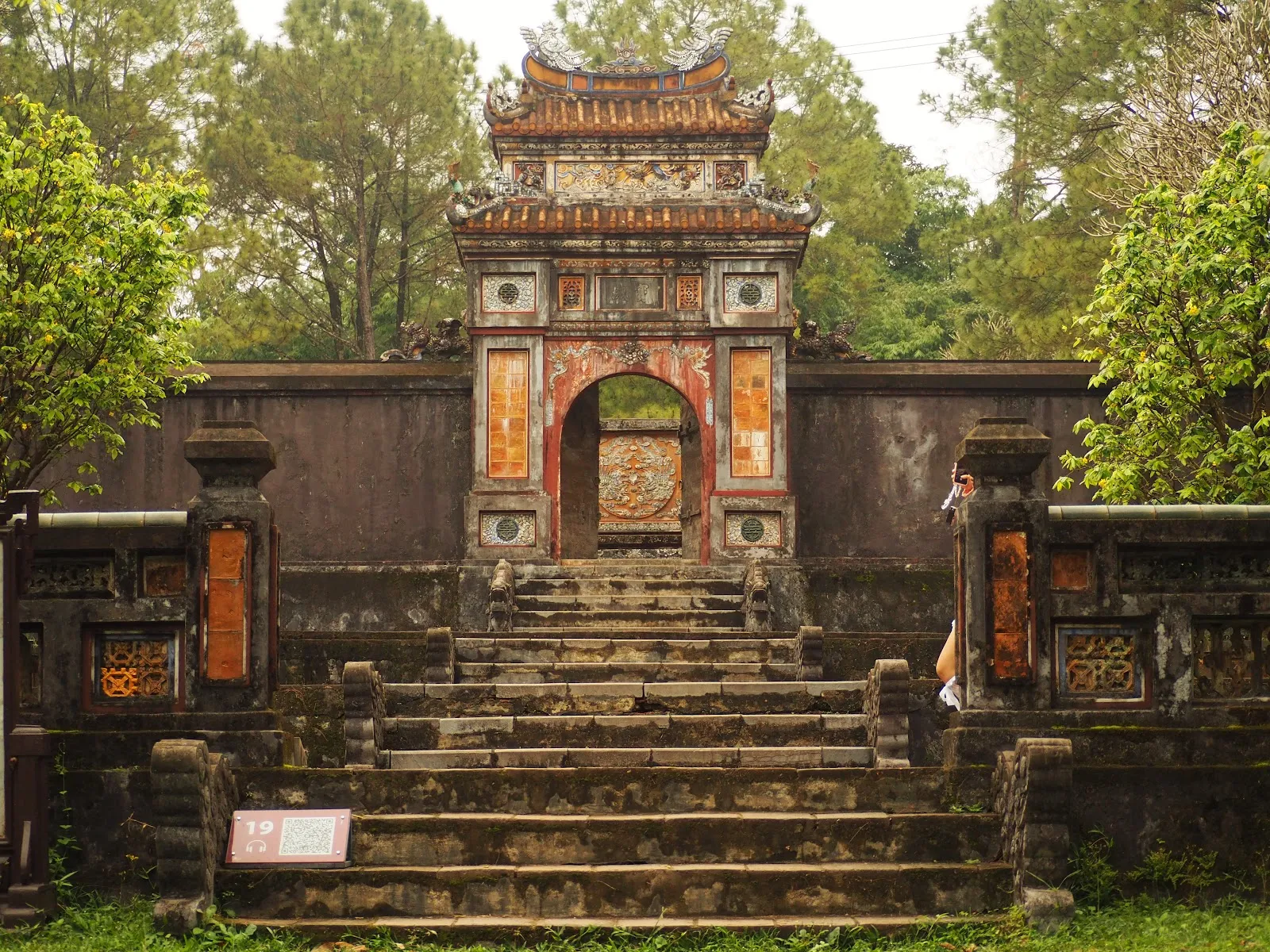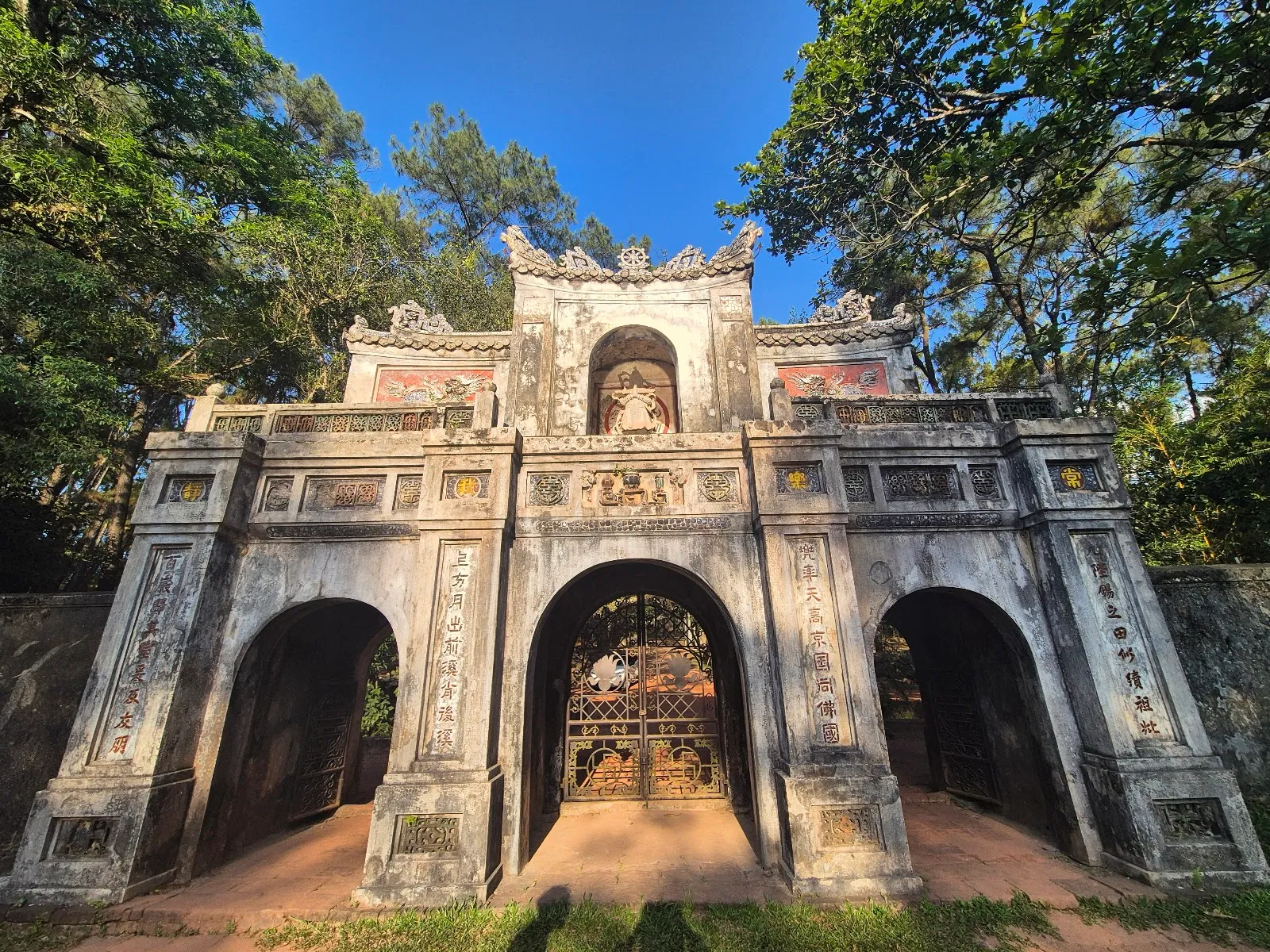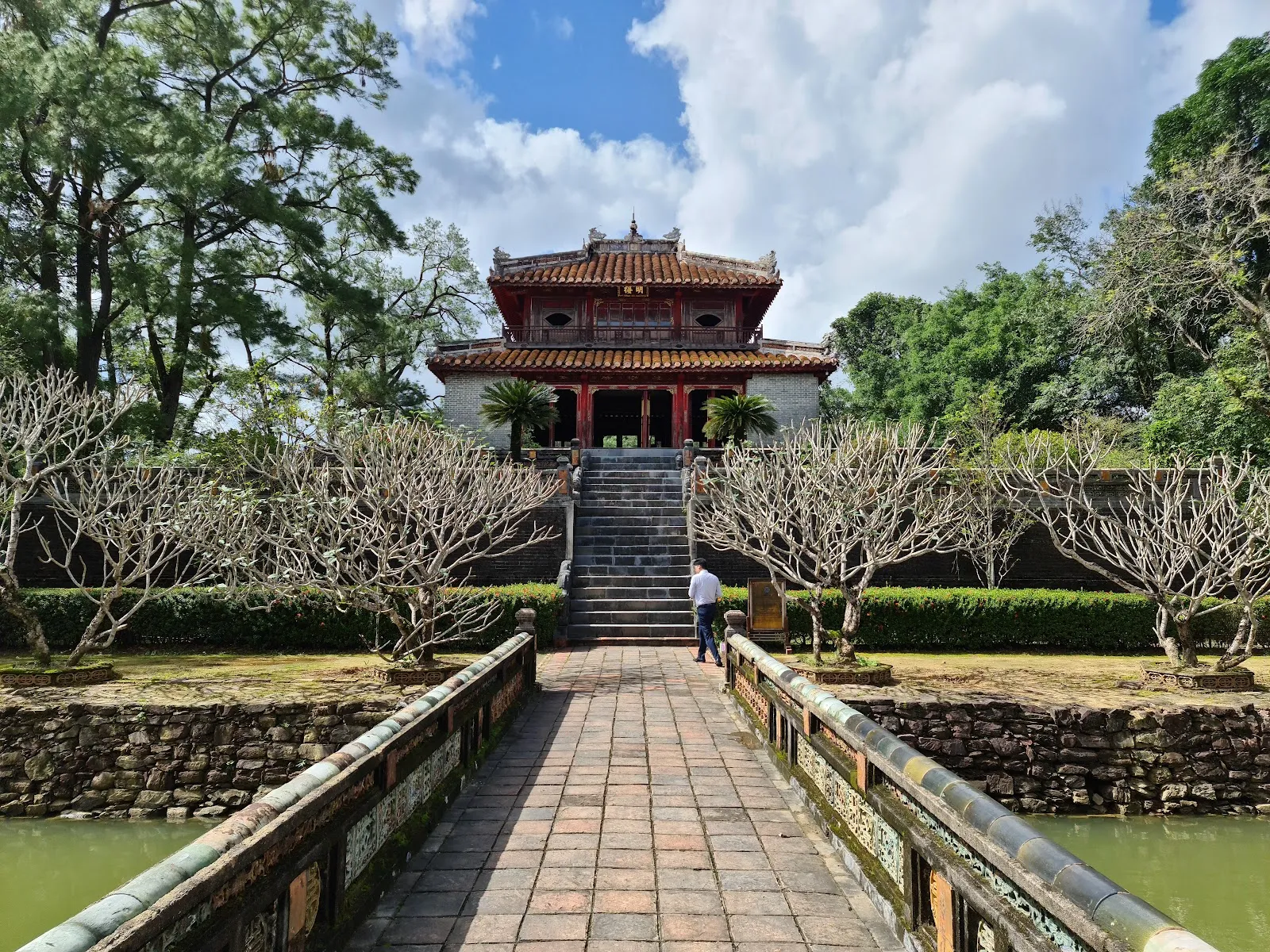
About 12 km from central Hue, the Mausoleum of Emperor Minh Mang is a large royal complex on Cam Ke Mountain, beside the Perfume River. Built from 1840 to 1843 for the second Nguyen emperor, it brings pavilions, courtyards, lakes and gardens together along a carefully balanced central axis. Walk the grounds to see how the buildings sit among pine trees and water, and look for the bright doorways and detailed architectural work. The site is spacious, so allow time to explore on foot.
A mausoleum planned around an axis
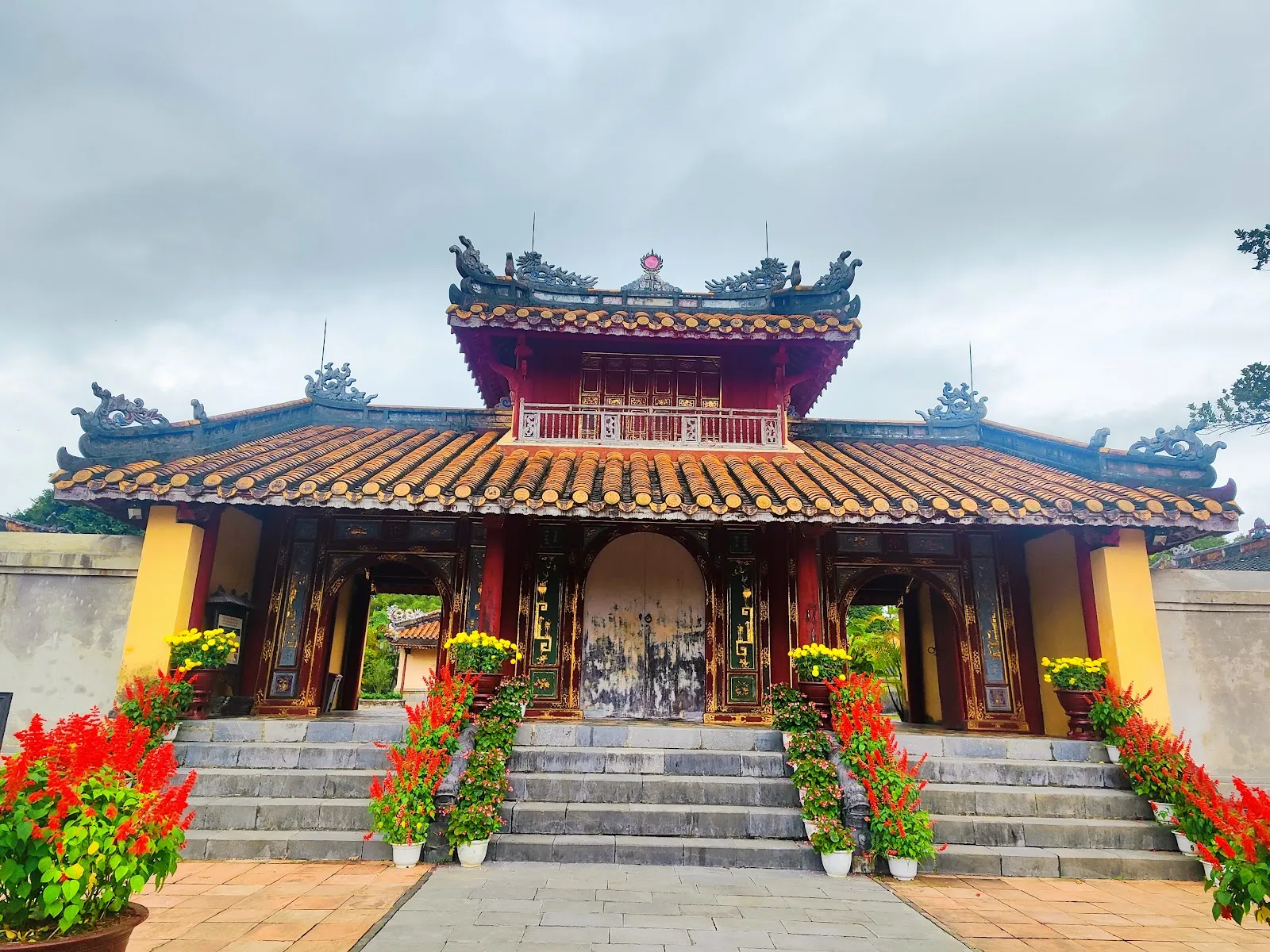
The mausoleum, also known as Hieu Lang, is the burial and worship complex of Minh Mang, the second emperor of the Nguyen dynasty. It stands on Cam Ke Mountain, near the junction of the Ta Trach and Huu Trach rivers, where the Perfume River begins. The setting links the site’s architecture to its surrounding mountains, river and lakes.
Construction began in 1840, during Minh Mang’s reign, and his successor, Thieu Tri, completed the complex in 1843, after the emperor’s death. Minh Mang had chosen the location and planned the mausoleum, but did not live to see it finished.
Buildings, lakes and gardens
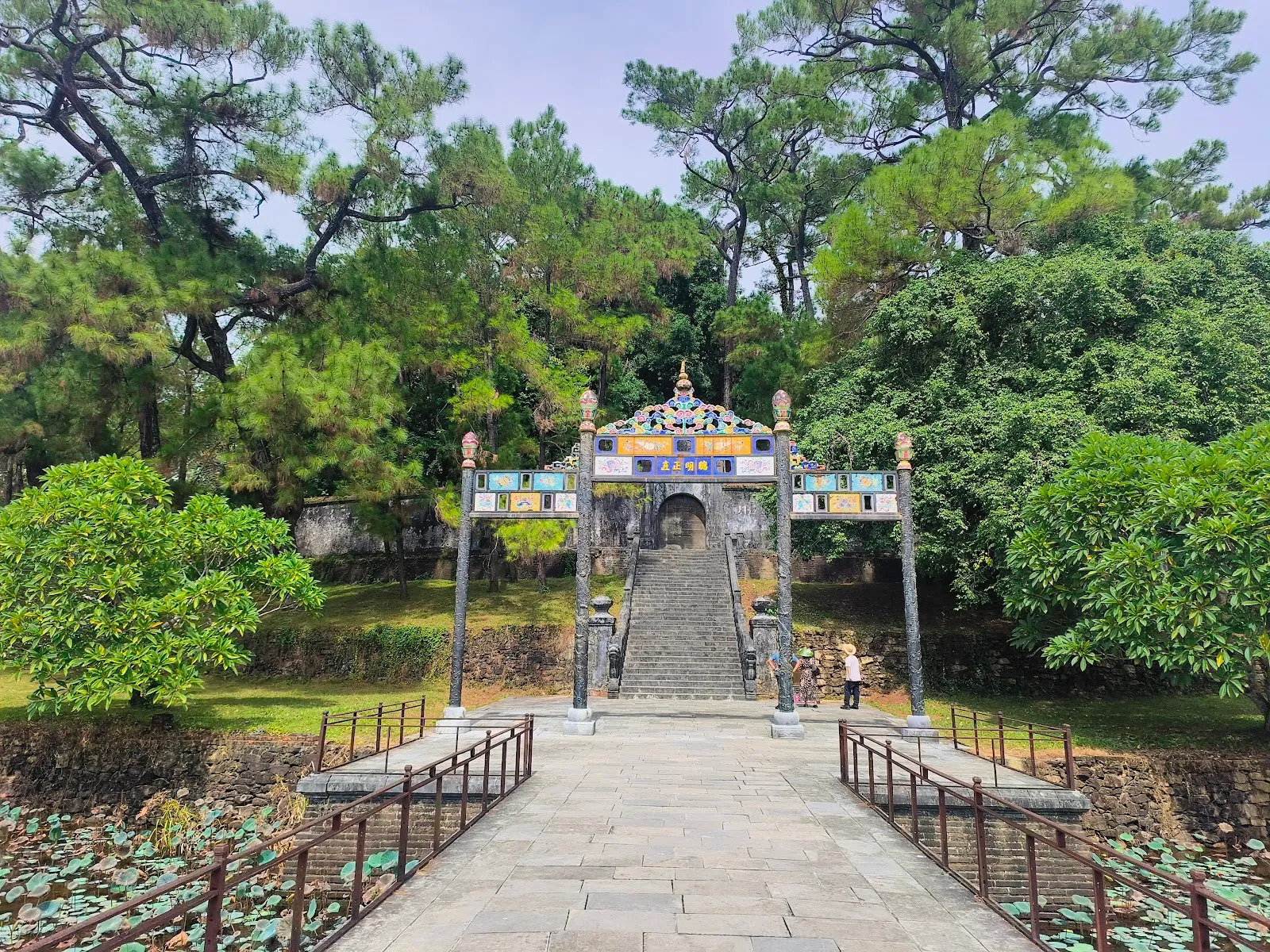
The grounds contain around 40 structures, including palaces, temples, pavilions and gates. They follow a central route, with buildings and courtyards arranged in careful alignment. Lakes, gardens and pine-covered slopes soften the formal layout, while bridges and water features connect parts of the complex.
The route extends from Dai Hong Gate toward the burial enclosure. Along the way, look at the sequence of courtyards and the changing views across the water. The design’s balance between built forms and the landscape is a defining part of the visit. Its ordered arrangement reflects Confucian ideas and the attention Minh Mang gave to geomancy, often called feng shui.
What to look for as you walk
Take time to notice the details as well as the overall plan. The complex includes richly colored doorways, pavilions and carved inscriptions. Nearly 600 poetic inscriptions are recorded across structures including the stele pavilion, Hien Duc Gate, Sung An Temple and Minh Lau Pavilion.
The emperor’s burial place lies within the enclosed section of the complex and is not open to visitors. The rest of the grounds offers plenty to explore, from the main route and its buildings to the lakes and garden paths. Because the site covers a broad area, walking between structures is part of the visit. Plan your route at an unhurried pace, especially if you want time to appreciate both the architecture and the setting.
Preguntas frecuentes
How far is Minh Mang Mausoleum from Hue?
It is about 12 km from central Hue, on Cam Ke Mountain near the Perfume River.
When was the mausoleum built?
Construction began in 1840 and the complex was completed in 1843 by Emperor Thieu Tri, Minh Mang’s successor.
Can visitors enter Minh Mang’s burial place?
No. The burial place is enclosed and is not open to visitors, but the surrounding complex can be explored.
How much walking is involved?
The grounds are large, with around 40 structures spread across the complex. Wear comfortable shoes and be prepared to walk between them.