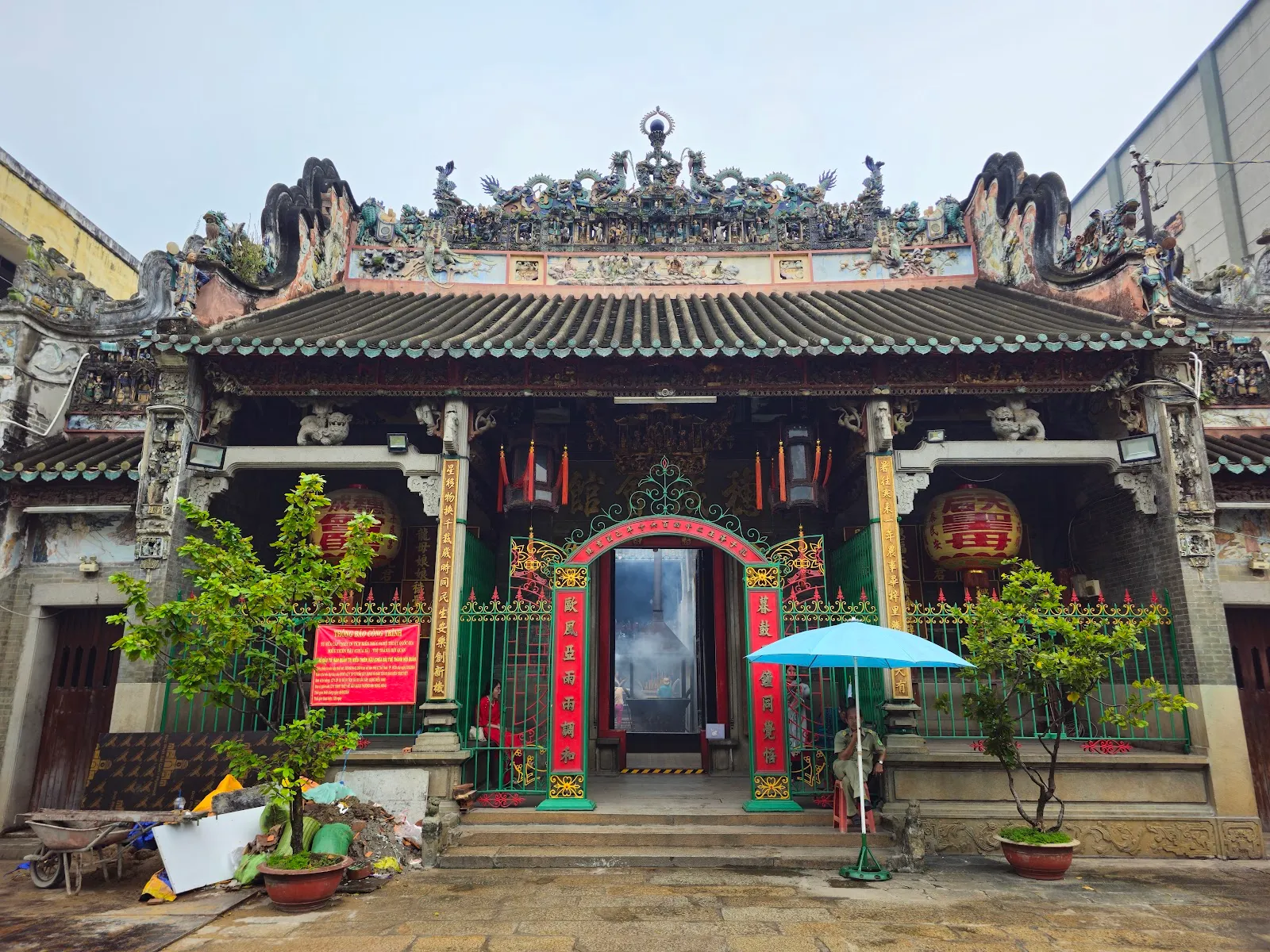
Thien Hau Pagoda is a Chinese temple in Chợ Lớn, Ho Chi Minh City, dedicated to Mazu, the sea goddess who protects sailors and travelers. Built in 1760 by the Cantonese community, it is known for its ceramic roof figures, carved details and large coils of incense suspended above the halls. Take time to look at the roof’s porcelain scenes, then walk through the three halls from the shared courtyard. This is an active place of worship, so keep your voice low and give people space to pray.
A temple built by the Cantonese community
Thien Hau Pagoda stands at 710 Nguyễn Trãi in Chợ Lớn, Ho Chi Minh City’s Chinatown. The Cantonese community built it in 1760 and dedicated it to Mazu, the Chinese goddess of the sea. Sailors and other travelers prayed to her for protection on journeys by water. The temple remains a place of worship for the Chinese community in Vietnam.
The pagoda is also known as Tuệ Thành Communal House. Its history is closely tied to Chinese settlement in the city, and people continue to come here to pray. Treat the halls as an active religious space: move quietly and avoid interrupting anyone at prayer.
Roof figures and carved details
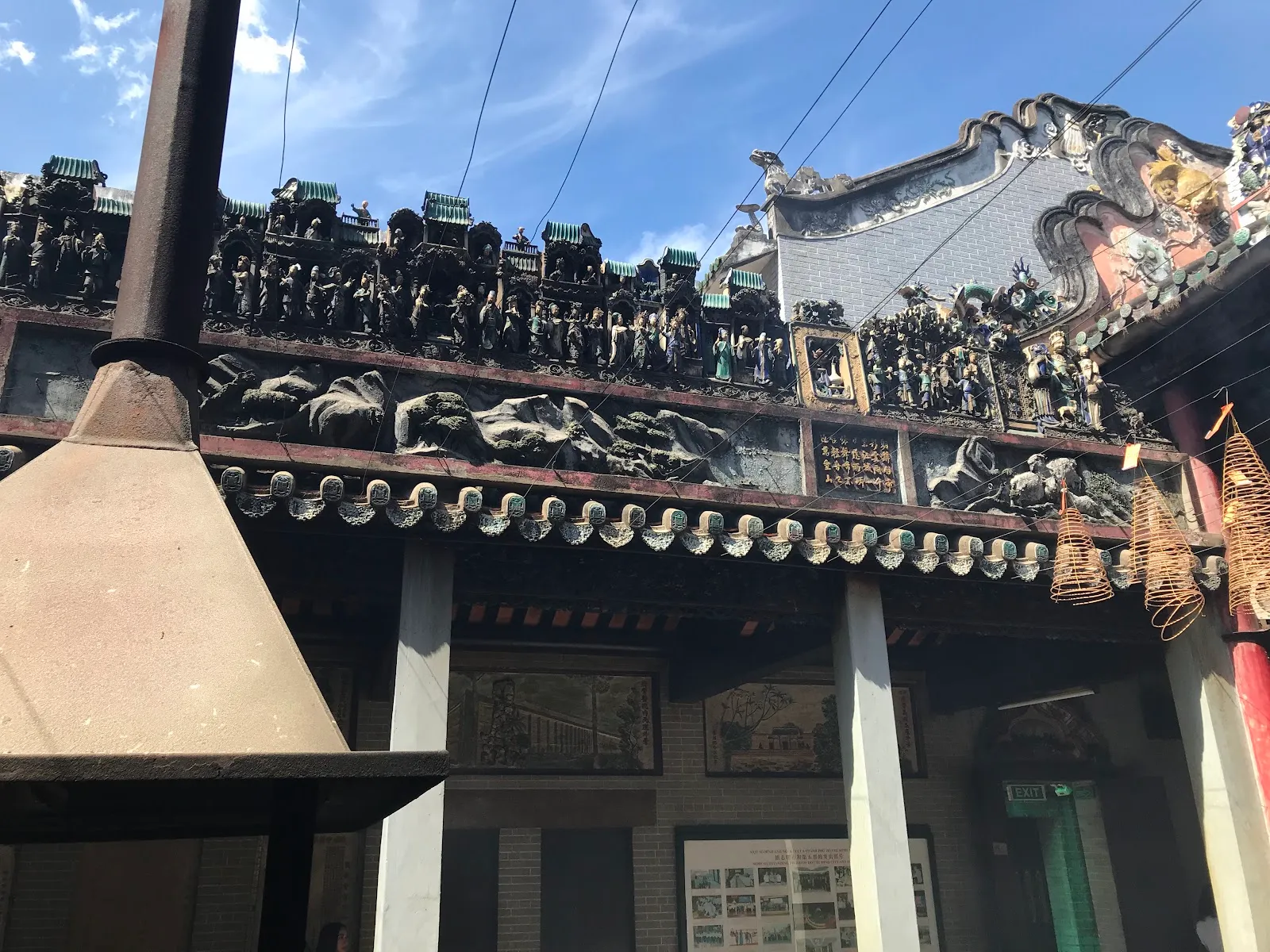
Start by looking at the roof, where ceramic figures form scenes with deities, legends and dragons. Porcelain reliefs and statues add color to the exterior. Inside, wood carvings and religious figures draw the eye toward the altars. The details are compactly arranged, so a slow look reveals more than a quick pass through the courtyard.
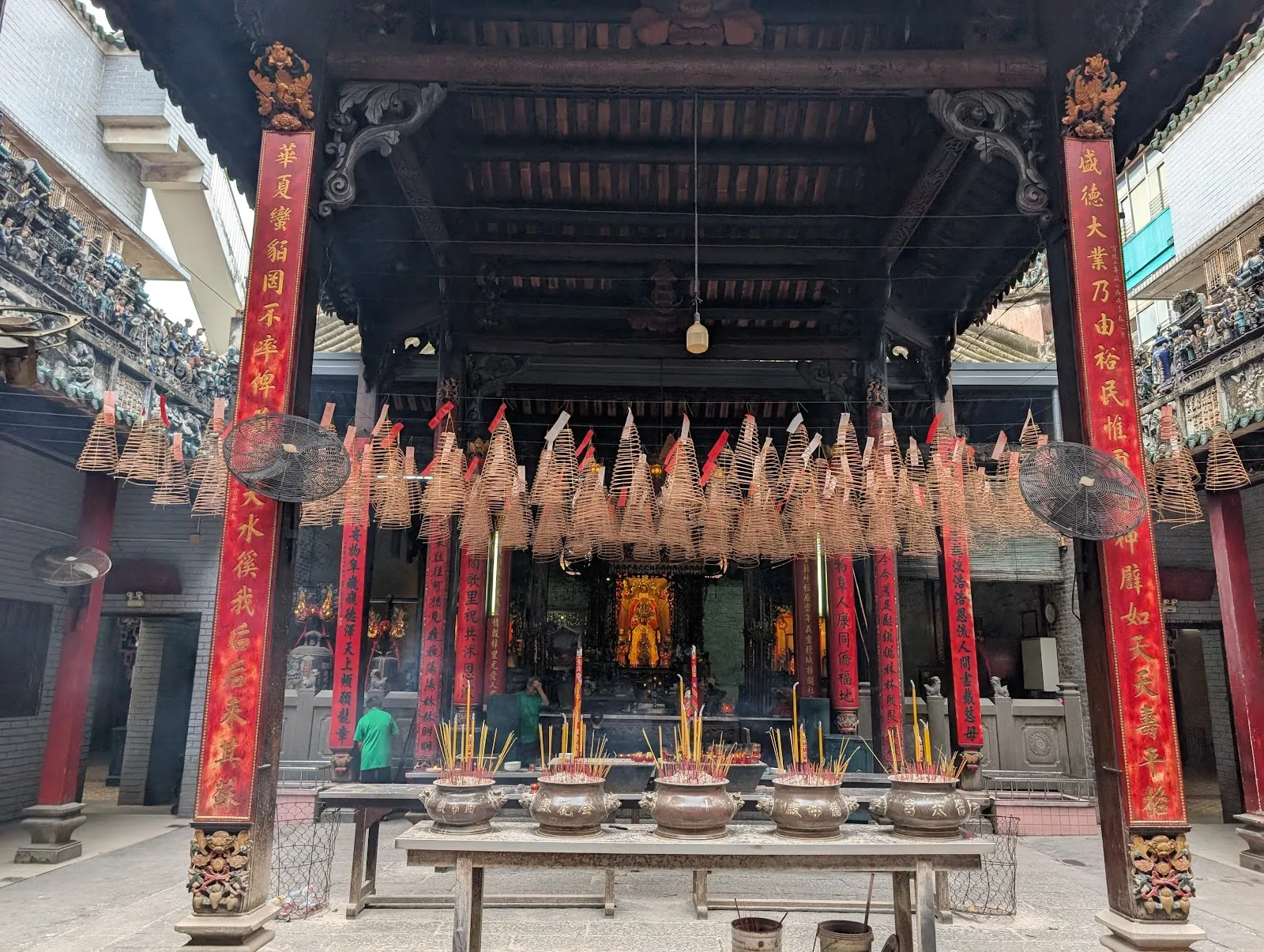
Lanterns, offering burners and incense are part of the temple’s visual character. Large spiral incense coils hang overhead. Worshippers can use them for prayers intended to last as the coils burn. The incense smoke can be strong inside, and small sparks may drop from the coils, so take care when walking beneath them.
Three halls around one courtyard
The pagoda’s three halls are reached through a single courtyard. In the front hall, an offering burner marks the approach to the inner spaces. The middle hall holds ceremonial objects, including a fire extinguisher dated 1898. The main hall contains shrines to Mazu, the Empress Golden Flower Goddess and the Dragon Mother.
Allow time to look across all three halls rather than stopping at the entrance. The arrangement brings together objects used in worship and architectural decoration, with altars and carvings visible as you move farther inside. Keep your attention on the space around you, particularly when worshippers are present.
Visiting with care
Thien Hau is an accessible stop for seeing Chinese religious architecture and learning about the community that founded the temple. Its location in Chợ Lớn also makes it a natural addition to time spent exploring the neighborhood. The pagoda is compact, but its roof scenes, interior carvings and three halls reward a measured visit.
This is not simply a display of historic objects. People still come to pray, and family connections to the temple span generations. Observe quietly, leave room around the altars and follow the lead of those worshipping. An early visit can provide a calmer setting for looking closely at the details.
Preguntas frecuentes
Where is Thien Hau Pagoda?
It is at 710 Nguyễn Trãi in Chợ Lớn, Ho Chi Minh City.
Who is Thien Hau Pagoda dedicated to?
The temple honors Mazu, the Chinese goddess of the sea, associated with protection for sailors and travelers.
What should I look for inside Thien Hau Pagoda?
Look for the suspended incense coils, carved details and the three halls around one courtyard. The roof has ceramic figures and scenes.
Is Thien Hau Pagoda free to visit?
The gathered information describes the pagoda as free to enter.
When is a good time to visit?
Go early in the morning for a quieter visit. Keep your voice low if people are praying.