Yosemite Falls drops 2,425 feet in three stages: Upper Yosemite Fall, the middle cascades and Lower Yosemite Fall. You can see it from several spots around Yosemite Valley, including Sentinel Meadow and Yosemite Valley Lodge, or follow the one-mile loop to the base of Lower Yosemite Fall. For a much harder outing, the trail to the top climbs steeply to overlooks above the valley. Snowmelt brings the strongest flow in spring, when the spray can create rainbows; water often dwindles by late summer.
Three falls in one
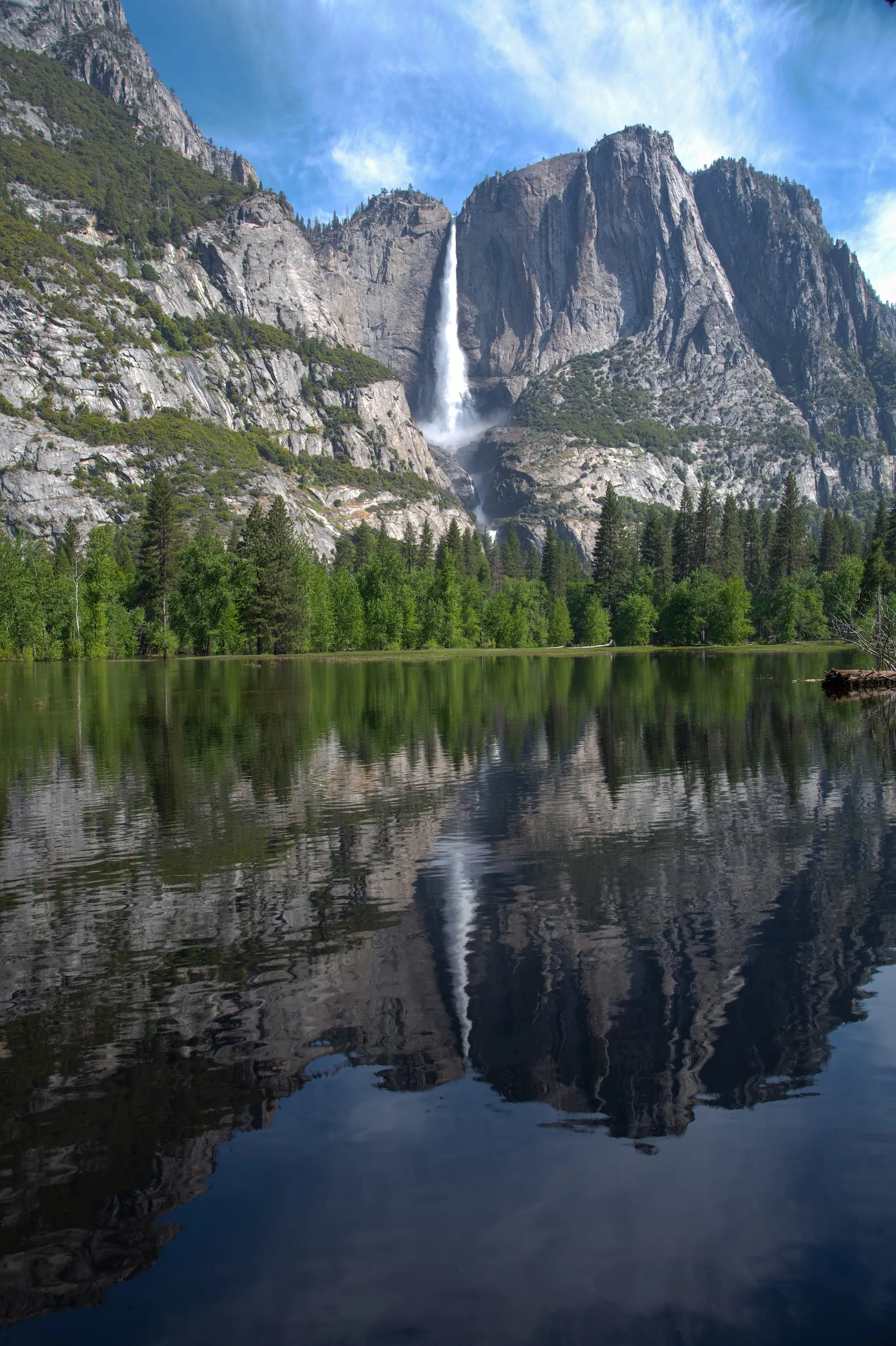
Yosemite Falls is formed by Upper Yosemite Fall, the middle cascades and Lower Yosemite Fall. Together, they descend 2,425 feet, with the upper section accounting for the greatest drop. The middle cascades are not visible from the valley floor, but the falls appear from many viewpoints around Yosemite Valley.
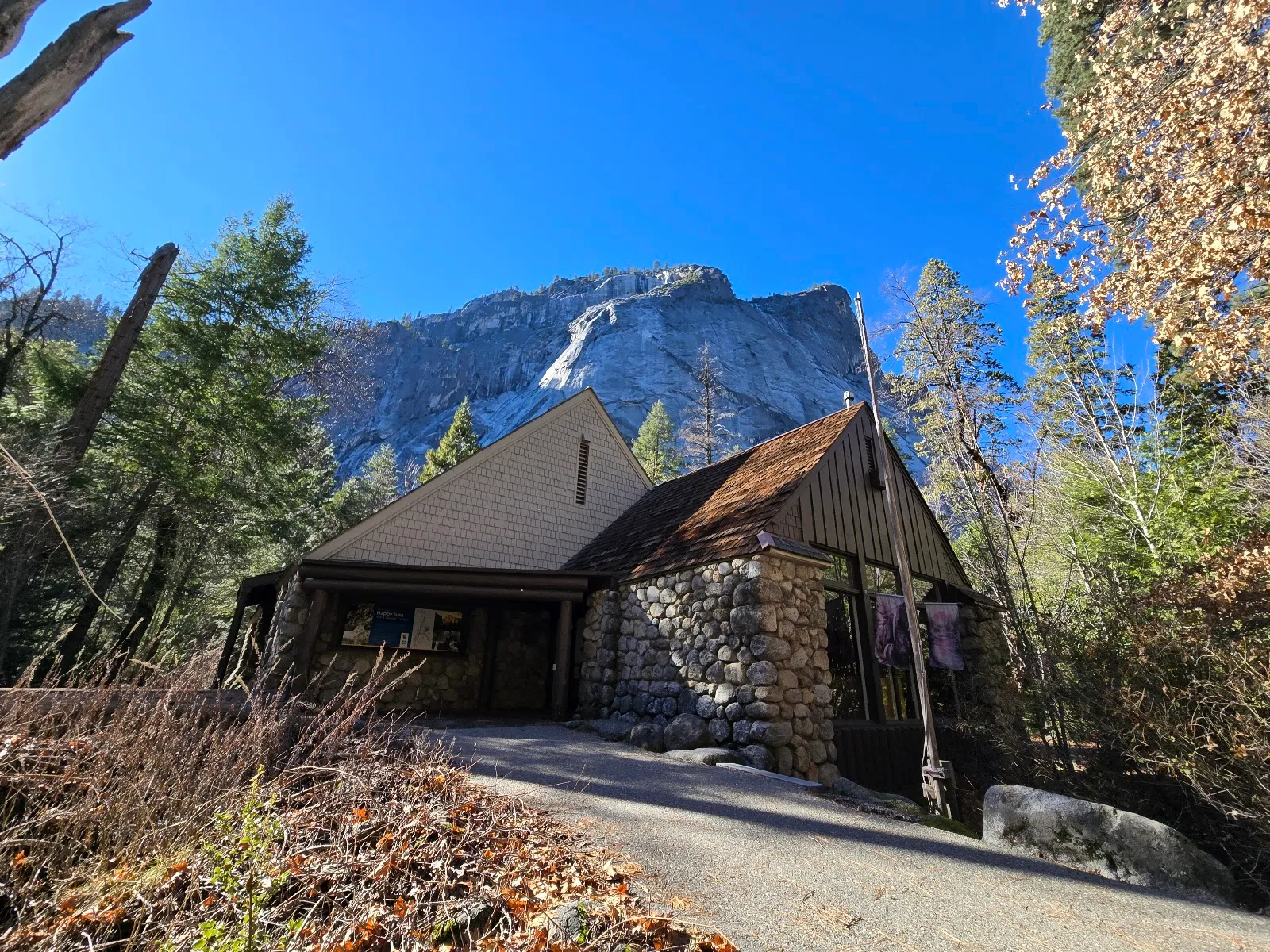
Sentinel Meadow and Yosemite Chapel are among the places to look for a view without taking on a long hike. The falls can also be seen near Yosemite Village and Yosemite Valley Lodge. Each viewpoint frames the water against the granite walls in a different way.
The Lower Yosemite Fall loop
A one-mile loop leads through trees to the base of Lower Yosemite Fall, with views of the lower cascade and the falls above it. The path is paved, and the eastern side, from the shuttle stop to the base, is wheelchair accessible. The walk is a straightforward way to get close to the water without committing to a strenuous climb.
The area near the falls can become crowded, particularly in the early afternoon. An early or late visit can give you more space and softer light for photographs. In spring, spray from the falls can leave visitors wet, so take care around the water and rocks.
Hiking to the upper falls
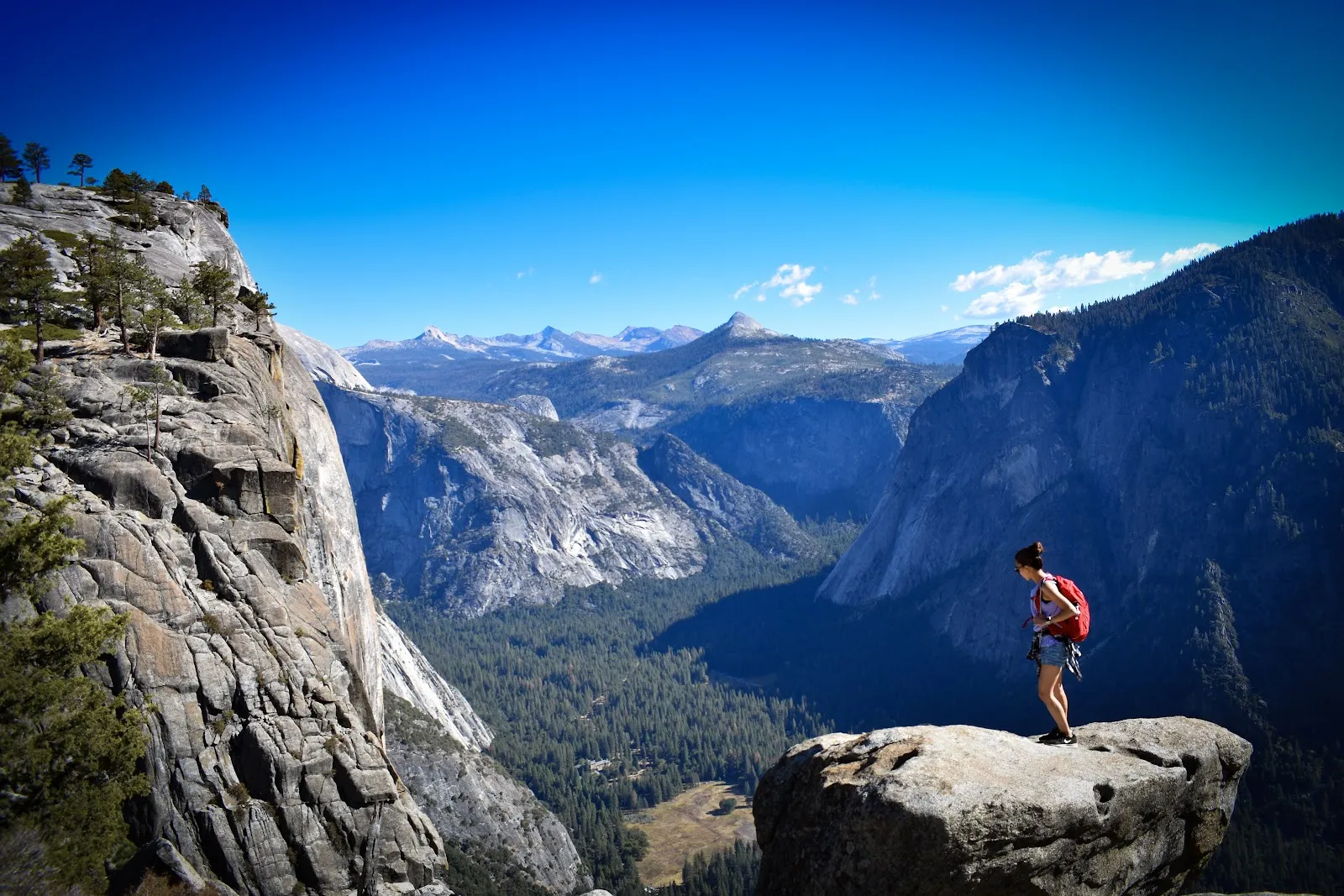
The trail to the top starts near Camp 4 and climbs through switchbacks. Columbia Rock, about a mile into the hike, gives an early view toward Half Dome. Continuing to the top is a strenuous outing with substantial elevation gain, but the upper overlook brings broad views over Yosemite Valley.
Plan for a demanding hike rather than a short extension of the Lower Falls walk. Carry enough food and water, allow time for breaks, and watch your footing on slippery rocks. Wind and changing weather can make conditions colder higher up. Do not rush the climb.
When the falls have the most water
Snowmelt drives the strongest flow, usually in spring, with peak flow around May. The runoff can roar through the valley from April into June, and sunny conditions may bring rainbows in the mist. Water is usually visible from November through July, but the falls can shrink to a trickle in late summer.
In winter, freezing temperatures can form an ice cone at the base of the upper fall. The appearance changes with the season, so the best time depends on whether you want powerful spring flow or a winter view of ice.
Preguntas frecuentes
How long is the Lower Yosemite Fall Trail?
The loop is about one mile long and leads to the base of Lower Yosemite Fall.
Is the Lower Yosemite Fall Trail wheelchair accessible?
The eastern side of the loop, from the shuttle stop to the base of the falls, is wheelchair accessible.
How long does the hike to the top of Yosemite Falls take?
The upper trail is strenuous and typically takes about 5 to 6 hours.
When is Yosemite Falls at its fullest?
Spring snowmelt brings the strongest flow, with peak flow around May. The falls often dwindle to a trickle by late summer.