
Joshua Tree National Park covers nearly 800,000 acres of Southern California desert, where granite boulders and the park's namesake Joshua trees fill the horizon. Two deserts meet here, the higher, cooler Mojave and the lower Colorado, so the plants change as you drive. Scramble around Skull Rock, walk the flat Barker Dam loop, climb Ryan Mountain for a wide view, or watch the light fade at Key View. Plan for a full day, and bring your own water and food, because the park has no food options inside.
Two deserts in one park
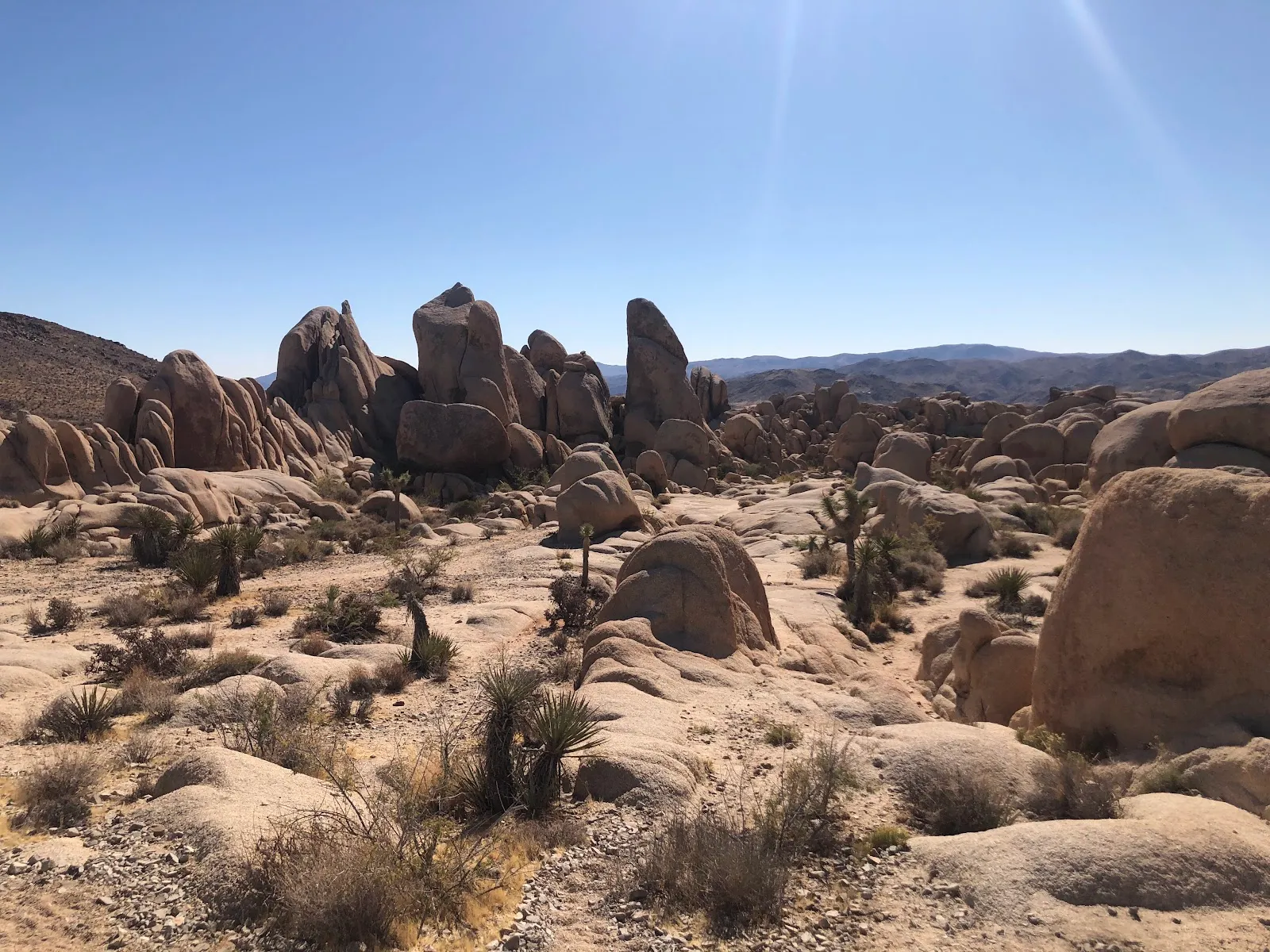
The park spans roughly 800,000 acres and protects parts of two desert ecosystems. The Mojave is higher and cooler and is home to the Joshua trees. The Colorado Desert is lower and warmer, and cacti are more common there. The park was set aside as a national monument in 1936 and became a national park in 1994.
The Joshua tree is a member of the yucca family, not a true tree. The park holds nearly 800 plant species, including 15 kinds of cactus and wildflowers that bloom each year. Wildlife includes hawks, roadrunners, kangaroo rats, desert tortoises, bighorn sheep and coyotes. Bighorn sheep are most often seen around first light.
Walks, boulders and viewpoints
Barker Dam is a flat loop of about 1.3 miles past an old cattle dam. It suits children and anyone who wants a short walk, and it is a place to watch for bighorn sheep. Skull Rock is a boulder formation that people scramble over, and the climbing around it can fill an hour. The Discovery Trail is a family-friendly path designed and built by local students.
Ryan Mountain is a steady climb to a wide view over the desert and the mountain ranges beyond. Key View is a popular sunset point. Bouldering areas such as Heart Rock and Cap Rock attract climbers, and rock climbing and bouldering are among the park's main activities. Hidden Valley is another well-known walk.
Distances between sights are long. Reaching a place like Skull Rock from the road can take up to half an hour, so choose a few stops rather than trying to see everything.
Sunrise, sunset and the night sky
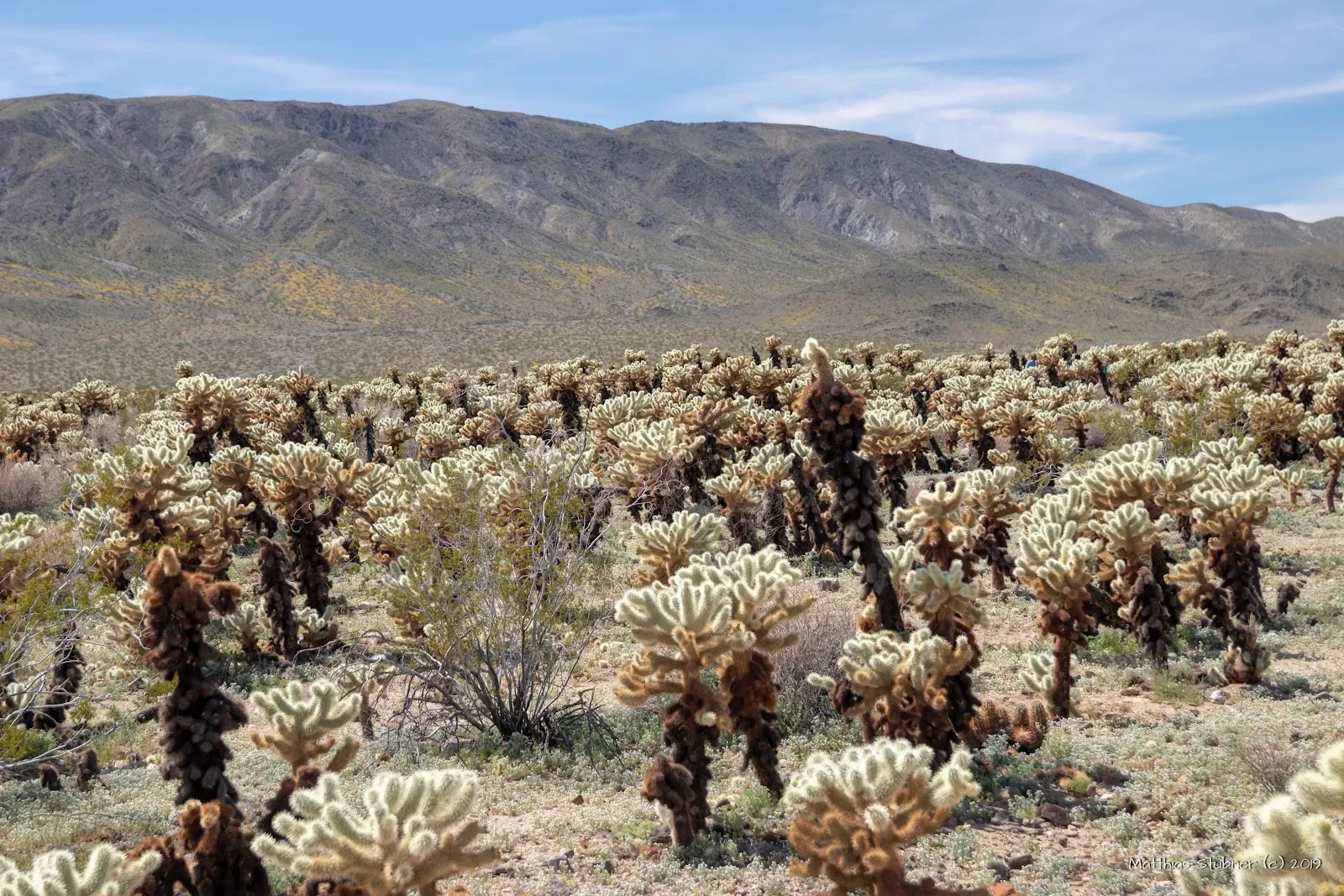
The park is quiet at dawn and dusk. At sunrise the Cholla Cactus Garden catches the first light, and the spines glow gold against a silent desert. Keep your distance from the cholla, as the needles cling to skin and clothing.
The dry air, higher elevation and distance from large cities make the park a certified dark sky destination. The best stargazing is on a moonless night in the remote areas, away from the lights of campgrounds. Ranger programs and guided tours run in the park, and Keys Ranch tours are among its historic offerings.
Entrances and planning
There are three entrances. The north entrance at Twentynine Palms has the park headquarters, the Cultural Center and the main visitor center. The West Entrance at the town of Joshua Tree and the Twentynine Palms entrance are both on Highway 62. The Cottonwood Drive entrance is at the south end. Visitor services are not the same at every entrance, so check where you will pass a visitor center before you set out.
The park is about 45 minutes from Palm Springs, roughly 140 miles east of Los Angeles, and about three hours from Los Angeles, San Diego and Las Vegas. It has no lodging inside. Many visitors stay in Twentynine Palms, Yucca Valley or Palm Springs, or camp. Cottonwood and Jumbo Rocks are two of the campgrounds. The busy season for camping runs from November to May, and summer air temperatures can pass 100 degrees Fahrenheit with ground temperatures far higher. Book a campsite before you leave, because you cannot count on a signal in the park.
Restroom facilities inside the park are basic, so use those in the visitor centers and nearby towns when you can.
Preguntas frecuentes
How much does it cost to enter Joshua Tree National Park?
The fee is $30 per vehicle, and the America the Beautiful pass is valid here. Check the park website for current prices and conditions before you go.
Do you need a reservation to enter?
No reservation is needed to enter the park. Campsites should be booked ahead.
When is the best time to visit?
Early spring is pleasant and brings blooming trees. For hiking, March to May and October to November have the mildest temperatures. Summer is very hot.
How long do you need at Joshua Tree?
One full day covers the main sights, and it is worth spending at least that. Camping or a second day lets you add sunrise, stargazing and longer hikes.
Is there food, water or lodging inside the park?
No. There are no food options and no drinking fountains or filling stations inside, and there is no in-park lodging. Bring water and food, and stay in nearby towns or at a campground.
Is Joshua Tree good for children?
Yes. Children can climb boulders at Skull Rock, walk the flat Barker Dam loop and follow the Discovery Trail. The park also runs a junior ranger program.


