Olympic Sculpture Park is a free, nine-acre outdoor art park on Seattle’s waterfront, at 2901 Western Ave. Its descending, Z-shaped paths link Belltown with the beach and pass more than 20 permanent and rotating works. Look for Alexander Calder’s red Eagle, Louise Bourgeois’s eye-shaped granite benches and large-scale pieces by Richard Serra. The walk also brings you close to Elliott Bay, with views of the Olympic Mountains and, on clear days, Mount Rainier. Bring a picnic or use the park as the start of a waterfront stroll.
From industrial site to waterfront park
Olympic Sculpture Park opened in 2007 as an outdoor extension of the Seattle Art Museum. Its nine acres were once used for industrial fuel storage and transfer. The transformed site now brings sculpture, planted areas and public paths together beside Elliott Bay.
The park’s layout connects Belltown with the waterfront. A descending route shaped like a Z crosses the site, with paths that wind between changes in level, grasses and artworks. The walk ends near the beach and joins the wider waterfront area, including the route toward Myrtle Edwards Park.
Sculpture along the paths
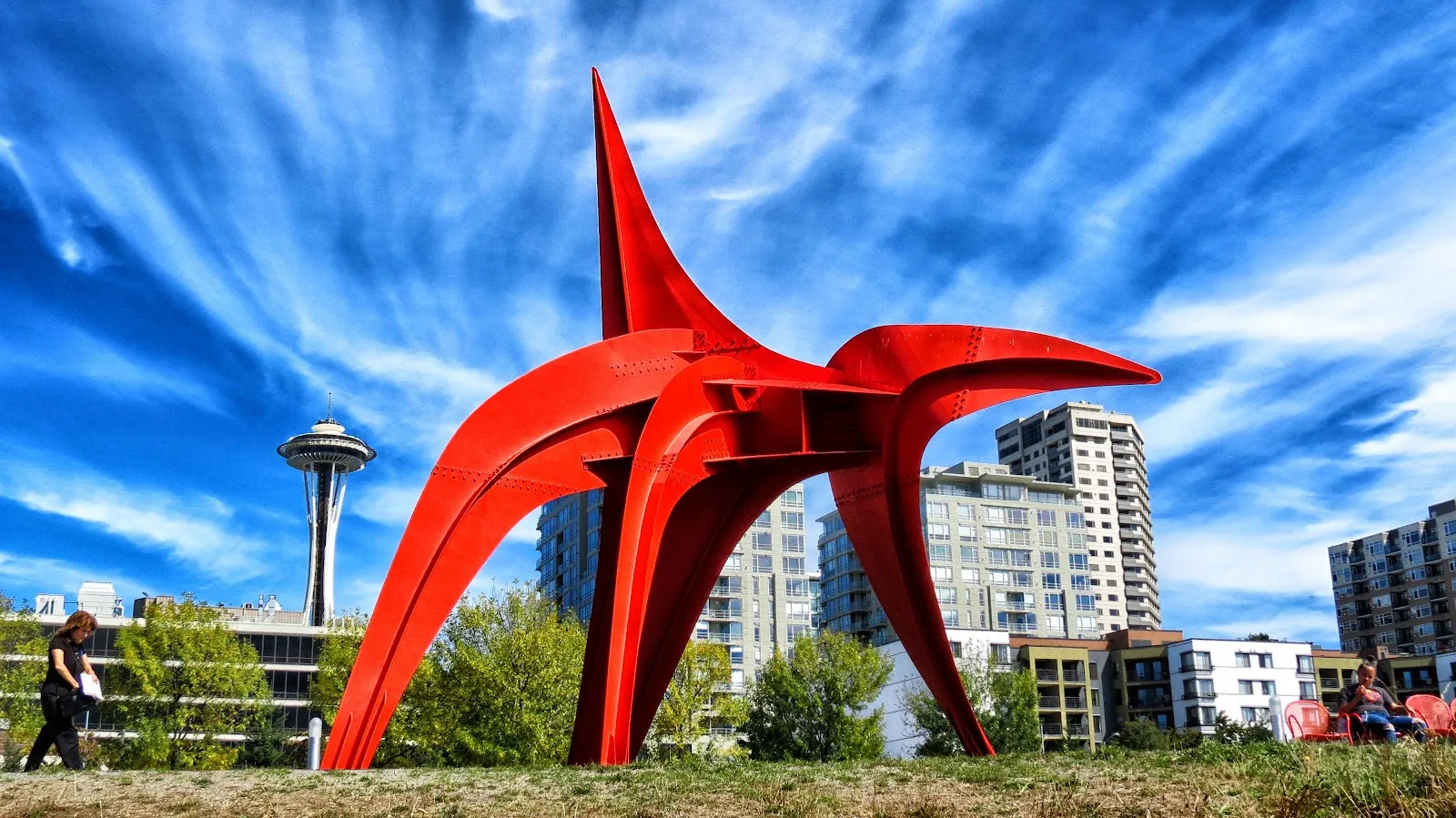
More than 20 permanent works, along with changing installations, are spread across the grounds. Alexander Calder’s red Eagle is one of the park’s most recognizable pieces, positioned above the water. Richard Serra’s large steel work Wake gives the route a different scale and presence.
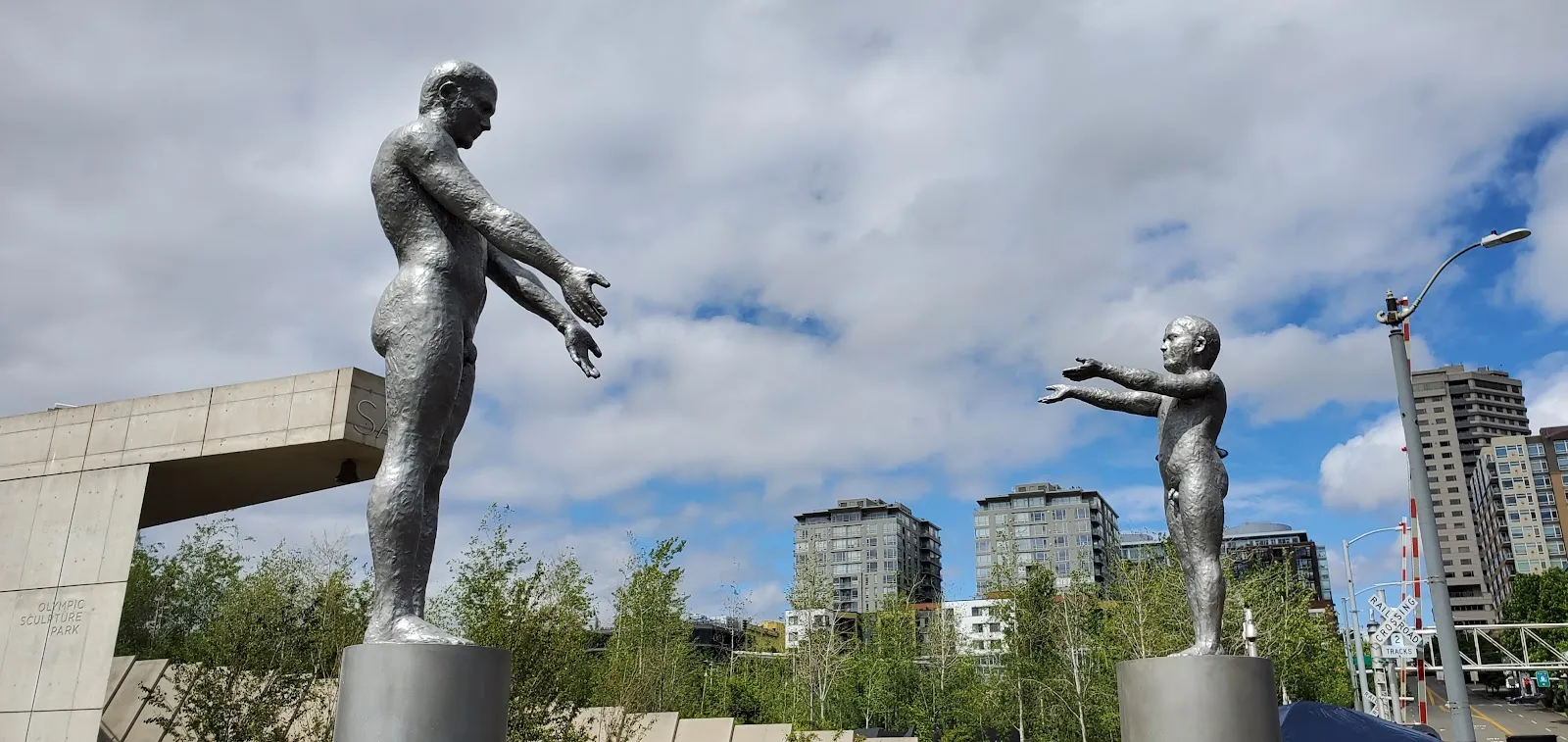
Look out for Louise Bourgeois’s Eye Benches, carved from granite in the shape of oversized eyes. Her Father and Son sculpture sits in a fountain, where moving water changes how the figures appear. Other works include Jaume Plensa’s Echo and Teresita Fernández’s Seattle Cloud Cover, a glass bridge that connects the artwork with the surrounding landscape. The pieces use varied forms and materials, so the walk is as much about noticing details as reaching the waterfront.
Views and places to pause
The park looks over Elliott Bay and Puget Sound, with downtown Seattle and the Space Needle visible from parts of the route. On a clear day, the Olympic Mountains rise across the water, and Mount Rainier may also be in view. The outlook changes as the path descends, so allow time to stop between the upper paths and the beach.
Green areas and shaded spots give you room to sit, picnic or watch boats on the water. The park also has a glass-and-steel pavilion with a café, public event space and changing exhibits. Events and activities take place at the park; check the Seattle Art Museum’s schedule if you want to plan around one. For a simple visit, you can wander the paths, see the sculptures and continue along the waterfront without paying admission.
Preguntas frecuentes
Is Olympic Sculpture Park free?
Yes. Admission to the park is free.
How long should I spend at Olympic Sculpture Park?
The park’s paths connect Belltown to the waterfront and pass more than 20 sculptures. The input does not give a typical visit duration.
What can you see at Olympic Sculpture Park?
The park has permanent and rotating outdoor artworks, including Alexander Calder’s Eagle and Louise Bourgeois’s Eye Benches. It also looks across Elliott Bay toward the Olympic Mountains.
Is Olympic Sculpture Park part of the Seattle Art Museum?
Yes. The park is an outdoor extension of the Seattle Art Museum.