The Cabildo is a Louisiana State Museum in the French Quarter, beside St. Louis Cathedral on Jackson Square. The Spanish colonial building was once the seat of government, and the Louisiana Purchase transfer took place here in 1803. Inside, exhibits trace Louisiana’s history through Native American objects, paintings, documents and other artifacts. Look for Napoleon Bonaparte’s death mask, displays on Mardi Gras and local culture, and works by New Orleans artists. Pair the museum with a walk around Jackson Square and its neighboring landmarks.
A government building turned museum
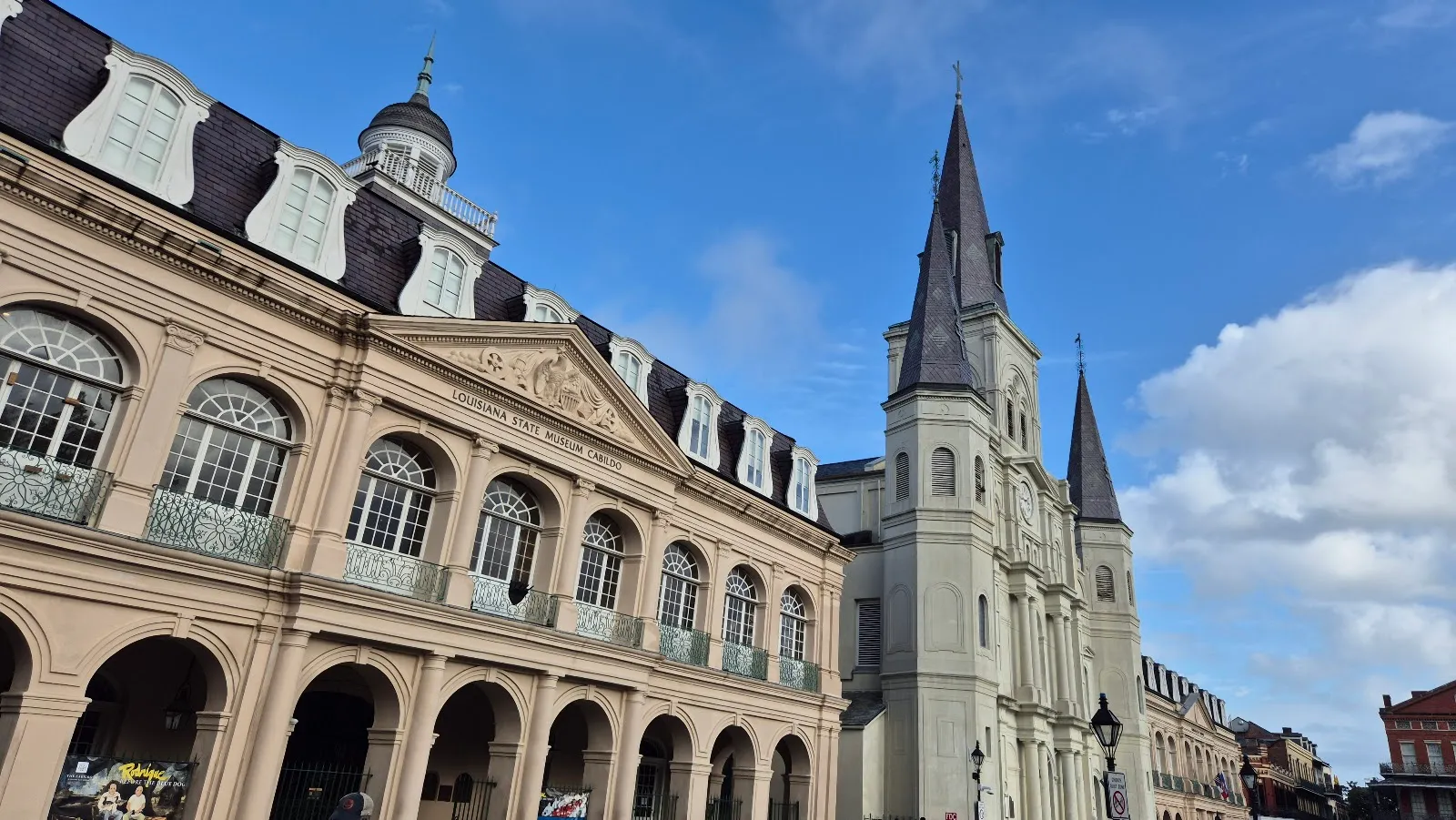
The Cabildo stands beside St. Louis Cathedral on Jackson Square, in the French Quarter. Its name comes from the Spanish council that met there. Built in the late 18th century under Spanish rule, the building was the seat of the colonial government in New Orleans. It later served as city hall and housed the Louisiana Supreme Court.
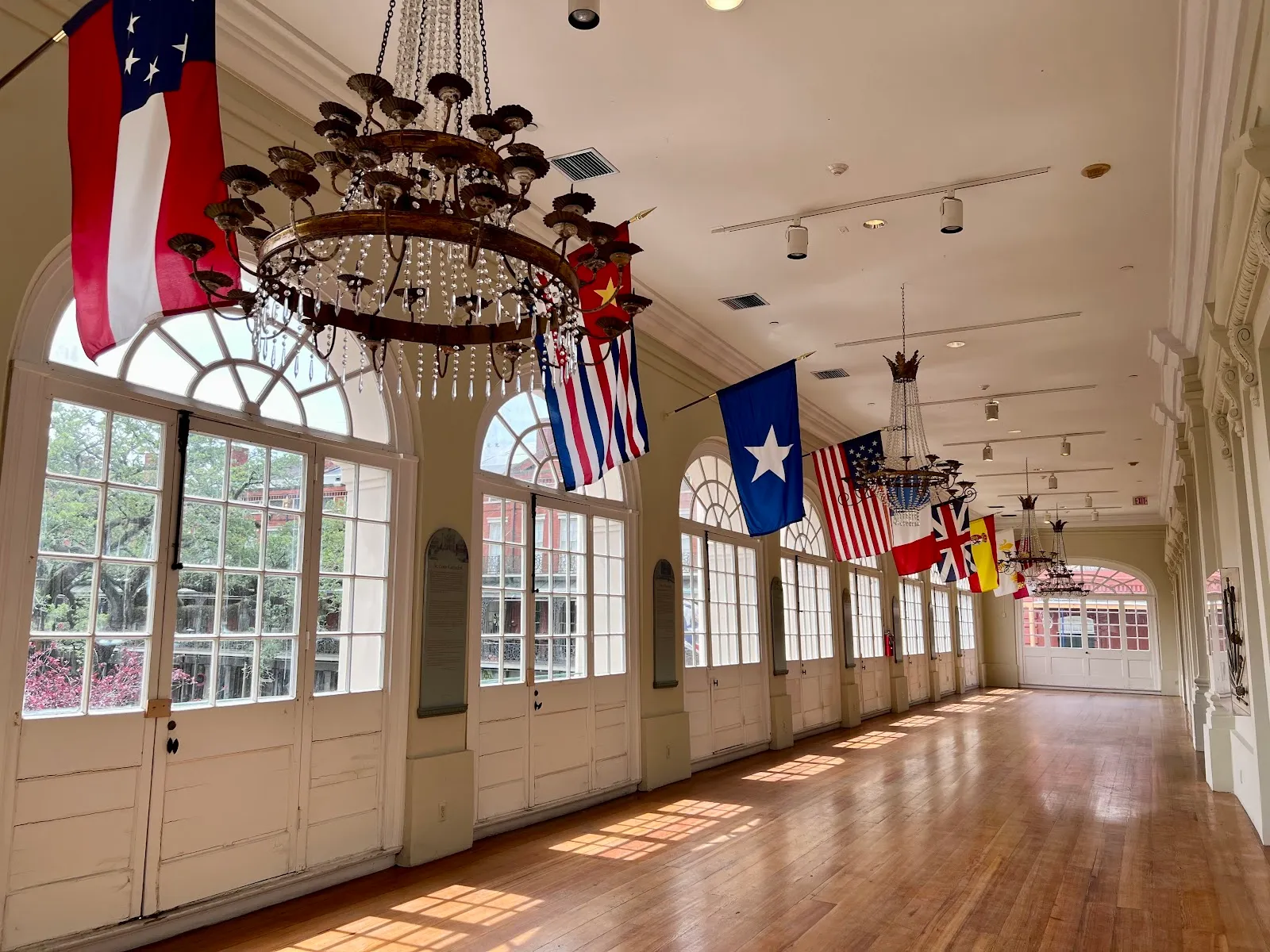
The Louisiana Purchase transfer took place in the building in 1803. The Cabildo also became the setting for the landmark Plessy v. Ferguson decision in 1892. Its history makes the building part of the story told inside, not just a backdrop for the museum.
Louisiana history across three floors
The Louisiana State Museum’s exhibits cover the state’s history, from Native American cultures and colonial rule to New Orleans life and modern culture. Objects, original documents and paintings help trace the region’s French and Spanish influences and its place in American history. Displays also address difficult parts of Louisiana’s past, including the local slave trade.
Look for Native American objects, colonial-era paintings and artifacts connected with the Civil War. The museum’s collection includes portraits of New Orleanians, including an 1839 self-portrait by Julien Hudson, an antebellum artist and free man of color, and a painting of Marie Laveau by Frank Schneider. Napoleon Bonaparte’s death mask is another notable object. It was made from a mold of his face after his death in 1821.
Art and local culture
The exhibits connect historical events with the culture of New Orleans. Displays on Mardi Gras and local life give context to traditions and places visitors encounter around the city. The museum also holds objects linked to music and leisure in Louisiana, including Sidney Bechet’s saxophone and memorabilia from Pontchartrain Beach.
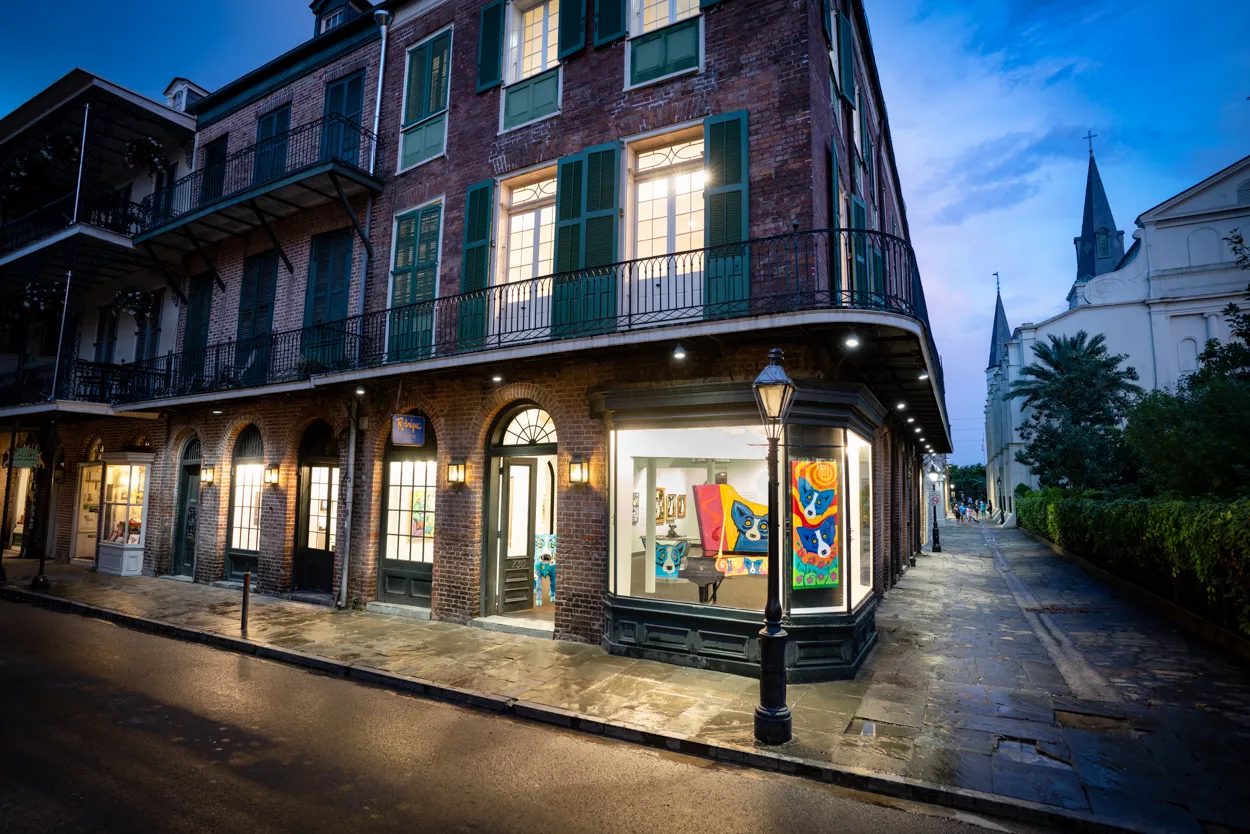
Art is part of the collection too. One visitor highlighted a third-floor display of roughly 40 to 50 paintings by George Rodrigue, known for stylized depictions of New Orleans houses, along with his palette and brushes. Exhibitions can change, so check the museum’s website if you are visiting for a particular display.
Planning a visit
Give yourself a couple of hours to explore the exhibits, and longer if you plan to read the labels closely. The museum is close to the Presbytère, another Louisiana State Museum building on Jackson Square, so both fit naturally into a walk around the square and St. Louis Cathedral.
The Cabildo also hosts events. A weekly Saturday morning yoga class has been held in the historic building, with museum admission included; check the museum’s website for current details before planning around it. The museum lists a wheelchair-accessible entrance and restroom.
Preguntas frecuentes
Where is The Cabildo Museum?
It is at 701 Chartres St, beside St. Louis Cathedral on Jackson Square in New Orleans’ French Quarter.
How long do you need at The Cabildo?
Plan on about two to three hours. Reading the exhibit labels can make a visit longer.
What can you see at The Cabildo?
Exhibits cover Louisiana history, Native American cultures, Mardi Gras and New Orleans life. The collection includes Napoleon Bonaparte’s death mask and paintings by Louisiana artists.
Is The Cabildo Museum wheelchair accessible?
The museum lists a wheelchair-accessible entrance and restroom.