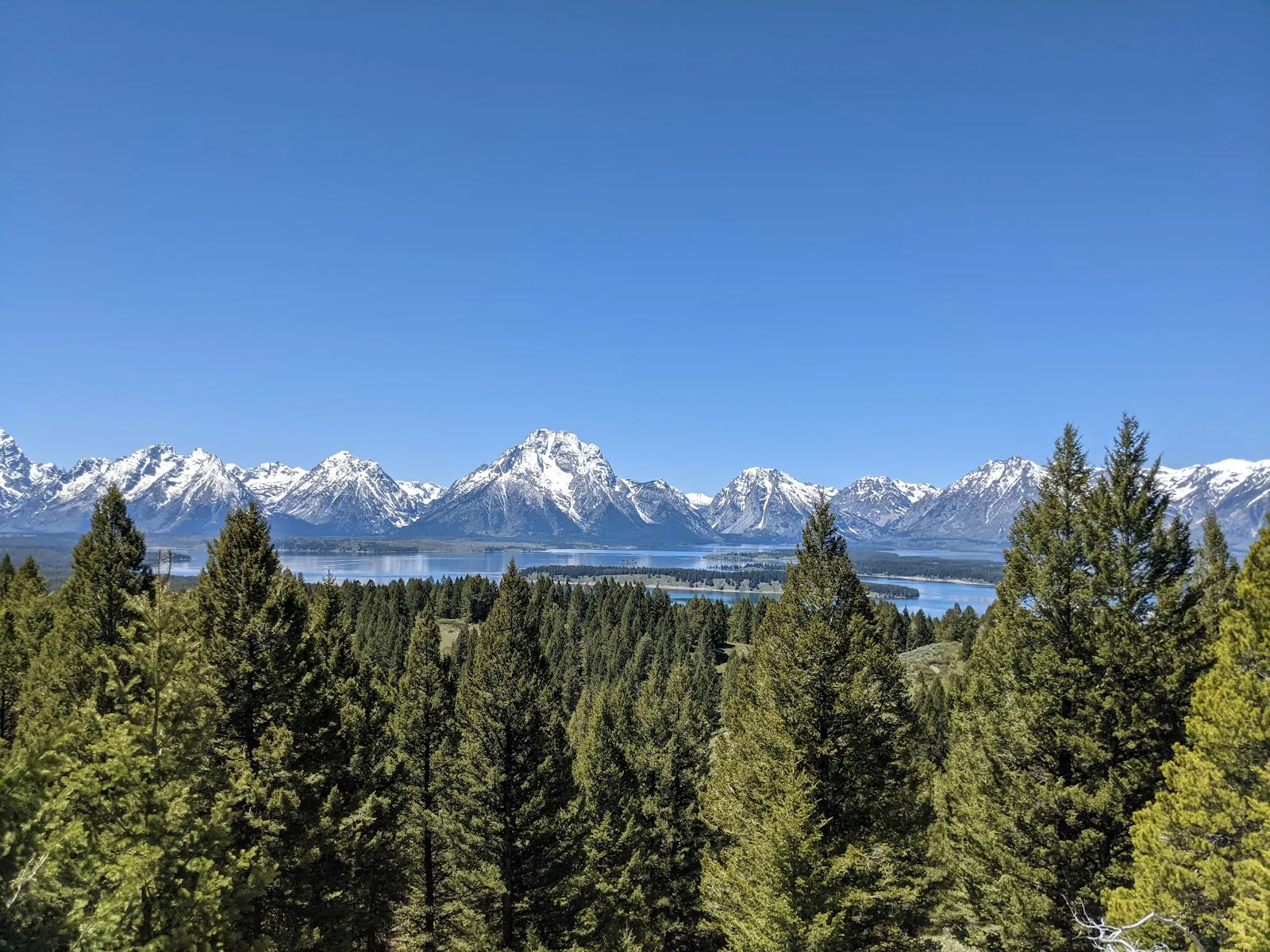
Oxbow Bend is a broad curve in the Snake River in Grand Teton National Park, along Highway 89/191 near Jackson Lake Junction. The slow-moving water can reflect Mount Moran and the northern Teton peaks, especially on a calm morning. It is also a wildlife-watching stop: look for pelicans and other waterbirds, and scan the riverbanks for moose, elk, otters and beavers. Pull over for the view, then take a short walk toward the water to find a different angle.
The Snake River and Mount Moran
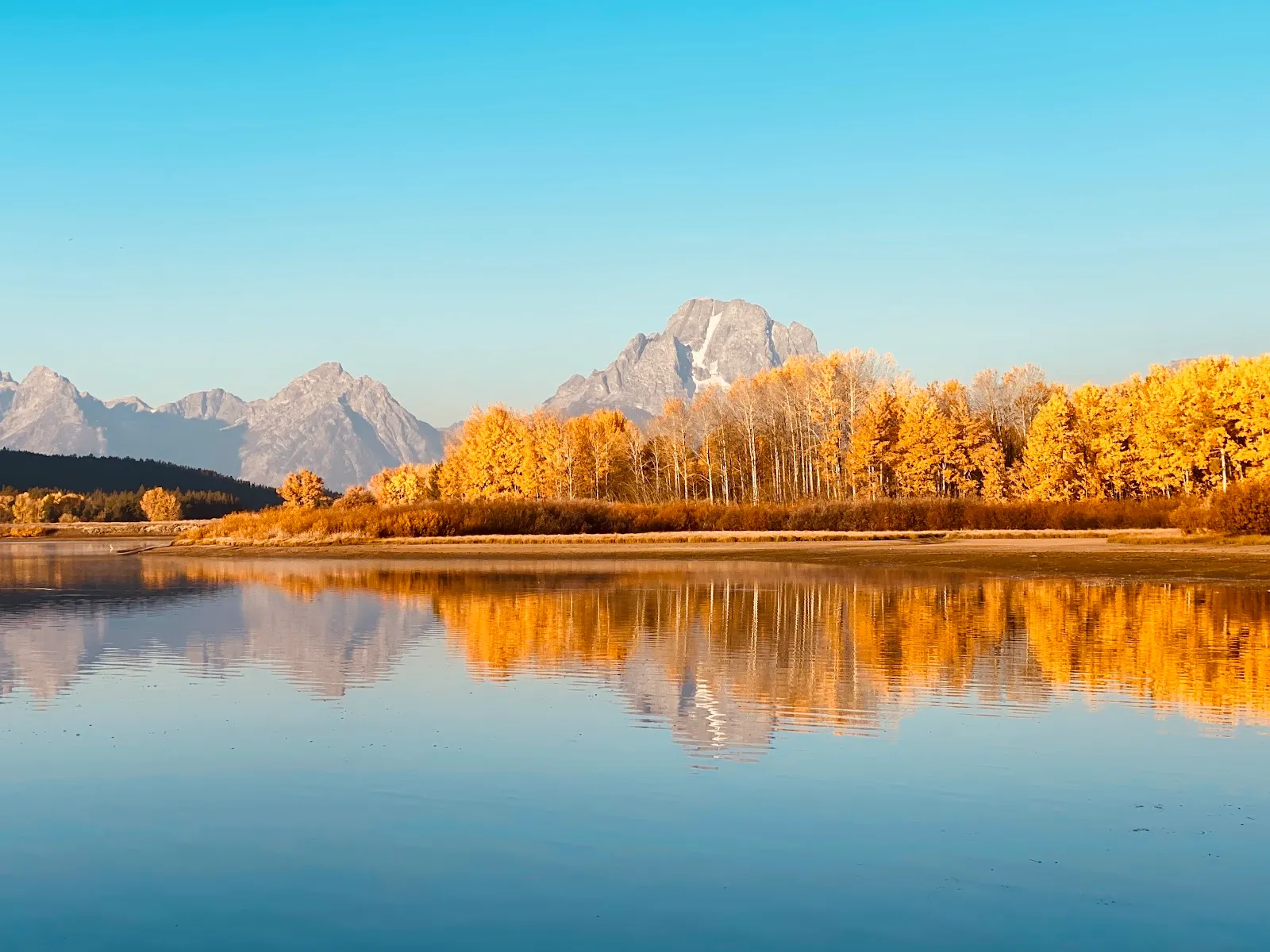
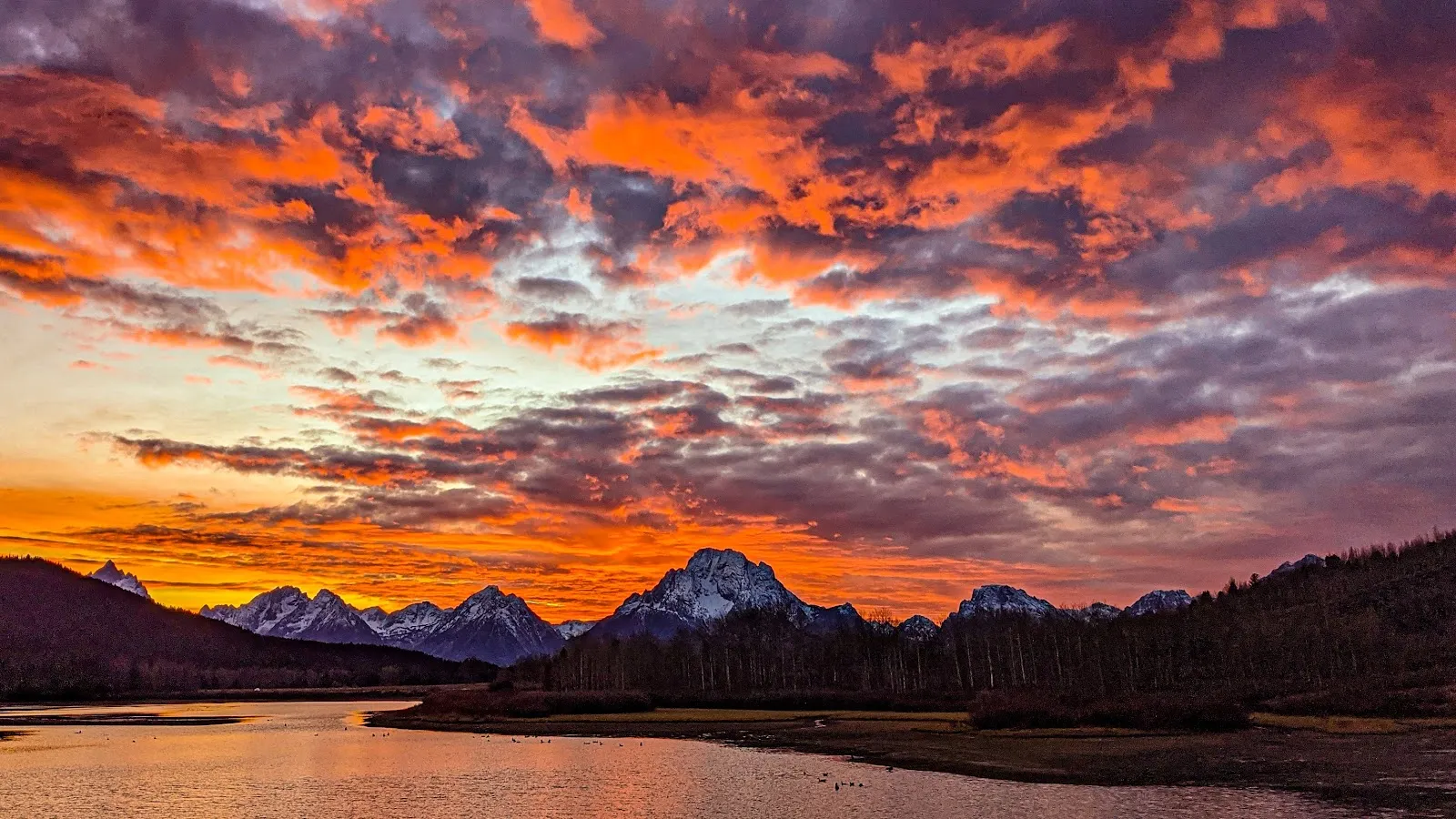
Oxbow Bend is a wide curve in the Snake River in the northern part of Grand Teton National Park. The river’s slower water creates a clear view toward Mount Moran and the surrounding peaks. When the surface is calm, the mountain can appear in the water below it, giving photographers a foreground and a mountain view from the same roadside stop.
The bend is a popular place to photograph the Tetons, particularly at sunrise. Early light can color the peaks, while a breeze can break up the reflection. Conditions change, so the mirror-like view is not guaranteed. You can still see the river and mountain from the overlook when the water is rippled or the sky is cloudy.
Birds and mammals along the water
The quiet river habitat supports fish and draws birds that feed around the water. Pelicans and common mergansers are among the waterbirds seen here; bald eagles and osprey may also be spotted. Look in the cottonwoods and along the banks, not only over the river. Binoculars can help you search the trees and distant shoreline.
Moose browse among the willows at the water’s edge, and elk may graze nearby. River otters and beavers are also associated with the slow-moving water. Wildlife sightings are never assured, so allow time to watch rather than expecting animals to appear on cue. Keep a respectful distance if you spot one.
Finding a place to look
Oxbow Bend is beside Highway 89/191, near Jackson Lake Junction and Moran Junction. The viewpoint is a roadside stop, with a parking area and a short walk from the car toward the water. You can look from the overlook or move along the bank for another composition. At sunrise, photographers gather here, and the small parking area can fill quickly. Arriving early gives you more choice of where to stand and helps avoid blocking other people’s views.
Autumn brings yellow and orange aspens along the river, adding color around the reflection. Early morning is a good choice if you want calmer water; dusk is another time to watch for wildlife. If you have more time for wildlife viewing, Willow Flats and Antelope Flats Road are nearby places to consider.
Preguntas frecuentes
Where is Oxbow Bend?
It is in the northern part of Grand Teton National Park, beside Highway 89/191 near Jackson Lake Junction and Moran Junction.
When is the best time to photograph Oxbow Bend?
Go early in the morning, when the water is more likely to be calm enough to reflect Mount Moran. Sunrise is popular, so arrive early for a place to park and photograph.
What wildlife can you see at Oxbow Bend?
Look for pelicans and other waterbirds, as well as moose, elk, river otters and beavers. Sightings are not guaranteed.