At 21 East Battery, the Edmondston-Alston House is a 1825 mansion overlooking Charleston Harbor. Its narrow-fronted Charleston house form combines with Greek Revival details added after the Alston family acquired it. A guided tour takes about 30 to 40 minutes, with original family furniture, silver, books and paintings inside. The rooms also tell the history of people who lived and worked here, including enslaved people. Look for the upper piazza, where the harbor view connects the house to Charleston’s waterfront past.
A mansion on the High Battery
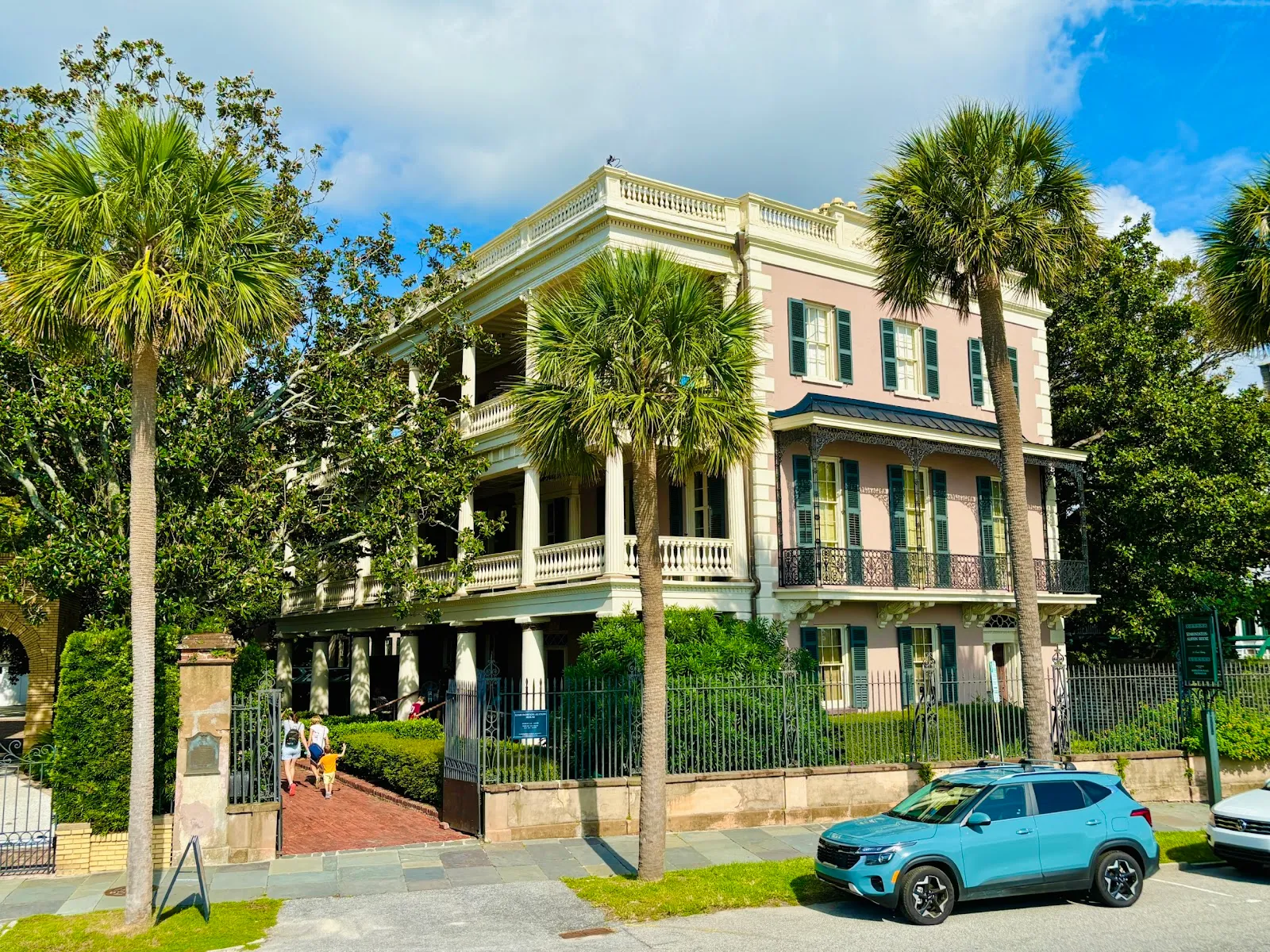
Charles Edmondston, a merchant and wharf owner, built the house in 1825. It was among the early grand residences along the High Battery, a waterfront section of Charleston. The location gave the house an open outlook across Charleston Harbor, and the piazzas still frame that view.
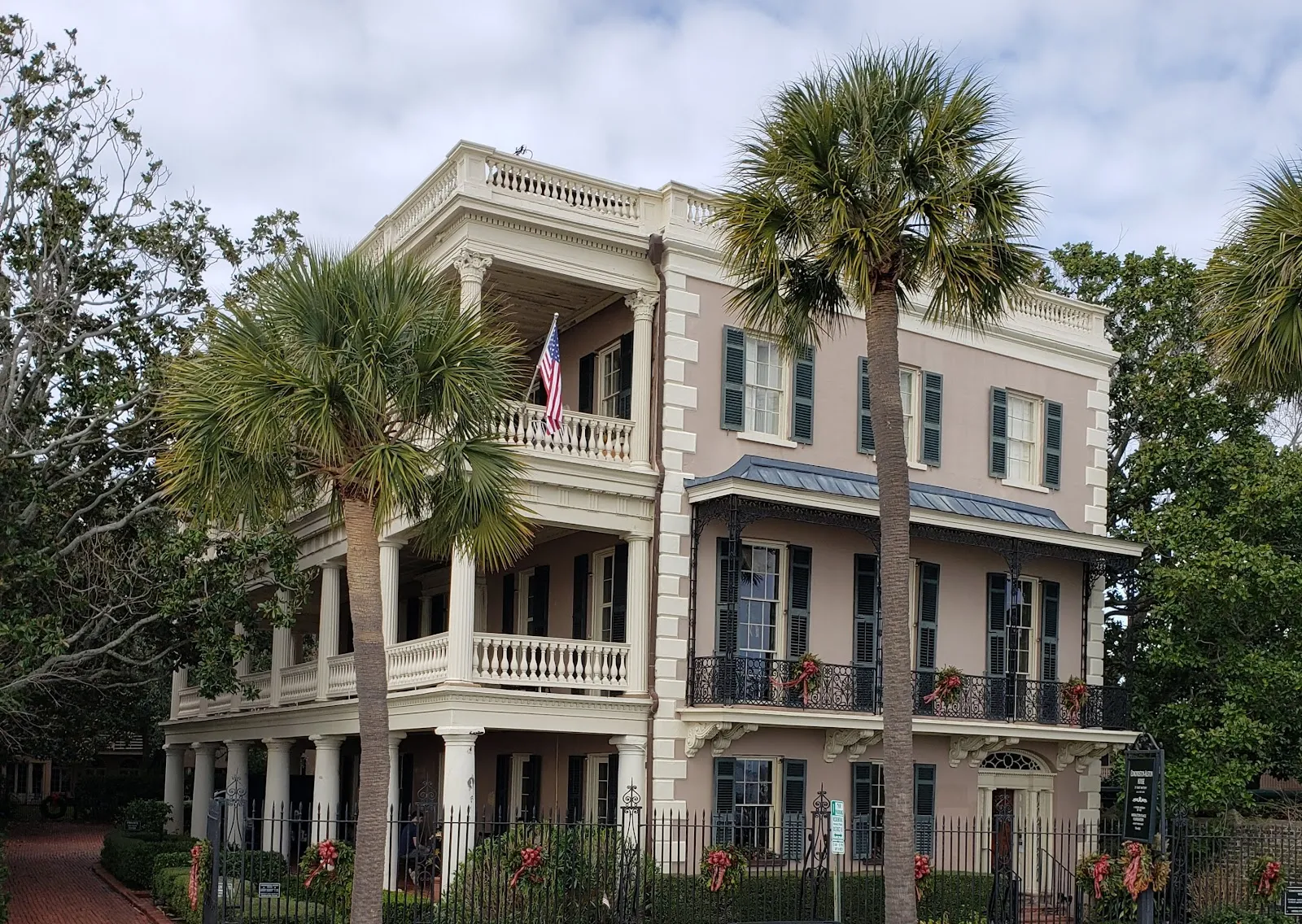
The building follows the Charleston single-house form, with a long, narrow plan and a narrow front facing the street. Edmondston’s home was originally designed in the English Regency style. After rice planter Charles Alston acquired it, Greek Revival details changed the appearance. The result brings together the original design and later alterations rather than presenting a single, untouched style.
The house has a three-story form. Tall ceilings and large windows and door openings were part of its design, allowing air to move through the rooms in Charleston’s warm summers. The upper piazza is a notable place to pause and look toward the harbor.
Rooms, furnishings and daily life
A guided visit takes you through rooms furnished with family pieces, including furniture, silver, books and paintings. Many items are original to the people who owned the house. One distinctive object is a traveling silver box, made to carry a silver service between a plantation and a city home.
The collection helps explain the lives associated with the property, but the house’s history also includes the people who were enslaved there. The tour addresses both the families who lived in the mansion and those whose labor was part of its history. Near the exit, memorials to enslaved people provide a further point for reflection.
An original copy of the Ordinance of Secession is also held in the house. It adds another layer to the site’s connection with Charleston’s political past.
The house and Charleston’s history
The mansion stood through major events in Charleston’s history, including the Civil War, the 1886 earthquake and hurricanes. In April 1861, General P. G. T. Beauregard watched the bombardment of Fort Sumter from the house. The upper rooms and piazza therefore connect the home’s domestic history with events beyond its walls.
Tours are led by docents and take around 30 to 40 minutes. Buying a ticket ahead helps you plan around the scheduled start times. Special events, including Wine On The Piazza, may give you a different way to spend time at the house; these events can include wine and charcuterie on the upper side porch.
Preguntas frecuentes
How long does a tour of the Edmondston-Alston House take?
Allow about 30 to 40 minutes for the guided tour.
What can you see inside the Edmondston-Alston House?
The rooms contain family furniture, silver, books and paintings, along with other historical objects. The house also has an original copy of the Ordinance of Secession.
Is the Edmondston-Alston House connected to the Civil War?
Yes. General P. G. T. Beauregard watched the bombardment of Fort Sumter from the house in April 1861.