Trinity Church stands in Copley Square, Back Bay, at 206 Clarendon Street, where its stone walls and tower contrast with the modern buildings around it. Designed by Henry Hobson Richardson and completed in 1877, it helped establish the Richardsonian Romanesque style. Inside, look for colorful stained glass, murals by John La Farge and other artists, carved woodwork, and painted organ pipes. A free audio guide can add context to a visit; leave time to sit quietly in the church, which remains an active Episcopal parish.
A church that shaped an architectural style
Trinity Church’s congregation dates to 1733, but the building in Copley Square belongs to a later chapter of its history. The earlier church on Summer Street was destroyed in the Great Boston Fire of 1872. The congregation moved to Back Bay, where construction of the present church ran from 1872 to 1877.
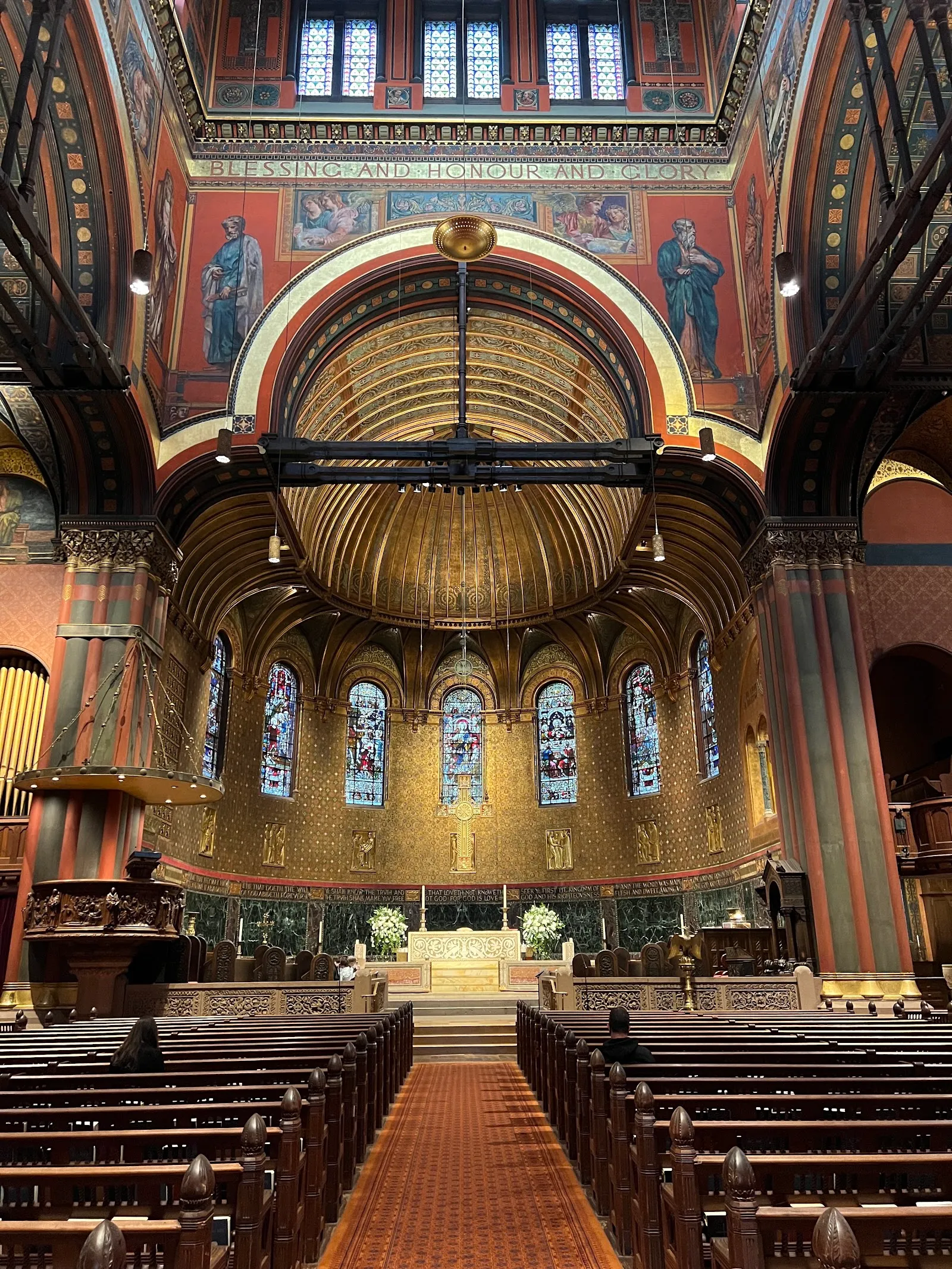
Architect Henry Hobson Richardson designed the building in a Romanesque style that became known as Richardsonian Romanesque. Its heavy stone walls, rounded arches, deep-set entrances, and prominent central tower give the exterior a strong, grounded profile. Granite and sandstone form the main structure, with contrasting colors arranged in patterns across the masonry. Irregular rooflines and towers capped with conical roofs add variety to the silhouette.
The church sits in Copley Square among much newer buildings. From outside, look at how the rough-textured stone and broad arches stand apart from the surrounding glass towers. The view also makes the church’s scale easier to appreciate: its central tower rises 211 feet.
Murals, stained glass, and carved wood
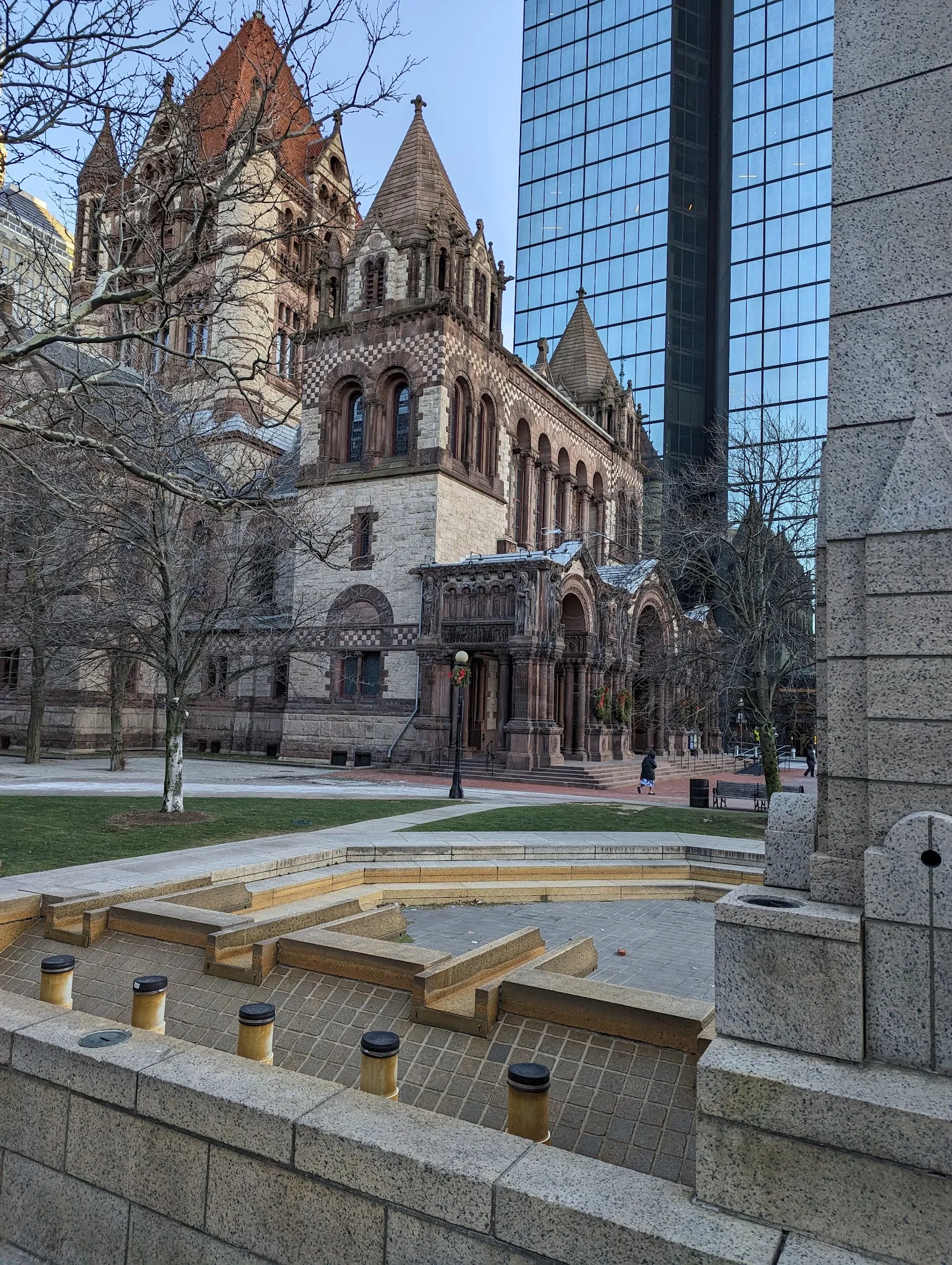
The interior was conceived as a unified visual space rather than a plain hall. Murals cover much of the walls, and the stained-glass windows bring color into the church. Artist John La Farge worked closely with Richardson on the interior design; La Farge and other artists contributed to the murals and windows. Their colors, shapes, and textures connect the artwork with the architecture around it.
Look up at the soaring interior and its structured ceiling, then take time with the details at eye level. Intricate wood carvings, embroidered kneelers, pebble mosaics, and painted organ pipes are among the features that reward a slower look. The large organ is another focal point. During services, its music is part of the church’s ongoing worship, not simply a display for visitors.
The open auditorium layout was a departure from common church design in the United States when Trinity opened in the 1870s. Its plan is shaped like a cross, with the central space bringing the congregation together beneath the tower.
Planning a visit
Trinity Church is both a historic landmark and an active Episcopal parish. Visitors can explore through guided or self-guided tours, and a free audio guide provides information about the church and its architecture. Some tour options may involve a charge, so check the church’s current visitor information before you go. The church is closed on Mondays.
A short visit can take about 30 minutes, though the artwork and architectural details make it easy to spend longer. If you have time, sit quietly inside after your tour. The church’s calm interior offers a pause from the surrounding activity of Back Bay.
For a visit focused on architecture, take in the exterior from Copley Square before going inside. Then compare the stonework and arches with the murals, stained glass, and carved details within. Trinity Church is at 206 Clarendon Street, and parking in the area can be difficult, so plan your arrival accordingly.
Preguntas frecuentes
Where is Trinity Church in Boston?
It is at 206 Clarendon Street in Copley Square, in Boston’s Back Bay neighborhood.
What architectural style is Trinity Church?
It is a leading example of Richardsonian Romanesque, designed by Henry Hobson Richardson and completed in 1877.
What should I see inside Trinity Church?
Look for the murals, stained-glass windows, carved woodwork, pebble mosaics, and painted organ pipes.
How long does a visit to Trinity Church take?
A visit can take about 30 minutes. Allow extra time if you want to use the audio guide or sit quietly inside.