Founded in 1660, Copp’s Hill Burying Ground is Boston’s second-oldest burial ground, at 45 Hull Street in the North End and on the Freedom Trail. Slate markers here include the shared grave of young brothers Thomas and David Copp, along with those of minister Cotton Mather, shipbuilder Edmund Hartt and Robert Newman, who lit the lanterns at Old North Church. The hill served as a British gun position during the Revolution, and its crest looks toward the harbor and Bunker Hill Monument. Plaques help explain the site’s history and its connection to Boston’s early African American community.
A burial ground on the Freedom Trail
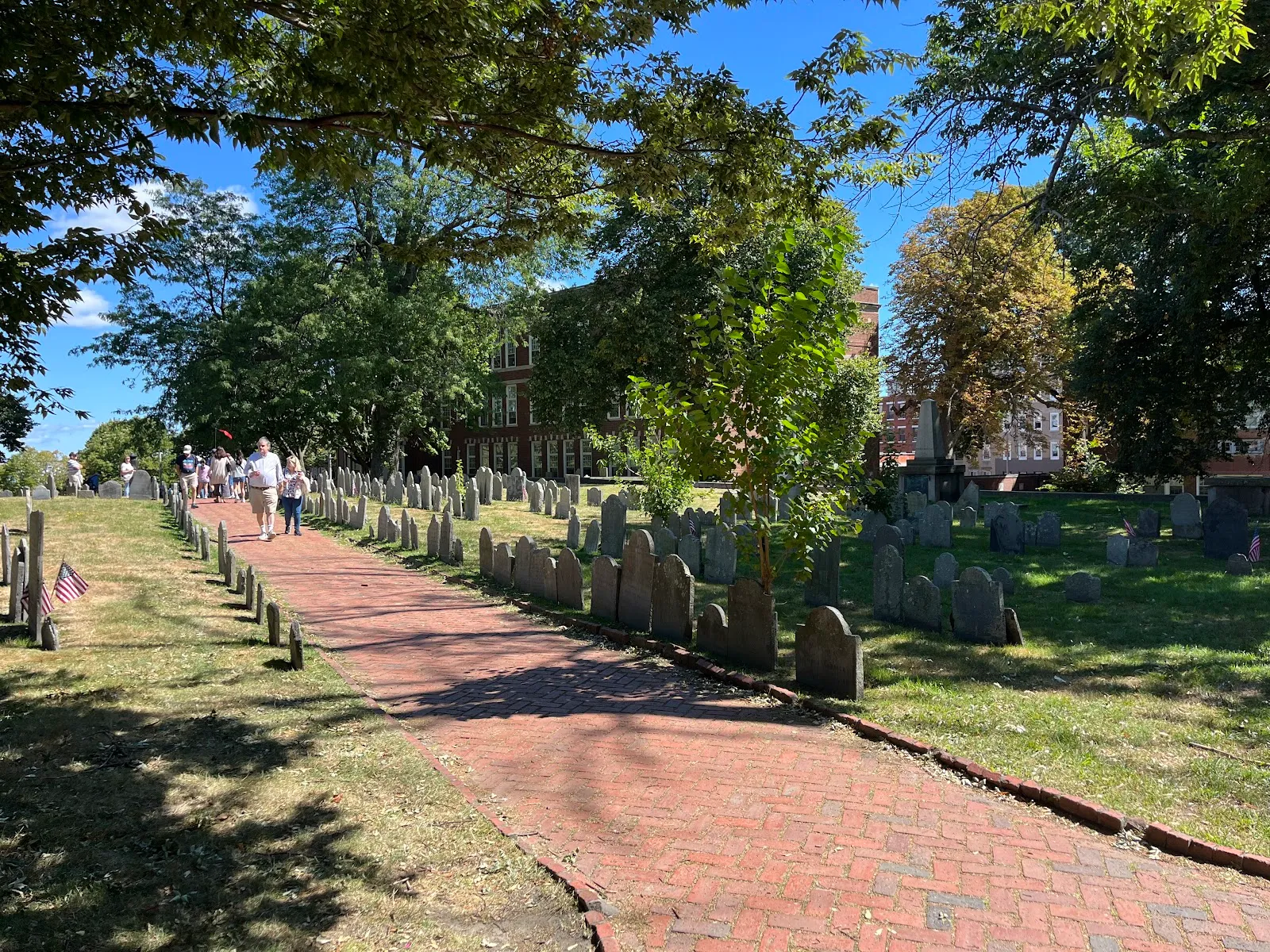
Copp’s Hill Burying Ground was established in 1660 and was originally known as the North Burial Ground. It is Boston’s second-oldest burial ground and covers about two acres in the North End. The site is one of the Freedom Trail’s stops, reached on foot from Old North Church along Hull Street.
Its name comes from William Copp, a shoemaker who once owned part of the land. His children were among those buried on the hill in the 1660s. The graveyard later became the resting place of North End merchants, artisans, craftspeople and ministers. Its slate markers span centuries, though age has worn away some inscriptions.
Graves and community history
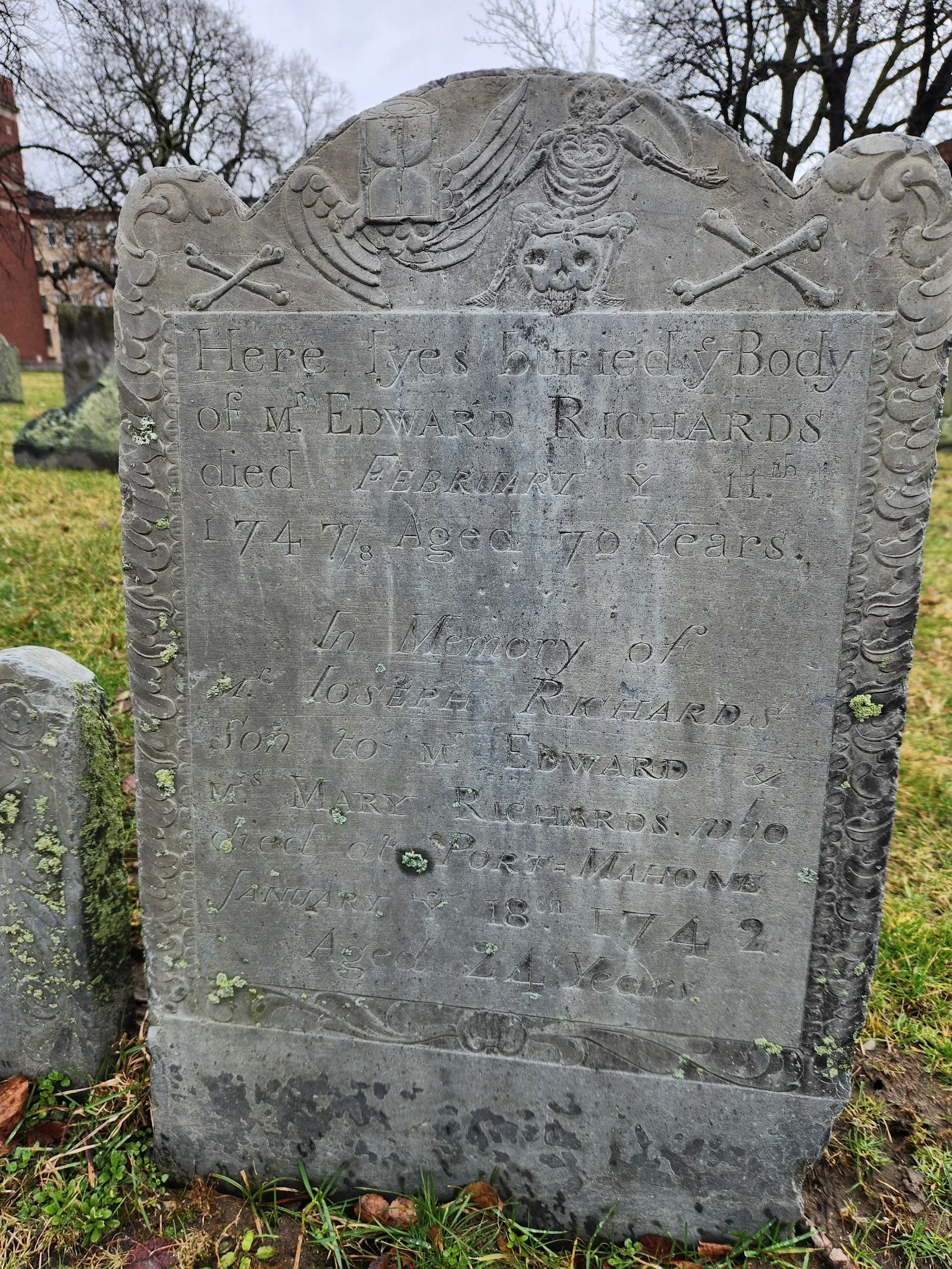
Among the people buried here are Cotton Mather, a minister associated with the Salem witch trials, and Edmund Hartt, the shipbuilder who built the USS Constitution. Robert Newman, who placed lanterns in Old North Church’s steeple, is also buried on the grounds.
A small shared marker commemorates Thomas Copp, who died as a toddler, and his infant brother David. The stone is identified as the oldest in the burial ground. A grave finder can help locate a particular person, but worn lettering can make some markers difficult to read.
The Snowhill Street side is associated with Boston’s early African American community. Many people from the New Guinea community are buried there. Plaques around the grounds offer context for the site and its occupants; a tour can provide further detail.
The hill during the Revolution
The elevated ground gave British troops a position from which to fire on American forces near Breed’s Hill during the Revolutionary War. The hill’s military use is part of the burial ground’s history, and musket-ball marks have been noted on some weathered stones.
From the crest, look toward the harbor, the USS Constitution and Bunker Hill Monument. Across the street stands the Skinny House, a well-known neighborhood landmark. The combination of graves, military history and nearby sights makes the stop easy to pair with Old North Church on a walk along the Freedom Trail.
Preguntas frecuentes
How long do you need at Copp’s Hill Burying Ground?
Allow about 45 minutes to an hour to walk among the markers and read the plaques.
What are the listed opening hours?
The burial ground is listed as open daily from 9 a.m. to 4 p.m. Check details before your visit.
Is Copp’s Hill Burying Ground accessible?
There are steps at the entrance, and the grounds have closely spaced, fragile stones. Plan for these conditions if you have accessibility needs.
Are there restrooms at Copp’s Hill Burying Ground?
No. There are no restrooms inside the burial ground.