Tintern Abbey is a Cistercian monastery ruin on the Welsh bank of the River Wye, on the border between Monmouthshire and Gloucestershire. Walter de Clare, Lord of Chepstow, founded it in 1131, and it was the first Cistercian house in Wales. Much of the stonework still stands, including the church, where the west window has seven lights. Allow time for the information boards inside the church, then walk the riverside paths around the site.
From 1131 to the dissolution
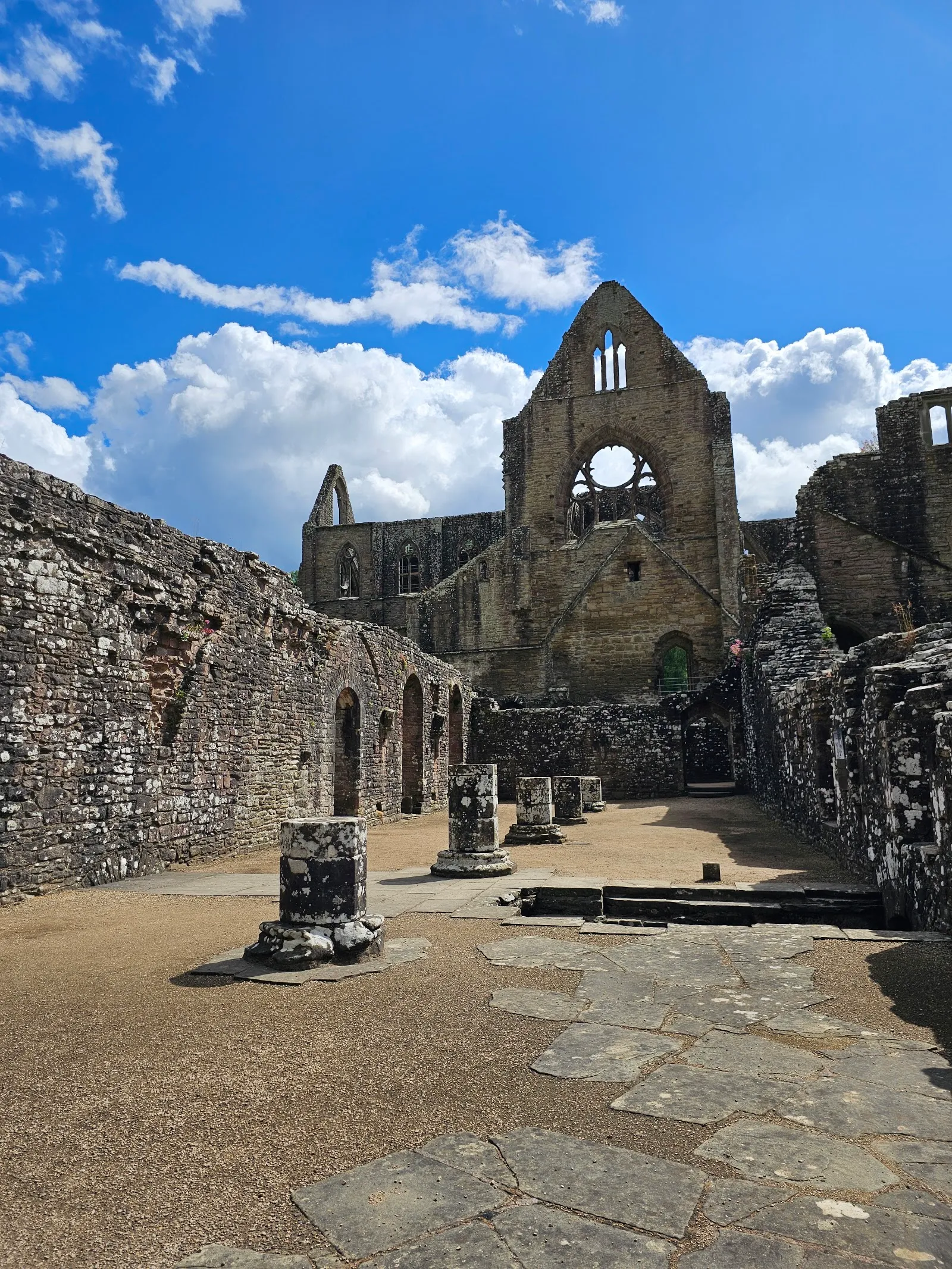
Walter de Clare, Lord of Chepstow, founded the abbey in 1131. It was the second Cistercian foundation in Britain and the first in Wales.
The Cistercian monks lived by principles of obedience, poverty, chastity, silence, prayer and work. They kept quiet, isolated lives here and dedicated themselves to their faith. For about 400 years, monks lived within the walls.
On 3 September 1536, Abbot Wyche surrendered the abbey to the officials of King Henry VIII. That ended its use as an abbey, and the buildings were left to fall into ruin.
Why poets and painters came
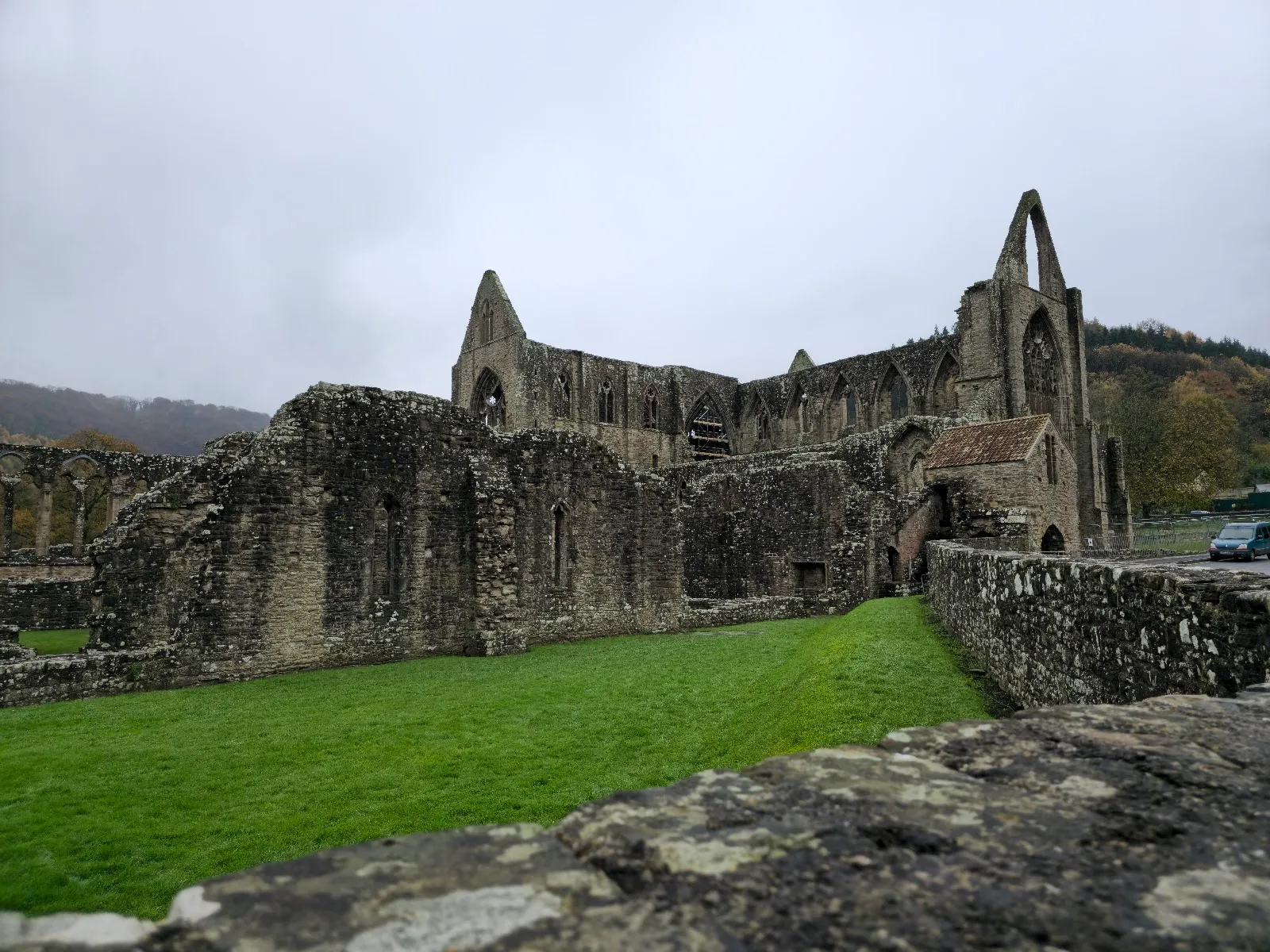
By the 18th century, the abbey was already a stop on the Wye Tour, the boat and walking route along the river. Its ivy-covered ruins in a wooded valley suited the picturesque taste of the Romantic period.
William Wordsworth wrote a poem about the abbey after a visit in 1798. Alfred Lord Tennyson also wrote about it, and J. M. W. Turner made many paintings and drawings of the site.
The ruins still reward a slow look. Stand at the river side and at the church end to compare how the building sits against the hills.
Inside the church
The church is the part most visitors head for first. Its arches and windows frame the sky and the wooded slopes above the river, and the roof is open to the weather.
The west window of the nave was under restoration at the time of the most recent information. Scaffolding covers some walls, and part of the abbey was closed off during the work.
The information boards inside the church explain the layout of the monastic buildings. Read them before you walk the rest of the grounds, so the rooms and the church make more sense.
Around the abbey
The Wye Valley Greenway is a traffic-free trail of about 7 km that ends at the abbey. It passes through the Tidenham tunnel, a 1 km tunnel that is open in daytime from 1 April to 30 September. In winter, signed alternative routes go over the top of the tunnel for walkers and cyclists.
A short walk from the abbey takes you to the Devil's Pulpit viewpoint, which gives a long view of the ruins. The Abbey Mill area, close to the abbey, has independent shops, craft makers and cafes. A waterwheel stands on the River Angiddy, reached by the river path.
The Angiddy Valley has traces of its industrial past, which history walkers can follow on foot.
Preguntas frecuentes
Is there an entry fee at Tintern Abbey?
Entry is by ticket, and booking in advance is recommended. Cadw members enter free.
How long do you need at Tintern Abbey?
Allow at least one hour to walk the site. A riverside walk afterwards makes it a full day out.
How do you get to Tintern Abbey from Chepstow by bus?
The Newport bus 69 leaves from Chepstow bus station and takes about 20 minutes. On Sundays the buses can be two hours apart, so check the timetable first.
Is Tintern Abbey wheelchair accessible?
The entrance, the restrooms and the car park are wheelchair accessible.
Are parts of Tintern Abbey closed?
Some areas are under scaffolding for restoration, so parts of the abbey can be closed while the work continues.