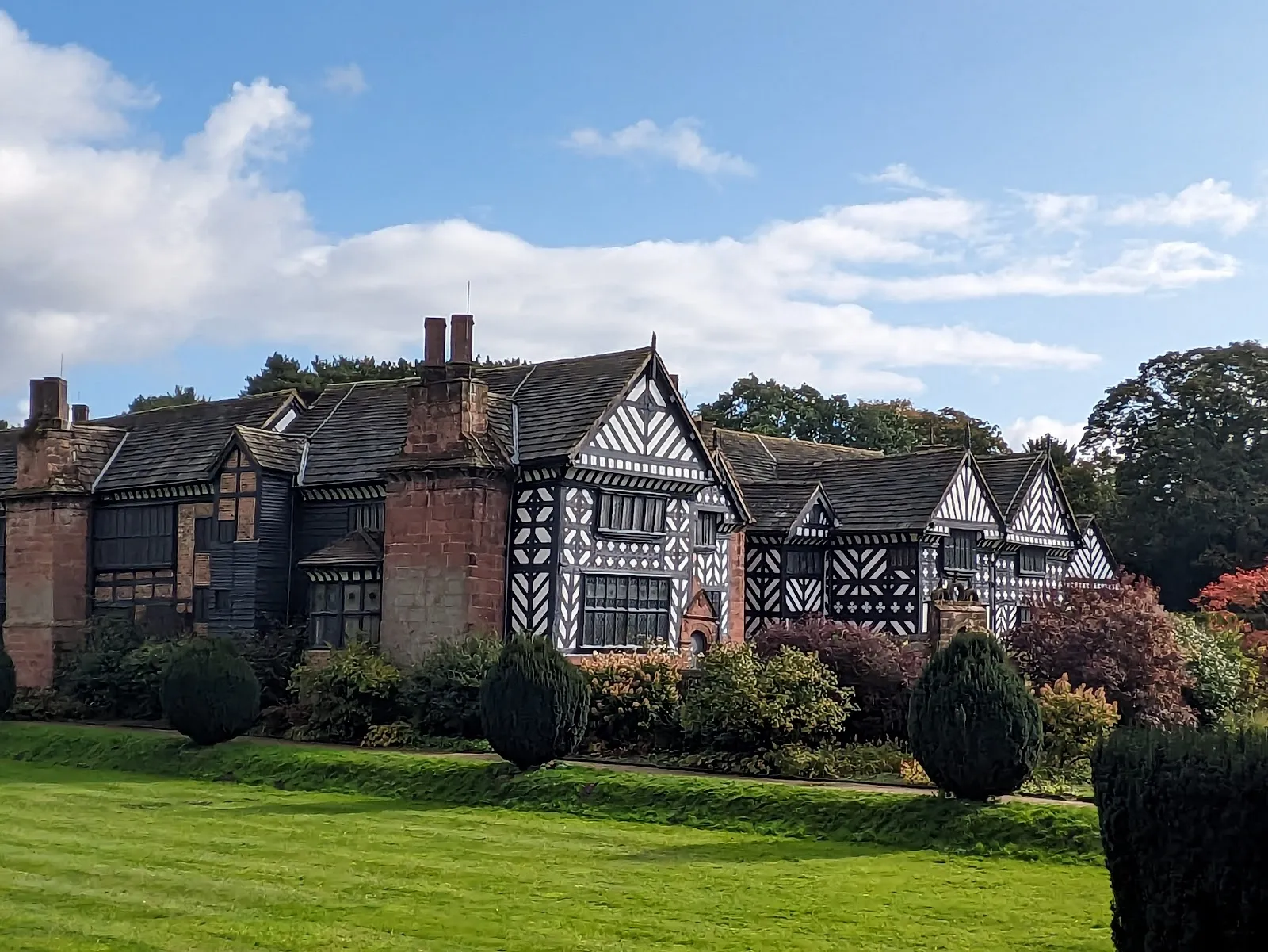
Speke Hall is a National Trust Tudor manor house in Speke, south Liverpool, with restored gardens and woodland paths around it. Its black-and-white timber frame makes the house distinctive, while the rooms bring together Tudor structure and Victorian interiors. Inside, look for carved furniture, William Morris wallpaper, the Great Hall and the kitchen. Outside, paths lead through the rose and stream gardens, and families can explore the hedge maze, play areas and woodland trail. There is also a café for a break during your visit.
A timber-framed Tudor house
Construction of the present house began in 1530 for the Norris family. The black-and-white exterior is formed from a timber frame with wattle-and-daub infill, a striking example of Tudor building. Earlier structures stood on the site, and parts of them were incorporated into the house.
Speke Hall took its distinctive shape during the 16th century under Sir William Norris and his grandson, also named William. The Norris family held the property for generations. Mary Norris later married Lord Sidney Beauclerk, and the hall changed hands over time before Liverpool merchant Richard Watt moved in during 1795.
Tudor structure and Victorian interiors
The house brings together its Tudor framework and later Victorian rooms. A restoration in the 19th century added or renewed features including the parlour, kitchens and gardens. The smaller rooms and the Oak Parlour give a sense of Victorian ideas of privacy and comfort, while carved furniture and patterned William Morris wallpaper add detail to the interiors.
The Great Hall is among the rooms to explore. The kitchen and servants’ quarters offer a look at the work behind a large household. Guides in period costume and volunteers share information about the house; guided tours can add context to what you see as you move through the rooms.
The gardens and grounds
The grounds include formal flower beds, a rose garden, a summer border and a stream garden, with spring bulbs adding seasonal colour. A kitchen garden has herbs and vegetables. Lawns and mature trees sit alongside woodland paths, so the visit can include time outdoors as well as inside the house.
From a high bank known as The Bund, there are views across the Mersey Basin and towards the hills of North Wales. Woodland walks provide another way to explore the estate. A circular walking route through the grounds takes around an hour, according to the route details available for the estate.
A family visit
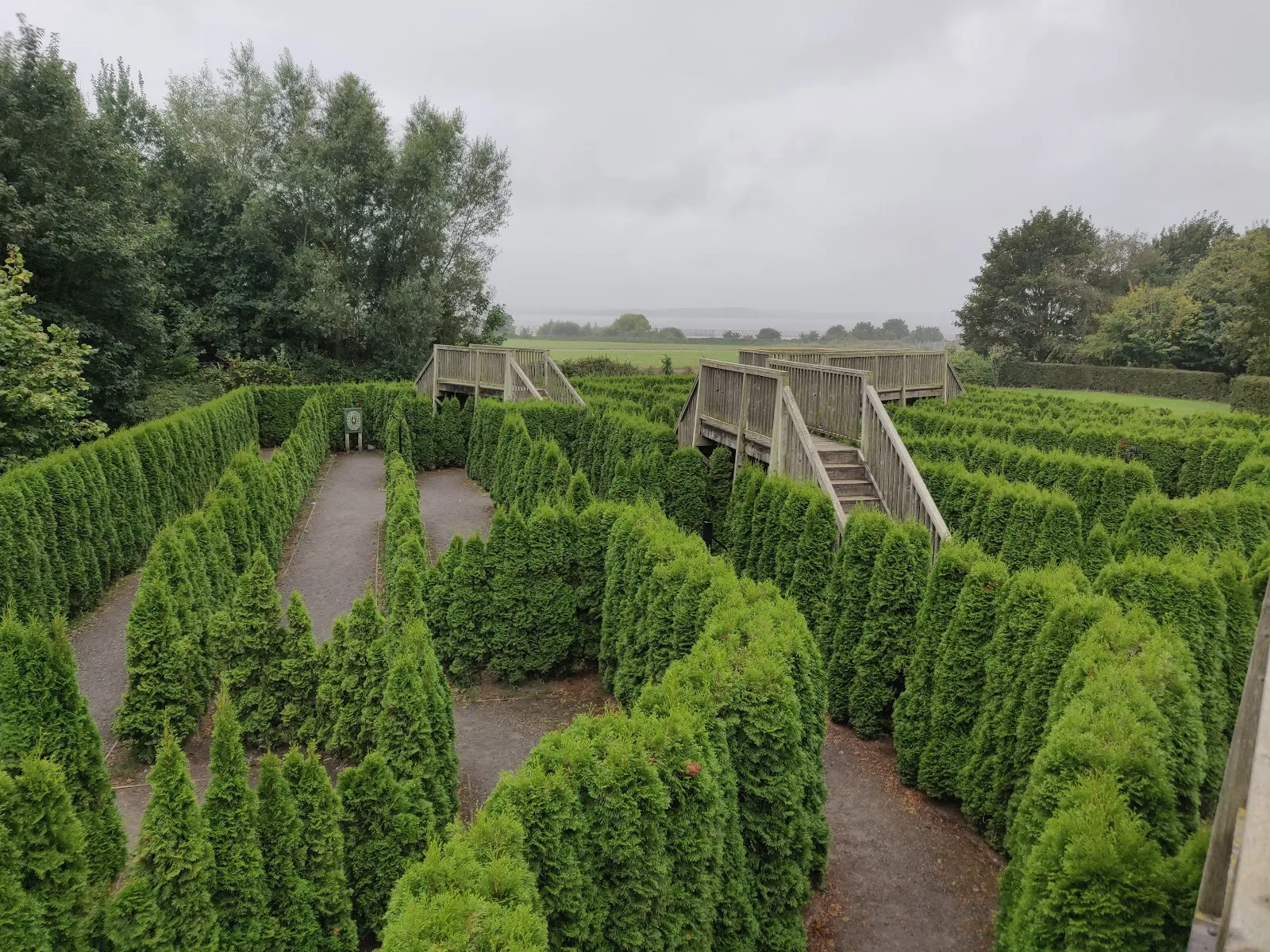
Children can explore the hedge maze, play areas and woodland trail. The grounds also have a zip line and nature play area, giving younger visitors space for active breaks between the house and gardens. The estate has a café for snacks and hot drinks, plus a restaurant listed among its facilities.
The National Trust took over the house after its final occupant, Adelaide Watt, died in 1921. She had donated money towards Liverpool Cathedral and developed a farm on the estate. Today, Speke Hall is managed by the National Trust and the house, gardens and grounds can be explored as one visit.
Preguntas frecuentes
Where is Speke Hall?
Speke Hall is at The Walk, Speke, Liverpool L24 1XD.
How long does the woodland trail take?
The circular walking route through the grounds takes around an hour.
Is there parking at Speke Hall?
Yes. Free parking is available on site.
What can children do at Speke Hall?
Children can explore the hedge maze, play areas and woodland trail. The grounds also include a zip line and nature play area.