Ely Cathedral stands on raised ground above the flat Fens of Cambridgeshire, and its tower can be seen for miles, which is why it is known as the Ship of the Fens. The present building dates from 1083. The highlights are the early 12th-century nave, the 14th-century Octagon and the Lady Chapel. Guided tours take you up the towers and onto the roof, where the view runs out over the countryside. Plan an afternoon, and book tickets ahead if you can.
From the seventh-century monastery to the Norman cathedral
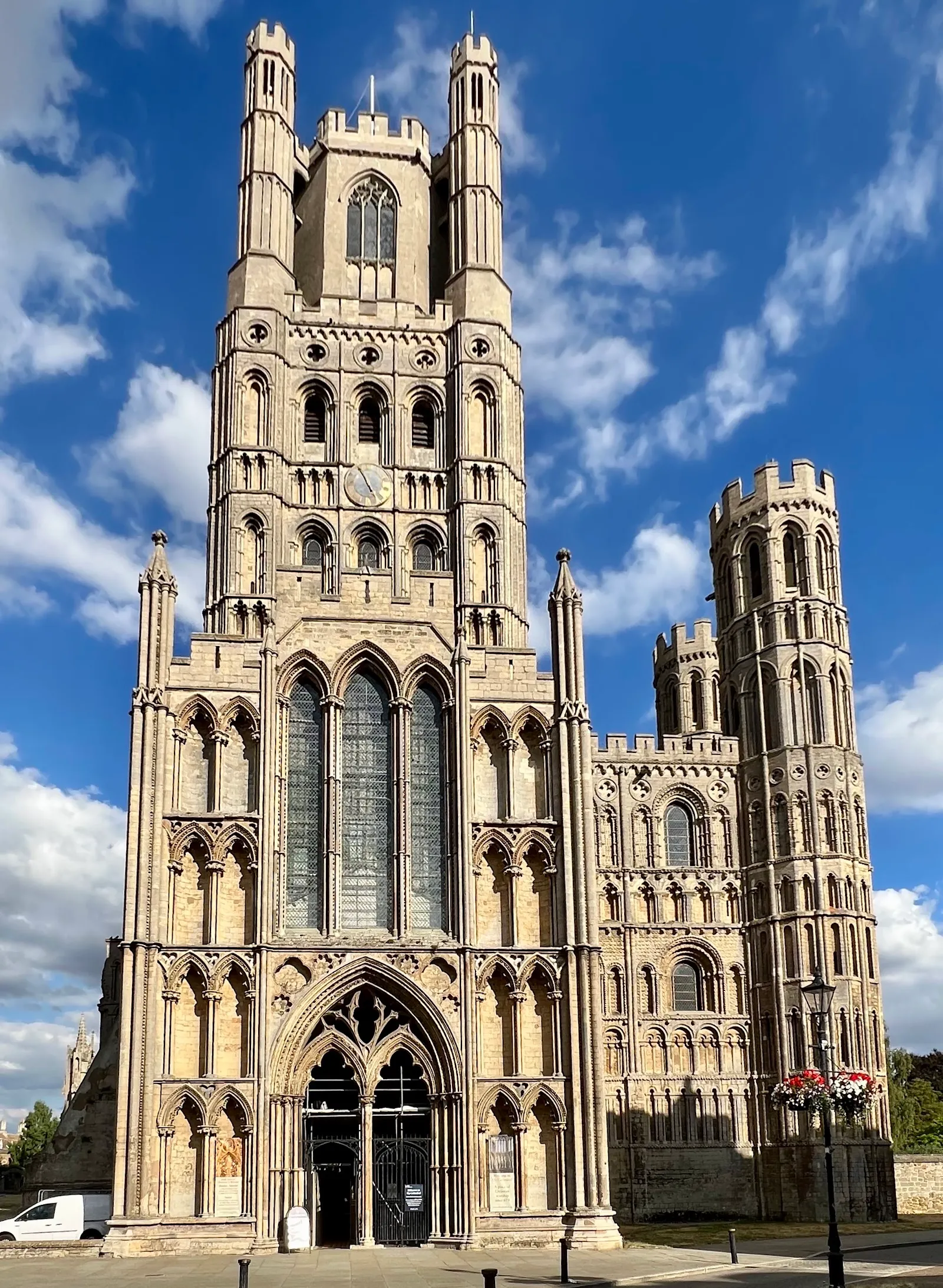
A religious house was first founded on this site in the seventh century, when Saint Etheldreda, a Saxon queen, established a monastery here. The name Ely is linked to an old English word meaning island of the eels, and the settlement grew up on an island among the marshes.
The Normans built the present cathedral, beginning in 1083, after a long struggle with the local Anglo-Saxon population. Until the Protestant Reformation, it was known as the Cathedral of St Etheldreda and St Peter.
The collapse that shaped the Octagon
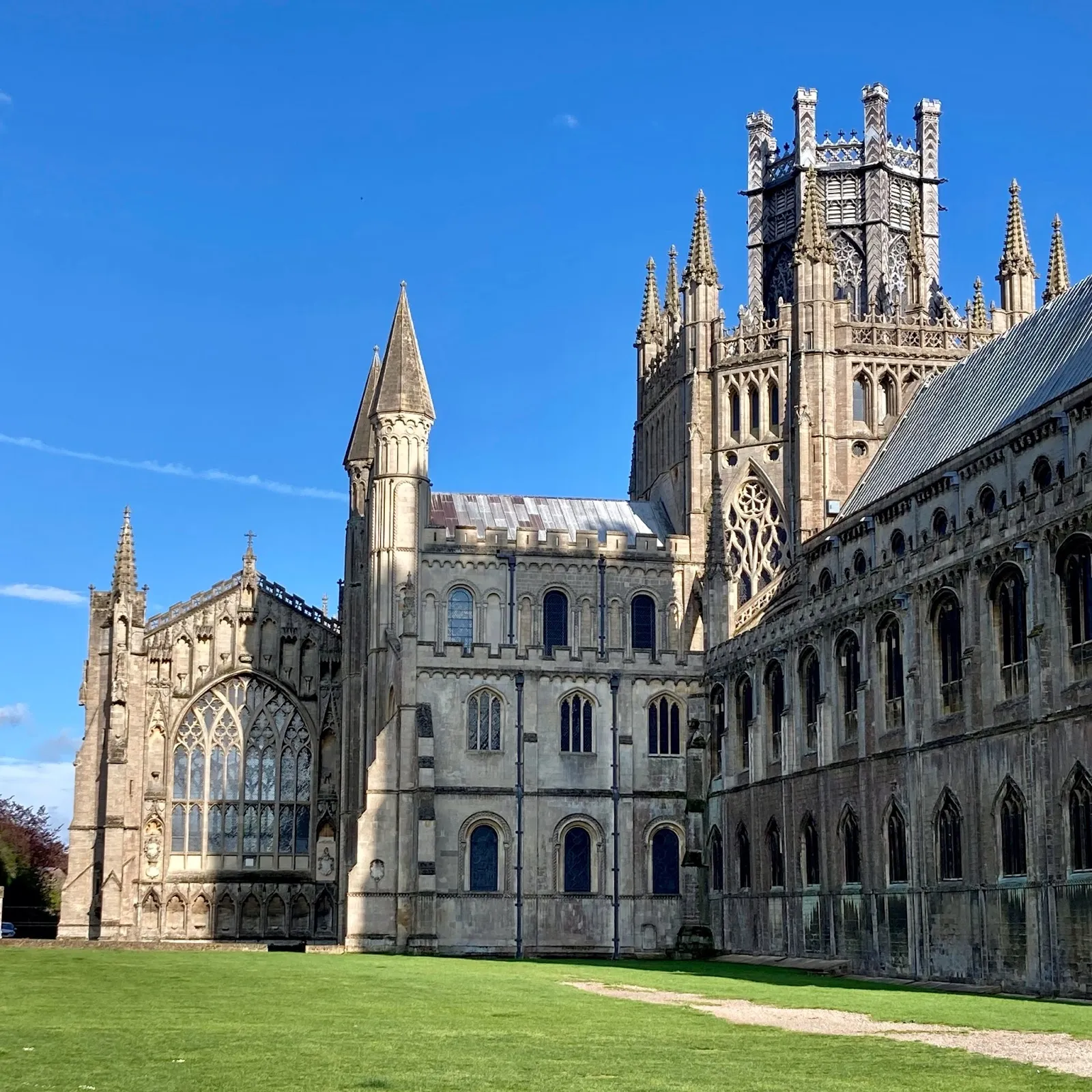
In 1322, while the Lady Chapel was being built, the Norman central crossing tower collapsed. The Octagon that rises in its place is the cathedral's most distinctive feature, and it is the reason the building looks different from other English cathedrals.
The Lady Chapel, built in the 14th century, has delicate carved stonework. Building took centuries, and the cathedral was still unfinished when King Henry VIII came along.
Inside the cathedral
The nave is the oldest part you will walk through, dating from the early 12th century. Its ceiling is painted with scenes showing the life of Jesus, although much of the visible decoration is Victorian work.
The choir is carved, and the upper levels have hidden panels that are worth looking for. The Stained Glass Museum holds more than 100 original panels, taken from both religious and secular buildings. It is on an upper level, reached by a staircase of 40 steps.
At the heart of the cathedral, the Octagon rises high above the crossing, and looking up from below shows the full scale of the timber and lead lantern.
Tower tours and the roof
Guided tours of the Octagon Tower and the West Tower run several times a day. Both involve steep climbing, and the number of steps is given differently across sources, so check the figure on the day. The Octagon tour includes several stops on the way up.
Part of the route passes the windows of the lantern, where you can look down onto the cathedral floor. The tour then reaches the roof, where the view stretches across the countryside. Ground floor tours cover the different building stages and the details that survive from each one.
Outside and around the grounds
The cathedral stands on raised ground about 68 feet above the surrounding fenland. Unlike Canterbury, York, Lincoln or Durham, it has a single tower at the west end, and the Octagon takes the place of a normal crossing tower.
The grounds include parkland and meadows. Afternoon tea is served in the undercroft. The building has also been used as a filming location, standing in for Westminster Abbey in The King's Speech and The Crown.
Preguntas frecuentes
Is there an entry fee?
Yes, entry to the cathedral is paid, and one visitor reports that tickets are valid for a year. The Ely Passport costs £29.50 and gives discounted entry to four city attractions, including the cathedral, over 48 hours.
How long do you need?
An afternoon is enough for the cathedral and its grounds. A tower tour adds time to the visit.
Should I book tickets in advance?
Yes. Booking ahead is recommended to avoid queues, especially at peak times such as the Christmas market season.
Is the cathedral wheelchair accessible?
The entrance, the restroom and the parking are wheelchair accessible.