Caernarfon Castle is a medieval fortress on the banks of the River Seiont, where the river meets the Menai Strait, in the centre of Caernarfon. King Edward I began it in 1283 as a royal palace, military base and seat of government for north Wales, and it is now a UNESCO World Heritage Site. Walk the walls, climb the Eagle Tower and the turrets for views over the water and the town, and visit the Royal Welch Fusiliers Museum, which fills two of the towers. Allow two to three hours.
How the castle was built
Work began in 1283, after Edward I's invasion of Wales, on the site of an earlier castle. The first castle here was a motte-and-bailey fortress set up by the Normans after 1066, and the Welsh princes held it for more than a century.
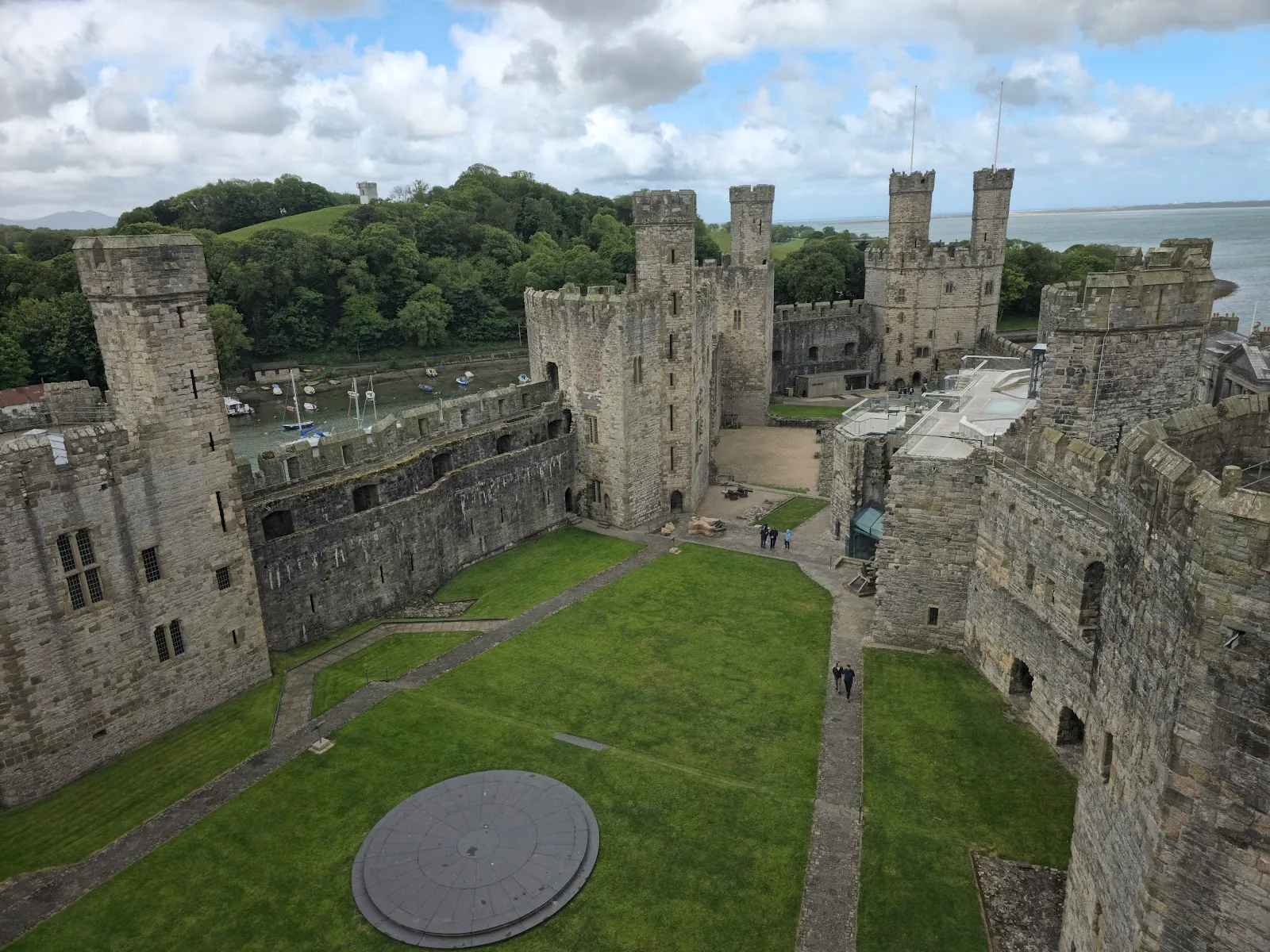
Edward's castle was built in stone, together with the town walls and a quay, all at the same time. The project took around 47 years and was finished in 1330. Edward's engineers dug a ditch around the castle and town. The main gate, King's Gate, has an internal chapel, five doorways and six portcullises, and a prison is attached to it.
Edward meant the castle to be a royal home, a military base and a seat of government for north Wales. In 1284 Caernarfon was made a borough, a county and market town, and the seat of English government in north Wales. Edward's son, who later became the first English Prince of Wales, was born in the castle that year.
Inside the towers and on the walls
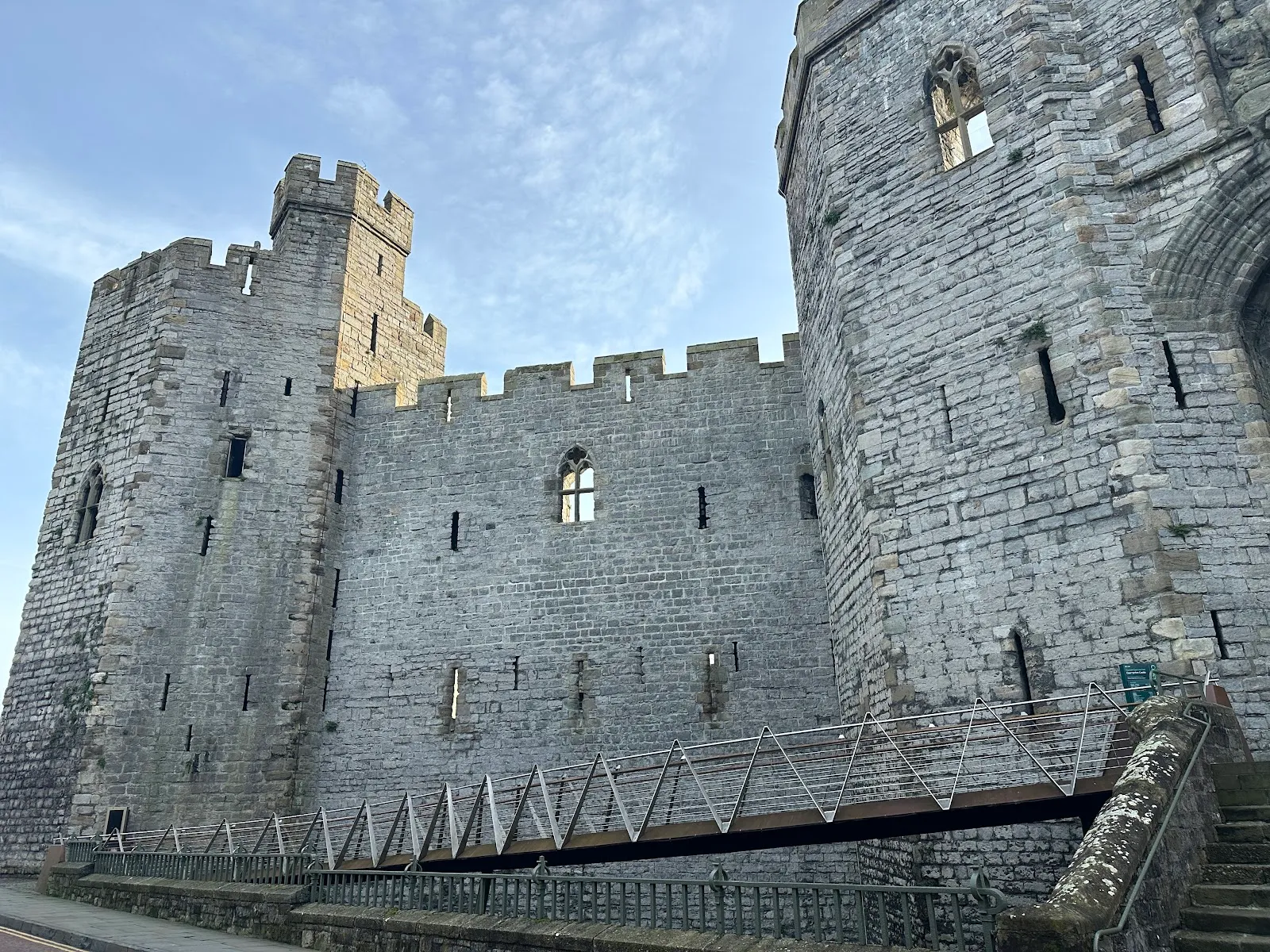
The castle has many towers, and the walls carry walkways. Visitors can circle the grassy inner courtyard, then climb to the turreted Eagle Tower, which overlooks the mouth of the River Seiont.
The polygonal towers are unusual for Wales. The round towers at Conwy are a different design, and the angled towers here make the fortress look larger. From the walls, the views reach the harbour, the Menai Strait and the town.
Most of the interior rooms are empty now, but the stairs, passages and exhibitions help show how the spaces were used. Plan for steps at every level if you want to see everything.
The Royal Welch Fusiliers Museum
The museum is housed in two of the towers, the Queen's Tower and the Chamberlain Tower. It covers the history of Wales' oldest infantry regiment, which spans more than 300 years, from the campaigns of William III to the present day.
The displays include the American War of Independence, the Crimean War, the Boer War and both World Wars. They also cover peacekeeping and humanitarian work with the UN and NATO in Bosnia, Iraq and Afghanistan. Film, sound and models bring the exhibits to life.
Visitors can learn how 14 Victoria Crosses were won, and read about writers who served in the First World War, including Siegfried Sassoon and Robert Graves.
The castle today and the town around it
The castle is cared for by Cadw, the Welsh Government's historic environment service. In 1969 it was the setting for the investiture of Prince Charles as Prince of Wales.
The town walls can also be walked. Enter through the East Gate into Palace Street, which leads toward the castle. The walled town and the waterfront are part of the same visit, so allow time to walk around the outside of the castle as well.
Preguntas frecuentes
Is there an entry fee for Caernarfon Castle?
Yes, there is a fee to enter the castle interior. The outside of the castle can be walked around for free.
How long do you need at Caernarfon Castle?
Allow two to three hours to see the towers, walls and the Royal Welch Fusiliers Museum. Allow more if you want to climb every level.
Is Caernarfon Castle wheelchair accessible?
The entrance, restroom and parking lot are wheelchair accessible. The staircases are steep and narrow, and may not be suitable for young children or people with mobility issues.
Is there a museum inside the castle?
Yes. The Royal Welch Fusiliers Museum is housed in two of the towers and covers the history of Wales' oldest infantry regiment over more than 300 years.