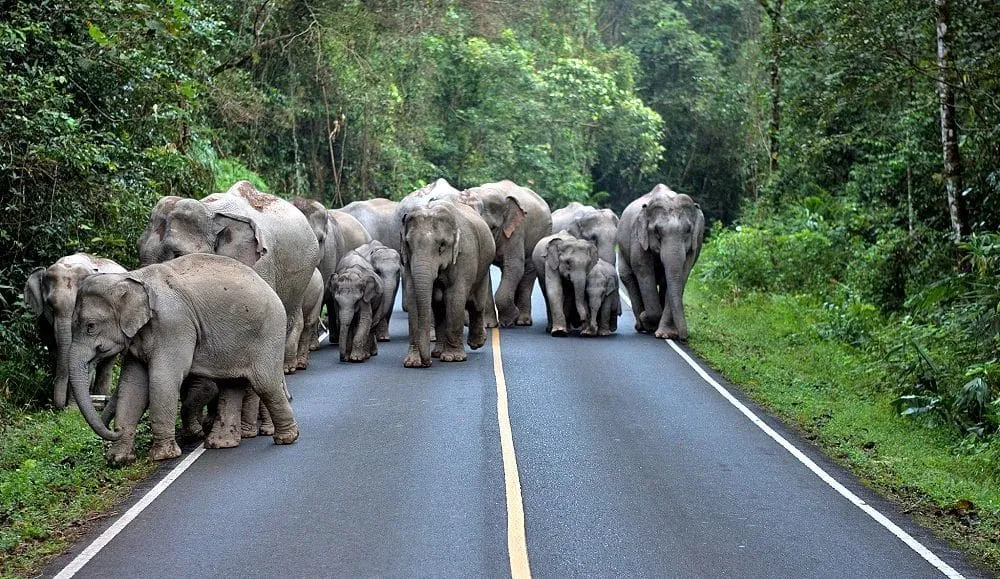
Khao Yai National Park is Thailand's first national park, established in 1962 about two to three hours' drive northeast of Bangkok. Evergreen forest covers hills and valleys with waterfalls, and open grassland fills some areas. Wildlife is the main reason to come: elephants, gibbons, deer, macaques and hornbills live here, and the park is known for birdwatching. Walk one of the trails, visit the Nong Phak Chi viewpoint, or camp inside the park.
History and recognition
The park was established in 1962 as the first national park in Thailand. It was listed by UNESCO in 2005 as part of the Dong Phayayen-Khao Yai Forest Complex, which also includes Ta Phraya National Park, Dong Yai Wildlife Sanctuary, Thap Lan National Park and Pang Sida National Park.
The park covers about 2,168 square kilometers across Nakhon Ratchasima, Prachinburi, Saraburi and Nakhon Nayok provinces. It is the third largest national park in Thailand and a key watershed for many rivers.
Around 1922, residents of Ban Tha Dan and Ban Tha Chai villages in Nakhon Nayok Province formed a settlement in the Sankamphaeng forest, where up to 30 households farmed the land. The government later formally recognized the territory, which is now known as Tambon Khao Yai in Pak Phli District.
Landscape and forest
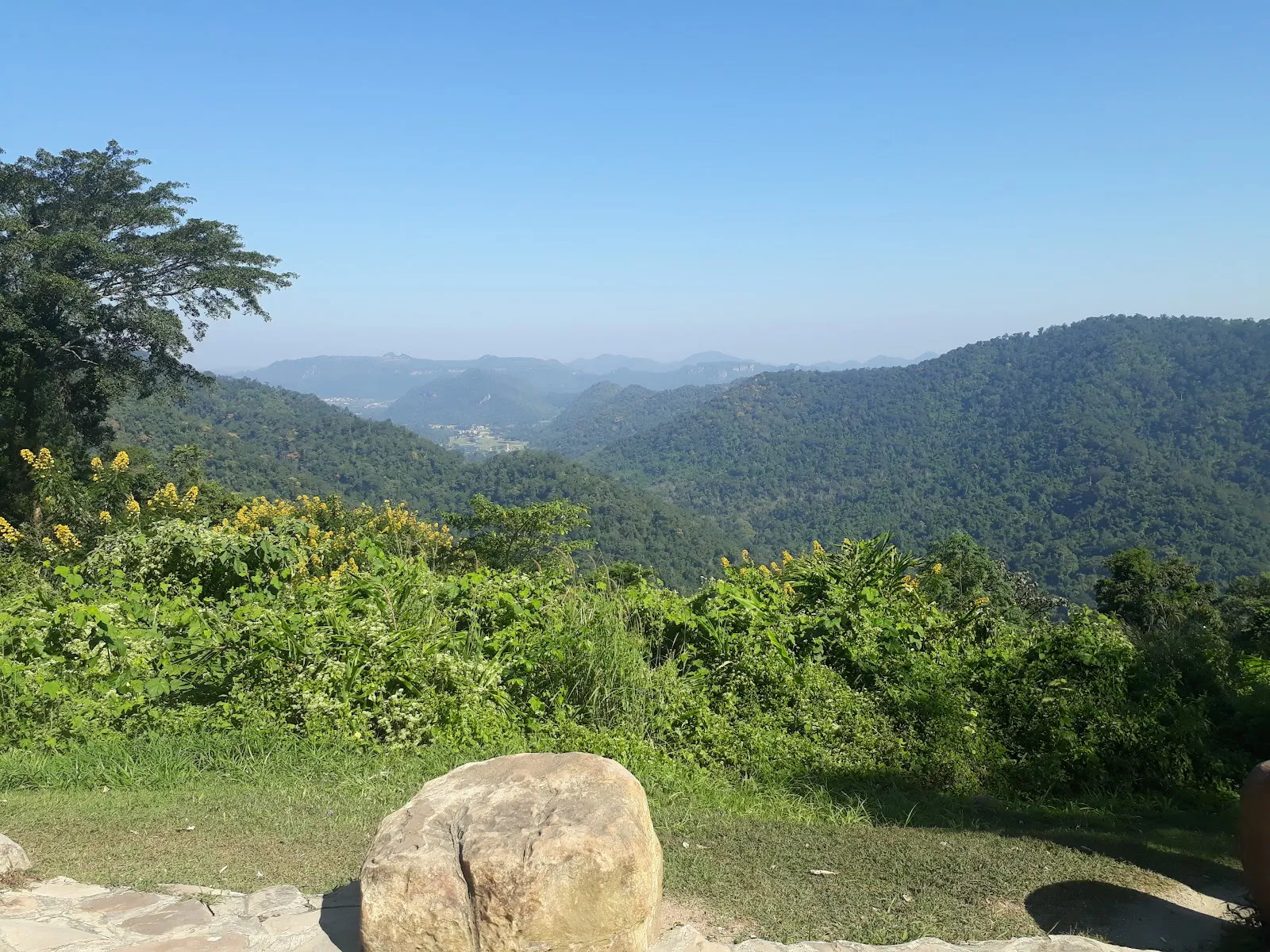
Seasonal evergreen forest is the dominant habitat. Hill evergreen forest and open grassland also cover large areas, and more than 80 percent of the park remains evergreen or semi-evergreen forest.
The land rises from 400 to 1,000 meters above sea level. Khao Rom, at 1,351 meters, is the highest peak in the park.
The park sits on the western part of the Sankamphaeng Mountains, on the southwestern edge of the Khorat Plateau.
Wildlife and birdwatching
Macaques and gibbons are among the most visible animals. The park also has elephants, gaur, sambar and muntjac deer, and wild boars. Elephants are not guaranteed on any given visit, but the park is one of the best places in Southeast Asia to see them. Many of its trails were first used as elephant tracks.
The park is known for its birds. Great and Wreathed hornbills are common, and visitors who walk the trails and quieter roads may spot the Silver Pheasant, Siamese Fireback, Coral-billed Ground-Cuckoo and Eared Pitta. Mixed flocks of leaf warblers move through the forest. The park also has bat caves and many insect species.
Trails, waterfalls and viewpoints
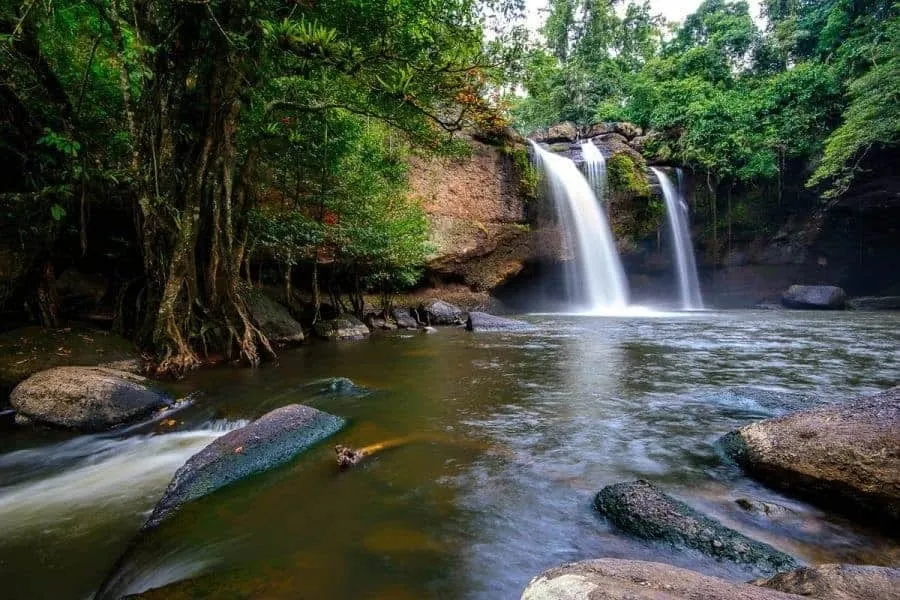
An extensive network of trails runs through the forest, with routes of different lengths and difficulty. Many trails are in poor condition, so wear sturdy shoes. Families with younger children can choose easier trails, while the trek to Haew Narok Waterfall is a bigger challenge.
The waterfalls are at their fullest from May to November. From March to April much of the water dries up, but those months suit birdwatching well.
The Nong Phak Chi Observation Tower offers panoramic views over the forest, and the mountain peak viewpoint is another option. Camp sites are available for visitors who want to stay overnight.
Rangers at the park entrance can arrange trekking and night safari trips.
Getting there and entry
The Pak Chong entrance is at the end of Thanarat Road. There is a one-time entrance fee. From Bangkok, take Highway 1 (Phahonyothin), then Highway 2 (Mittraphap) at Saraburi to Pak Chong. The drive takes about two to three hours.
The visitor center at the entrance has maps, and you can hire qualified guides there to help you find your way through the forest. The center also has facilities, so stop there before a walk or hike if you need a toilet.
Food and planning
Restaurants inside the park have uneven opening hours, especially outside busy periods. Most close by 16:00, so bring food and water if you plan to stay.
Pak Chong, the town closest to the park, has eateries along Thanarat Road and a daily market where local people sell food and goods. Stay overnight, and the night market is also worth a visit.
Preguntas frecuentes
Is there an entrance fee?
Yes, there is a one-time entrance fee at the Pak Chong entrance. The amount is not listed here, so check the park's website before you go.
How long do you need in the park?
Trails take from one to five hours, depending on the route and your pace. Plan a longer day if you want to visit more than one trail or viewpoint.
Can you see elephants in Khao Yai?
Elephants live in the park and are among the animals visitors hope to see. Sightings are not guaranteed, so keep your expectations flexible.
When do the waterfalls have the most water?
The waterfalls are fullest from May to November. From March to April much of the water dries up, but that is a good time for birdwatching.
How do you get to Khao Yai from Bangkok?
Take Highway 1 (Phahonyothin), then Highway 2 (Mittraphap) at Saraburi to Pak Chong. The drive takes about two to three hours.


