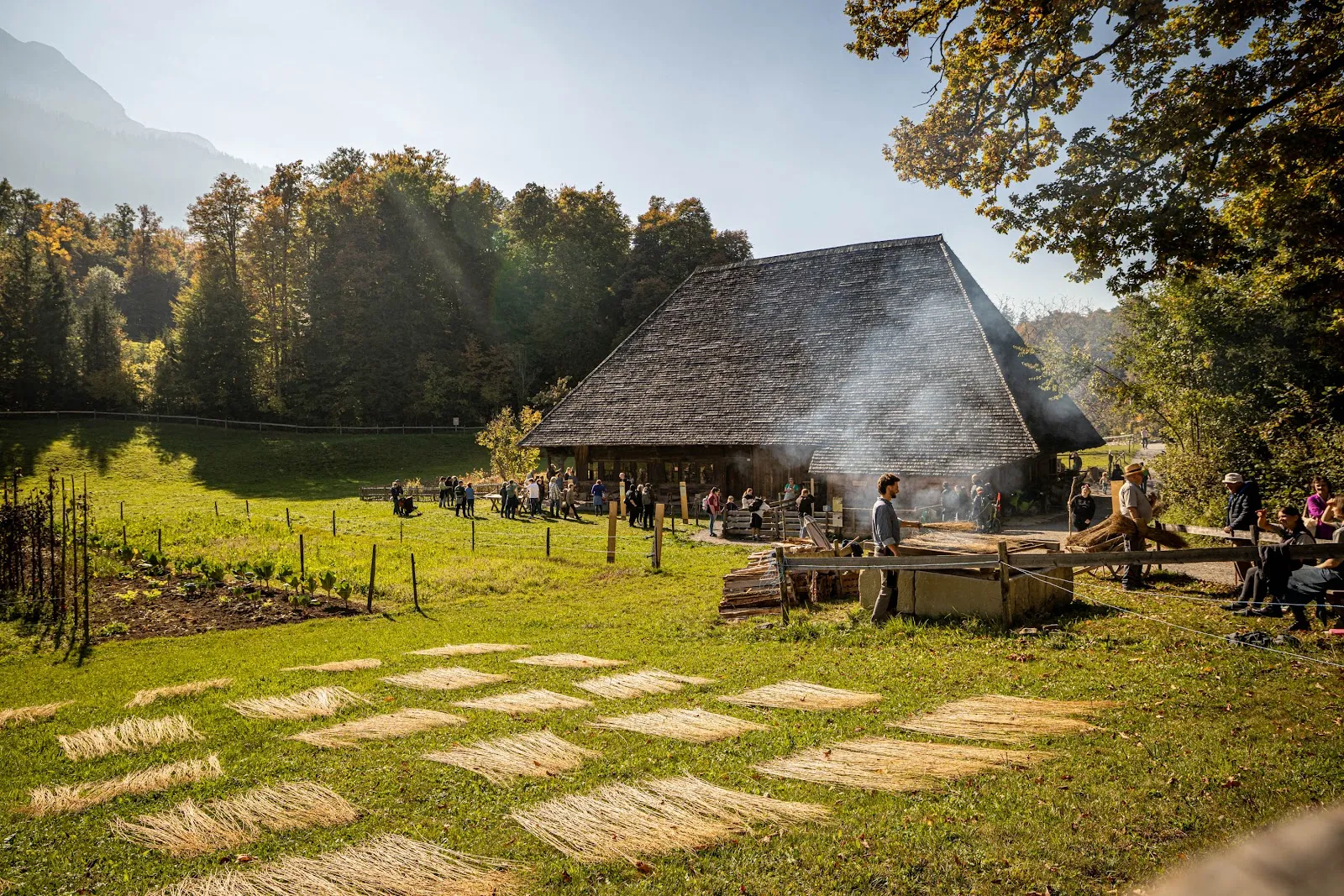
Ballenberg Swiss Open-Air Museum lies between the towns of Brienz and Meiringen in the Bernese Oberland. Over 100 historic buildings from across Switzerland were taken apart, moved here and rebuilt, so the houses, barns and farms are originals rather than copies. Craftspeople work through the day at benches and water-powered machines, making bread, cheese, butter, rope and pottery. Farm animals live on the grounds, and you can walk into most of the houses.
Getting there and moving around
Bus 151 runs from Brienz to the museum. The museum is about 6 km from Brienz train station, which makes the bus the simplest option from the station.
The site has two entrances: the West entrance, nearest Brienz, and the East entrance, near Brienzwiler. Parking is available at both, with free and paid lots. Some visitors park at one entrance, cover its highlights, then drive on to the other end. A tram also runs between the two ends, and walking the full length is possible if you have the time and energy.
The paths are well maintained, but the grounds are large and some sections involve gentle slopes. Solid shoes make the walk far more comfortable.
How the buildings were moved
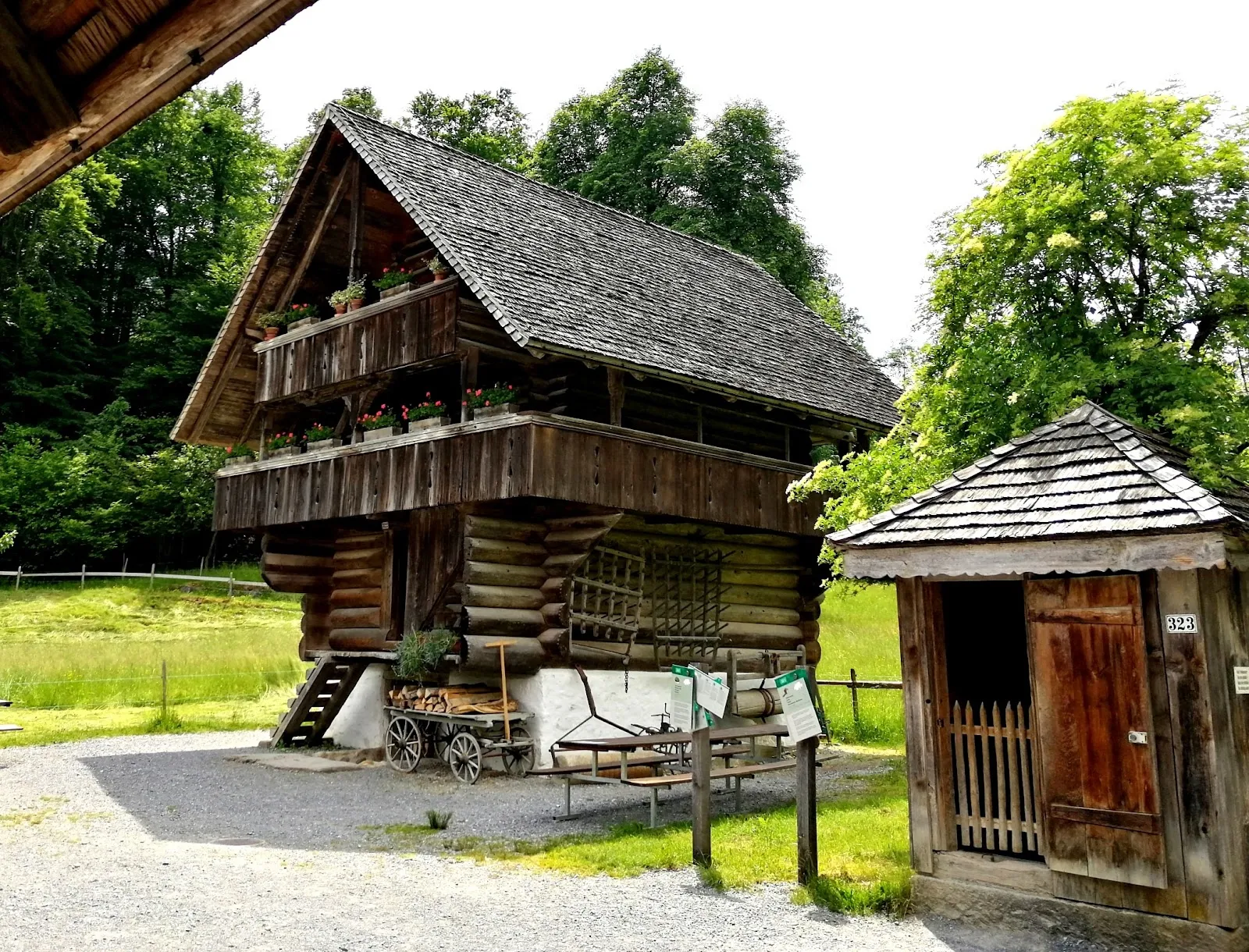
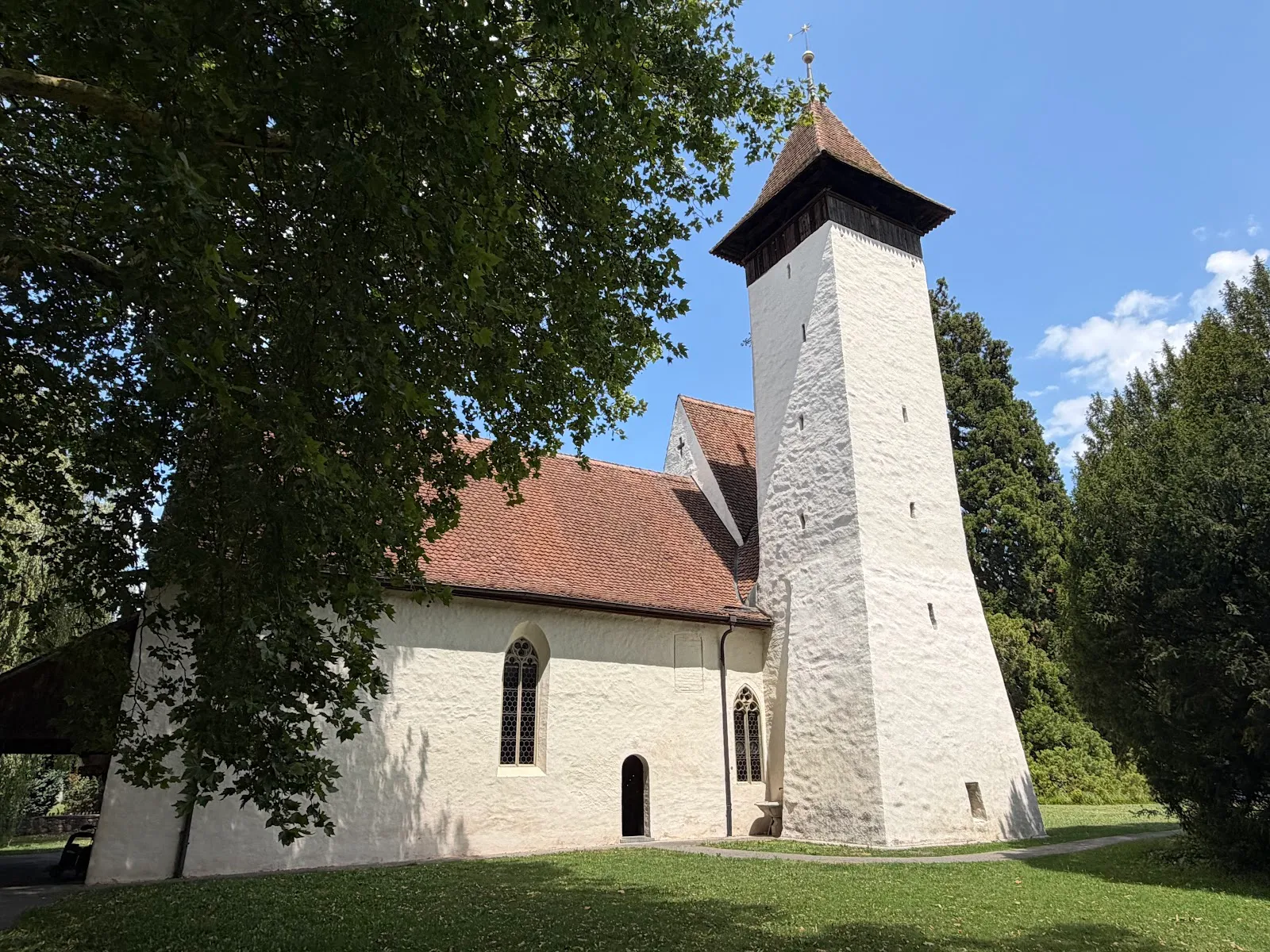
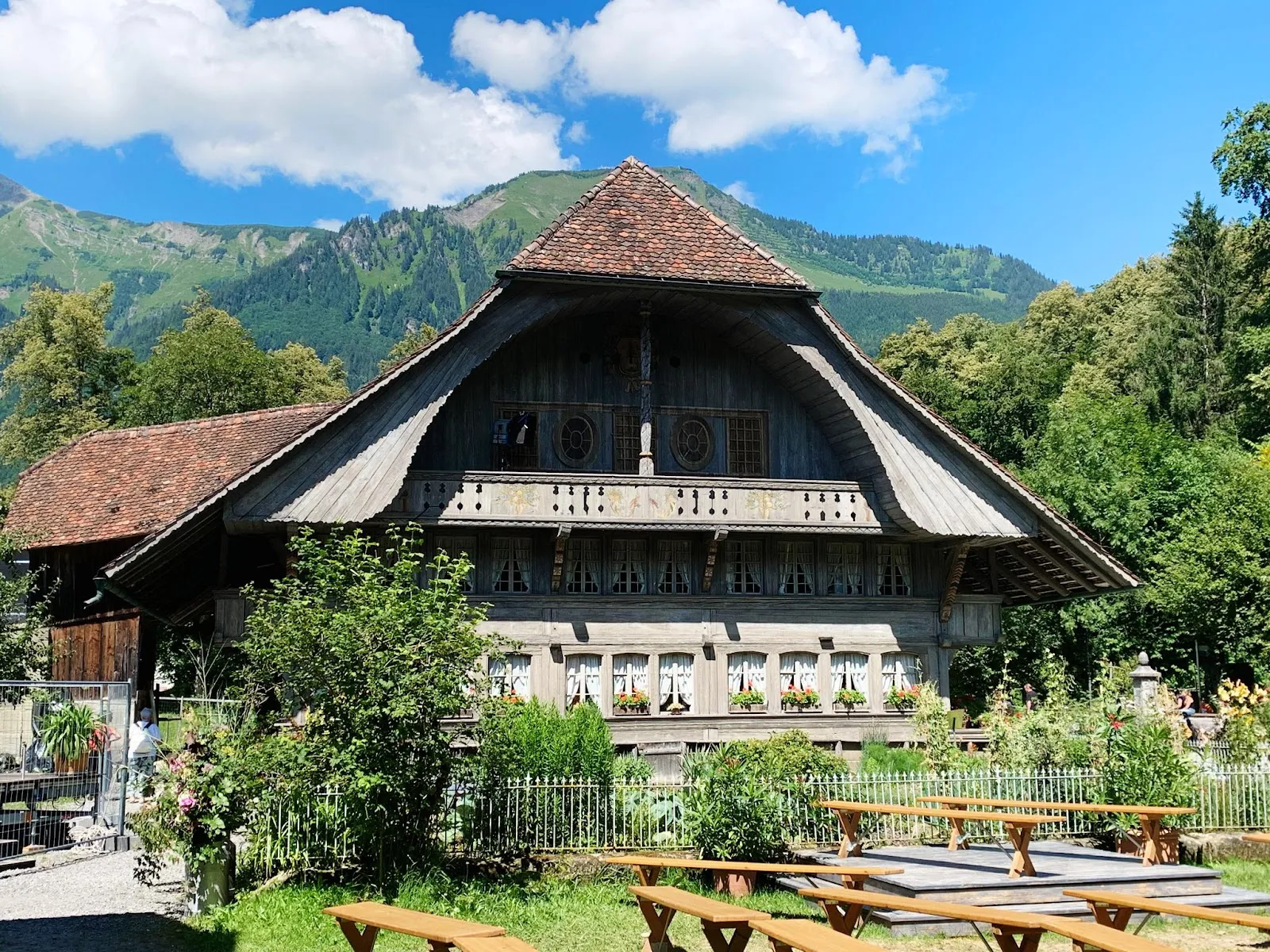
The houses were taken from their original settings across Switzerland and reassembled here piece by piece. The museum's aim is to show the rural homes of the different cantons, so the buildings differ in construction, layout and materials from one area to the next.
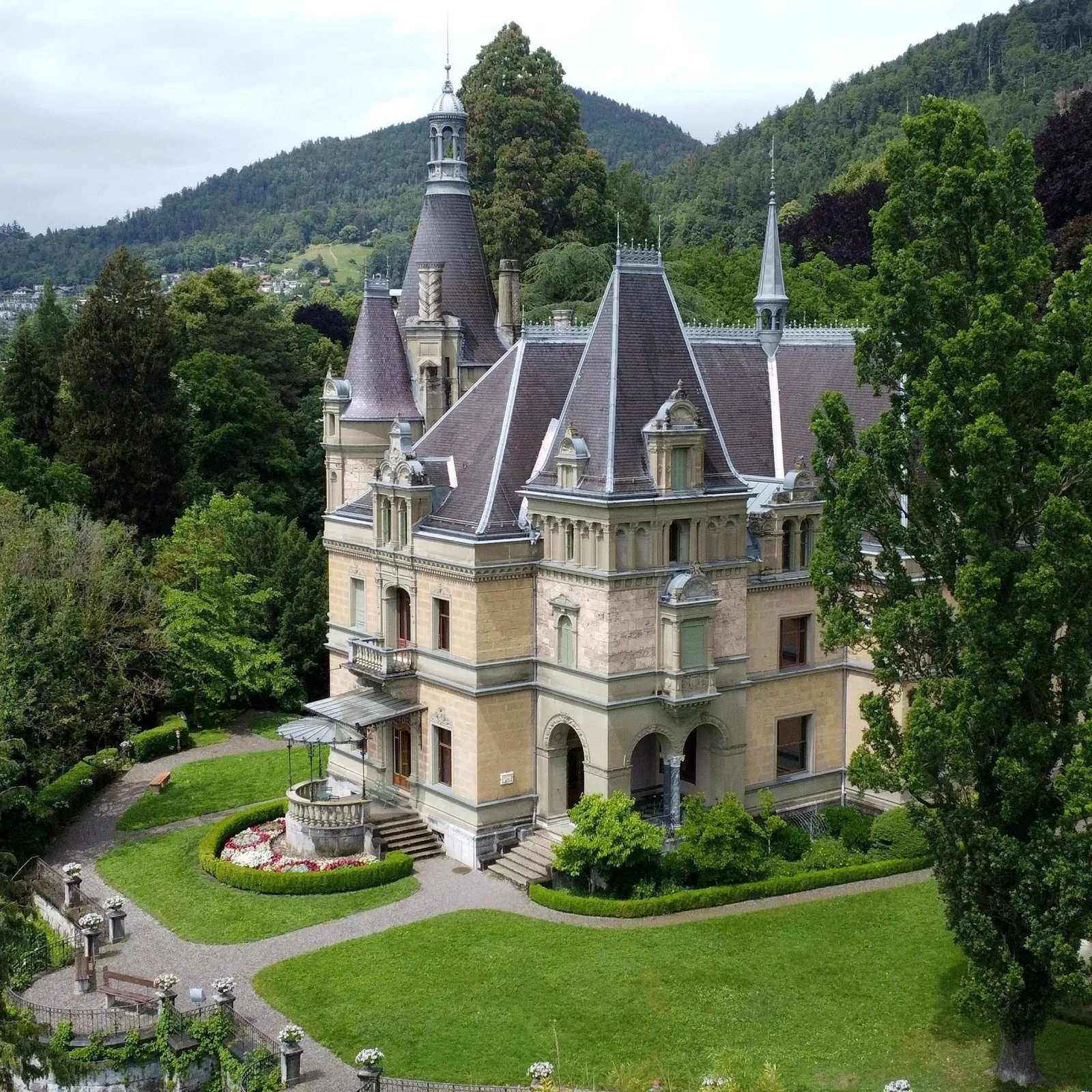
The oldest buildings date back to the 16th century. Among them is a 17th-century manor. Visitors can also see a chalet furnished with regional costumes and period furniture.
In most houses, the interiors are open for visitors to explore. Look closely at the workshops and smokehouses, which show how families once stored food and carried out daily work.
Demonstrations and workshops
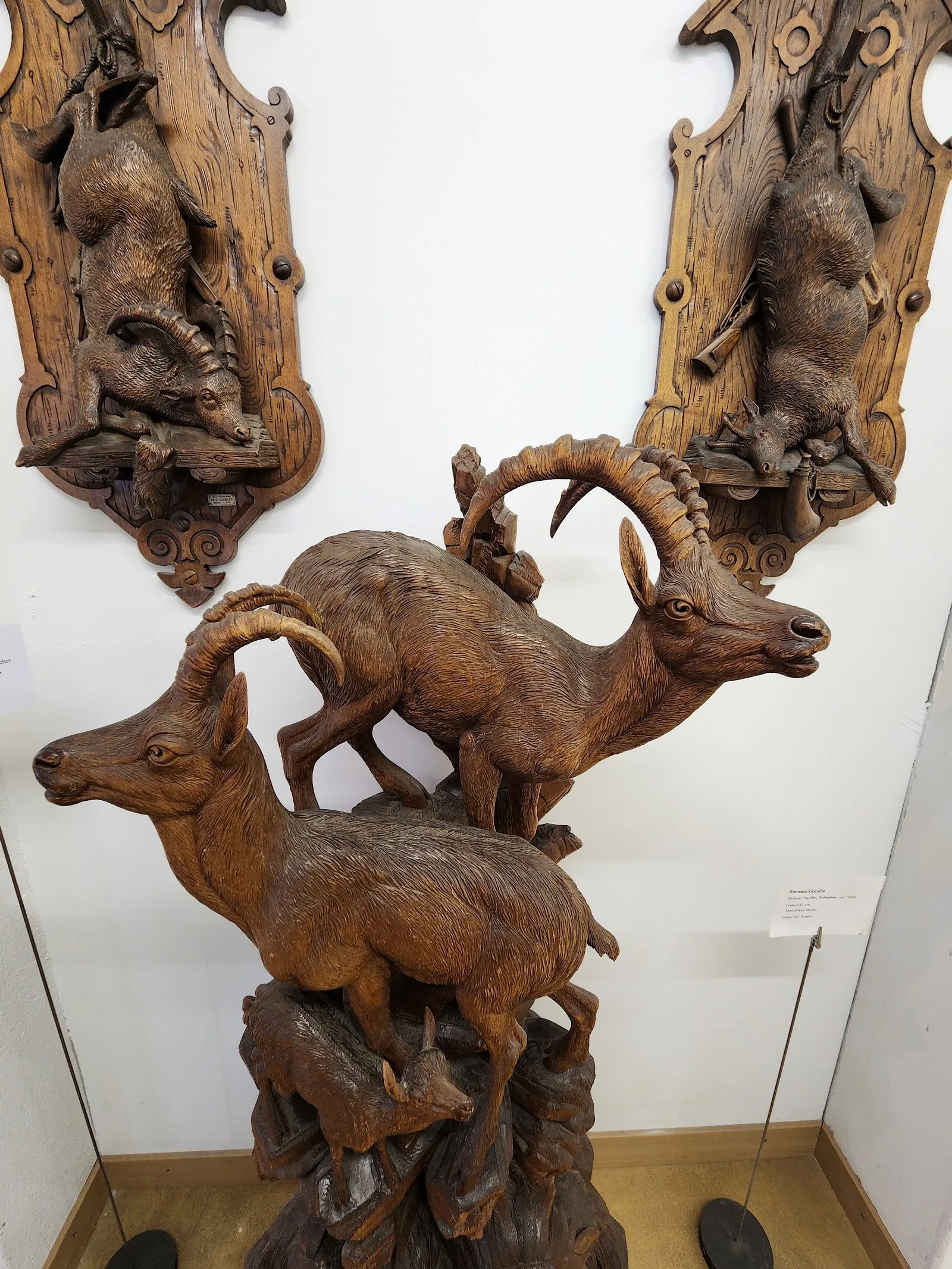
Craft demonstrations are the core of a visit. Depending on the day, you may see clock making, wool carding, lace making, wood carving, hat making, blacksmithing, pottery, rope making, milling and weaving. A water wheel powers an old sawmill that cuts large timbers.
Food demonstrations show how things were made in the past. You can watch bread baking, cheese making, with tasting, and butter making. One visitor learned how hats were made from wheat, a process that takes more than 20 hours.
Some activities cost extra, and at least one has an age limit of 14 and up. Ask at the desk on arrival which workshops are running and what they cost.
Animals and food on site
Farm animals are part of the grounds. Along the paths you can see donkeys, cows, chickens, rabbits and cats, and the museum keeps a large number of native farm animals.
There is a restaurant on site, along with a stall that sells food and drinks. The restaurant stops taking food orders in the afternoon, so plan an early lunch if you want a full meal. Demonstrations and animal areas can change through the day, so check the website for the day's schedule.
Planning for different visitors
The entrance, restrooms and parking are wheelchair accessible. Mobility scooters can be rented on site, and guided tours are offered for visually impaired visitors. A changing table is available.
Families with young children will find plenty of space to explore. Some areas can be difficult to navigate with a stroller, so carry a child carrier if you have one.
Preguntas frecuentes
Is there an entry fee?
Yes, admission is charged. Buying tickets in advance is recommended, and the museum website lists the current prices and pass options.
How do I get there from Brienz?
Take bus 151 from Brienz. The museum is about 6 km from Brienz train station and has an entrance near Brienz (West) and one near Brienzwiler (East).
How long do you need?
Plan at least half a day. Walking from one gate to the other takes about 30 minutes, and there are more than 100 buildings to see.
Is the museum wheelchair accessible?
The entrance, restroom and parking lot are wheelchair accessible, and mobility scooters can be rented on site.
Is it good for children?
Yes, the museum is family-friendly, with farm animals and craft demonstrations. Some areas are difficult to reach with a stroller.