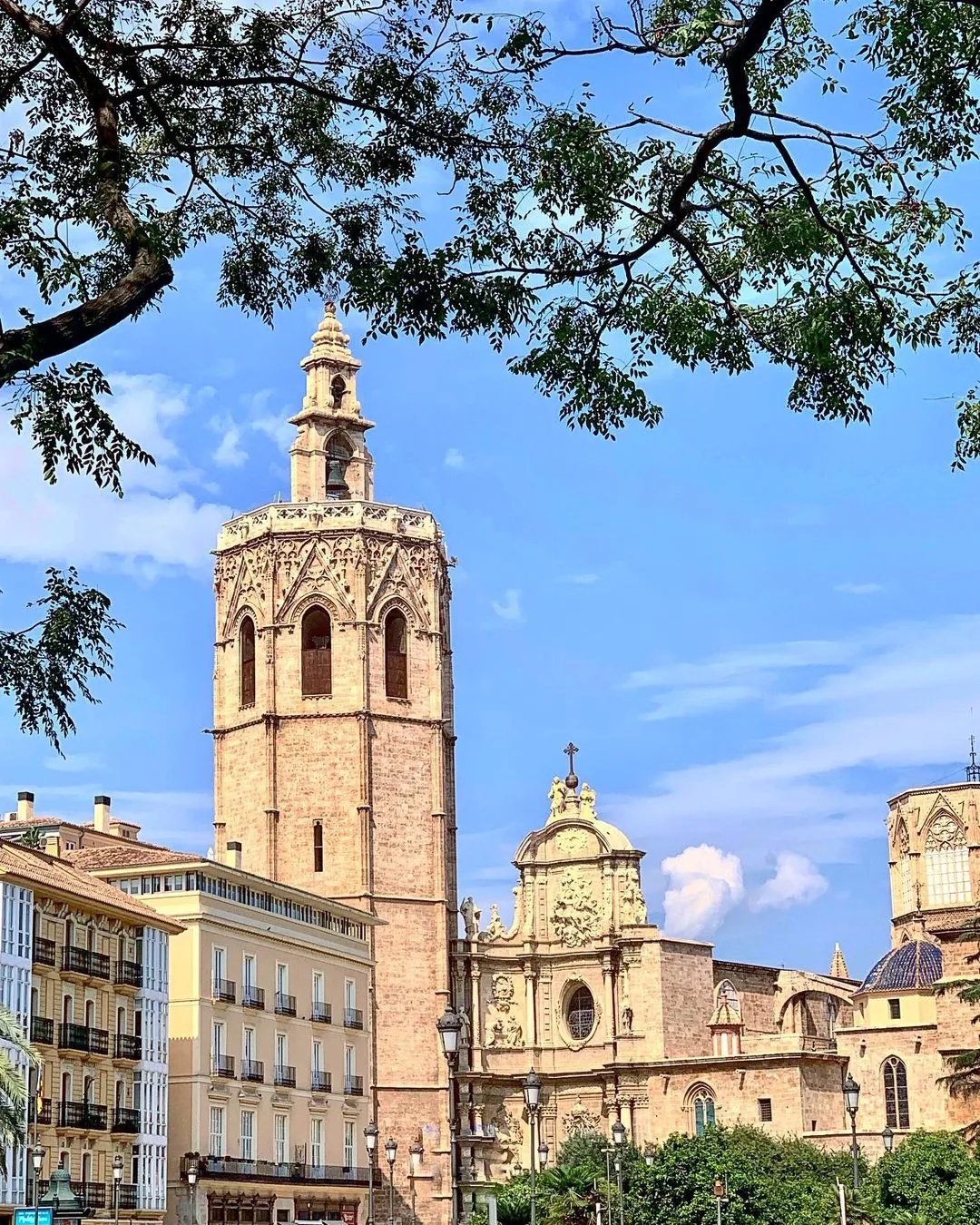
Valencia Cathedral stands in the old town between Plaza de la Reina and Plaza de la Virgen. Its mostly Gothic structure carries Romanesque, Renaissance, Baroque and Neoclassical additions from centuries of building and change. Inside, look for the Chapel of the Holy Chalice, where a chalice believed by some to be the Holy Grail is kept, as well as paintings by Goya and other artists. If you have the energy for 207 steps, climb the Miguelete bell tower for a view across the city.
A cathedral built over earlier places of worship
Valencia Cathedral occupies a site that had previously been used for religious buildings, including a mosque. Material about the site also records an earlier Roman temple and a Visigoth church. After James I took Valencia in 1238, Christian churches were built across the city. Work on the cathedral began later in the 13th century and continued into the 15th, with changes and additions made over subsequent centuries.
The result is not a building from a single moment. Gothic forms dominate, but Romanesque, Renaissance, Baroque and Neoclassical elements appear in different parts. The three principal entrances also differ in style: one is Gothic, one Baroque and one Romanesque. Take a walk around the outside to see how those entrances and later alterations give the cathedral a varied appearance.
Inside the cathedral and its museum
The cathedral’s broad, low interior has three naves with brick vaulting. Look up and around as you move through the chapels: the building’s art is spread across different spaces rather than gathered in one place. Highlights include Renaissance paintings above the altarpiece and works by the Valencian painter Jacomart. The Chapel of San Francisco de Borja contains two paintings by Goya, painted in 1799.
The cathedral museum includes paintings from the 15th and 16th centuries, as well as the Goya works. An audio guide can help you follow the artworks and the building’s history as you explore. Allow time to look through the interior and museum rather than treating the cathedral as a quick stop between the nearby squares.
The Holy Chalice and the Miguelete tower
The Chapel of the Holy Chalice holds an agate cup that some believe to be the Holy Grail, the chalice used by Jesus at the Last Supper. The cathedral presents it as a sacred relic. Its form and history are part of the appeal, but the identification remains a belief, not an established fact.
The Miguelete, also called the Micalet, is the cathedral’s bell tower. Its octagonal structure dates to the 15th century and rises 51 metres. Reaching the top means climbing 207 steps on a narrow spiral staircase. From the terrace, you can look over the old town, including Plaza de la Reina and Plaza de la Virgen. The climb is a separate part of the visit, so it is best suited to people comfortable with a long stairway.
Preguntas frecuentes
Is the Holy Grail in Valencia Cathedral?
The Chapel of the Holy Chalice holds an agate cup that some believe is the Holy Grail. The cathedral recognizes it as a sacred relic.
How many steps are there in the Miguelete tower?
There are 207 steps on the narrow spiral staircase to the top. The tower terrace looks out over Valencia’s old town.
What can you see inside Valencia Cathedral?
Highlights include the Chapel of the Holy Chalice, Renaissance paintings, works by Jacomart and two Goya paintings in the Chapel of San Francisco de Borja.
What architectural styles does Valencia Cathedral have?
Gothic is the main style, with Romanesque, Renaissance, Baroque and Neoclassical elements added over time.