La Lonja de la Seda is a 15th-century Gothic trading complex in Valencia’s Ciutat Vella, opposite the Central Market. Merchants once met here to trade silk and other goods; today, its main draw is the Sala de Contratación, where tall twisted columns rise to vaulted ceilings. Look for carved details inside and gargoyles on the exterior, then pause in the courtyard among the orange trees. The visit is compact, so it fits easily around the nearby market and other Old Town sights.
A trading hall built for Valencia’s commerce
La Lonja de la Seda, or the Silk Exchange, was built between 1482 and 1533, when Valencia was a major centre of Mediterranean trade. Merchants used the complex to negotiate deals in silk and other goods. Its scale and elaborate design expressed the city’s commercial wealth during the late 15th and 16th centuries.
The building is recognised as a UNESCO World Heritage Site, a distinction it received in 1996. It is also a notable example of civil Gothic architecture: a grand public building created for trade rather than religious worship. The complex stands opposite the Central Market in the historic centre, making the two sights easy to pair on a walk through Ciutat Vella.
The Sala de Contratación
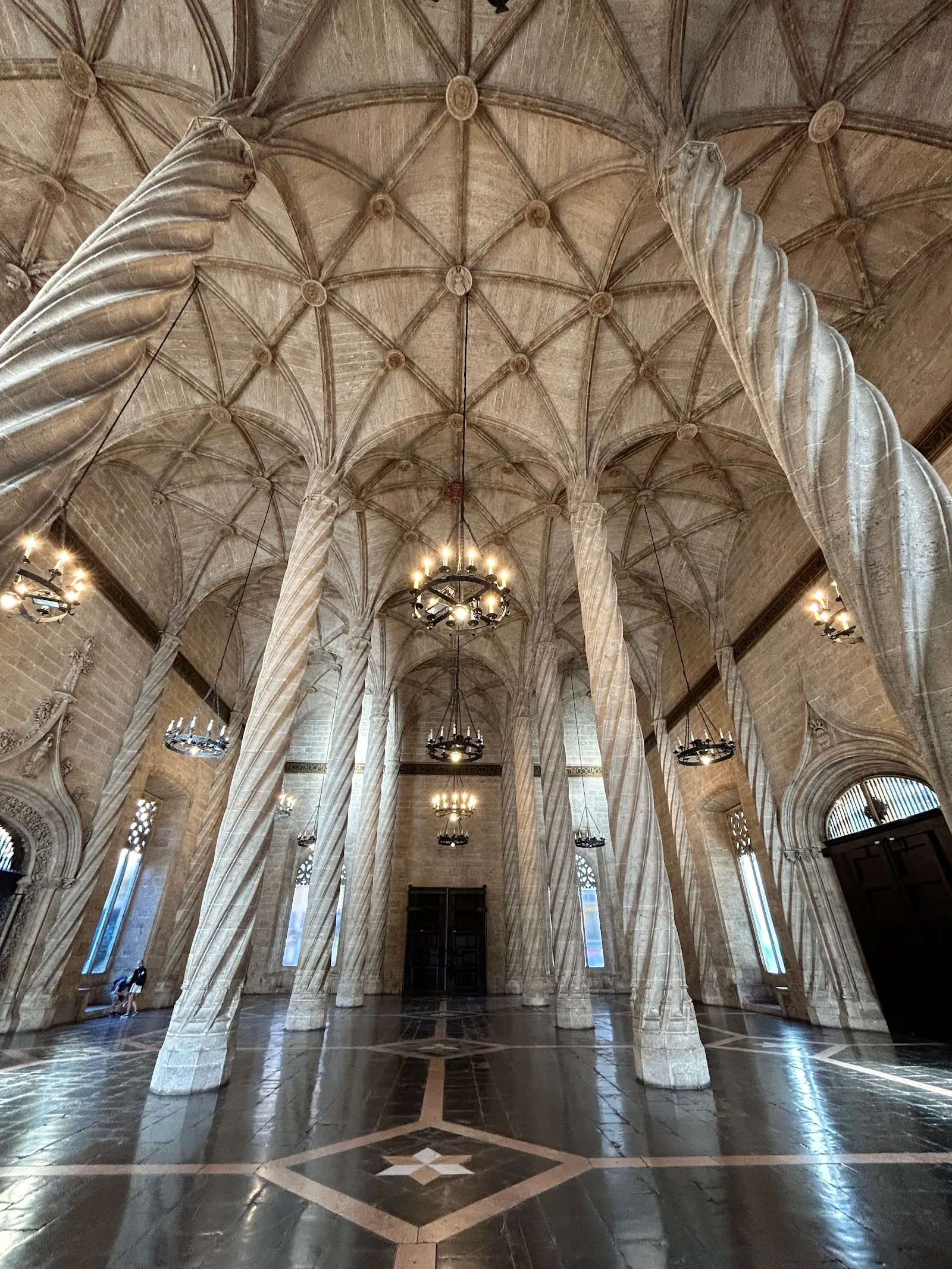
The main room to look for is the Sala de Contratación, also called the Contract Hall or Columned Hall. This was where merchants met and made business agreements. Its tall, twisted stone columns support a vaulted ceiling, drawing the eye upward across the length of the hall. The columns and high vaults give the room its distinctive sense of height and space.
Take a moment to notice the floor, carved details and ceiling as well as the columns. The building’s different rooms have their own architectural character, including decorated wooden ceilings. The trading hall is the clearest place to picture how the complex once worked, but its stonework is also worth studying for its own detail.
The courtyard and the exterior carvings
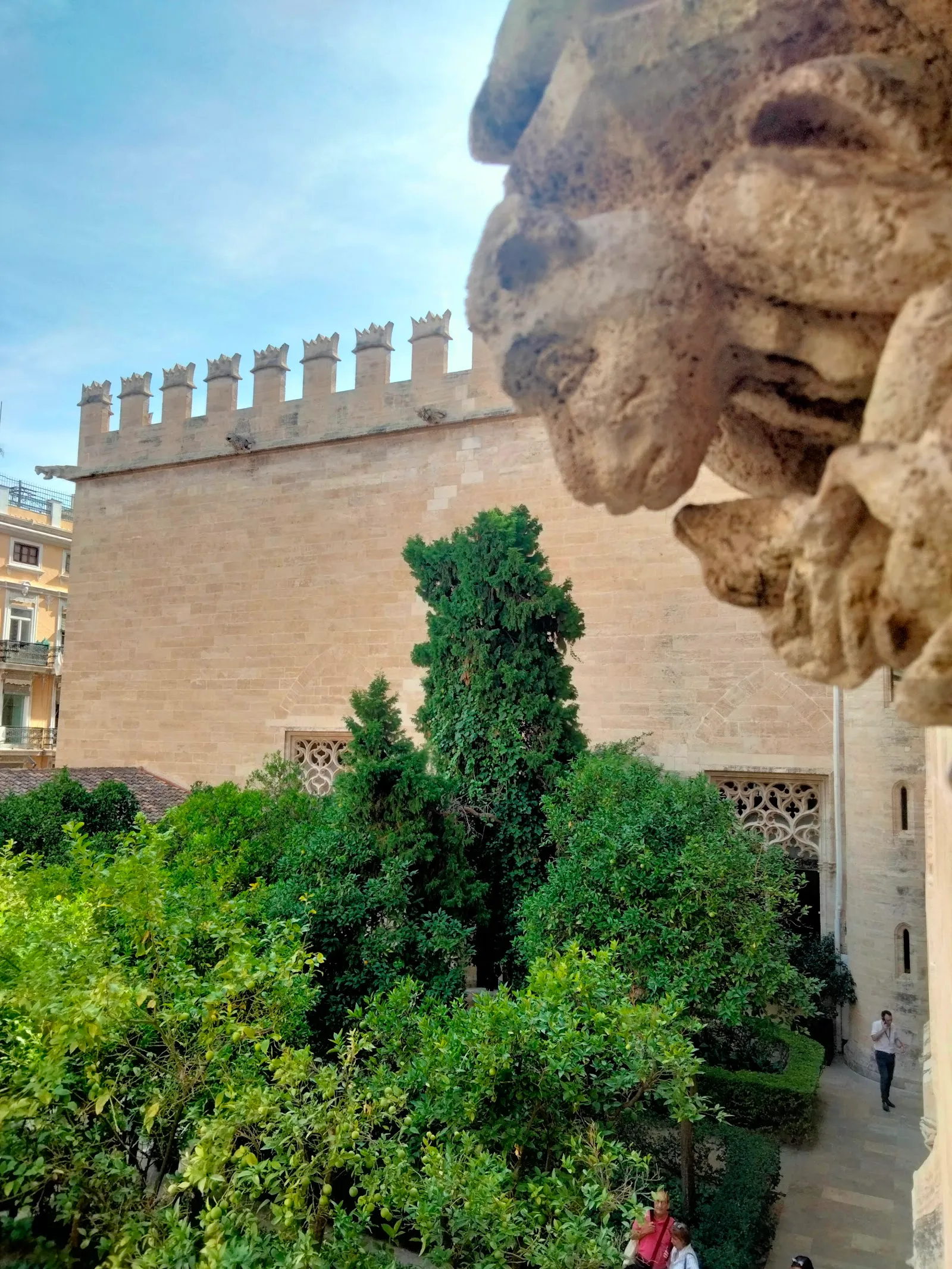
The courtyard, known as the Patio de los Naranjos, is planted with orange trees and offers a calmer contrast to the imposing halls. It is part of the visit, not just a view from outside, so leave a little time to walk through it.
The facade has another set of details to look for: carved stone gargoyles with varied expressions and forms. Walk around the outside and look up to find them. An audio tour can add context to the building’s history; without one, the rooms and carvings are still easy to explore at your own pace.
Preguntas frecuentes
What was La Lonja de la Seda used for?
It was a trading complex where merchants negotiated deals in silk and other goods. Its main trading hall is the Sala de Contratación.
What should I see inside La Lonja de la Seda?
Look for the twisted columns and vaulted ceiling in the Sala de Contratación, along with the details in the other rooms. The courtyard and the exterior gargoyles are also worth seeing.
How long do you need at La Lonja de la Seda?
Plan for around 30 to 60 minutes to see the rooms, courtyard and exterior details.
Where is La Lonja de la Seda?
It is in Ciutat Vella, opposite Valencia’s Central Market.