The Convent of San Esteban is a Dominican monastery on Plaza del Concilio de Trento in Salamanca. Its church and carved façade bring together Plateresque, Gothic and Baroque details, while the central courtyard offers a quieter pause between rooms. Inside, look for José de Churriguera’s heavily gilded reredos and the choir area, where you can take in views from above. Allow time to move through the rooms slowly; the architectural details and exhibits reward more than a quick look.
A Dominican convent in Salamanca
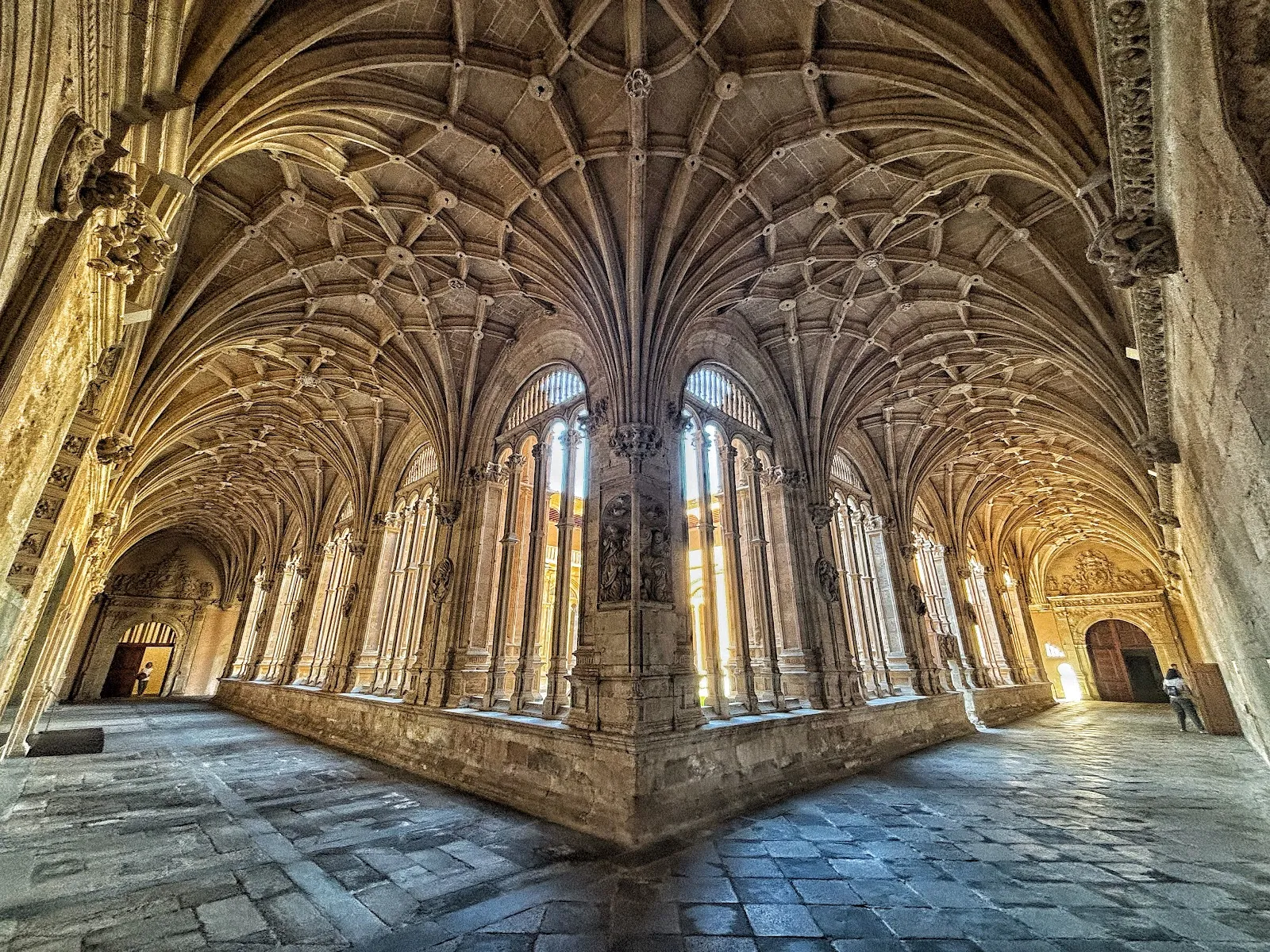
The Convent of San Esteban stands on Plaza del Concilio de Trento. It belongs to the Dominican Order, whose presence in Salamanca dates to around 1255. The earlier monastery was later replaced by the complex associated with the church of San Esteban. Construction began in 1524 and continued until 1610, with Martin de Santiago and Rodrigo Gil de Hontañón among the architects involved.
The convent is still run by the Dominicans. Its history connects the religious life of the city with Salamanca’s intellectual heritage. Francisco de Vitoria, a prominent figure associated with that heritage, is among the people to look for as you explore the site.
Reading the façade and church
The façade is one of the convent’s defining features. Its intricate stone carving reflects the Plateresque style, which combines Gothic, Islamic and Renaissance elements. Take a moment to look across the surface rather than focusing on a single detail: the carved decoration is part of what makes the building’s exterior worth seeing up close.
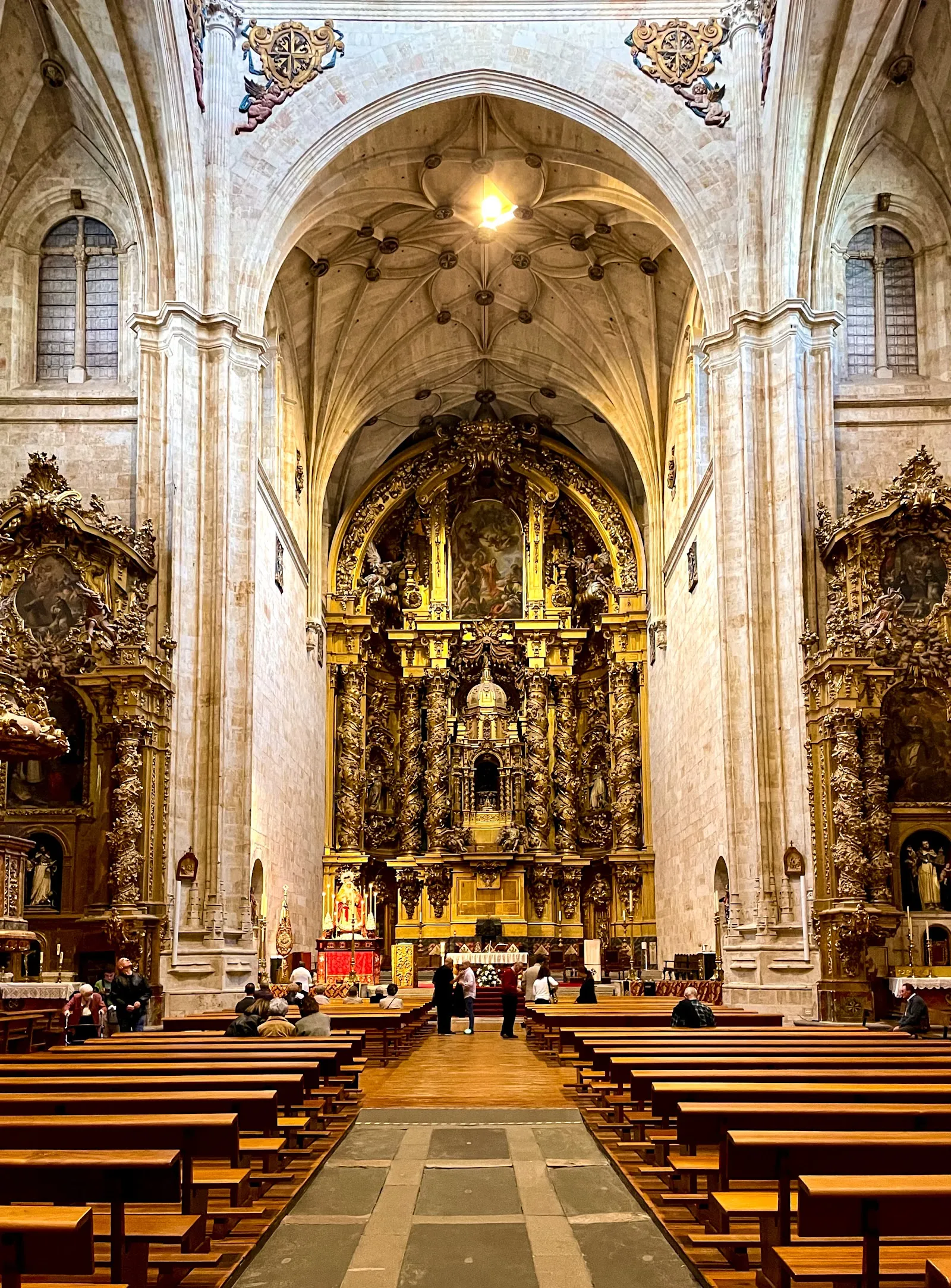
Inside the church, the architectural styles continue, with Gothic and Baroque features. The gilded reredos by José de Churriguera is a key detail to seek out. Its richly decorated surface contrasts with the stonework outside. The church is one of the spaces included in the visit, along with the cloisters and choir area.
Courtyard, rooms and views
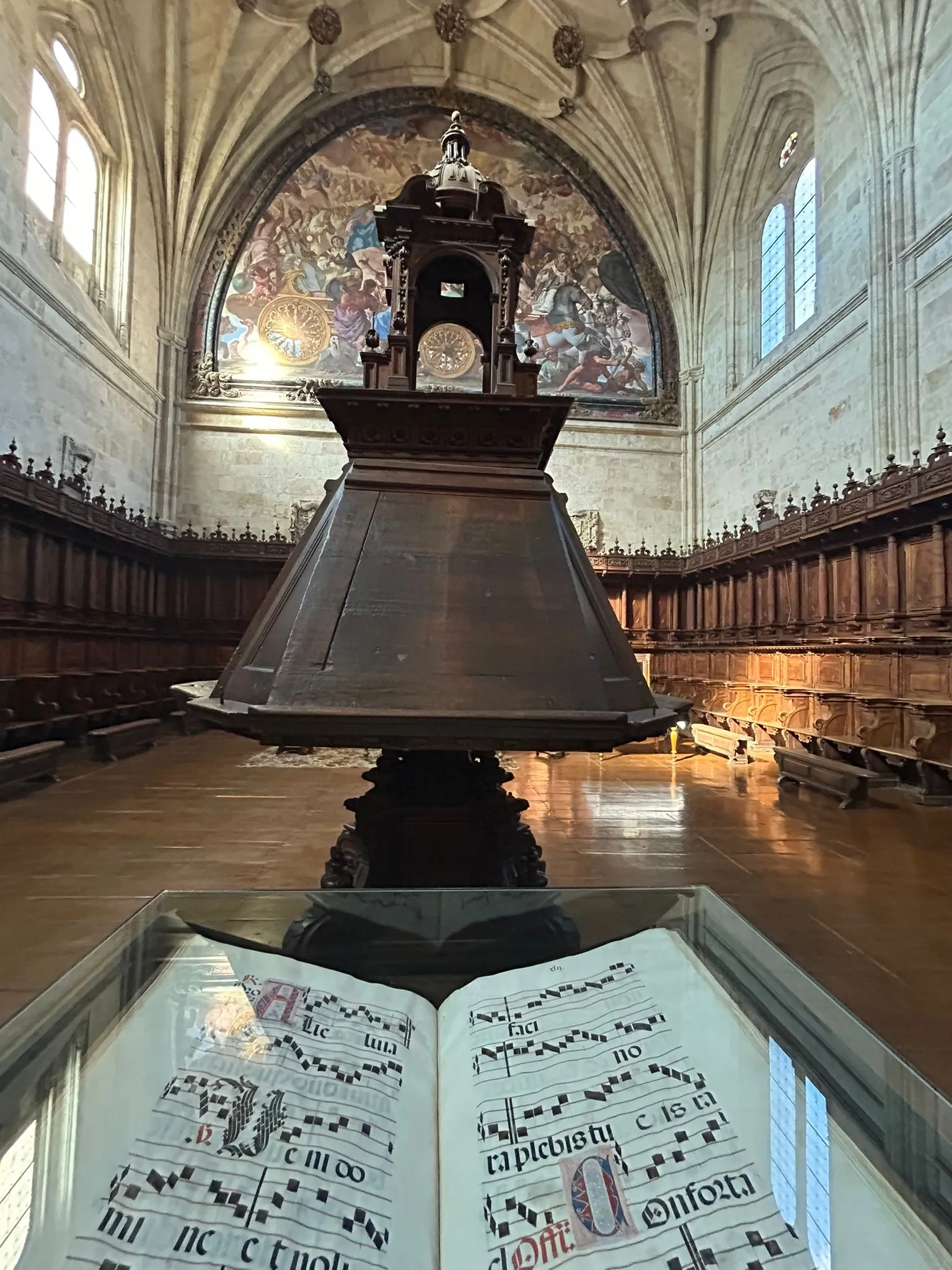
The central courtyard gives the convent a quieter feel between its more elaborate interiors. As you move through the rooms, look up as well as around: ceilings and architectural details draw attention across different areas of the building. The visit also includes the cloisters and the choir area, with views from both lower and upper floors.
There is enough to see here to justify taking your time rather than treating the convent as a brief stop. If you want more historical context as you go, ask about a guided tour. The building is on Plaza del Concilio de Trento, a short walk from Salamanca’s cathedrals.
Preguntas frecuentes
How long should you spend at the Convent of San Esteban?
Allow around two to three hours to explore the rooms, church, cloisters and choir area at an unhurried pace.
What should you see inside the convent?
Look for José de Churriguera’s gilded reredos in the church, the central courtyard, the cloisters and the choir area.
When is a good time to visit?
Early or later in the day is a good choice for a quieter visit.