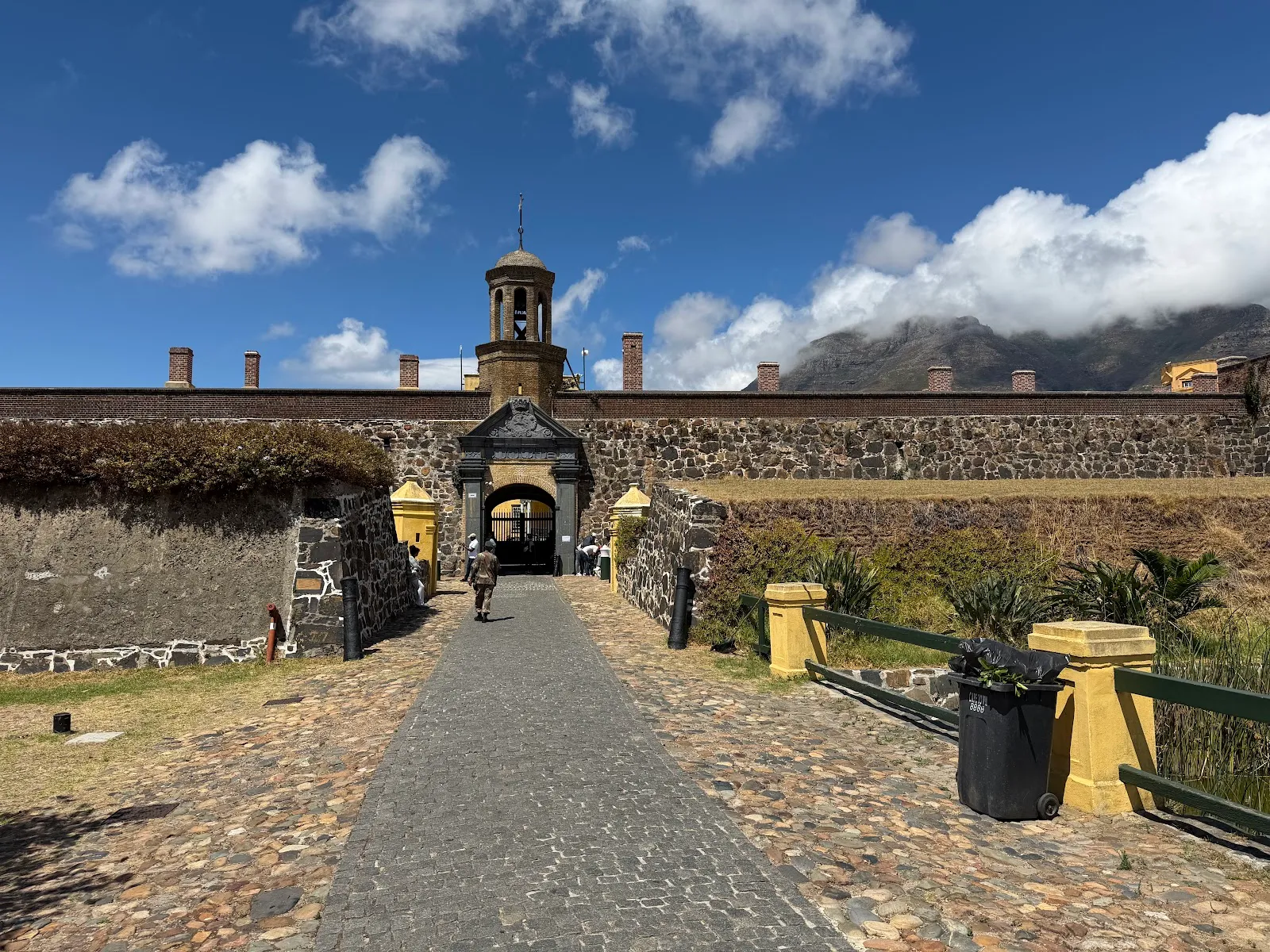
The Castle of Good Hope is a five-sided fort in central Cape Town, a short walk from City Hall and the train station. The Dutch East India Company built it between 1666 and 1679, and it is the oldest surviving colonial building in South Africa. Inside, you will find several museums, including a military museum with a large sword collection, period rooms, prison cells and a roof with views of Table Mountain. Start on the outer walls, then work inward to the courtyards.
Built by the Dutch East India Company
The Dutch East India Company, known as the VOC, began the castle in 1666, and the work was finished in 1679. Jan van Riebeeck, the Dutch commander who led the early settlement at the Cape, had first put up a fort of clay and timber on the site. The stone fort replaced it. It was meant to protect the small Dutch settlement that grew into Cape Town, including against a British invasion, and it guarded the Company's supply station for ships on the route to Asia.
The Company Gardens nearby began in 1652 as a station that grew fresh fruit and vegetables for passing ships. The castle followed to defend the people who worked the gardens, supplied the ships and kept order among the settlers. Soldiers and enslaved people built the walls from local stone.
The five bastions and the walls
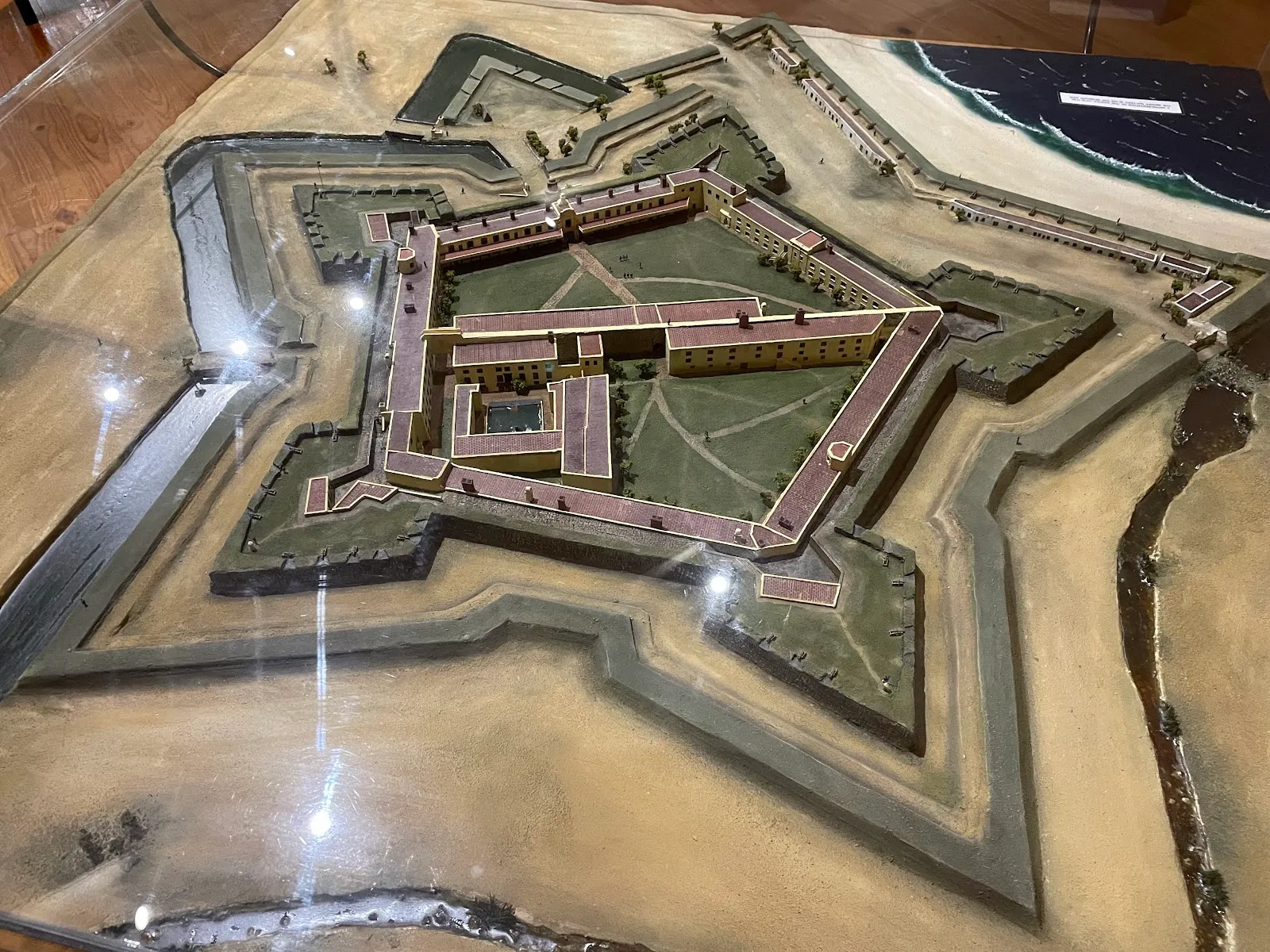
The castle is a fort rather than a European-style castle. Its plan follows the Vauban model, a design used in European fortress building. Five bastions, the angled structures that project from the walls, are named after titles of Prince William of Orange: Oranje, Nassau, Leerdam, Catzenellenbogen and Buuren. The walls rise about 10 metres, and a moat once surrounded the fort. The bastions were later used as prisons and storerooms.
Walking the top of the walls lets you see the whole plan at once and understand why the fort was built in this shape. Starting on the outside makes that layout easier to follow before you go in.
Inside the walls
The fort's original layout included a church, a bakery, a workshop, an arsenal, a prison and a torture chamber. The prison and torture chamber are part of the castle's harder history, and the castle's exhibits do not look away from it. A blacksmith's forge and a Khoi kraal are also part of the site. The old granary has hosted a ceramics exhibition, and the courtyards sometimes have temporary displays.
The Dolphin Pond is one of the older features in the grounds. It is less well kept than the rest of the site.
Museums and the military
Several museums are housed in the castle. The Iziko Museums of Cape Town hold antique furniture, historical paintings and decorative art linked to the early Cape. The Castle Military Museum covers South African military and political history from the 16th to the 19th century. Its sword collection is one of the finest in the country.
The Cape Town Highlanders Regiment is still based at the castle, and ceremonial facilities for the Cape Regiments are on the site.
Later history
The Khoi name for the site was Kui Keip, meaning Stone Kraal. During the Second Boer War, from 1899 to 1902, the castle was used as a jail. It was declared a national monument in 1936. It was carefully restored in the 1980s and is now a provincial heritage site.
Visiting the castle
Guided tours take about 30 to 45 minutes. They can take you up onto the roof, where you get views of Table Mountain. The castle has a shop, a cafe and toilets.
Cannon firings and a key ceremony take place on set days, so check the schedule before you go. Parking options include a paid lot, free street parking and paid street parking. The entrance and the parking lot are wheelchair accessible. Cards are accepted for payment.
Preguntas frecuentes
Is there an entry fee?
Yes. Entry has been R50, so check the castle's website for the current price before you go.
How long do you need?
Allow two to three hours. A guided tour takes about 30 to 45 minutes.
Should I book tickets in advance?
Yes. The castle recommends getting tickets in advance.
Is the castle wheelchair accessible?
The entrance and the parking lot are wheelchair accessible.