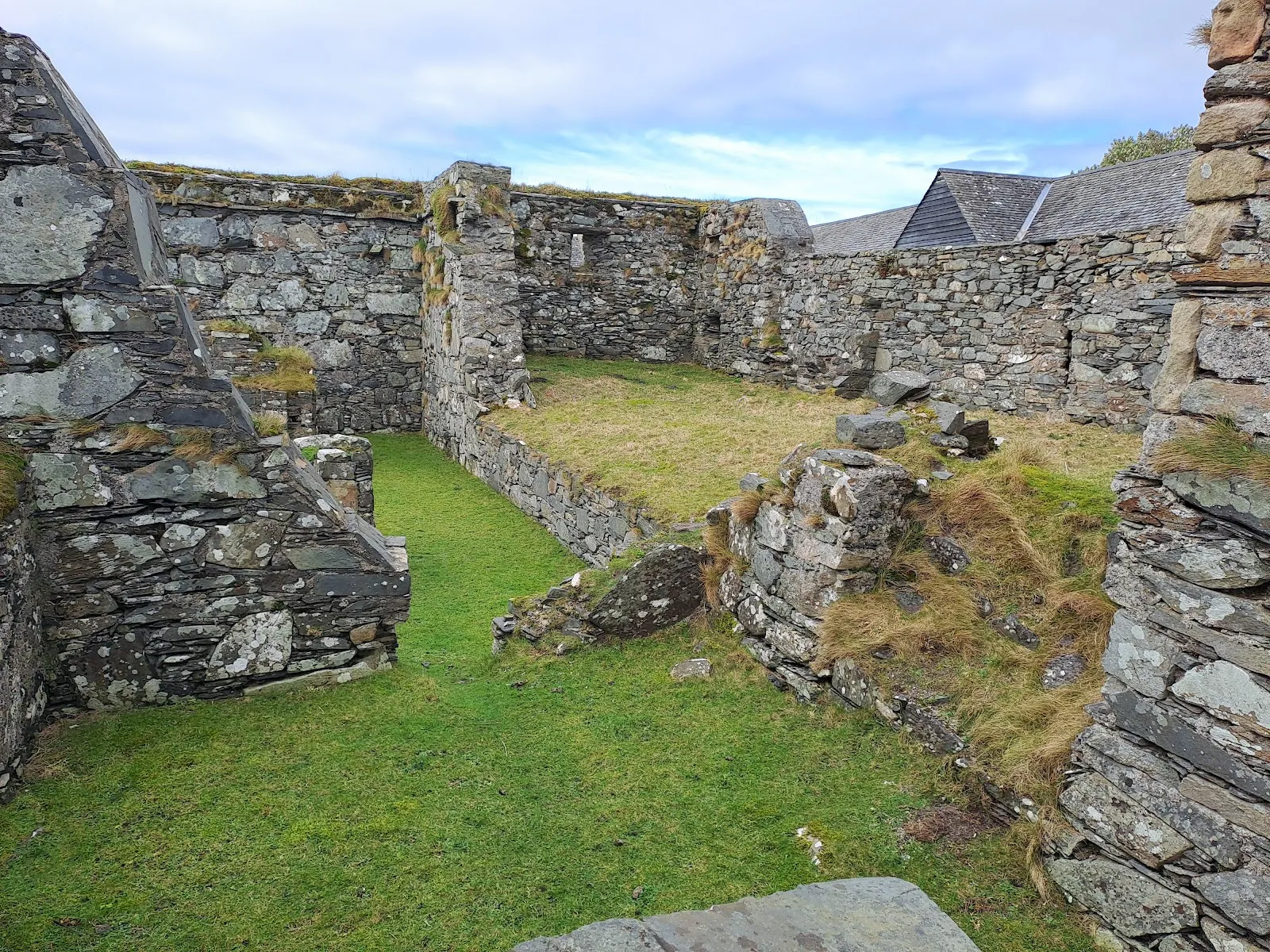
Oronsay Priory stands on Oronsay, reached on foot from Colonsay when the tide allows. The 14th-century ruins include part of the cloisters, while two 15th-century stone crosses stand in the kirkyard. A restored building, the Prior’s House, displays carved grave slabs. The quiet setting and surviving stonework make the crossing worthwhile, but tide planning is essential: check local tide information before setting out and be back on Colonsay two hours after low tide.
The tidal crossing from Colonsay
Oronsay is connected to Colonsay by a stretch of sand that can be crossed on foot when the tide is low. The crossing is the first part of the visit, so check the tide times on Colonsay before setting out. Tide tables are available at the ferry terminal and hotel, and local information can also be checked at the post office next to the shop.
The island is accessible on foot for about an hour and a half either side of low tide. Plan your return with care and be back on Colonsay two hours after low tide. The sand is strewn with cockleshells; long wellies or bare feet are suggested, though the water can be cold.
The priory and its carved stones
The priory ruins date to the 14th century and are among Scotland’s best-preserved medieval priory remains. Part of the cloisters still stands, and the grounds are maintained. In the kirkyard, two 15th-century stone crosses mark the site.
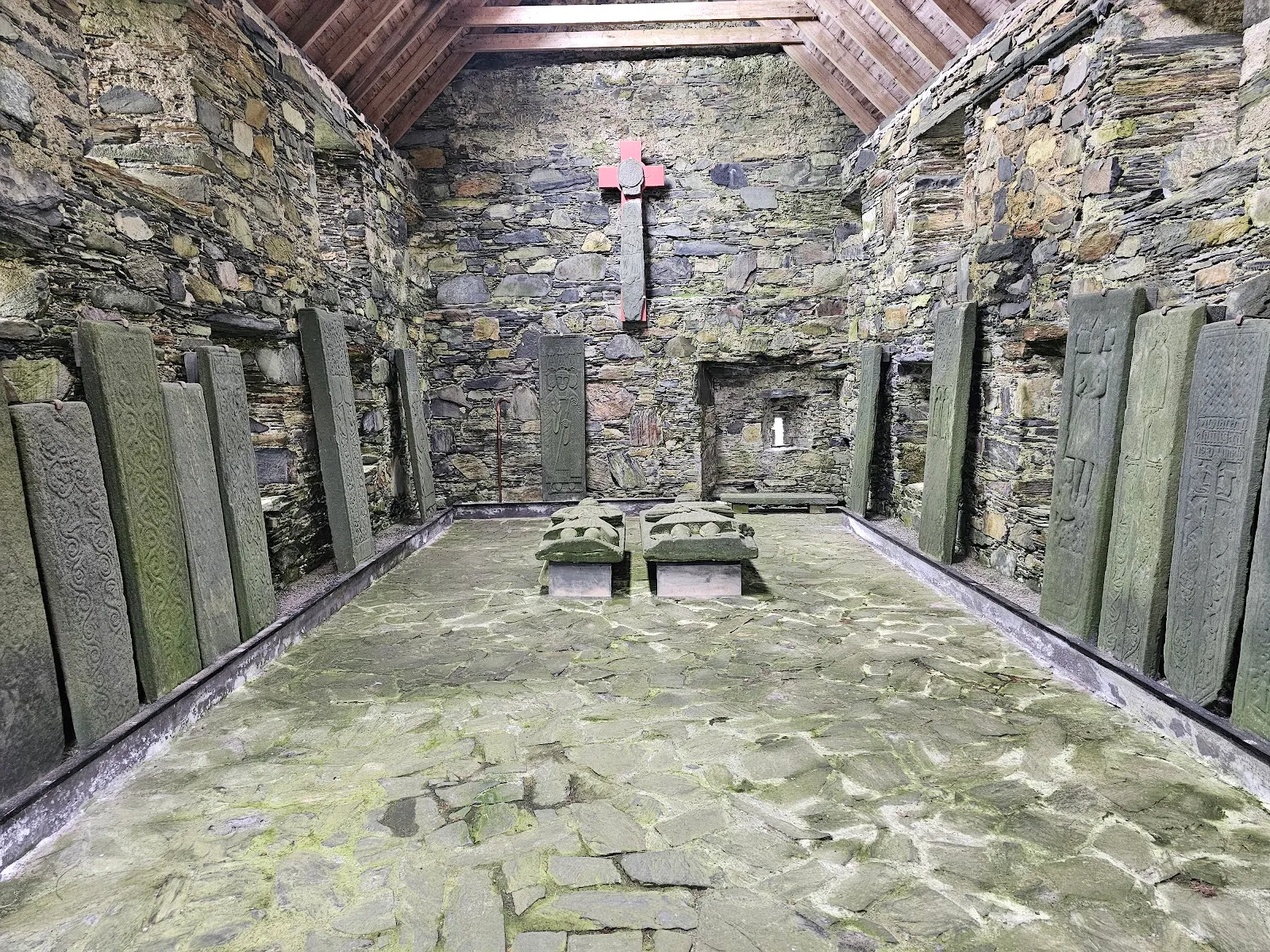
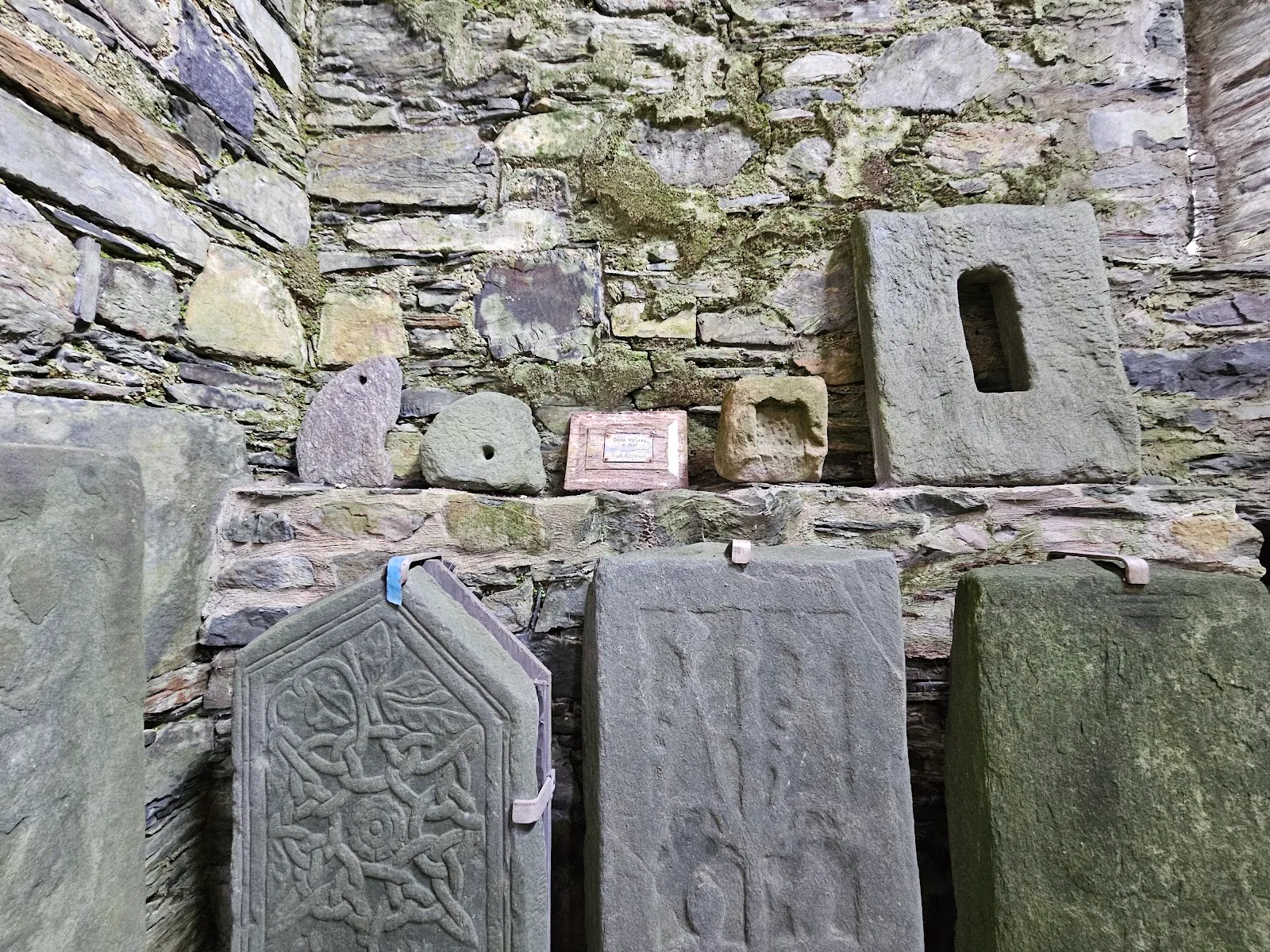
The Prior’s House contains a display of carved grave slabs in a restored building. Take time to look at the stones as well as the larger ruins. The site adjoins private property, so follow any privacy signs.
Preguntas frecuentes
How do you get to Oronsay Priory?
Walk from Colonsay across the tidal sands when the tide is low. Check tide times before setting out.
When can you cross to Oronsay?
Oronsay is accessible on foot for about an hour and a half either side of low tide. Be back on Colonsay two hours after low tide.
What can you see at Oronsay Priory?
The site includes 14th-century priory ruins, part of the cloisters, two 15th-century stone crosses and carved grave slabs displayed in the Prior’s House.