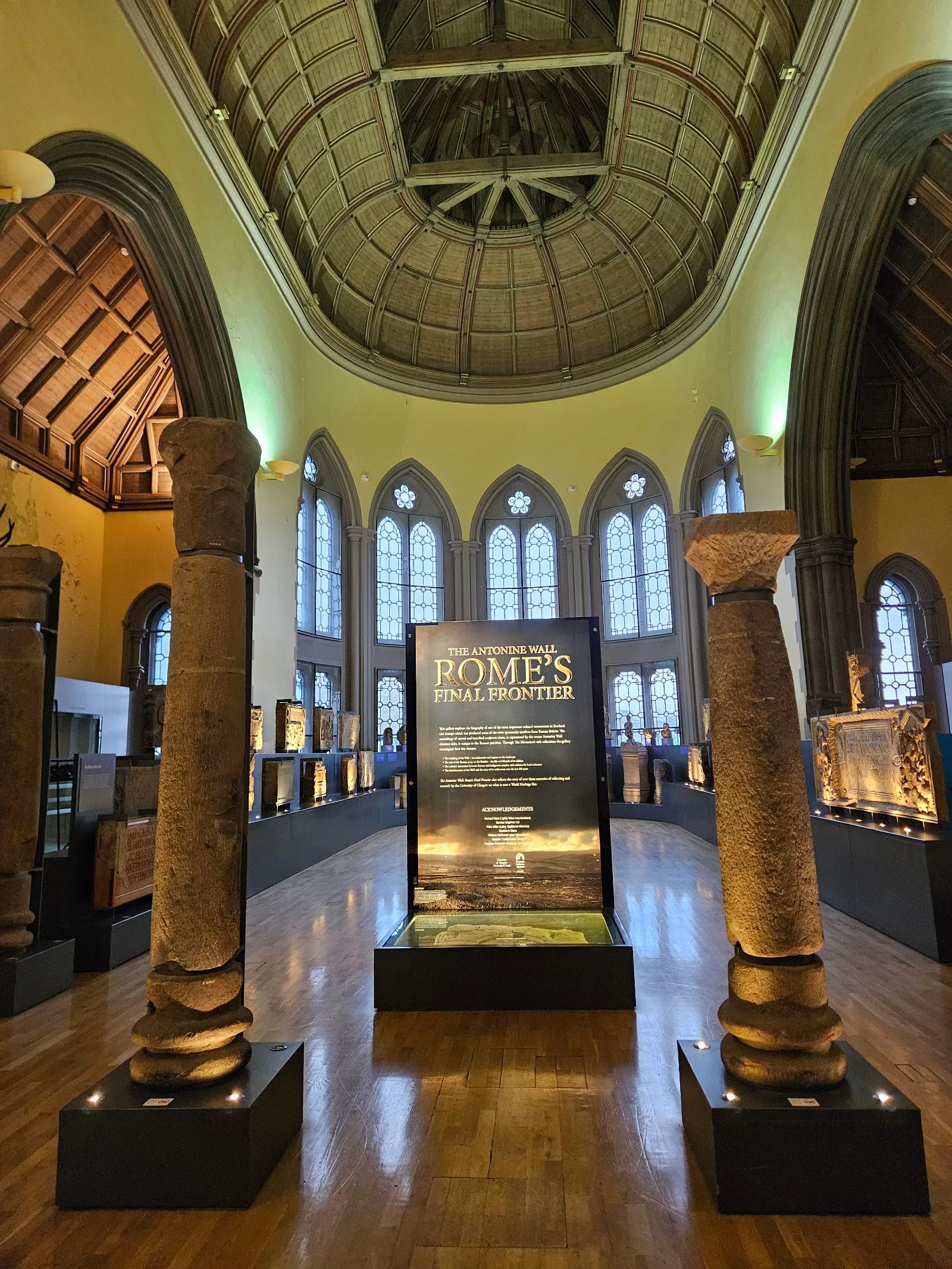
On the University of Glasgow campus, the Hunterian Museum brings together Roman finds, fossils, scientific instruments and objects from natural history. Opened in 1807, it is Scotland’s oldest public museum and displays part of the collection assembled by physician William Hunter. Look out for the Egyptian mummy, the fossilised shark and exhibits on the Antonine Wall. The museum occupies two floors in the university’s Gothic buildings, so allow time to explore. Entry is free, and the surrounding campus has cloisters and historic architecture to see too.
A collection given to the university
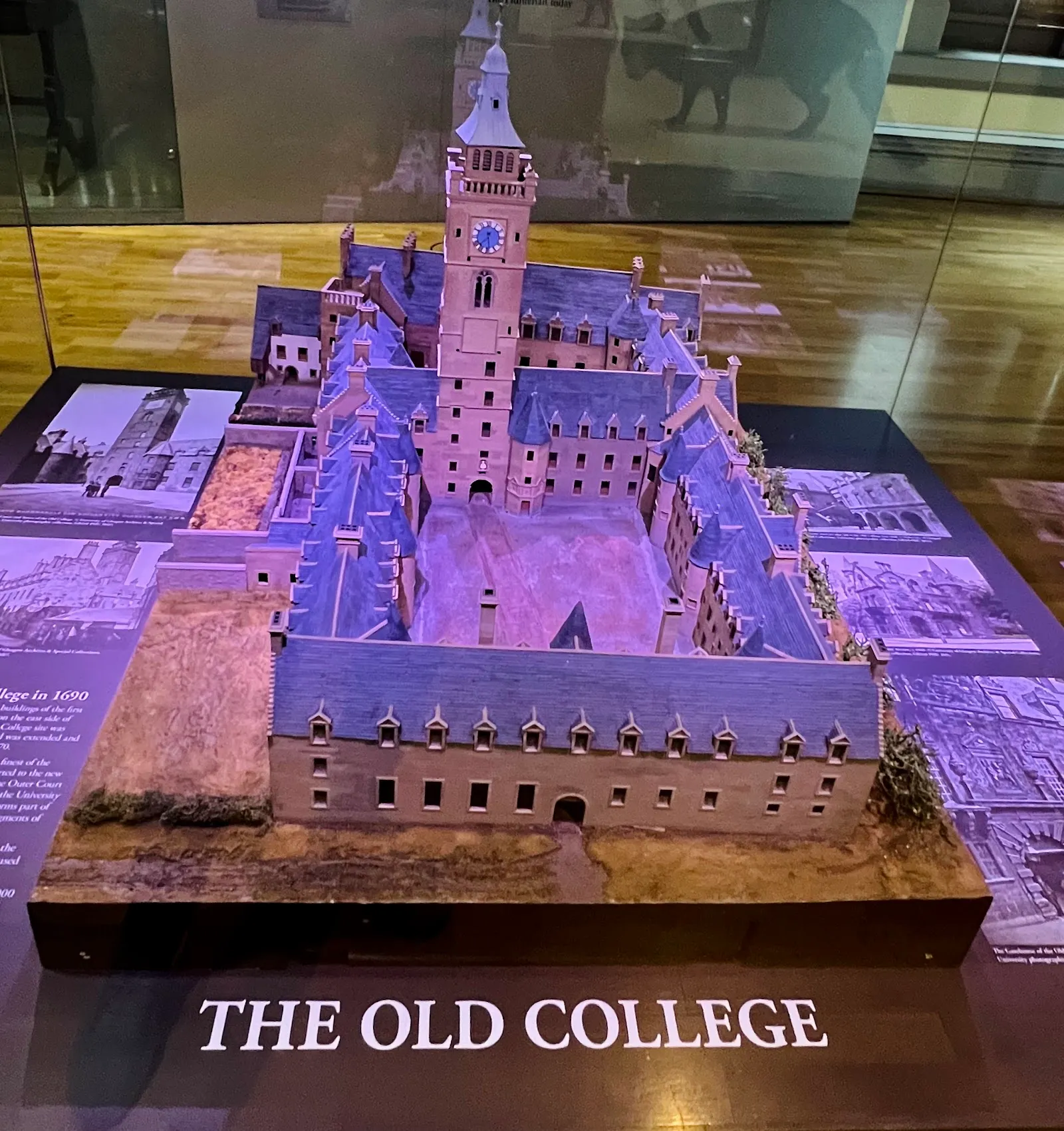
The Hunterian opened in 1807 after William Hunter, an eighteenth-century physician and anatomist, left his collection to the University of Glasgow. The objects span natural history, archaeology, anthropology and anatomy, as well as scientific instruments and artworks. Their variety gives the museum its cabinet-of-curiosities character: a visit can move from fossils and geological specimens to Roman antiquities and the history of medicine.
The museum is part of a wider university collection. Related displays and venues, including the Hunterian Art Gallery, the Zoology Museum and the Anatomy Museum, are in other university buildings. Check which collections you want to see before setting out, as they are not all in the same place.
Find the entrance in the university cloisters
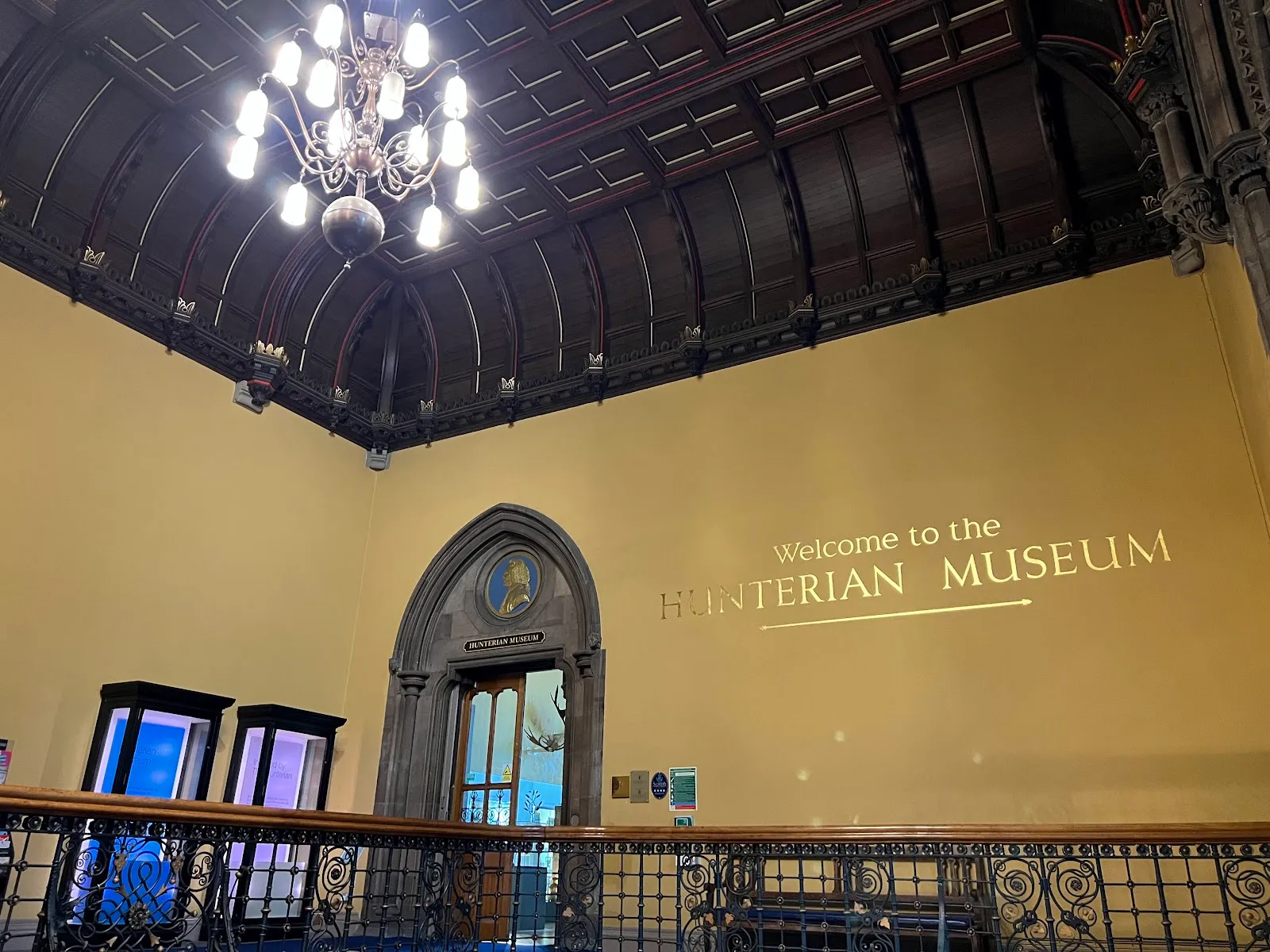
The museum is inside the University of Glasgow’s main campus, in the historic Gothic buildings. If you are coming through the cloisters, follow the staircase and signs towards Bute Hall to reach the entrance. The campus itself is part of the visit: its architecture and cloisters are close by, and the Hunterian Art Gallery is next door.
The displays are spread over two floors. The building’s lift can be slow, so allow extra time if you need it. Wheelchair access is available, along with an induction loop system and magnifying glasses at reception.
Roman finds, fossils and natural history
The collections range across subjects and periods. Look for Roman archaeological objects and a display about the Antonine Wall, the Roman frontier in Scotland. Natural history includes fossils and geological specimens; among the notable objects are a fossilised shark reported to be 330 million years old and an Egyptian mummy described as 2,500 years old.
Scientific instruments, coins and medals, and objects connected with anatomy add further strands to the collection. Some displays deal with medical specimens, which may not suit every visitor. Children interested in dinosaurs, fossils or ancient objects have plenty to look for, while the range of material also gives adults a reason to take their time.
Preguntas frecuentes
Is the Hunterian Museum free to enter?
Yes. The museum has free entry.
Where is the entrance to the Hunterian Museum?
It is within the University of Glasgow’s cloisters. Follow the staircase and signs towards Bute Hall.
How much time should I allow for a visit?
The displays cover two floors, but the available information does not give a typical visit length.
Is the Hunterian Museum accessible?
Wheelchair access and an induction loop system are available. Magnifying glasses can be found at reception.