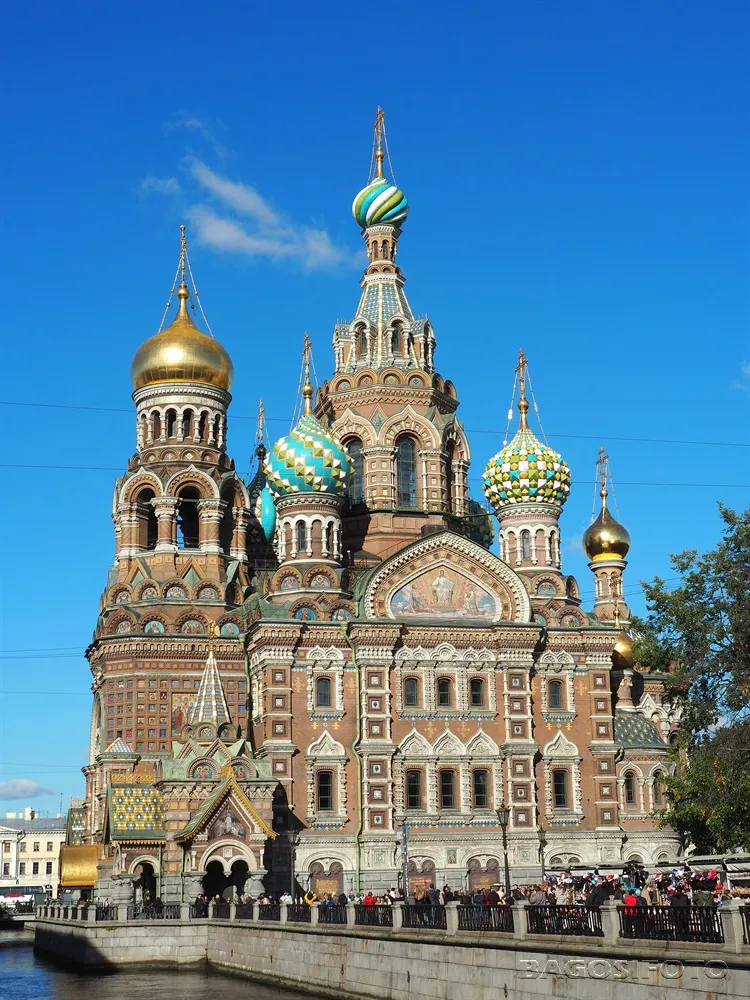
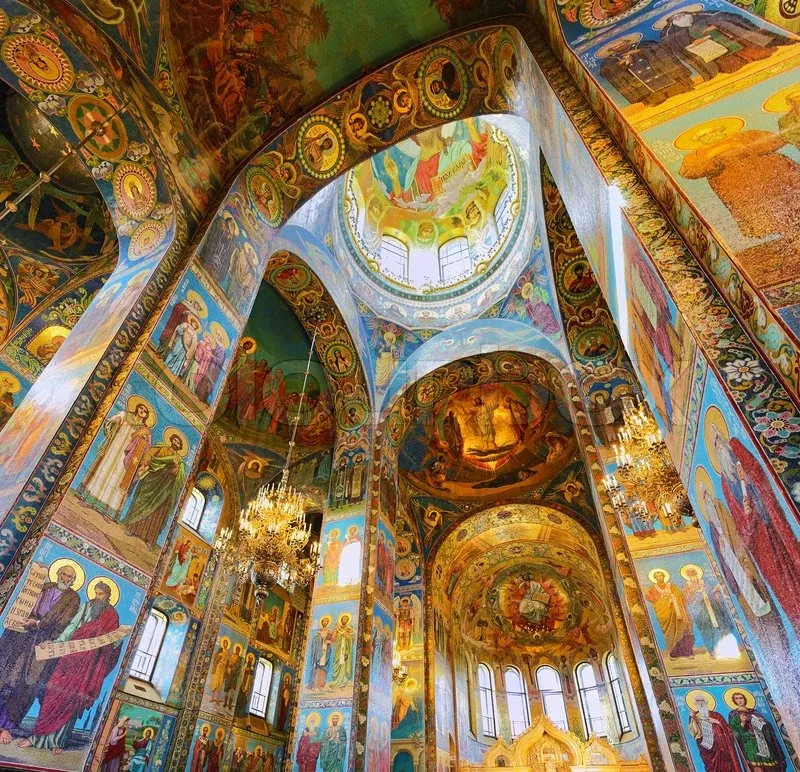
On the Griboyedov Canal in St Petersburg, the Church of the Savior on Spilled Blood stands out for its colorful onion domes and detailed façade. Built as a memorial on the spot where Emperor Alexander II was fatally wounded in 1881, it combines a solemn history with Russian Revival architecture inspired by older Russian forms. Inside, mosaics cover the walls and ceilings, with biblical scenes and images of Orthodox saints. Allow time to look closely at the decoration, which fills nearly every part of the interior.
A memorial on the canal
The church stands on the Griboyedov Canal at the spot where Emperor Alexander II was mortally wounded in 1881. His son, Alexander III, ordered a memorial church there. Construction began in 1883 and was completed in 1907, with funding from the imperial family and private donors.
The name refers to the blood shed in the attack. Alexander II was known as the Tsar-Liberator for abolishing serfdom across the Russian Empire in 1861. The church therefore carries both a personal memorial and a connection to a major reform in the country’s history.
A Russian Revival design
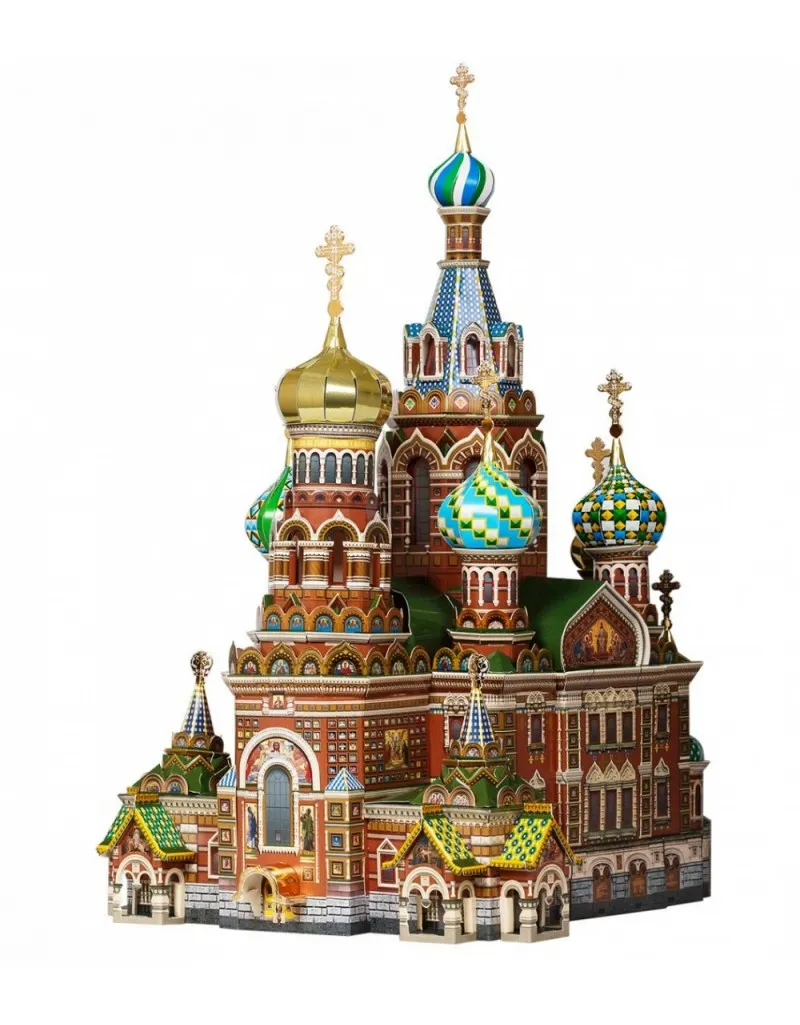
St Petersburg is known for Baroque and neoclassical architecture, so the church’s medieval Russian style makes it particularly distinctive in the city. Architect Alfred Parland looked to Moscow’s St Basil’s Cathedral as a model. Five richly decorated onion domes rise above the building, while the exterior’s bright colors and elaborate detail set it apart from the surrounding architecture.
The church was built over 24 years. Its complex decoration contributed to the long construction, as the interior required thousands of square metres of mosaics.
Mosaics inside
Mosaic panels cover the walls and ceilings, depicting biblical scenes, Orthodox Christian saints and the divine patrons of the Romanov family. Several Russian artists worked on the mosaics. Their scale and fine detail make the interior a central part of a visit, so leave time to look beyond the broad patterns and follow the individual scenes.
The church was built as a memorial and did not host regular services; memorial services for Alexander II were held there. During the Soviet period, the building was used as a morgue and a warehouse, and it reopened to the public in the 1990s.
Preguntas frecuentes
Why is it called the Church of the Savior on Spilled Blood?
The name refers to the site where Emperor Alexander II was fatally wounded in 1881. The church was built there in his memory.
What can you see inside the church?
Mosaics cover the walls and ceilings, showing biblical scenes, Orthodox saints and patrons of the Romanov family.
Where is the Church of the Savior on Spilled Blood?
It is on the Griboyedov Canal embankment in St Petersburg.
How long should you allow for a visit?
Allow a few hours if you want time to examine the interior mosaics in detail.