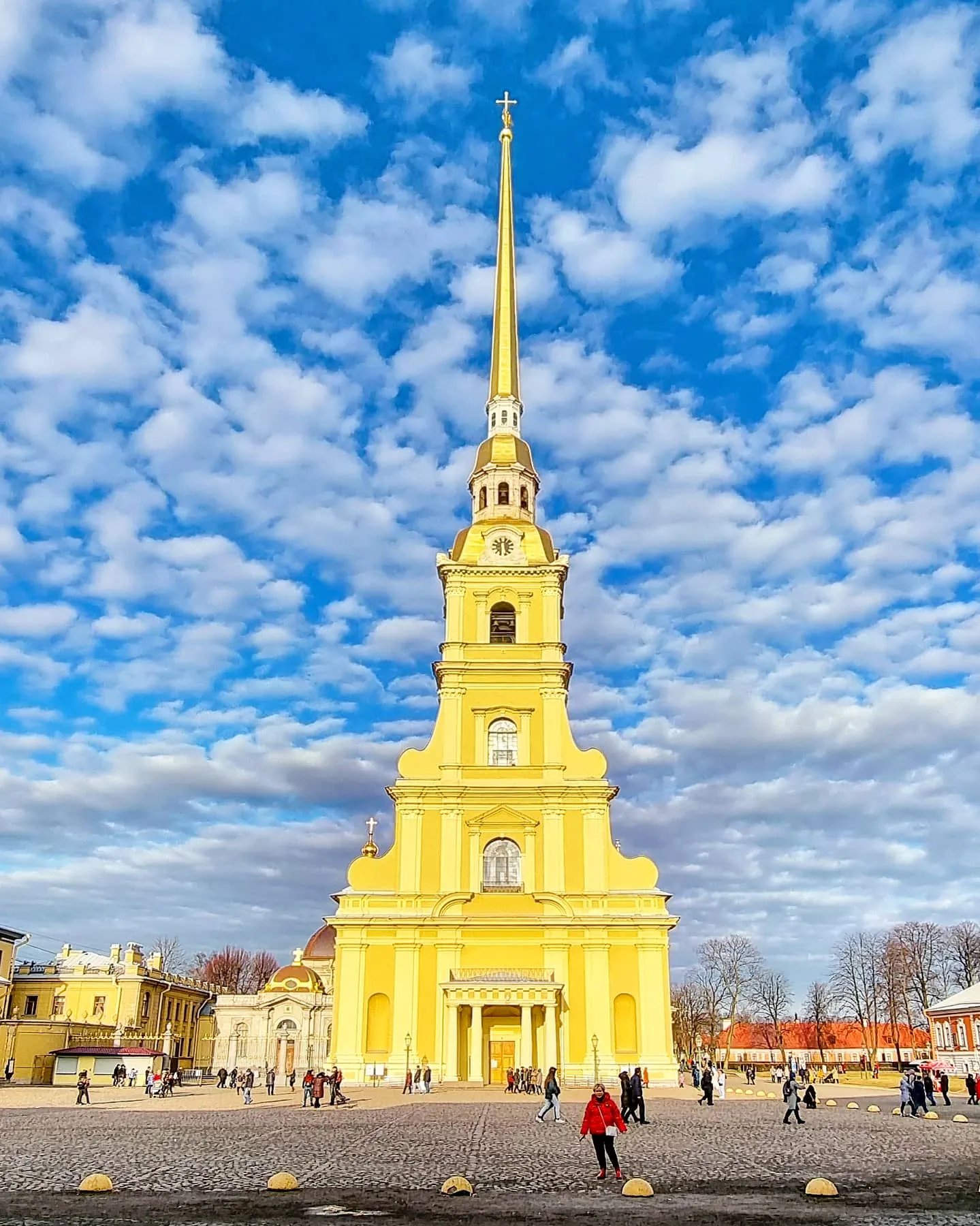
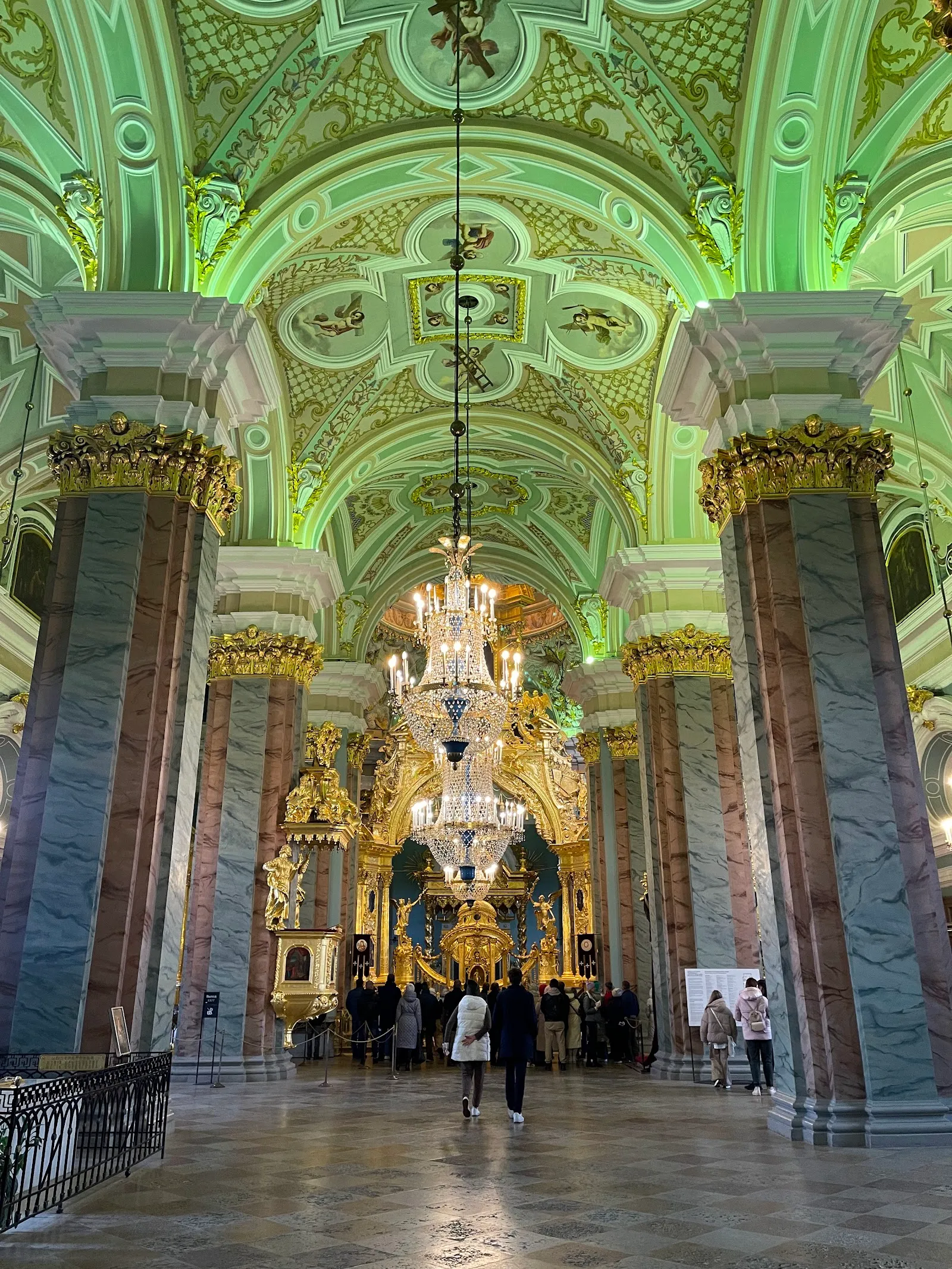
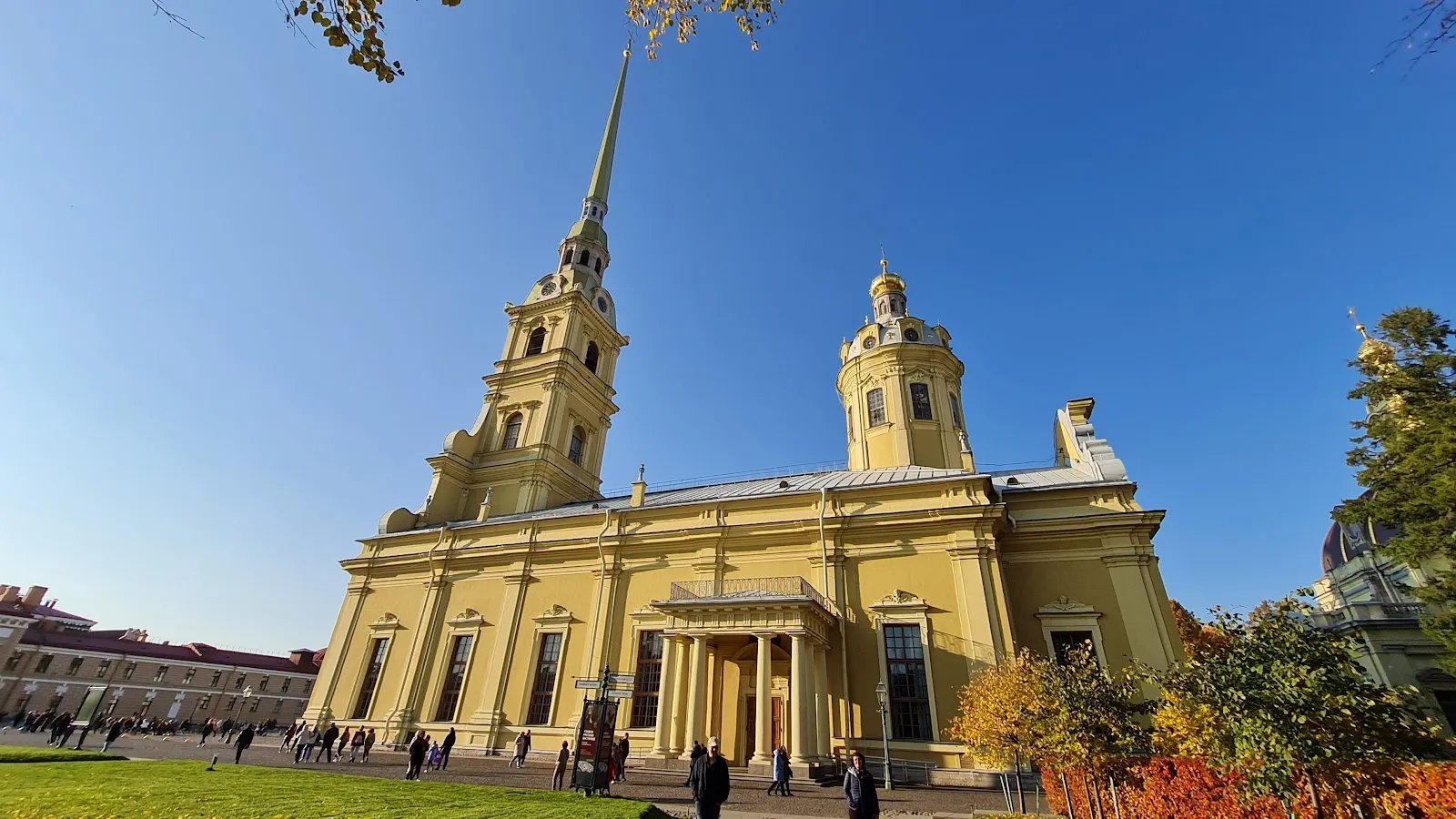
Peter and Paul Cathedral stands inside the Peter and Paul Fortress on Hare Island, beside the Neva River. Built under Peter the Great, it was among the first churches in St Petersburg and has a Baroque interior with Italian-style decoration and green lighting across the ceilings. Its main historical draw is the imperial burial chapel: nearly all Russian emperors and empresses from Peter the Great to Nicholas II and his family are buried here. Read a little about the rulers before you go, then leave time to explore other parts of the fortress.
An early church in St Petersburg
Peter and Paul Cathedral is inside the fortress of the same name on Hare Island, along the Neva River. Peter the Great ordered the fortress and cathedral as part of the new city’s early development. The cathedral was built between 1712 and 1733 and is one of St Petersburg’s oldest landmarks.
Architect Domenico Trezzini designed the building in a Baroque style. Its rectangular plan, tall tower and European architectural details set it apart from older Muscovite churches. The cathedral was intended to give the new capital a distinct architectural character, looking westward rather than following Byzantine church forms.
Baroque details and the cathedral interior
Inside, Italian-style decoration and green lighting on the ceilings give the cathedral a different feel from the more restrained appearance of the imperial tombs. Baroque design uses gilding, sculpture and painted effects to create a dramatic interior. Look up as you move through the church to take in the ceiling treatment and the contrast between its decorated surfaces and the tombs below.
The cathedral’s tall spire is a prominent part of the city’s skyline. The bell tower reaches 122 metres, according to the material available for this guide. Peter the Great wanted the tower to rise above Moscow’s Ivan the Great Bell Tower, a choice that also made the cathedral a visible marker of the new capital.
The imperial tombs
The cathedral is the burial place of nearly all Russian emperors and empresses from Peter the Great to Nicholas II and his family. The tombs are modest in appearance compared with the ornate church interior. Knowing something about the rulers before arriving can help make the sequence of burials easier to understand.
The chapel tomb of Nicholas II and his family is a particularly solemn part of the visit. They were murdered, and their remains were later buried here with honours in 1998. Take time to approach this area quietly and respectfully.
Explore the fortress beyond the cathedral
The cathedral is one part of the Peter and Paul Fortress, whose grounds contain several museums and historic buildings. Trubetskoy Bastion is known for its prison cells, and the fortress also has the State Museum of the History of St Petersburg and the functioning St Petersburg Mint. Check which sites you want to visit before setting your pace through the complex.
For a view across the city, a walk along the fortress wall between Naryshkin and Gosudarev Bastions is another option. The cathedral visit can fit into a wider walk around the grounds, with the Neva riverbank close by.
Preguntas frecuentes
Where is Peter and Paul Cathedral?
It is inside the Peter and Paul Fortress on Hare Island, beside the Neva River in St Petersburg.
Who is buried in Peter and Paul Cathedral?
Nearly all Russian emperors and empresses from Peter the Great to Nicholas II and his family are buried there.
What is notable about the cathedral interior?
The interior has Italian-style decoration, Baroque details and green lighting on the ceilings. The decorated space contrasts with the comparatively modest imperial tombs.
What else can I see at the Peter and Paul Fortress?
The fortress includes Trubetskoy Bastion, known for its prison cells, the State Museum of the History of St Petersburg and the functioning St Petersburg Mint.