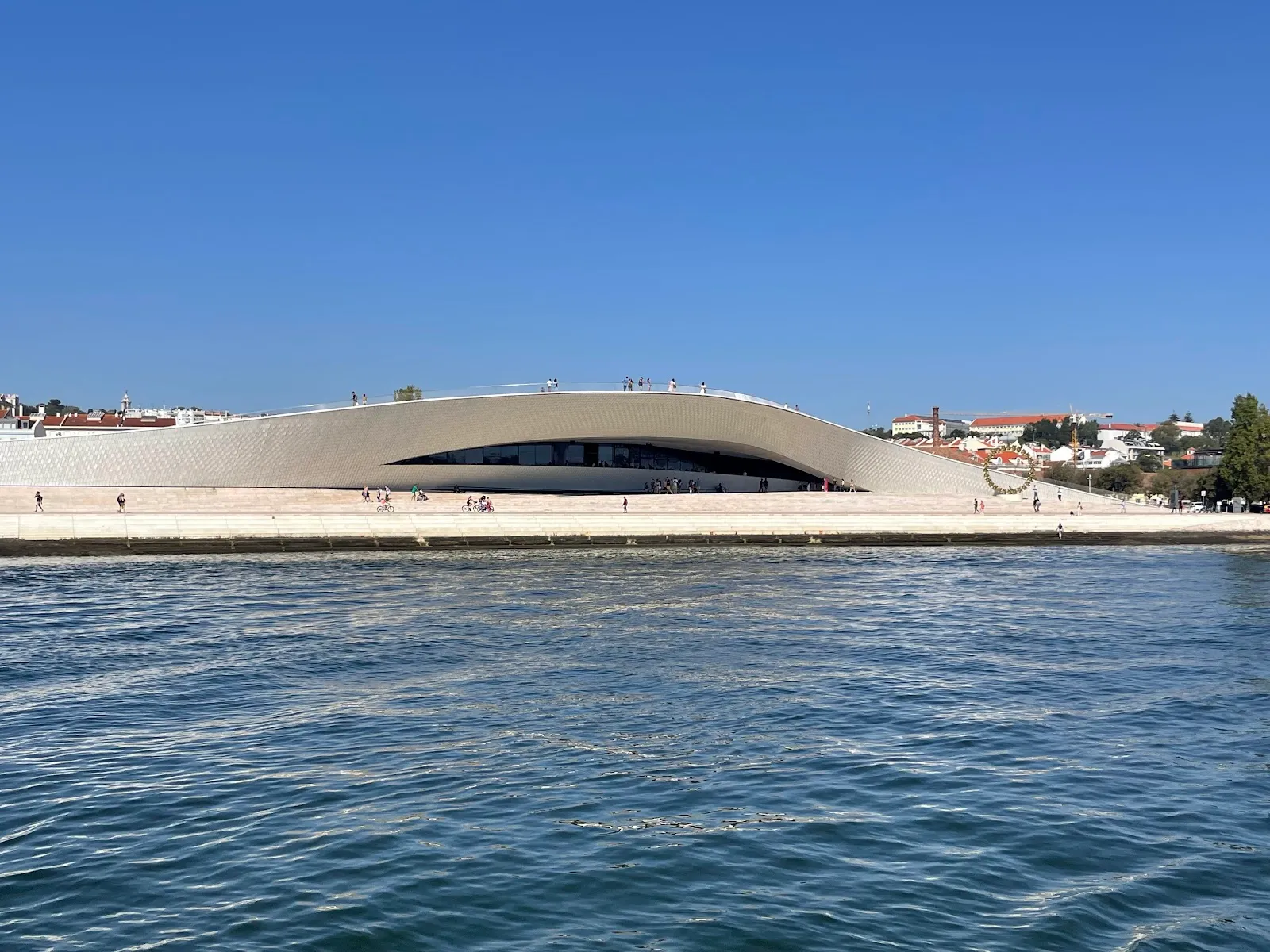
MAAT sits on Lisbon’s Belém waterfront, where a contemporary art museum and a former power station share a riverside site. The newer building, designed by Amanda Levete, has a curving white-tiled form and a rooftop terrace with views across the Tagus towards the 25 de Abril Bridge. Inside, temporary exhibitions explore contemporary art, while the old station preserves the machinery and spaces used to generate electricity. The exhibitions change, so check what is showing if a particular artist or theme matters to your visit.
Two buildings, two different visits
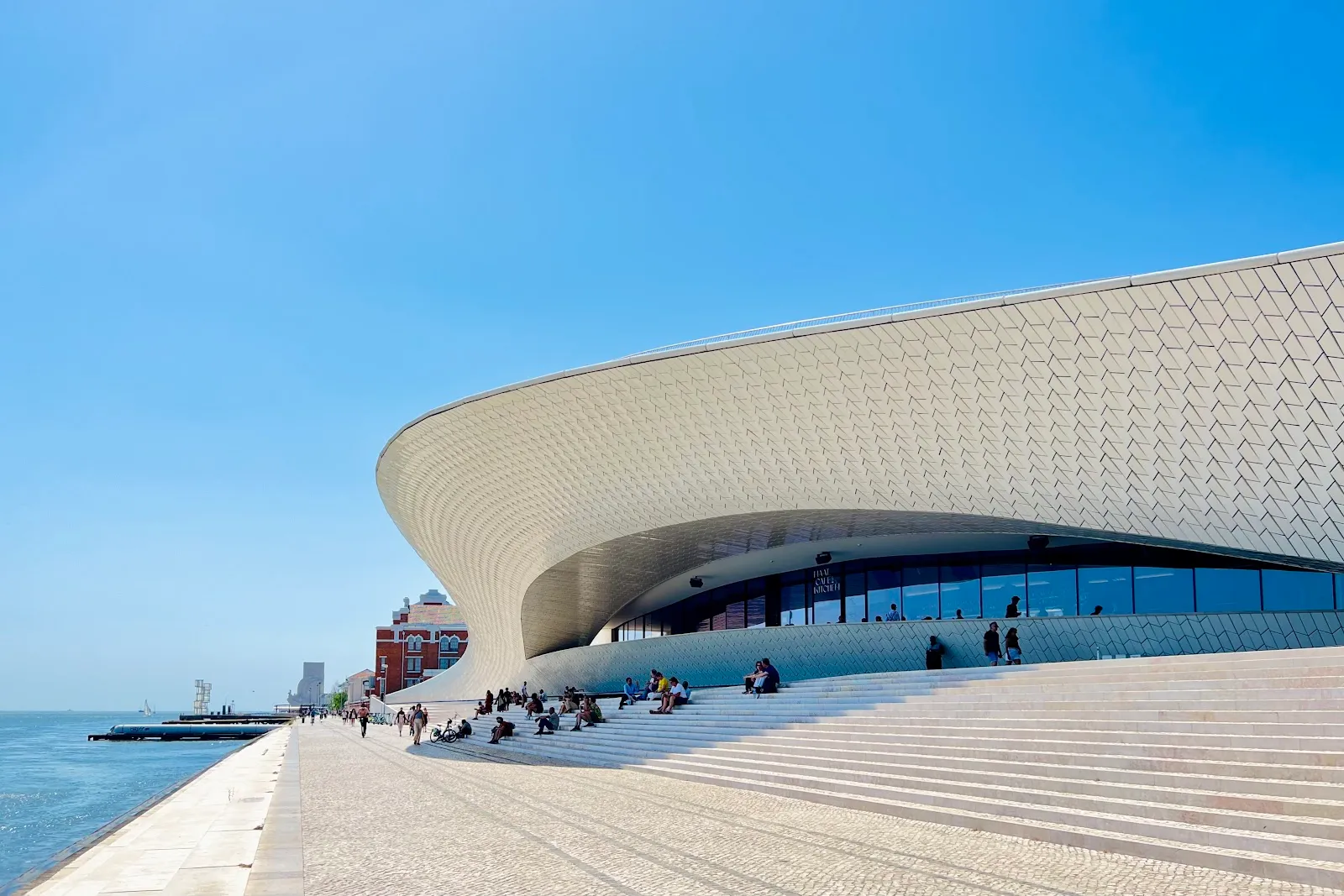
MAAT brings together the contemporary gallery and the former Tejo power station beside the Tagus in Belém. The newer building was designed by British architect Amanda Levete and opened in 2016. Its low, curved profile follows the riverfront, with a white-tiled exterior and a roof visitors can walk across.
The power station, known as MAAT Central, has a different character. Its rooms and industrial equipment preserve the building’s working past, when it generated electricity for Lisbon. The site also includes MAAT Garden, the green space linking the two buildings. Together, the three areas connect art, architecture and the history of energy without making them feel like one continuous exhibition.
Inside the former power station
The old station is a substantial part of the visit for anyone curious about how electricity was produced. The walk-through display takes you among the machinery and former work areas, including furnaces, turbines and generators. Explanatory signs in Portuguese and English describe the power-generation process. Hands-on science activities and video quizzes add an interactive element for children.
The building’s brick, iron and industrial spaces are part of the experience: visitors move through the place where the equipment once operated. The permanent electricity exhibition gives the historic structure a clear purpose, distinct from the changing art programme in the newer gallery.
Changing exhibitions and the riverfront setting
The gallery’s exhibitions rotate, with work by Portuguese and international artists shown across a range of media. The rooms include a tall atrium suited to large-scale works, as well as more traditional galleries for prints and other pieces. The programme can cover contemporary art, architecture and technology, and the works on view change over time. If you are choosing whether to go inside, check the current exhibition details first; interest in the building and power station can also shape how much you enjoy the visit.
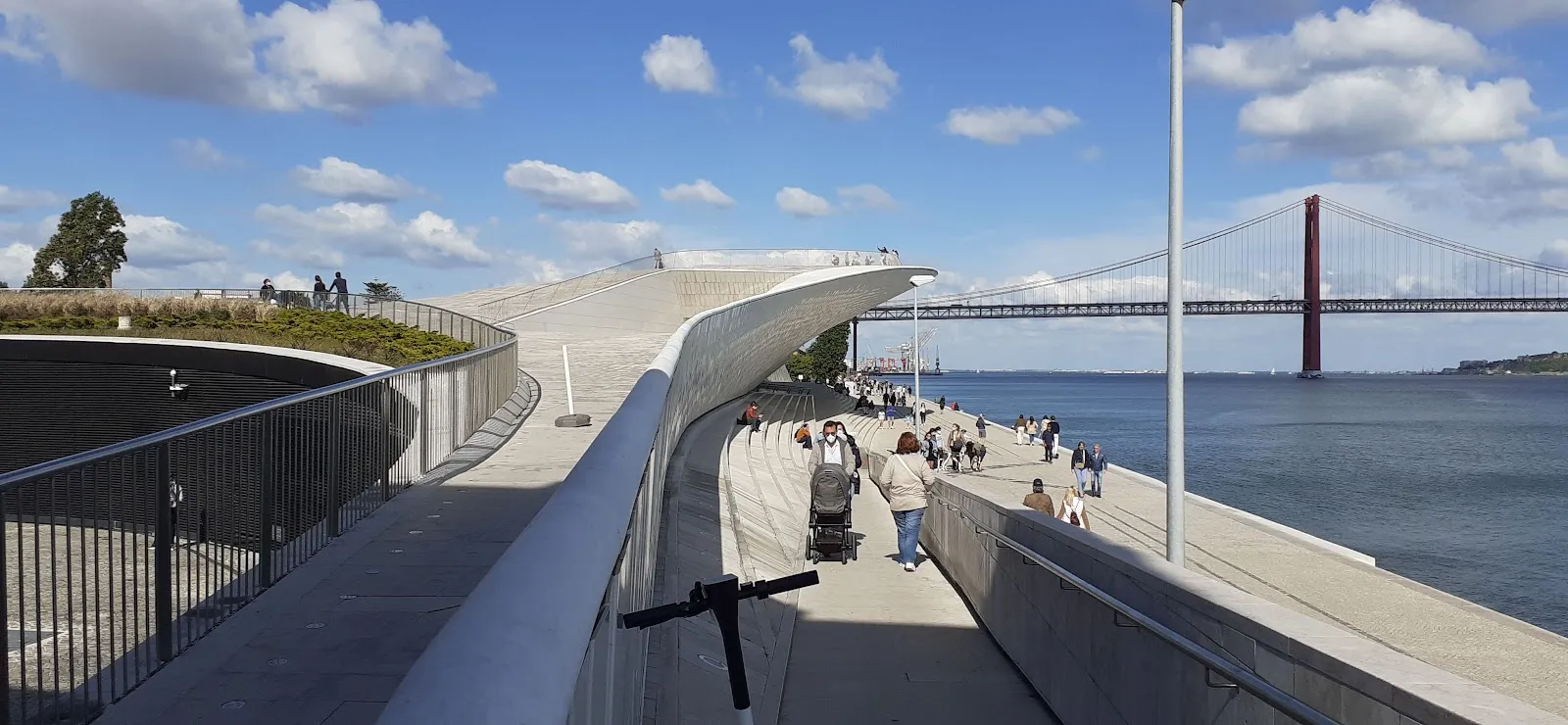
The roof is a viewpoint as well as part of the building’s design. From above, you can look across the Tagus and towards the 25 de Abril Bridge. The riverside garden connects the museum spaces, and the embankment makes for a pleasant approach on foot. A café and restaurant are also on site if you want to pause during a visit.
Preguntas frecuentes
What can you see at MAAT?
The site includes contemporary art exhibitions in the modern gallery and a permanent exhibition about electricity generation in the former Tejo power station.
Can you walk on the MAAT roof?
Yes. Visitors can walk across the roof terrace, which has views of the Tagus and the 25 de Abril Bridge.
How long should you spend at MAAT?
Allow at least four hours to explore both museum buildings and take a break for refreshments.
When is a good time to visit MAAT?
Around sunset suits the rooftop views. A weekday can be quieter, and checking the current exhibitions in advance helps you decide whether to go inside.


