Kumari Ghar is the residence of Kathmandu’s living goddess, the Kumari, on Kathmandu Durbar Square. Its three-storey brick-and-timber façade is known for detailed Newari woodwork, including carved windows, while the inner courtyard has a stupa. The main draw is the chance to see the Kumari appear at a window, though appearances are brief and not guaranteed. Ask at an information desk when to wait, and observe the quiet and no-photography rule during a viewing. It’s a meaningful stop for architecture and Nepal’s living traditions.
A residence on Durbar Square
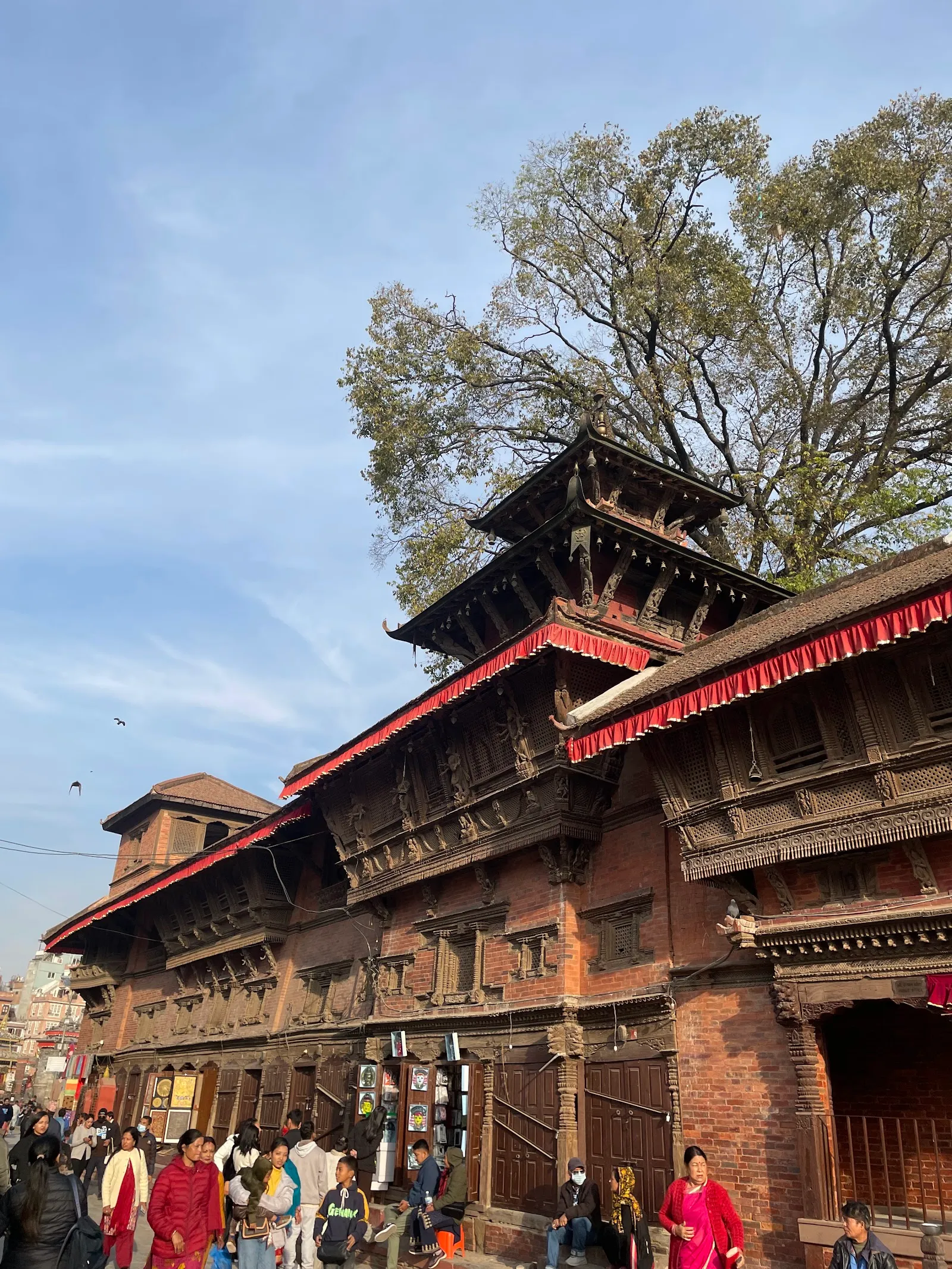
Kumari Ghar stands on the south side of Kathmandu Durbar Square. Built in 1757, it is a three-storey brick-and-timber building in the Newari style. The house is associated with the Kumari, a young girl regarded as a manifestation of the goddess Taleju. She lives here with her family while she holds that role, which lasts until puberty.
The Kumari tradition gives the building its cultural significance. For many visitors, a glimpse of her at a window is the focus of the visit. An appearance is brief and cannot be assumed, so check with an information desk before waiting. There is no photography inside, and those gathered for a viewing are expected to remain quiet.
Carved windows and courtyard
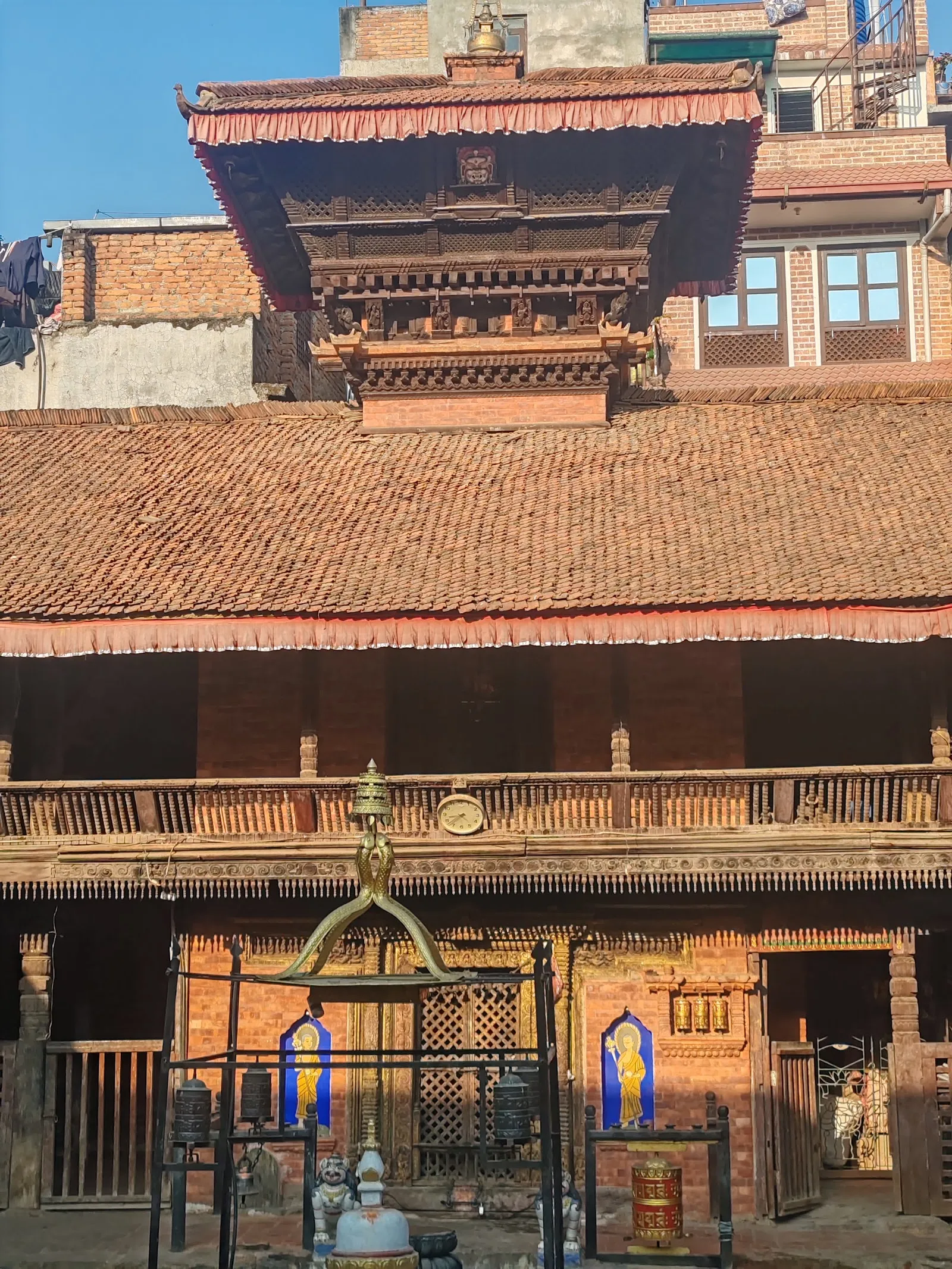
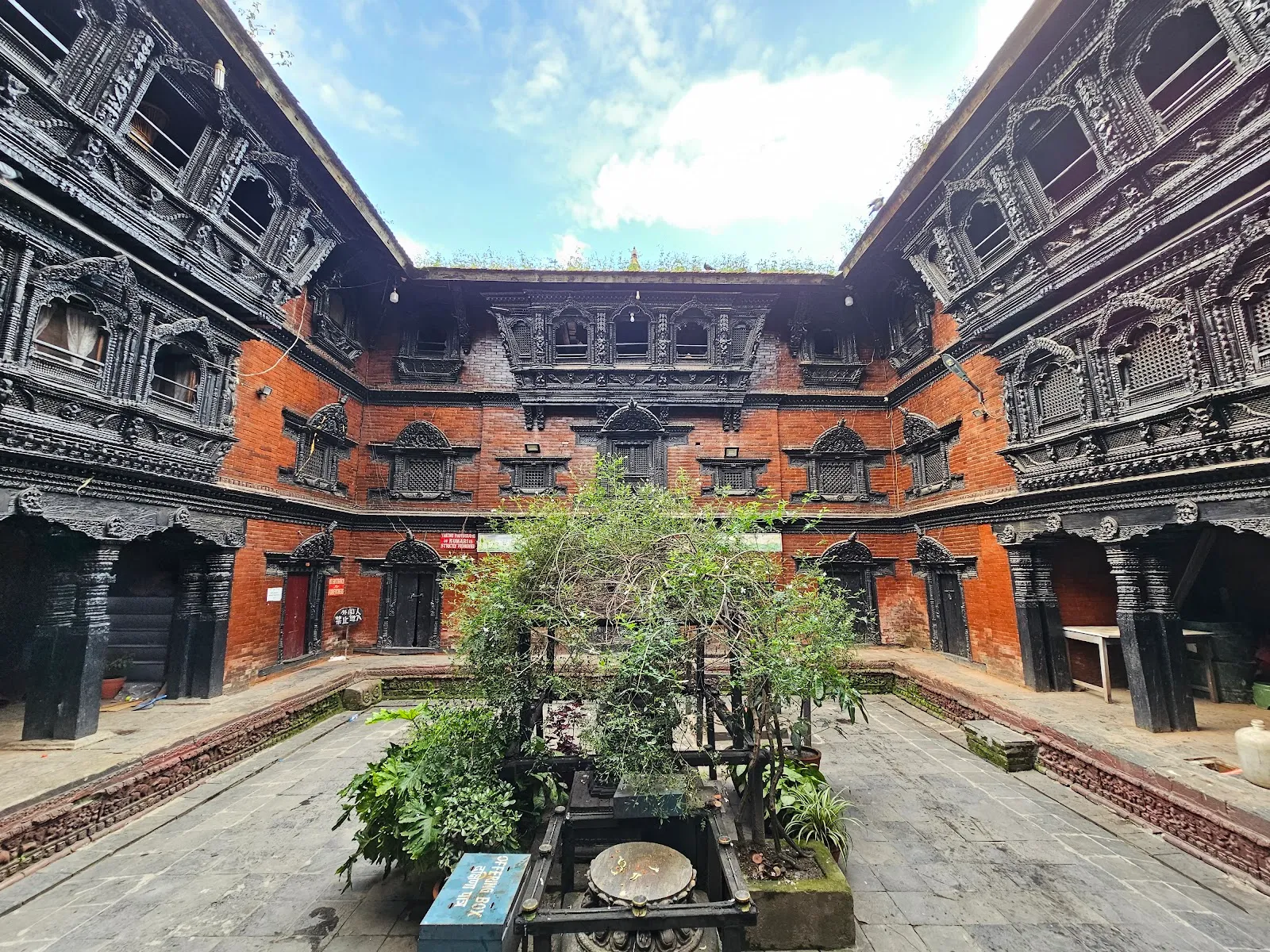
The façade is decorated with carved wooden windows, doors and figures. Look for the detailed latticework and the distinctive Peacock Windows, which are among the building’s best-known details. The carvings reward a slower look as you move through the historic square.
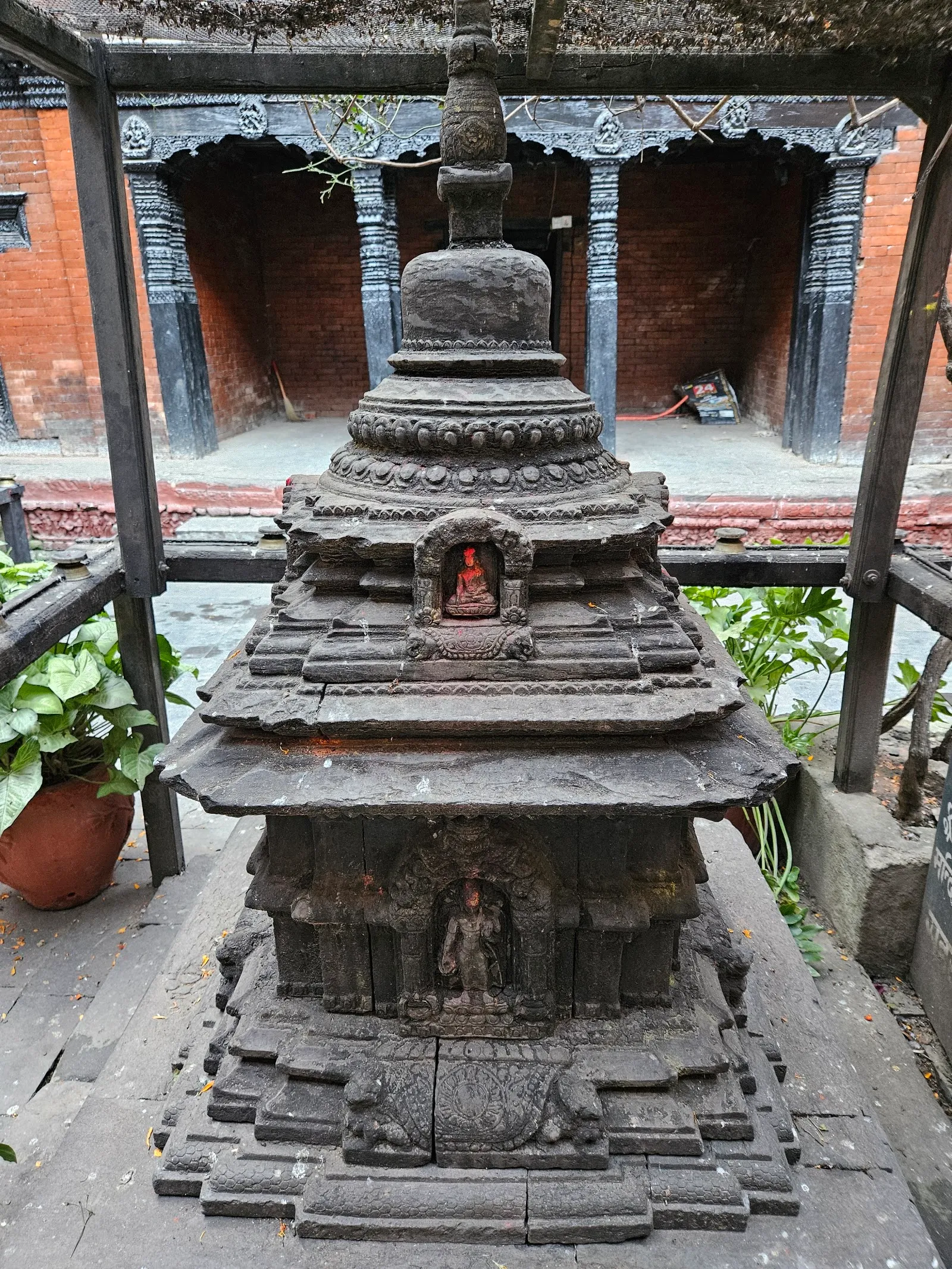
Inside, Kumari Chowk is a courtyard with a stupa at its centre. Its enclosed setting offers a change of pace from the square outside. The courtyard and the building’s woodwork are reasons to stop even if the Kumari does not appear during your visit.
The Kumari in public festivals
The Kumari’s connection to Kathmandu extends beyond the residence. A large chariot is kept at Kumari Ghar and is used to carry her around the town during the annual festival. On major festivals and special occasions, she may also appear outside around Kathmandu Durbar Square.
The tradition has a place in the square’s wider religious life. One account links King Pratap Malla with a dream involving the goddesses Mahakali, Mahalaxmi and Kumari, and with an annual dance recital inspired by it. Ask locally about the Kumari’s selection and the customs connected with her role for more context during your visit.
Preguntas frecuentes
Where is Kumari Ghar?
It is on Kathmandu Durbar Square, on the south side of the square.
Can you see the Kumari at Kumari Ghar?
You may see her appear at a window, but the appearance is brief and not guaranteed. Ask an information desk about the expected timing.
Can you take photos inside Kumari Ghar?
No. Photography inside is not allowed, and visitors should remain quiet during an appearance.
Does entry to Kathmandu Durbar Square cover Kumari Ghar?
Visitor information indicates that the Kathmandu Durbar Square entry ticket also covers Kumari Ghar.