
Hida no Sato Folk Village Museum is an open-air museum on the edge of Takayama, in Gifu Prefecture. It brings together about 30 traditional houses, storehouses and other buildings moved from across the Hida region. Most are farmhouses with steep thatched roofs in the gassho-zukuri style, and many date from the Edo period. You can walk between the buildings, step inside most of them, and watch craft demonstrations. The village is quiet, and its mountain setting changes with the seasons, from snow in winter to fresh green in late spring.
An open-air museum, not a living village
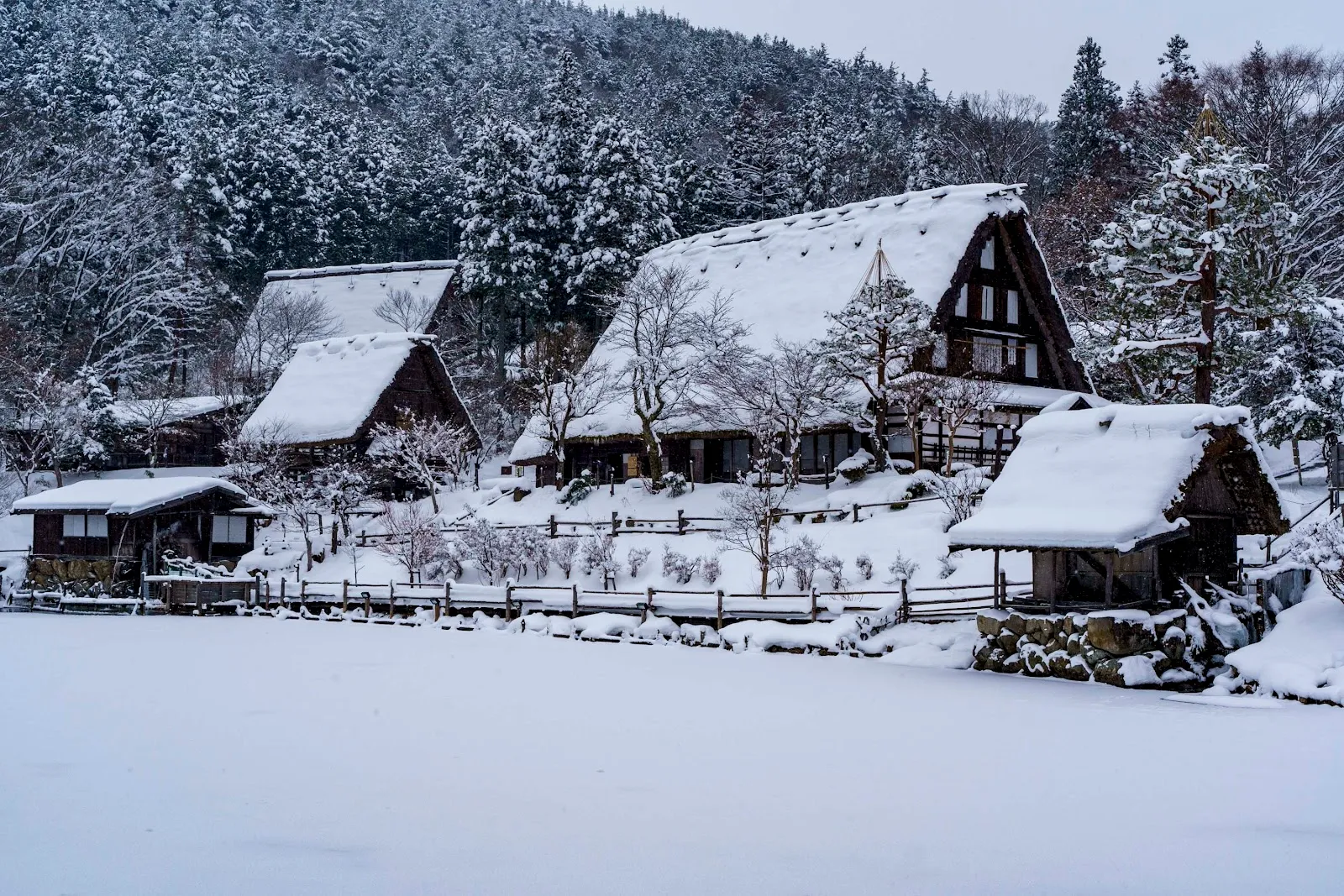
Hida no Sato is a museum, so no one lives in the houses. The buildings were scattered across the countryside of the Hida region, and many stood far from their neighbours. In 1971 they were taken down from their original sites and rebuilt in Takayama to protect them.
The collection includes over 30 buildings, most of them farmhouses. Four are listed as National Important Folk Cultural Property. Some of the houses are estimated to be between 100 and 500 years old, and the village includes storehouses and other structures alongside the homes. Some of the buildings came from areas that faced destruction during river dam projects.
The gassho-zukuri style takes its name from the shape of the roof, which is said to resemble hands joined in prayer. The steep thatched pitch keeps snow from settling on the roof in winter. Inside, many houses have an irori hearth set into the floor.
Inside the houses and demonstrations
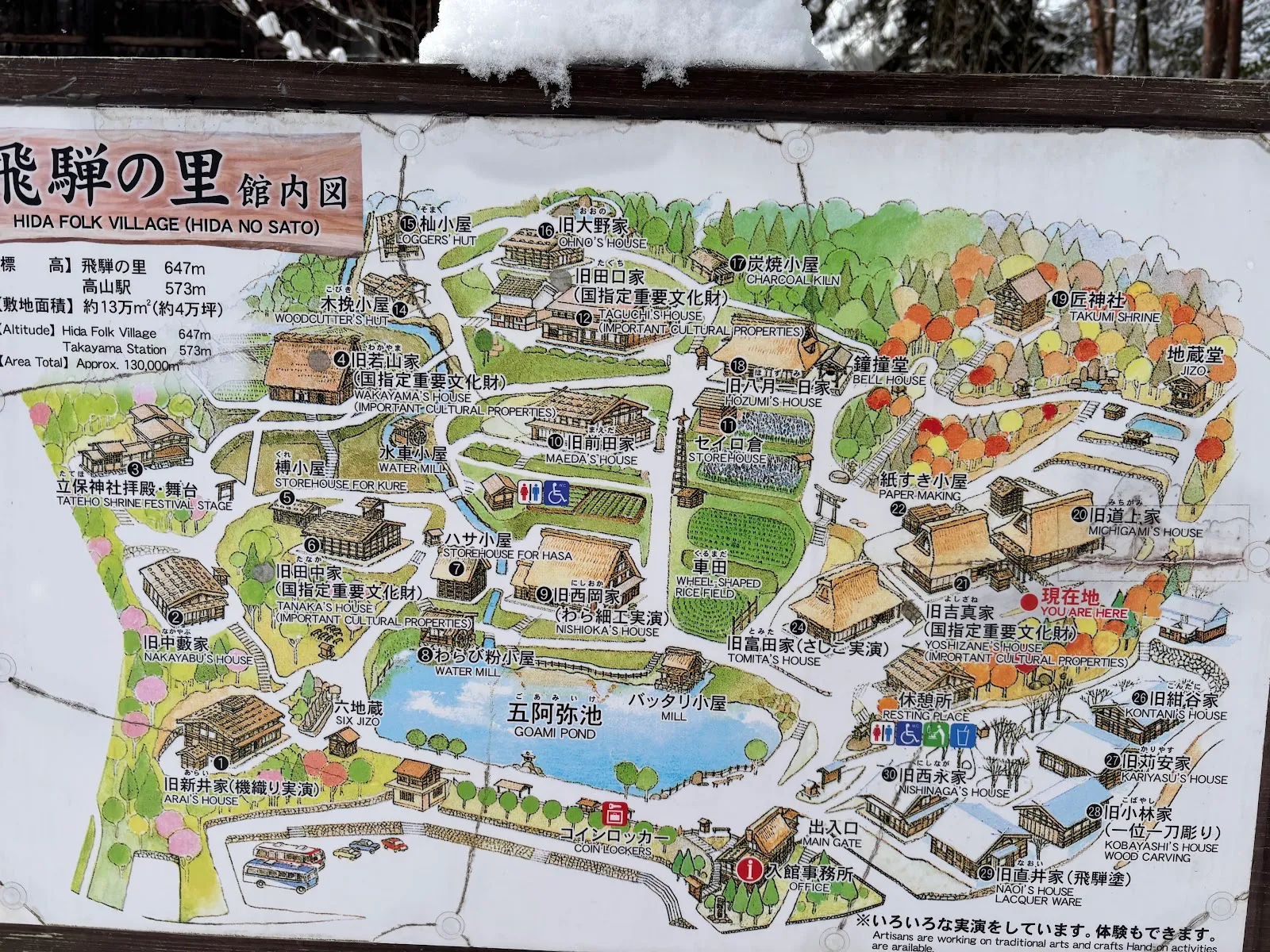
The houses are open to enter, so you can see how the rooms were arranged and used. Displays show the tools, tableware, weaving equipment and personal items of daily life. The village holds around 8,000 folk items in total. Information is available in English throughout, which makes it easier to follow the history of each building.
Craft demonstrations take place on the grounds. Woodworking has been seen in past visits, and straw work is shown as well. The demonstrations change through the day, and some rotate between traditional crafts such as sashiko needlework and kumihimo braiding. Check the schedule when you arrive to plan around the ones you want to see.
If you are interested in the crafts, a craft centre stands across the street, where visitors have been able to try chopstick making.
Stamps, toys and time with children
The stamp rally is one of the easiest ways to move through the village. Stamps are placed at the houses, and you can collect them in a stamp book bought at the entrance. If you do not want to buy one, the back of the brochure works too.
Families find plenty to do. There are old folk toys that children can play with, including water pistols. The houses are spacious enough to explore at a child's pace, and the grounds are wide, so there is room to walk and rest between buildings.
The village has accessible facilities, including an accessible entrance, parking area, restrooms and seating. Barrier-free restrooms and nursing areas are also available. A restaurant is on site for a meal during your visit.
Getting there and what to expect
The village is about a 30-minute walk from Takayama Station. The easier option is the Sarubobo bus from the Takayama Bus Center beside the station, which takes about 10 minutes. Bus services are limited, so keep an eye on the timetable for the return trip.
Parking is available in a paid lot. Street parking is also paid, so plan for that if you come by car.
The village suits visitors who want a museum-style visit in a quieter setting. If you have only a short time in the area, it offers a closer look at the traditional architecture of the Hida region without the longer journey to Shirakawa-go.
When to visit
Winter brings snow over the thatched roofs, which is a popular time to see the village. Spring is quieter and green, and visitors on a late spring Saturday found the paths uncrowded and a cool breeze through the village even in the afternoon sun. September was also calm when visitors came.
Because the grounds are wide and the houses take time to see, a morning start gives you more time to enter each building before the afternoon. The buildings are close together, so you can cover the site on foot without needing to move between them by bus.
Preguntas frecuentes
How much is the entry fee?
Adult admission is 700 yen. Children aged 6 to 15 pay 200 yen.
How long do you need at Hida no Sato?
Plan two to two and a half hours to enter every house. You will need more time if you want to rest or sit by the grounds.
How do you get to Hida no Sato from Takayama Station?
The village is about a 30-minute walk from Takayama Station. You can also take the Sarubobo bus from the Takayama Bus Center beside the station, which takes about 10 minutes.
Is Hida no Sato wheelchair accessible?
Yes. The site has a wheelchair accessible entrance, accessible parking, an accessible restroom and wheelchair accessible seating.


