
Nishi Hongan-ji is a major Jodo Shinshu Buddhist temple in Kyoto’s Shimogyo Ward, a short walk from Kyoto Station. Its spacious grounds hold large wooden halls, including Goei-do, dedicated to the tradition’s founder, and Amidado, the main worship hall. Look for the white lanterns and shrines inside, the carved gate and the old ginkgo tree. Entry to the grounds is free, and the temple remains an active place of worship, so visitors can explore its architecture while observing a living religious site.
A temple headquarters in Kyoto
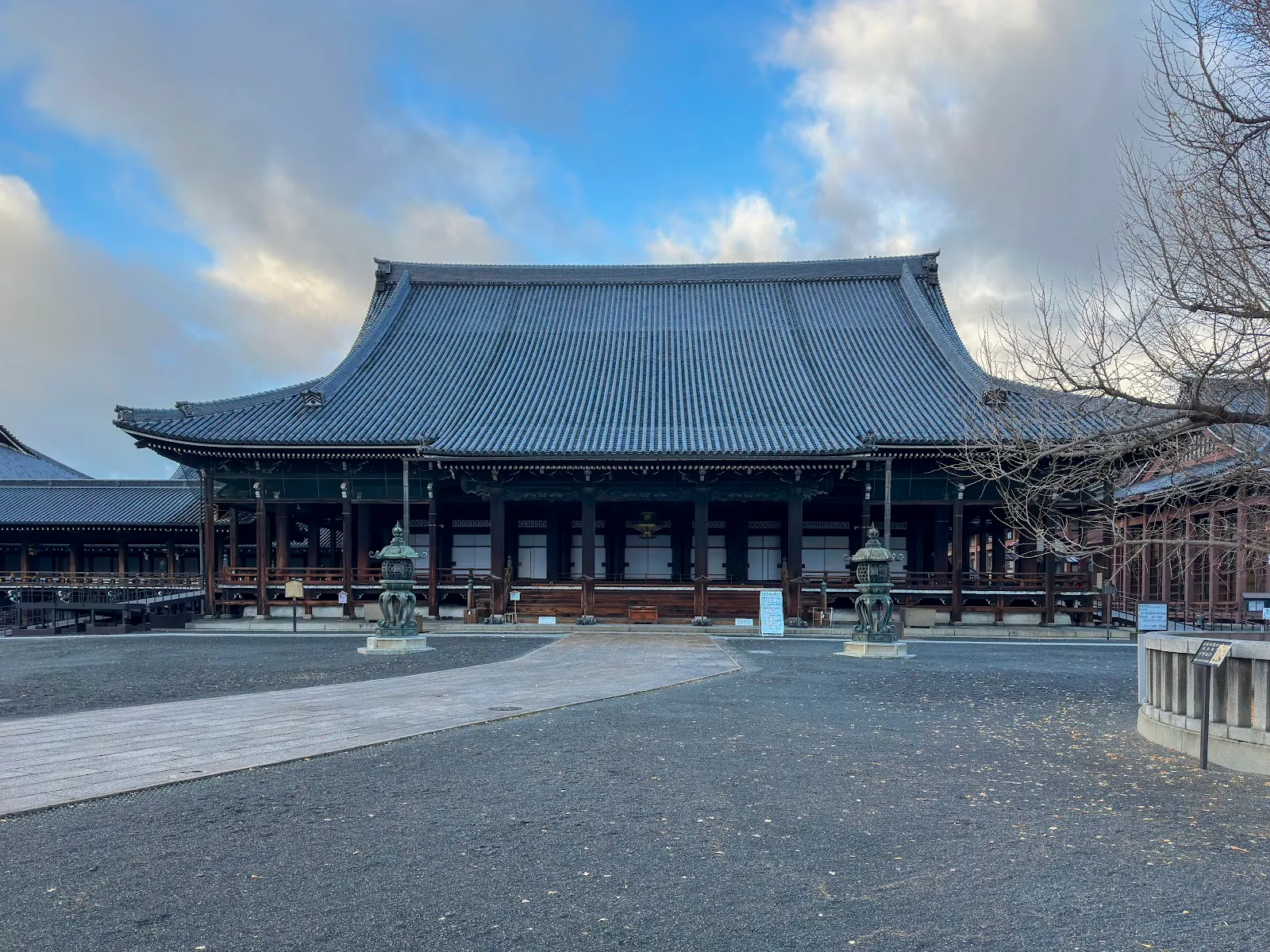
Nishi Hongan-ji is the head temple of the Honganji branch of Jodo Shinshu Buddhism, a tradition based on the teachings of Shinran. The temple was moved to its present site in Kyoto in 1591. Its grounds are part of the Historic Monuments of Ancient Kyoto, listed as a UNESCO World Heritage Site in 1995.
The complex is close to Kyoto Station and has a calm, spacious feel. It remains an active place of worship, so the visit is as much about seeing a working religious site as viewing historic architecture. The buildings and ceremonies belong to the temple’s religious life; give worshippers room and keep your voice low inside.
Goei-do and Amidado
Two large halls anchor the visit. Goei-do, also called the Founder’s Hall, is dedicated to Shinran. It was completed in 1636 and is one of the largest wooden structures in the world. Beside it, Amidado serves as the main worship hall and was completed in 1760.
Inside the halls, look for white hanging lanterns and shrines. Visitors may enter the buildings, but shoes are not allowed inside, so bring socks. Photography is permitted inside, according to the information available for the temple. The wooden structures, their scale and the details of the interiors are the main reasons to take your time rather than rush between halls.
Gates, stages and the ginkgo tree
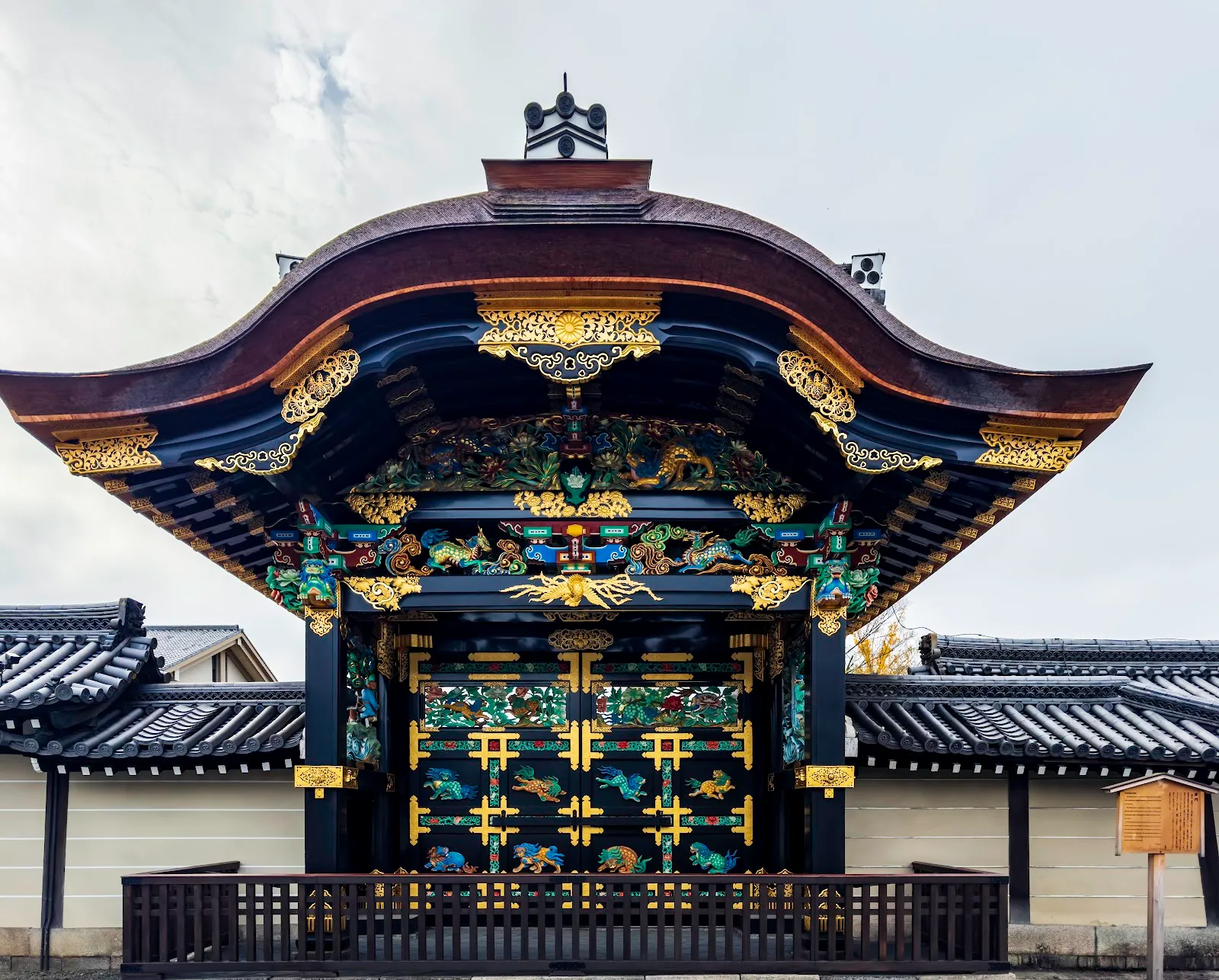
The grounds hold more than the two main halls. The carved Karamon gate and the Shoin reception hall are among the complex’s designated National Treasures. The Kitano Stage, also known as the north Noh stage, is identified as Japan’s oldest existing Noh stage. A traditional dry landscape garden is associated with the study and is designated a Special Place of Scenic Beauty.
Look out for the old ginkgo tree, known for its distinctive upward-pointing form. Its leaves turn yellow in autumn. These smaller details give you reasons to explore beyond the main halls, though the complex is large enough that you can set your own pace.
Visiting respectfully
The grounds open early, and arriving in the morning can give you a quieter time to look around. Morning services are held at the temple; visitors can attend respectfully, sit quietly and follow the example of those worshipping. You do not need to be Buddhist to visit, but remember that the temple is an active place of worship.
Entry to the grounds is free. Allow time to walk between the buildings and, if you plan to go inside, to remove your shoes. Seasonal events, including an autumn flower show, may add another point of interest; check the temple’s official website for current event details.
Preguntas frecuentes
Is Nishi Hongan-ji free to visit?
Entry to the temple grounds is free.
How long should I spend at Nishi Hongan-ji?
Allow about 1 to 2 hours to explore the spacious grounds and main halls.
Can visitors enter the temple buildings?
Yes. Remove your shoes before going inside and bring socks.
What are the main buildings to see?
The main highlights are Goei-do, dedicated to Shinran, and Amidado, the main worship hall.
Is Nishi Hongan-ji an active place of worship?
Yes. Services and ceremonies take place there, so observe quietly and give worshippers space.


