
Kinkaku-ji, officially Rokuon-ji, is a Zen Buddhist temple in northern Kyoto, best known as the Golden Pavilion. Its three-story wooden hall stands beside a pond, with gold leaf covering the upper two floors and the interior of the third. The water reflects the pavilion, trees and small islands, and a garden path leads past several viewpoints. The current building was rebuilt in 1955 after a fire. Visitors cannot enter the pavilion itself, so the visit is an outdoor walk through the grounds and garden.
From shogun’s villa to Zen temple
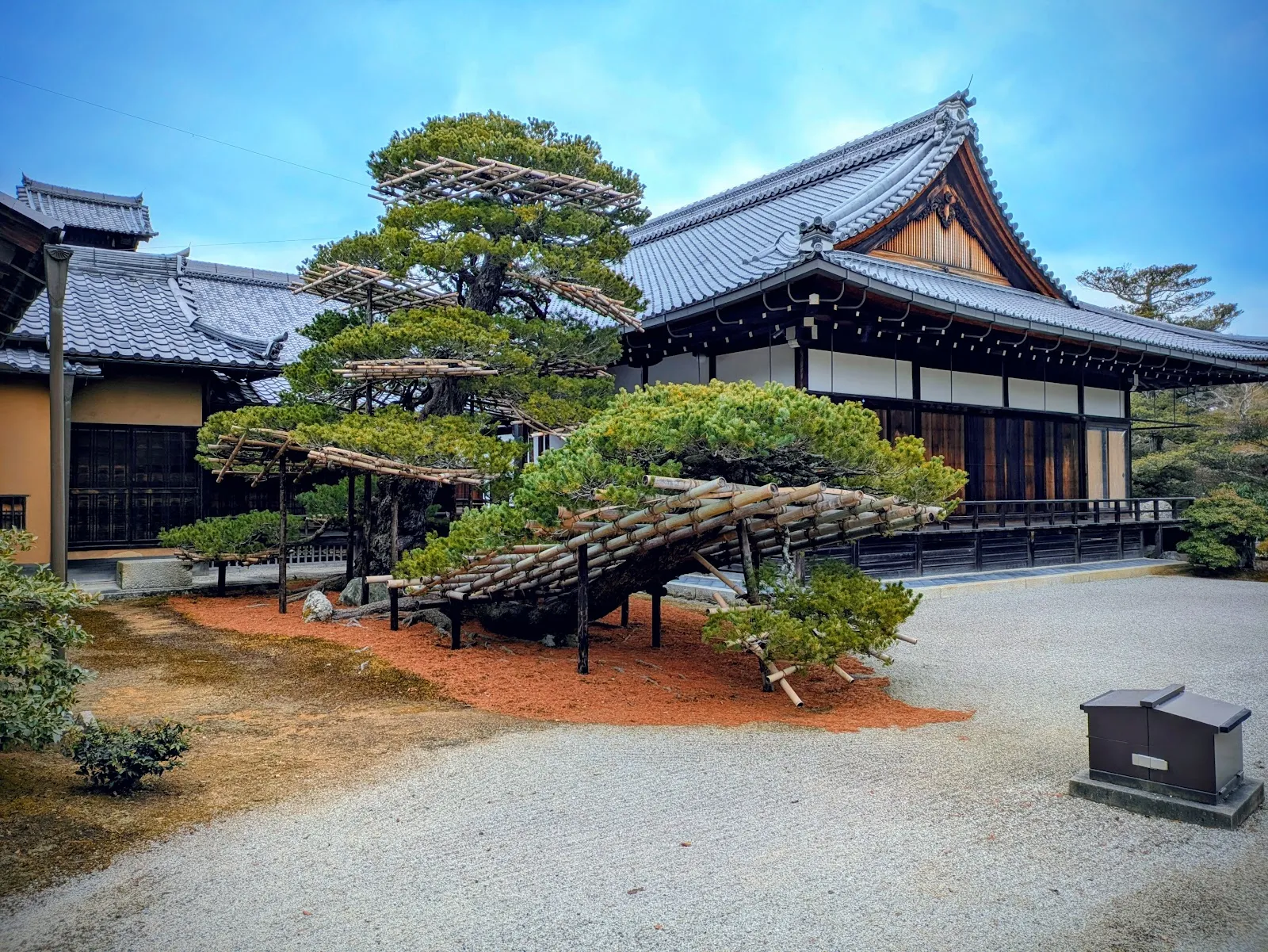
Kinkaku-ji is the familiar name for Rokuon-ji, a Zen Buddhist temple in northern Kyoto. Ashikaga Yoshimitsu built the site as his retirement villa in 1397. After his death in 1408, it became a Zen temple, as he had requested.
The pavilion’s three floors draw on different architectural traditions. The first follows the style of a Heian-period palace, the second that of a samurai residence, and the third that of a Zen Buddhist temple. Gold leaf covers the upper two floors and the inside of the third, except for the floor. A phoenix crowns the roof.
The pavilion and its pond
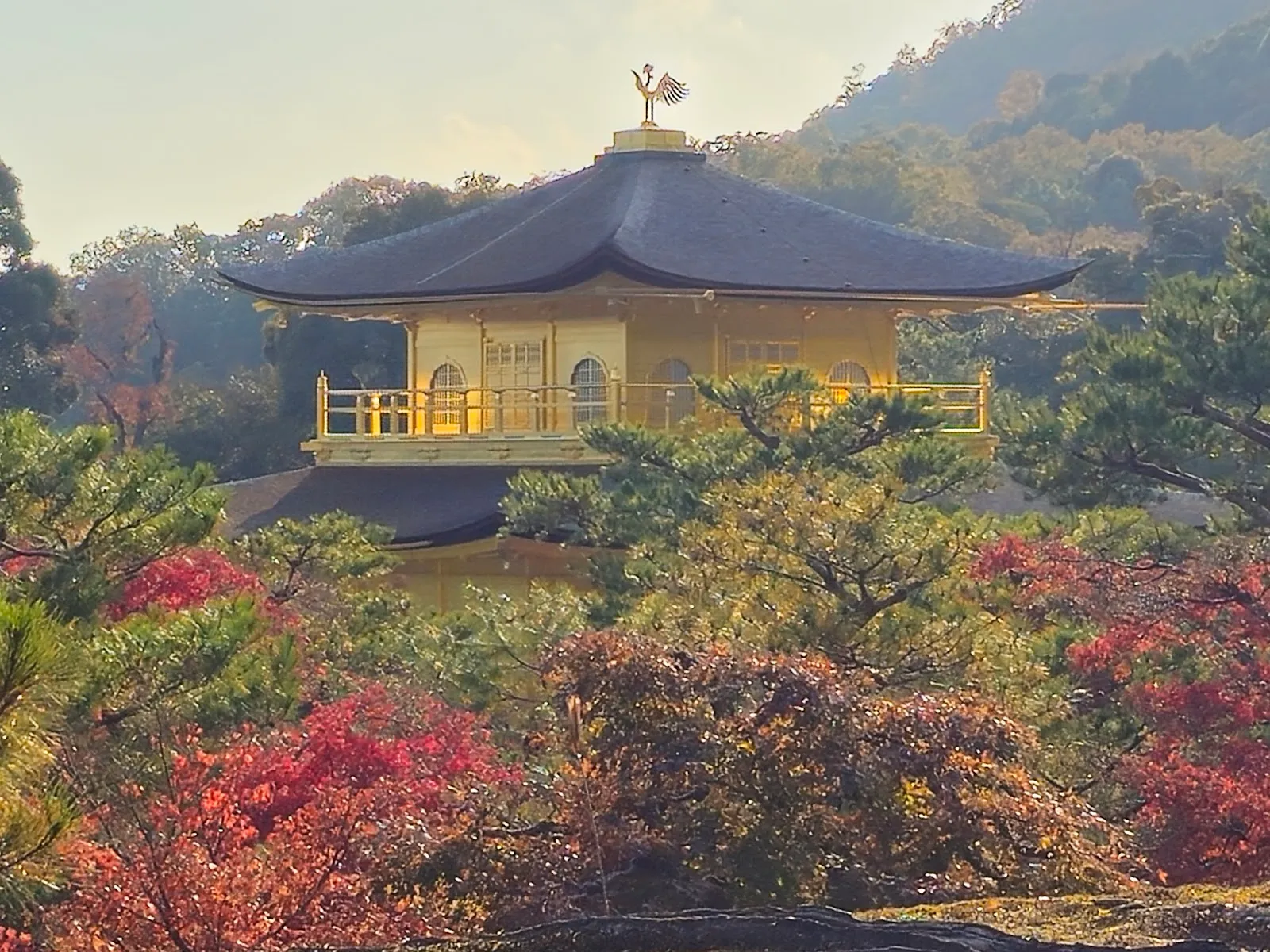
The main view opens across the pond, where the gold-covered hall is reflected in the water. The pond’s islands and surrounding trees frame the building, and the reflections change with the light and weather. On a sunny day, the gold stands out against the greenery; after rain, a break in the clouds can bring a sudden bright reflection.
The pavilion houses relics of the Buddha, but it cannot be entered by visitors. The visit is arranged around outdoor views, with a set path through the grounds rather than access to the hall’s interior.
The gardens and the walking route
Allow time to notice the garden beyond the main photo stop. The grounds include moss-covered stones, mature pines and firs, and ferns growing along rock walls. The path provides several perspectives on the pavilion, and quieter views can open up as you move away from the busiest pond-side area.
The grounds also contain an old stone pagoda and Sekkatei Teahouse. Souvenir shops are near the exit, where vending machines sell drinks and ice cream. The route is walkable, though the viewing areas can become crowded, especially around the pond.
The pavilion rebuilt
The present building dates to 1955. A fire destroyed the earlier pavilion in 1950, and the structure was rebuilt in its original form. The site’s history as Yoshimitsu’s villa and its later use as a Zen temple give context to the hall’s layered design and its place within the garden.
Preguntas frecuentes
Can you go inside the Golden Pavilion?
No. Visitors view the pavilion from the garden path across the pond.
How long should you spend at Kinkaku-ji?
Allow about 30 to 60 minutes to walk the grounds and stop at the viewpoints.
When is the best time to visit Kinkaku-ji?
Early morning or late afternoon can mean fewer crowds. Sunny light can bring out the pavilion’s reflection in the pond.
What is the pavilion covered in?
Gold leaf covers its upper two floors. The inside of the third floor is also gilded, apart from the floor.
Are there restrictions on the grounds?
Food and drinks, tripods and monopods are prohibited.


