
Heian-jingū Shrine in Kyoto’s Okazaki district was built in 1895 to mark 1,100 years since the capital moved to Heian-kyō. A huge vermilion torii gate leads to shrine buildings modeled on the old imperial palace, with a broad courtyard and green-tiled roofs. The main grounds are free to enter; the paid Shin’en Garden is the quieter highlight, with ponds, bridges, stepping stones and seasonal flowers. In spring, its weeping cherry trees draw visitors, and Seiho Lake reflects the blossoms in the east garden.
A shrine built for Kyoto’s anniversary
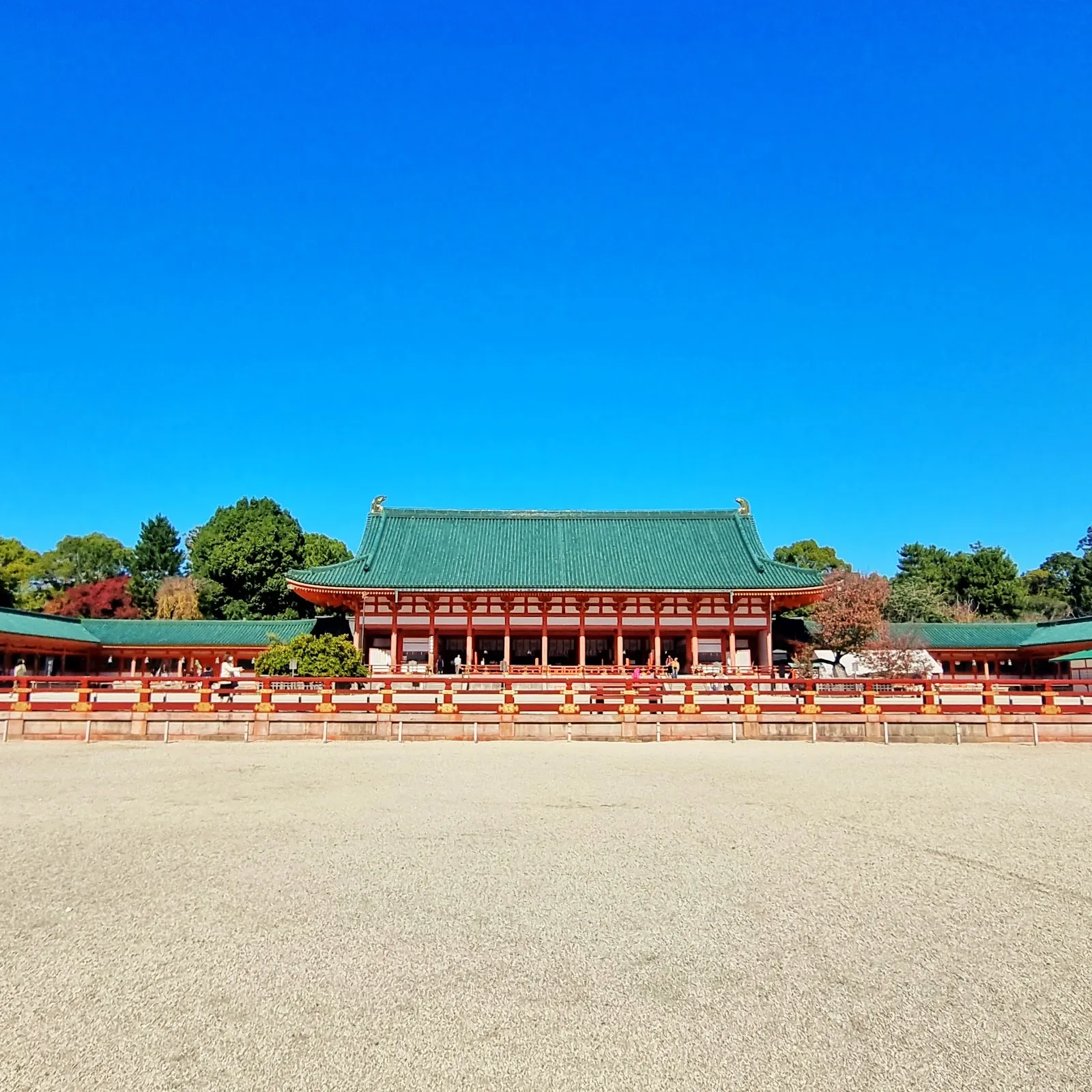
Heian-jingū was established in 1895 to mark 1,100 years since Kyoto became the capital. The shrine honors Emperor Kanmu, who moved the capital to Kyoto in 794, and Emperor Kōmei, the last emperor to rule from the city.
Its design draws on the Chōdō-in, the central government building of ancient Heian-kyō. The main complex is a reduced-scale recreation of palace architecture, with vermilion structures, green roofs and an expansive gravel courtyard. The shrine was built in the Meiji period, so its history is much shorter than that of many Kyoto temples and shrines.
The torii and main precincts
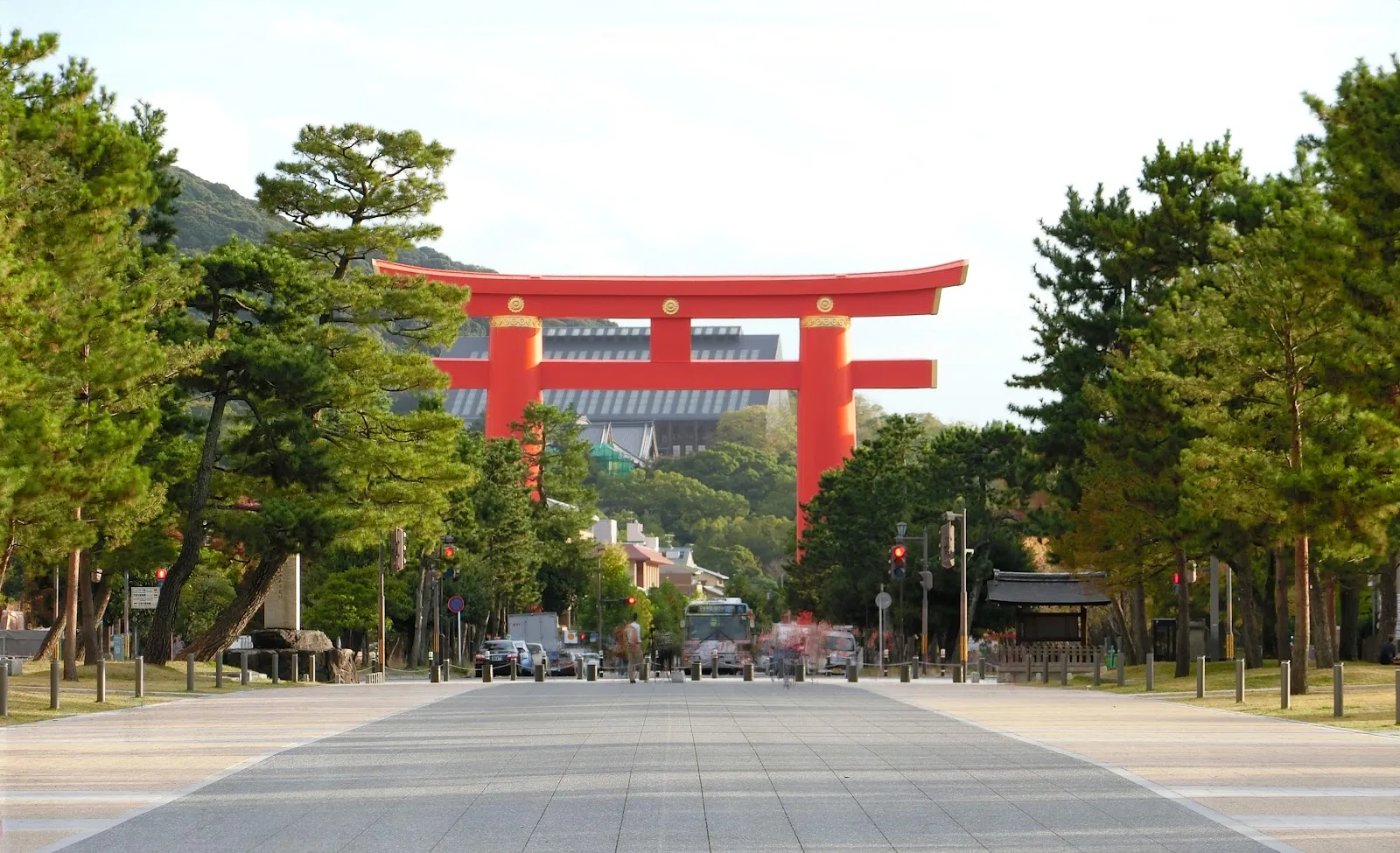
The large vermilion torii stands over the road leading toward the shrine and is a landmark of the Okazaki district. From there, continue to the main buildings and open courtyard. The generous space lets you take in the layout and colors of the complex without needing to enter the garden.
The main shrine precincts are free to visit. Six buildings in the complex are registered as Important Cultural Properties. The approach and courtyard are also useful places to pause for photographs of the architecture.
Walking through Shin’en Garden
Shin’en is a strolling garden arranged around ponds, with paths, stepping stones, bridges and pavilions. The garden covers about 30,000 square meters and is divided into four areas. Its landscape changes with the seasons, so the walk can be as much about the planting and water as the shrine buildings.
In spring, the garden’s weeping cherry trees are a major draw. The east garden is known for blossoms reflected in Seiho Lake. Irises and water lilies bloom in summer, while maple leaves bring autumn color. The garden has a separate admission fee, unlike the main shrine grounds.
Choosing when to visit
Cherry blossoms in the garden tend to bloom later than many other varieties in Kyoto, so Heian-jingū can suit a visit after earlier blossoms have passed. Spring is also a busy period at popular viewing spots, and autumn color brings seasonal interest too. For a calmer walk, choose an off-peak period or arrive early on a weekday.
The garden is the best fit if you want a longer, quieter stroll and are comfortable paying a separate entry fee. If you mainly want to see the gate, buildings and courtyard, the free precincts make a shorter stop possible.
Preguntas frecuentes
Is Heian-jingū Shrine free to visit?
The main shrine grounds are free to enter. Shin’en Garden has a separate admission fee.
What is Heian-jingū Shrine known for?
Its large vermilion torii, palace-inspired shrine buildings and Shin’en Garden, particularly the weeping cherry blossoms in spring.
When do cherry blossoms bloom at Heian-jingū Shrine?
The garden’s weeping cherry trees bloom later than many cherry varieties in Kyoto, usually around mid-April.
How long should I spend at Heian-jingū Shrine?
Allow about 1 to 2 hours if you plan to see the shrine grounds and walk through Shin’en Garden.


