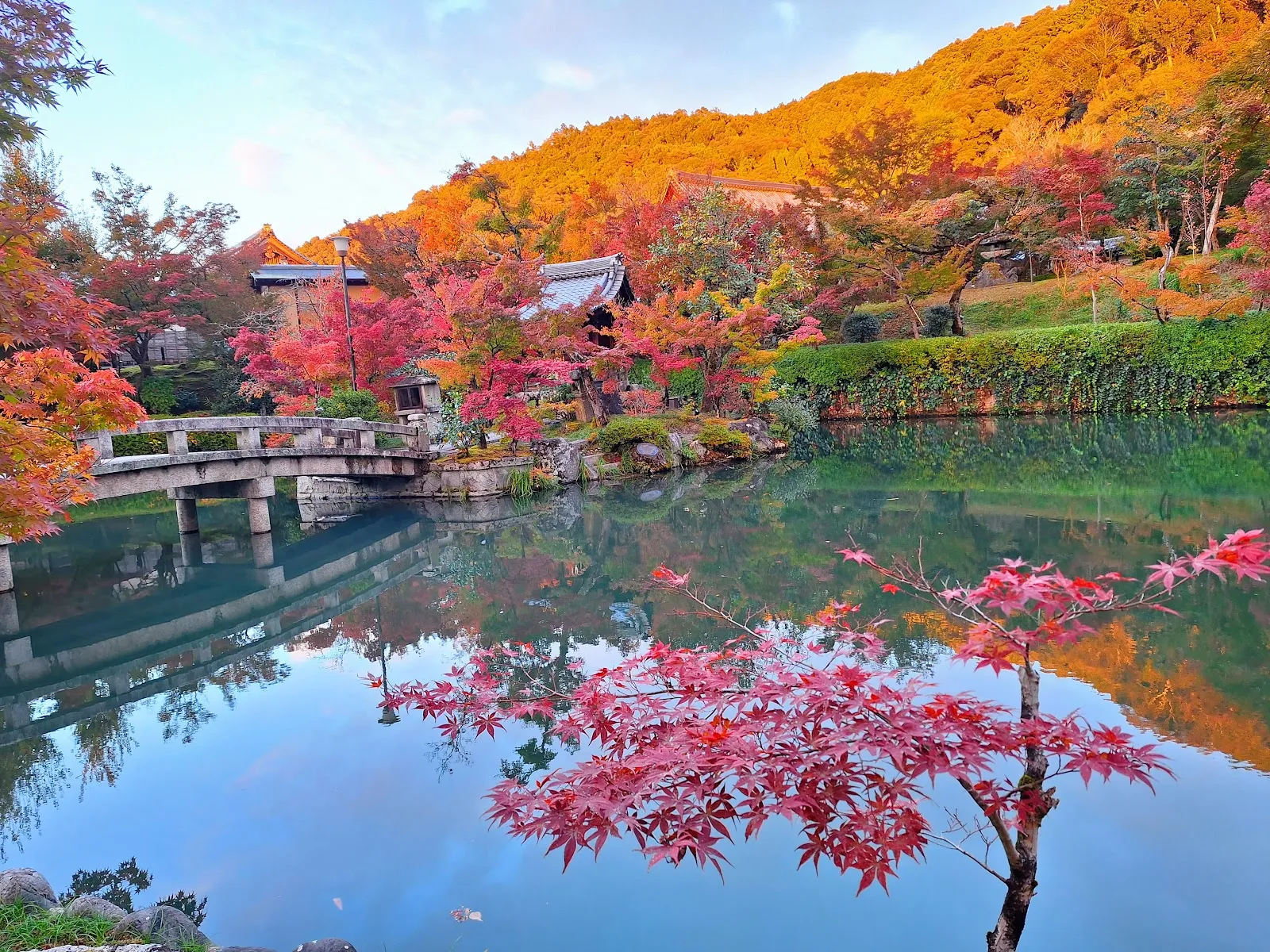
Eikandō, formally Zenrin-ji, is a Buddhist temple complex in Kyoto’s Sakyo Ward, near the Philosopher’s Path and Nanzen-ji. Its gardens, pond and wooden buildings are especially striking in autumn, when maple leaves turn red and gold and appear in the water’s reflections. Look for the Mikaeri Amida, a Buddha statue shown glancing over its shoulder, and the hillside pagoda. Seasonal evening illuminations bring the foliage into view after dark, but draw large crowds. Inside the temple, visitors walk without shoes and photography is not allowed.
Zenrin-ji and the name Eikandō
The temple is formally called Zenrin-ji. Its popular name, Eikandō, comes from Eikan, a head priest associated with the complex. Zenrin-ji was founded in 853 by the priest Shinshō and began as a centre for Shingon Esoteric Buddhism. It later became associated with the Jōdo school, including the Seizan branch.
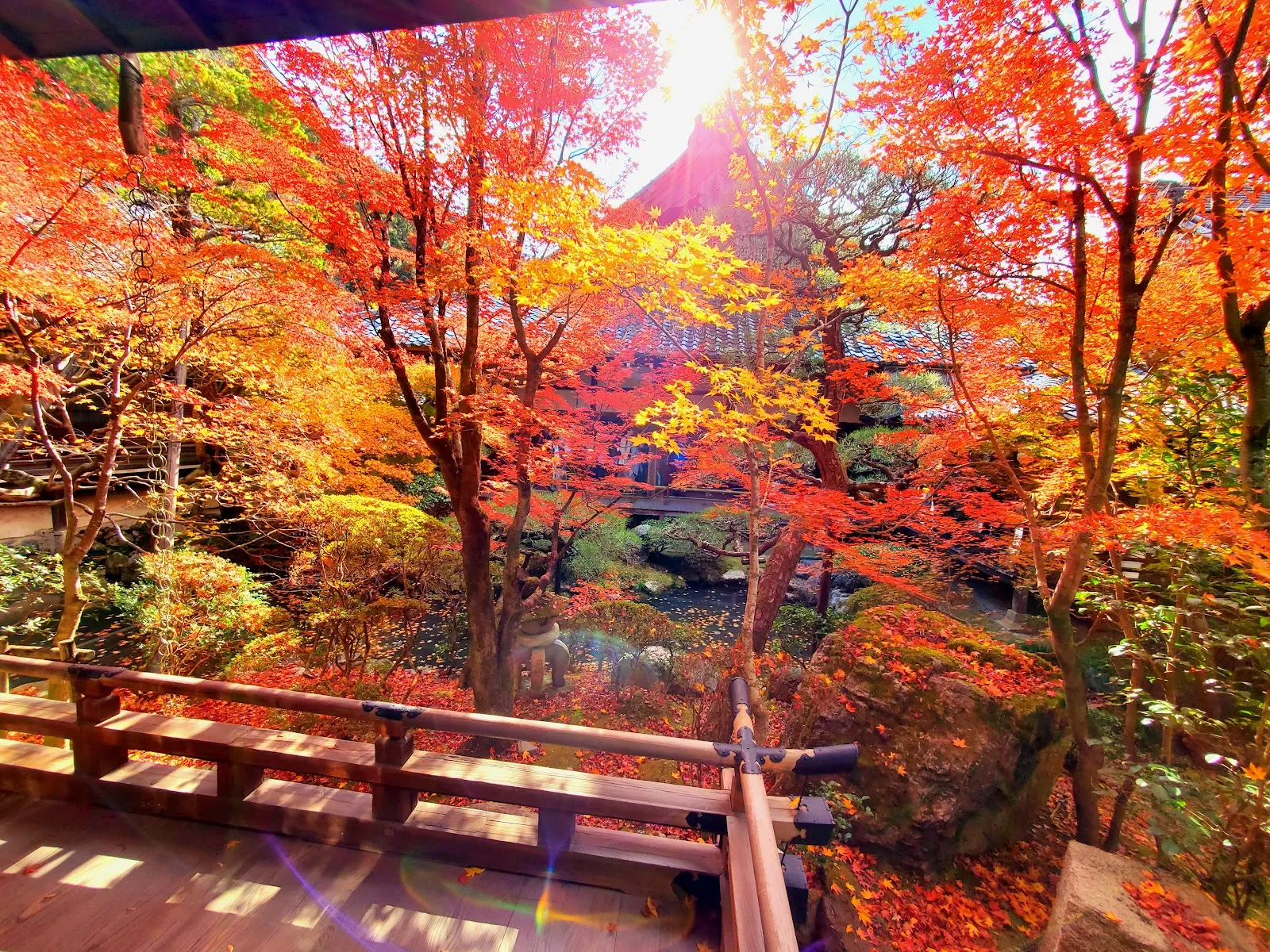
The name Zenrin-ji is translated as “Temple in a Calm Grove,” fitting its gardens and wooded setting. The site has drawn attention for its autumn colours for centuries, and its foliage was noted in the Kokin Wakashū, an anthology of Japanese poetry.
The Mikaeri Amida
Eikandō’s best-known Buddhist image is the Mikaeri Amida, a statue of Amida Buddha looking back over one shoulder. The unusual pose sets it apart from the forward-facing form common in Buddhist statues. The statue dates to the 12th century.
A popular account connects the pose to Eikan, the temple’s seventh abbot. As he circled an Amida statue while chanting, the figure is said to have turned to look back at him. The story gives the statue’s sideways gaze a connection to the temple’s religious tradition.
Gardens, buildings and autumn foliage
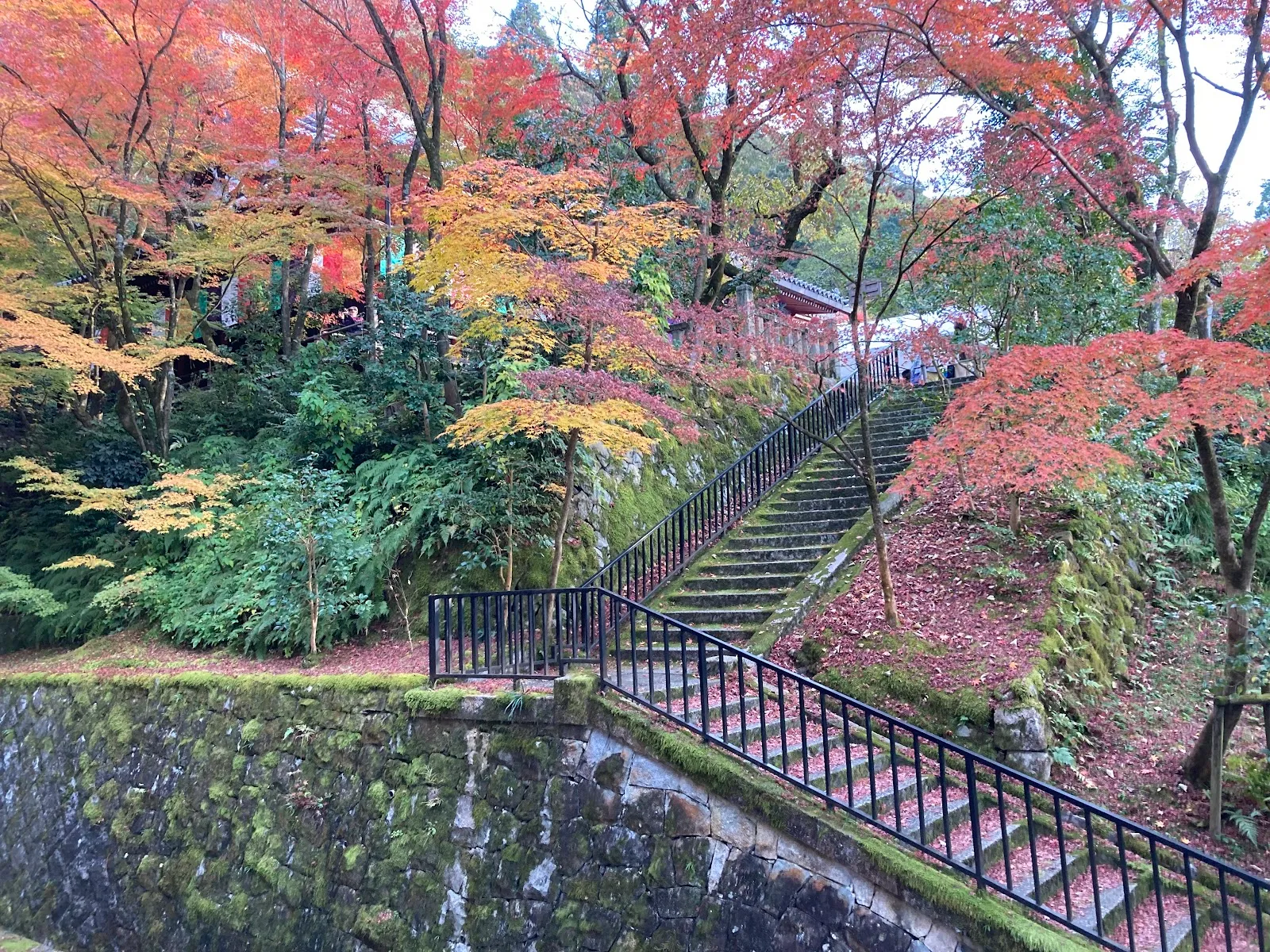
The grounds combine gardens, ponds and temple buildings linked by wooden corridors. Paths climb the hillside, with the Tahōtō Pagoda among the features to look for. One garden uses pale gravel arranged in winding lines between moss and stones, suggesting water moving around small islands.
Autumn is the temple’s most celebrated season. Maple trees colour the gardens and frame the buildings, while the pond reflects the foliage. In autumn, the temple also holds an exhibition of its treasures during the day and illuminates parts of the grounds in the evening. The lighting draws large crowds, particularly around popular viewing spots.
Planning a visit
Eikandō is close to Nanzen-ji and the southern end of the Philosopher’s Path, so it fits naturally into a temple walk in this part of Kyoto. A visit usually takes around 45 minutes to 1.5 hours, depending on how much time you spend in the grounds.
Remove your shoes before walking through the temple buildings. Photography is not permitted inside, so plan to enjoy the interiors without taking pictures and use your camera in the gardens. The entrance fee is 1,000 yen and is cash-only. Tickets in advance are recommended. Autumn is the busiest time, and the evening illumination can bring queues; allow extra time if you plan to visit then.
Preguntas frecuentes
Where is Eikandō Temple?
It is at 48 Eikandocho in Kyoto’s Sakyo Ward, near Nanzen-ji and the Philosopher’s Path.
How much is admission to Eikandō Temple?
The entrance fee is 1,000 yen, payable in cash.
How long should I plan for a visit?
Allow around 45 minutes to 1.5 hours to explore the temple complex.
Can you take photos inside Eikandō Temple?
No. Photography is not allowed inside the temple.
When is Eikandō Temple most crowded?
Autumn foliage season draws heavy crowds, especially during the evening illumination.


