The Otaru Canal is a waterway about 1,140 meters long in Otaru, a port city on Hokkaido's west coast, roughly 30 to 50 minutes by JR from Sapporo. Built by reclaiming the shoreline and completed in 1923, it carried cargo from ships in the harbor to the warehouses along its banks. Many of those stone and brick warehouses still stand, and a number now hold shops, cafes and restaurants. Walk the banks by day, take a boat cruise, or return after dark when the gas lamps are lit.
Port history and the 1923 canal
Otaru grew quickly in the late Edo period, when herring fishing drew people to the coast. In the Meiji and Taisho eras the city became the gateway for the settlement of Hokkaido, and the volume of goods passing through its port rose sharply. The sea was reclaimed to create a more efficient waterway, and the canal was completed in 1923, the twelfth year of the Taisho era.
Small boats called hashike carried cargo from the larger ships anchored in the harbor to the warehouses on the banks. When modern dock facilities allowed large ships to unload directly, the canal lost that role. After the war part of it was filled in. The north section, known as the North Canal, keeps its original width of about 40 meters, while the main canal is about 20 meters wide.
Residents and the government debated for about ten years over what to do with the obsolete canal. It was reshaped into its present form in 1986, after local preservationists worked to save it from being filled in.
The canal and its warehouses
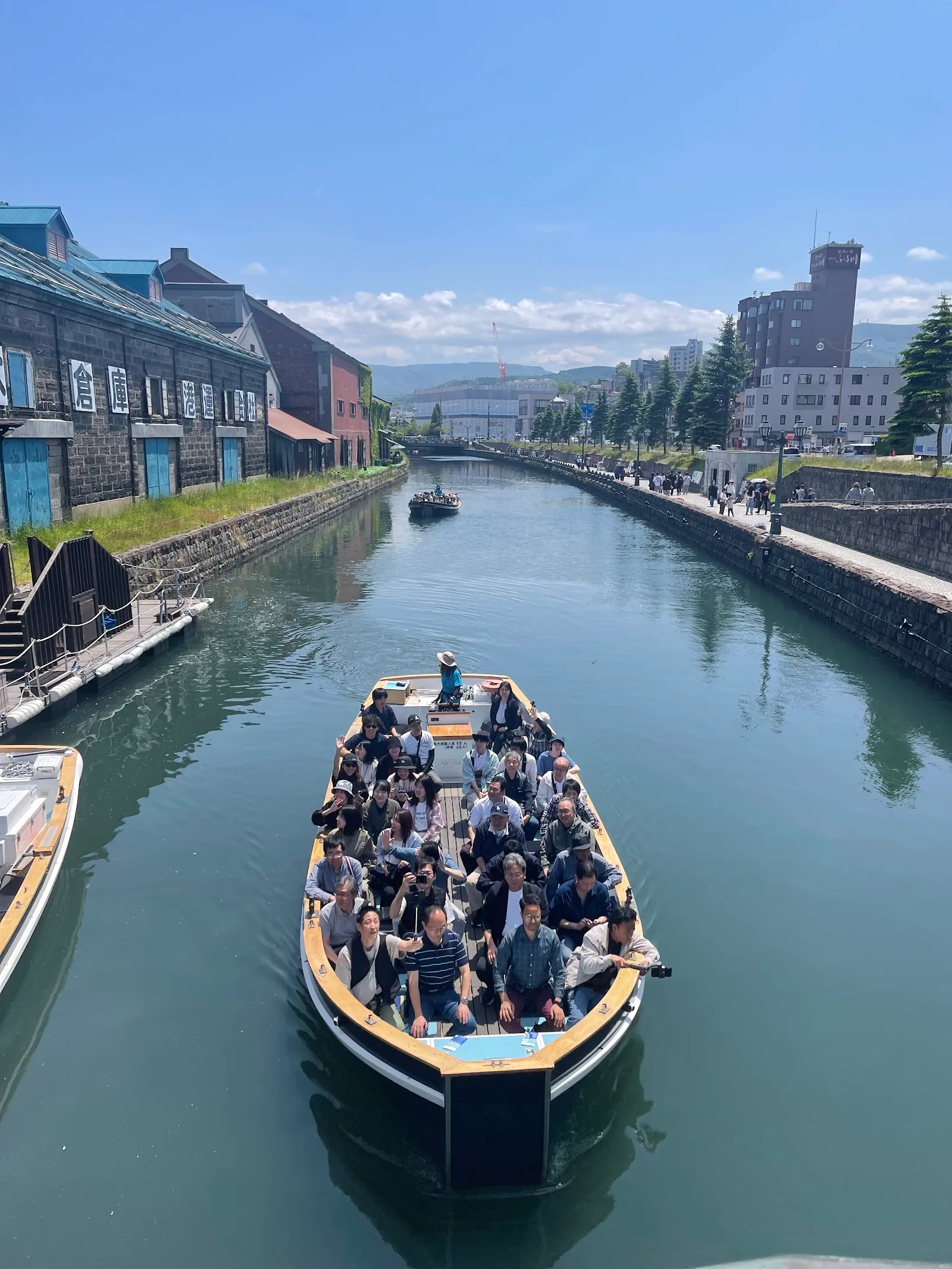
The canal curves gently for about 1,140 meters. Stone and brick warehouses line both banks, and many have been converted into shops, cafes, restaurants and museums. Some warehouses still have the plain, solid look they had when cargo was stacked inside.
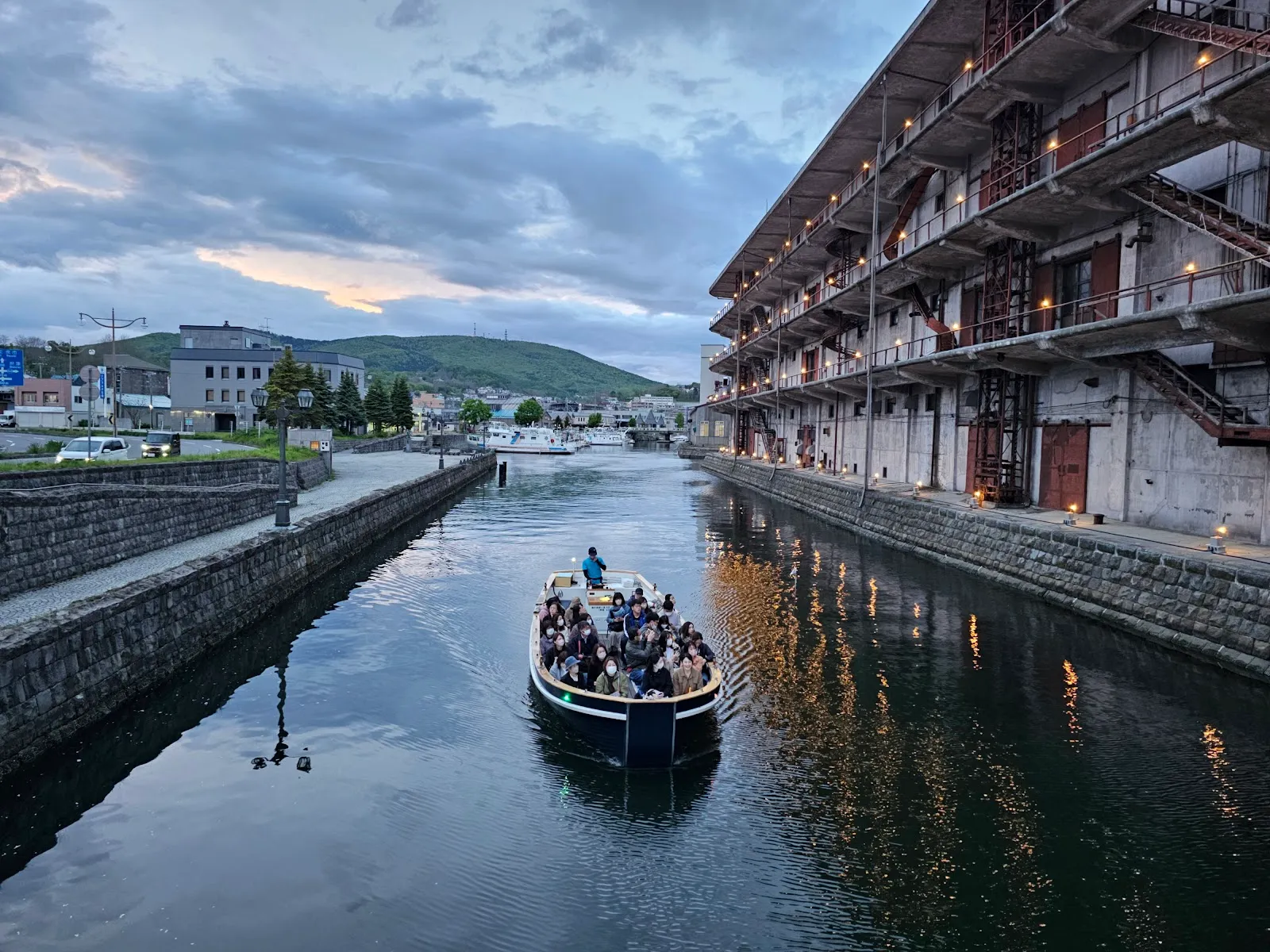
The Former Shibusawa Warehouse stands on the North Canal. It was used by a warehouse company founded by Eiichi Shibusawa, whose portrait appears on Japanese paper money. The building is now designated as historic and is used as a live music venue and cafe.
The canal is also the setting for several action scenes in the manga Golden Kamuy, which is one reason many fans of the series make the trip.
Evening, night and the Snow Light Path
Gas lamps run along the promenade and are lit at dusk. Their soft light falls on the water and the warehouse walls, and the walkway grows quiet once the day visitors leave. The canal is open at all hours, so you can walk it after dark without a set time to leave.
For reflections, aim for sunset or sunrise, when the buildings show clearly in the water.
In February the Snow Light Path transforms the banks. Lanterns and candles light the snow along the water, and small snow statues line the walkway. The festival is usually held around the same time as the Sapporo Snow Festival, so the two can be combined on one trip.
Boat cruises and the streets nearby
A boat cruise offers a different view of the warehouses and bridges than the walk along the banks. One cruise is about 40 minutes long. Guided commentary is available in several languages during the rides.
Sakaimachi Street, a short walk away, is a preserved merchant street. Some of its old buildings now house restaurants, cafes, souvenir shops and boutiques. Glass shops and music box shops are also nearby, along with LeTao Confectionery. Sankaku Market, a few minutes from the canal, sells fresh seafood, and visitors can have a purchased live crab cooked at a diner beside the market.
Getting to the canal from Sapporo and Otaru Station
JR trains run from Sapporo to Otaru in roughly 30 to 50 minutes, depending on whether you take a rapid or a local train.
Otaru Station sits partway up a hill. Chuo-dori, the main street, runs straight down to the sea, and the canal lies at the bottom on flat land by the water. The walk from the station takes about 10 minutes, mostly downhill. The canal entrance is wheelchair accessible.
Preguntas frecuentes
How long do you need at the Otaru Canal?
Allow 1 to 2 hours for a walk along the banks and a boat cruise, which takes about 40 minutes.
Is the Otaru Canal open at night?
Yes. The canal is open at all hours, and the gas lamps along the walkway are lit in the evening.
How do I get to the Otaru Canal from Sapporo?
Take the JR train from Sapporo, which takes about 30 to 50 minutes depending on the train. From Otaru Station the canal is about 10 minutes on foot, mostly downhill.
Should I book boat cruise tickets in advance?
Yes. Buying tickets in advance is recommended to avoid waiting.
Is the canal wheelchair accessible?
The entrance is wheelchair accessible, and the canal sits on flat land by the water.