The Atomic Bomb Dome is the preserved shell of Hiroshima’s former Prefectural Industrial Promotion Hall, beside the Motoyasu River and across from Peace Memorial Park. The building was completed in 1915 and severely damaged when the atomic bomb exploded above it on August 6, 1945. Its exposed walls and metal dome remain as a memorial and a UNESCO World Heritage Site. Walk around the fenced perimeter to see the structure from different sides, then continue into the park to visit its memorials and reflect on Hiroshima’s history.
A public exhibition hall before the bombing
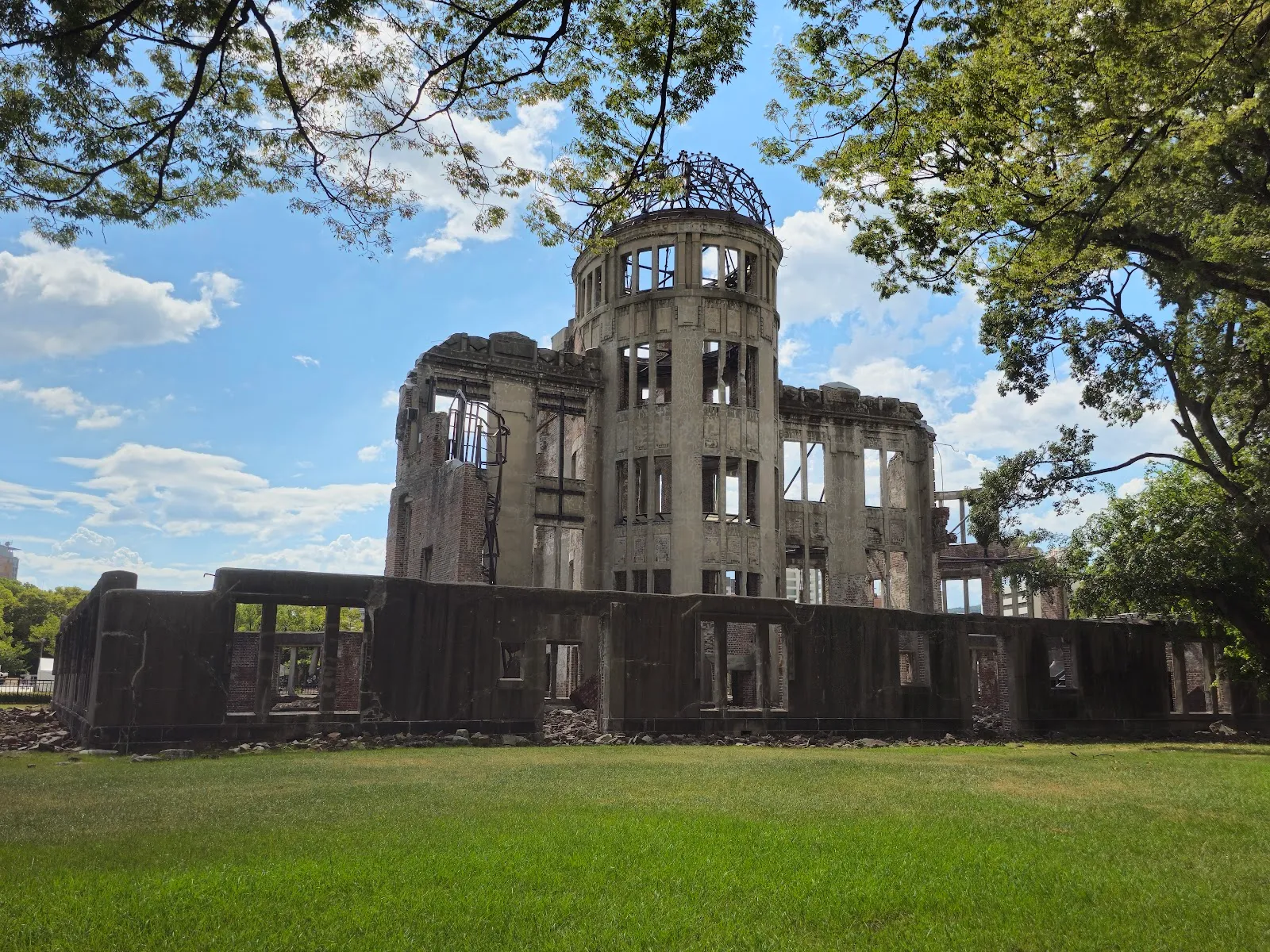
The building opened in 1915 as the Hiroshima Prefectural Products Exhibition Hall and was later known as the Hiroshima Prefectural Industrial Promotion Hall. Designed by Czech architect Jan Letzel, it was a three-storey brick building with a five-storey central stairwell and an oval dome. Its European-style design made it a prominent landmark by the river.
The hall was about 160 metres from the atomic bomb’s hypocentre. On August 6, 1945, the bomb exploded above the dome. The blast and heat devastated the building, destroying much of its interior and damaging its outer walls. Parts of the frame and dome remained standing.
Why the ruin was preserved
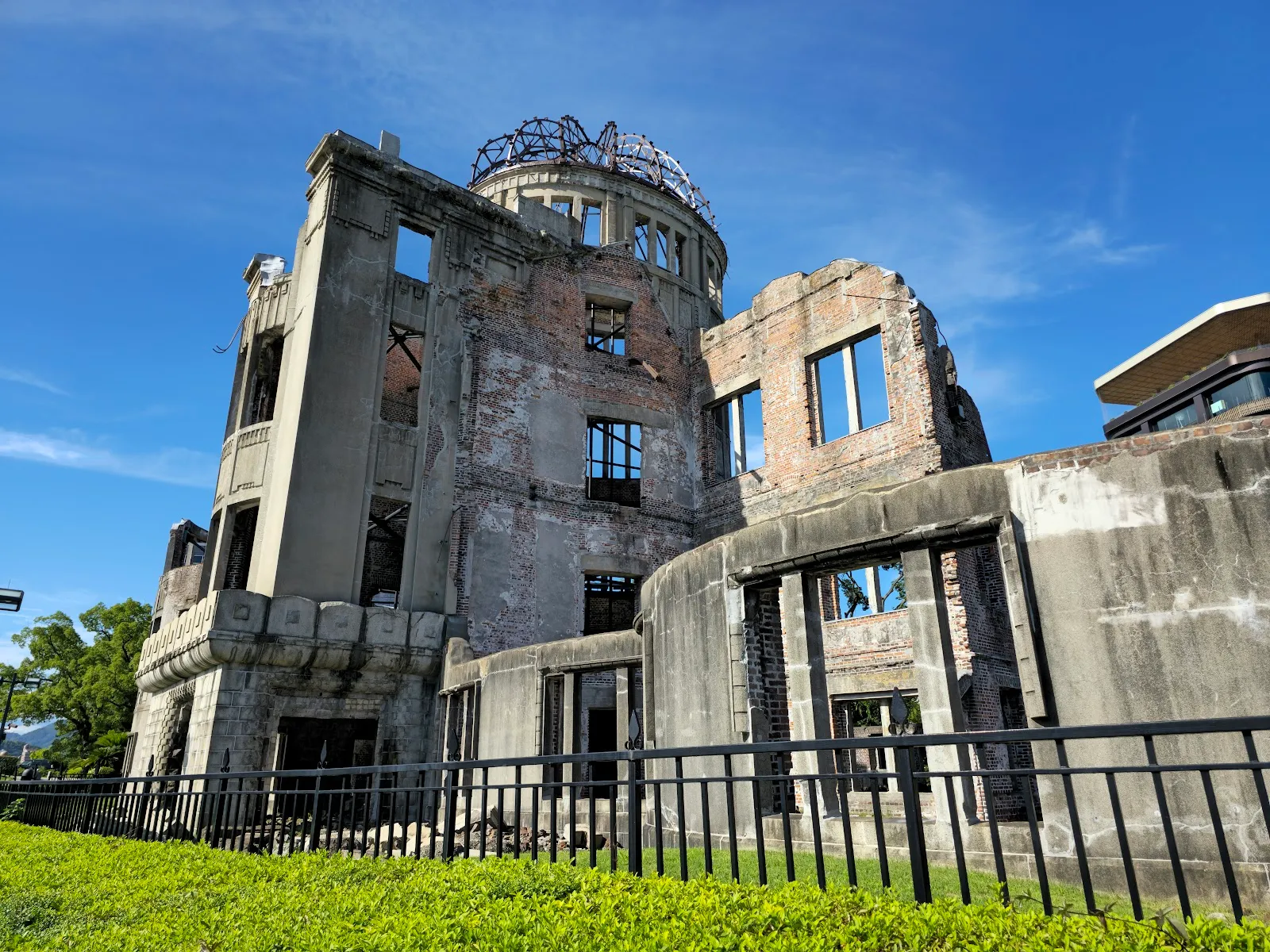
After the bombing, the damaged structure became known as the Atomic Bomb Dome, named for the shape of its remaining steel dome. The decision to preserve it was debated for years; Hiroshima City Council chose permanent preservation in 1966. The site was registered as a UNESCO World Heritage Site in 1996.
The exposed frame and broken walls show the physical damage left by the blast. The building is kept as a memorial to those who died and as a call for peace. Visitors can view it from outside the surrounding fence, but cannot enter.
Across the river in Peace Memorial Park
The dome stands by the Motoyasu River, opposite Hiroshima Peace Memorial Park. The park’s memorials include the Cenotaph for the Atomic Bomb Victims, which holds a list of people killed by the bombing, and the Children’s Peace Monument, associated with the paper-crane peace movement.
The nearby Hiroshima Peace Memorial Museum presents personal artifacts and material about the bombing and its aftermath. Visiting the museum alongside the dome and park can provide more context for the history commemorated here. The dome is also illuminated at night, when the quiet surroundings offer a different setting for reflection.
Preguntas frecuentes
Can you go inside the Atomic Bomb Dome?
No. The building can be viewed from outside the surrounding fence, but entry is not permitted.
Is there an admission fee?
No. Admission to the Atomic Bomb Dome is free.
How long should I spend at the Atomic Bomb Dome?
Allow around 30 to 60 minutes to walk around the dome and take in the site.
Is the Atomic Bomb Dome lit up at night?
Yes. The building is illuminated after dark.