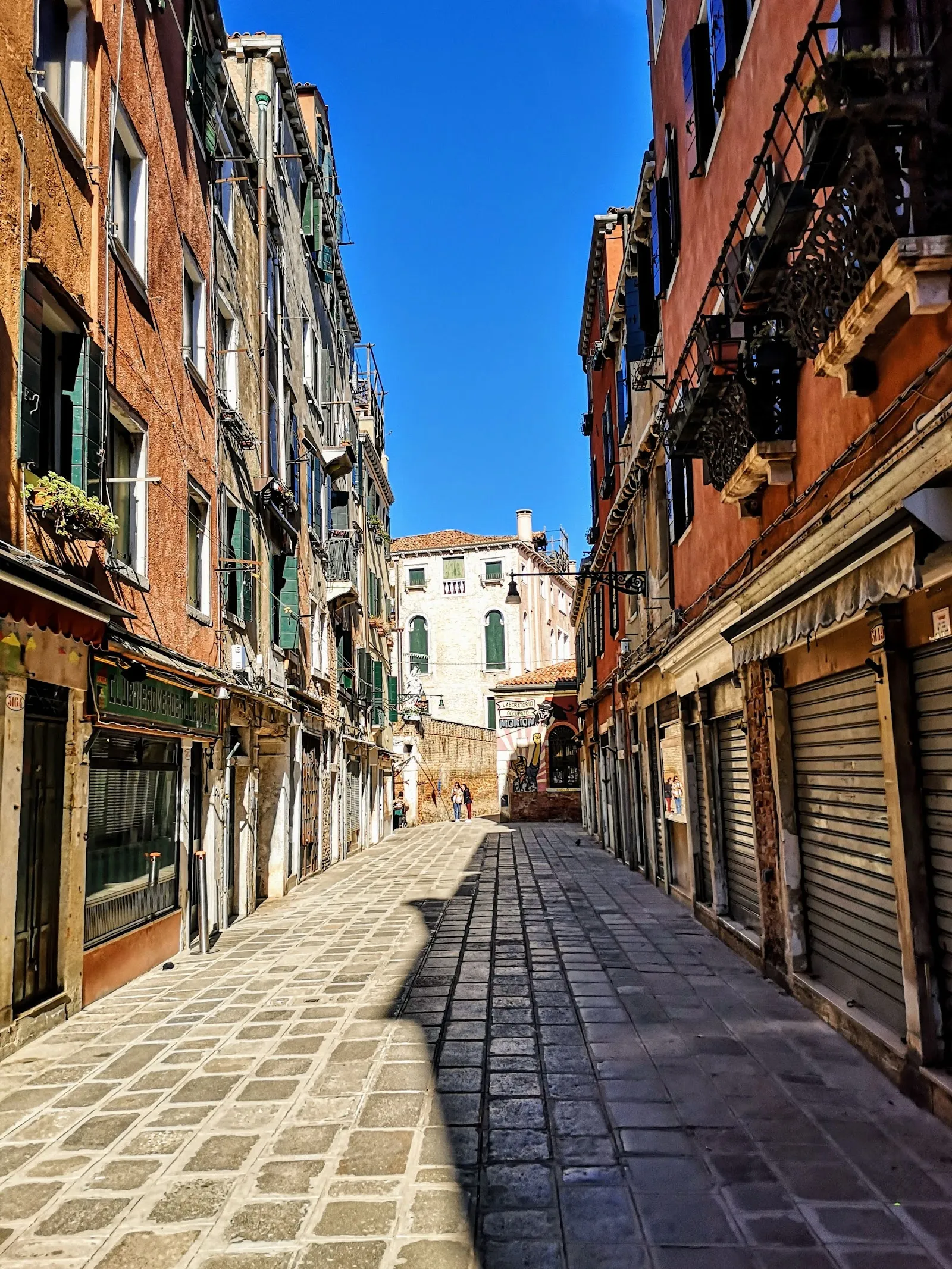
In Castello, the Scuola di San Giorgio degli Schiavoni is a small former confraternity house known for Vittore Carpaccio’s Renaissance paintings. Its lower hall holds a cycle devoted to the lives of the school’s patron saints, including St George, St Tryphon and St Jerome. Look closely at Carpaccio’s scenes of St George and the dragon, set against details of Venetian life. The quiet rooms make this a worthwhile stop for art and history, especially if you want a break from Venice’s busier sights.
A meeting place for Venice’s Dalmatian community
Founded in 1451, the Scuola di San Giorgio degli Schiavoni was established by Venice’s Dalmatian community. A scuola was a confraternity, a place where people outside the nobility, including migrants, could meet and support one another. These groups also organized charitable care for members of their community, including the sick, injured and widowed.
The building retains its connection to that community. Its name refers to the Schiavoni, a term for Slavs, and Dalmatia is a region of present-day Croatia. The school is also known as the Scuola Dalmata dei Santi Giorgio e Trifone. Its religious and community history gives the paintings inside a specific setting: they were made for a confraternity devoted to its patron saints.
Carpaccio’s cycle in the lower hall
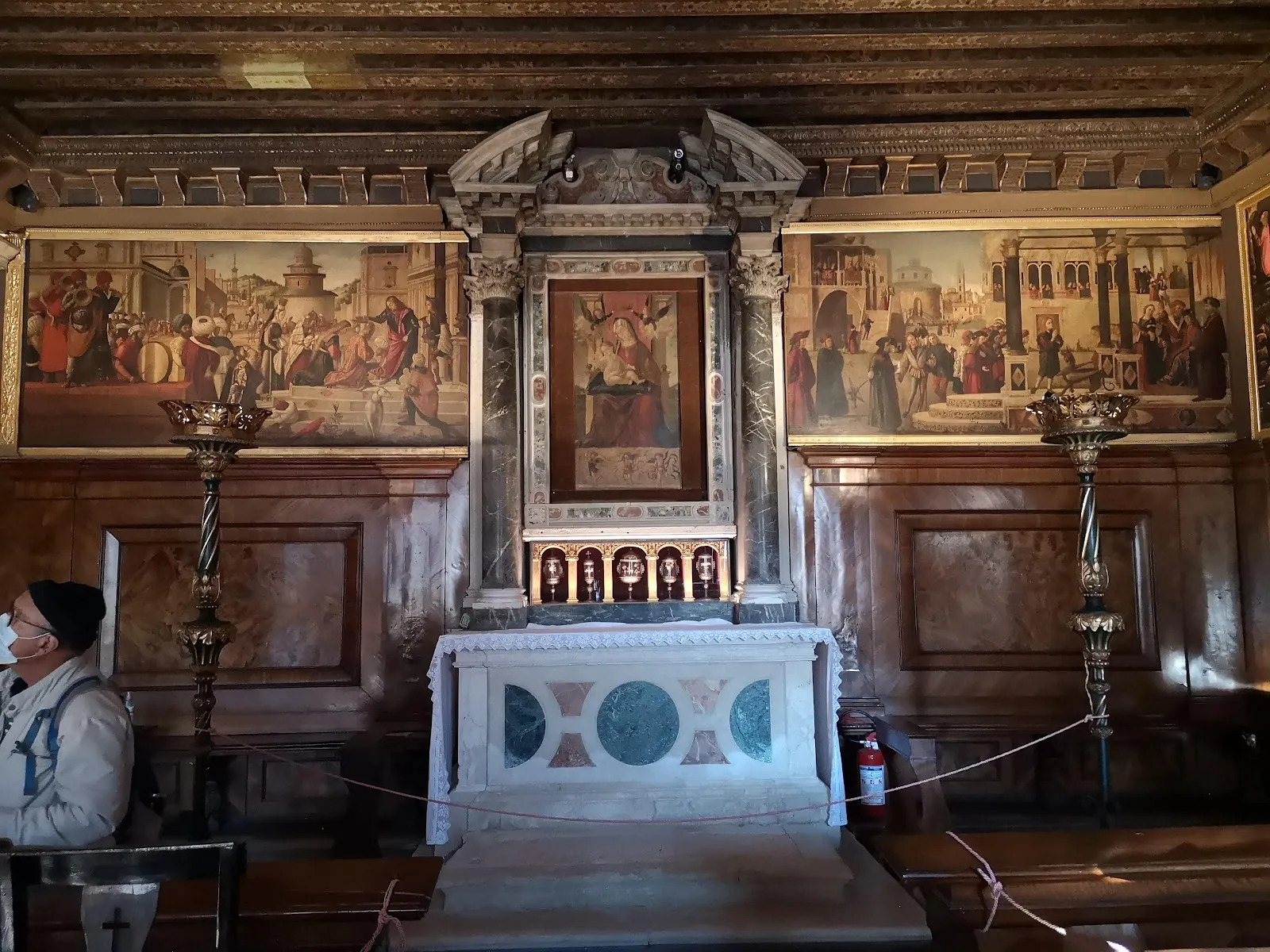
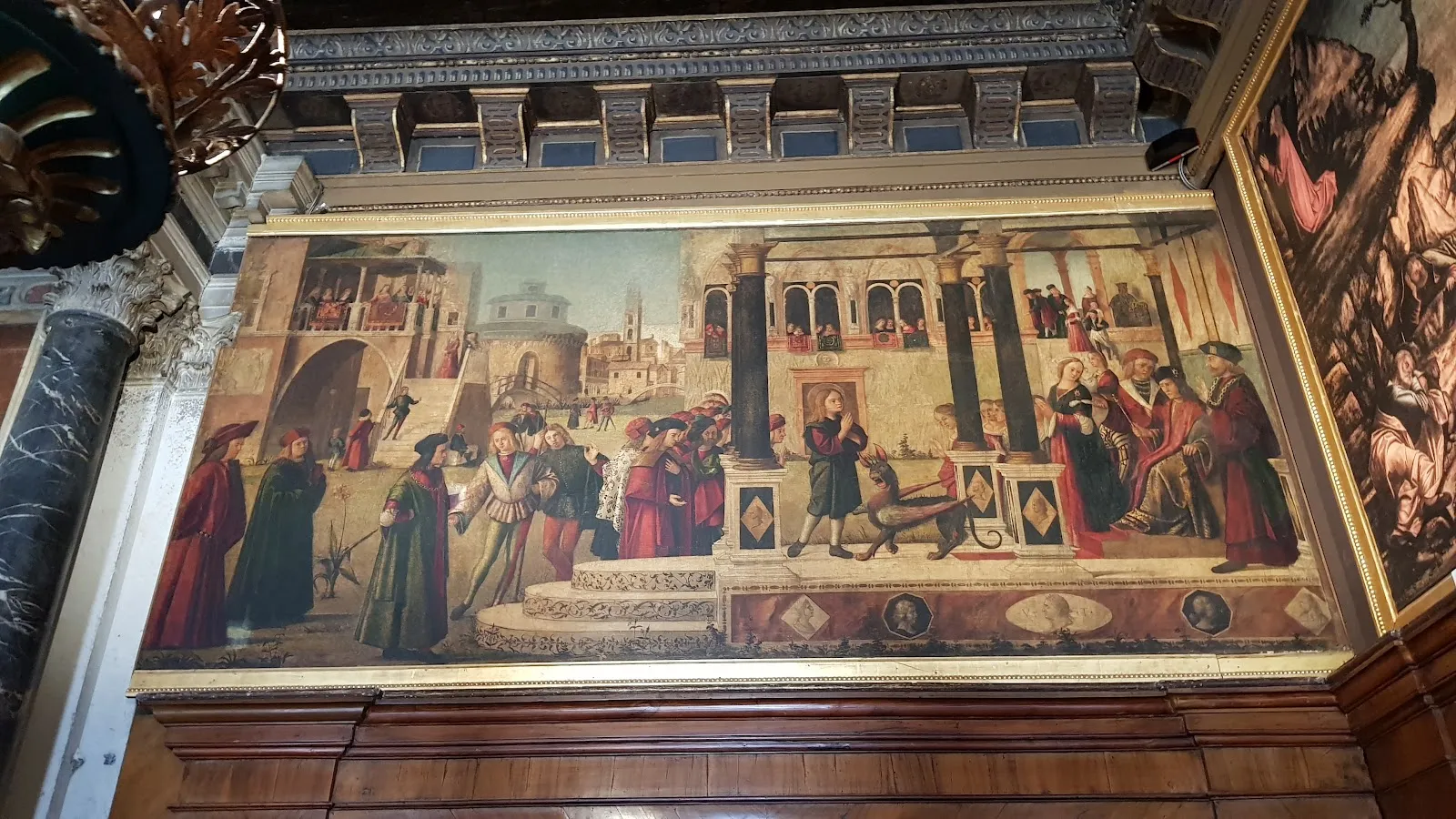
The main draw is a group of paintings by Vittore Carpaccio, created between 1502 and 1507. The cycle tells stories associated with the school’s patron saints, including St George, St Tryphon and St Jerome. Carpaccio was a prominent Venetian painter of the early Renaissance, and the works are among the defining features of the school’s interior.
St George’s encounter with the dragon is among the scenes to look for. The saint confronts the creature with his lance, while other episodes show him after his victory. A painting of St Jerome in a trance offers a quieter contrast. Carpaccio often placed legendary and religious figures against settings drawn from contemporary Venetian architecture; in this cycle, the scenes also include elements described as Orientalist, an early instance of that approach in Western painting.
The paintings remain in the lower hall, where the cycle can be viewed as a group. Take time to look across the room and follow the different episodes rather than treating each canvas as an isolated work.
Planning your visit
The school is a small, two-storey museum in Castello, on Calle dei Furlani near the bridge della Commenda. Its position away from Venice’s busiest routes contributes to the quieter feel, but the entrance can be easy to miss. An English audio guide is available free, and handouts are available in different languages; these can help explain the scenes and the confraternity’s history.
The upper floor has been under restoration at times, so the lower hall is the part to focus on for Carpaccio’s cycle. Advance ticket booking is recommended. The supplied information does not establish a current admission price, so check the official website before your visit. Mid-October is suggested as a quieter time to go.
Preguntas frecuentes
What is the Scuola di San Giorgio degli Schiavoni?
It is a former confraternity house founded in 1451 by Venice’s Dalmatian community. Today it is known for Vittore Carpaccio’s paintings of the school’s patron saints.
What should I see inside?
Look for Carpaccio’s cycle in the lower hall, including scenes of St George, St Tryphon and St Jerome.
Is an audio guide available?
A free English audio guide is available at the venue. Handouts in other languages are also available.
Where is the scuola?
It is on Calle dei Furlani in the Castello district, near the bridge della Commenda. The entrance can be difficult to spot.
Should I book tickets in advance?
Advance booking is recommended. Check the official website for current admission details.