Stromboli is an active volcanic island in the Aeolian archipelago, off Sicily’s northern coast. Its steep cone rises above whitewashed coastal villages and black-sand beaches, with frequent eruptions most visible after dark. Take a boat around the island to watch the Sciara del Fuoco, the lava slope descending toward the sea, or join a guided hike for views from higher up. Spring and early autumn bring milder conditions for walking. The island also has two small settlements, Stromboli and Ginostra, to explore between outings.
The volcano and the Sciara del Fuoco
Stromboli is an island volcano in the Aeolian archipelago, northeast of Sicily. Frequent, usually mild explosions have given it the name “Lighthouse of the Mediterranean.” The island’s most striking volcanic feature is the Sciara del Fuoco, a broad slope of lava and rock fragments running from the crater toward the sea.
At night, eruptions can be seen from the water as glowing material drops down the slope. A boat trip around Stromboli is one way to view the activity; a hike to an observation point is another. The island is also a popular stop on trips between the Aeolian Islands.
Hiking on Stromboli
The route begins near the town and climbs from green vegetation onto steeper, dark volcanic ground. A half-day hike can be timed to reach a high viewpoint around sunset, with views toward the mainland and the volcano’s craters. Conditions and access affect how far you can go: walking is permitted up to 400 metres without a guide, while continuing higher requires one. Organised treks are scheduled for the afternoon, with departure times varying by season.
Spring and early autumn are recommended for more comfortable hiking weather. Sicily’s sun can still be strong, so bring sun protection and enough water for the trail. The ascent is steep, so it is better suited to visitors prepared for a strenuous walk than to anyone looking for an easy stroll.
Villages and volcanic shores
Stromboli and Ginostra are the island’s two small settlements. In Stromboli village, coastal and upper roads connect districts including Scari, San Vincenzo, San Bartolo, Ficogrande and Piscità. White, square houses stand out against the island’s green slopes and dark volcanic terrain.
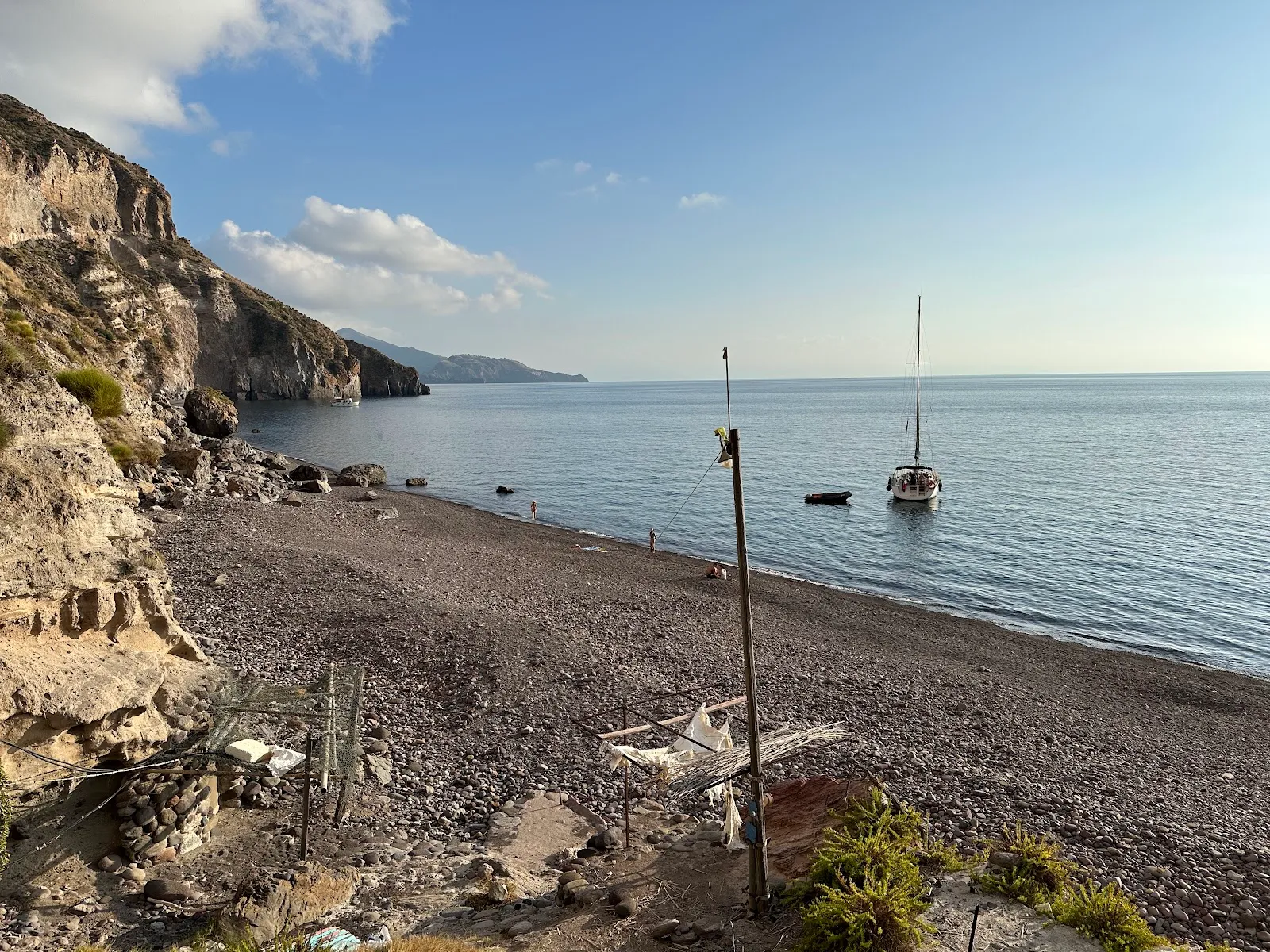
The shoreline includes black-sand beaches, and the waters around the island draw visitors for swimming, diving and snorkelling. Spring or early autumn can suit walks and hikes; after dark is the time to choose a boat trip or viewpoint for a clearer look at glowing eruptions.
Preguntas frecuentes
Can you hike Stromboli without a guide?
You can walk up to 400 metres without a guide. A guide is required to continue higher.
How long does a Stromboli volcano hike take?
The hike is described as a half-day outing.
When is the best time to see eruptions?
After dark, when glowing lava can be seen from the sea or a viewpoint.
When is a good season to hike Stromboli?
Spring and early autumn are recommended for milder hiking conditions.