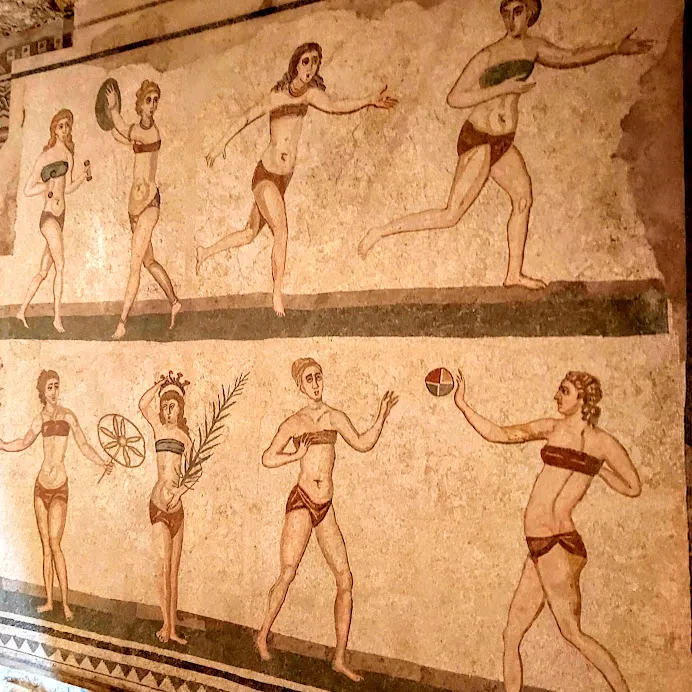
Near Piazza Armerina in central Sicily, the Roman Villa of Casale preserves an extensive late Roman residence and more than 3,500 square metres of mosaics. Built in the fourth century, the complex gives a close look at the art and daily life of a wealthy Roman household. Follow the signed suspended walkway through rooms decorated with hunting, mythological and everyday scenes. Look out for the Great Hunt corridor and the panel of female athletes. The villa is a UNESCO World Heritage Site.
A fourth-century Roman residence
The villa stands in the countryside near Piazza Armerina, in central Sicily. Built in the early fourth century, it was part of a large estate and is often associated with the wealth of the late Roman elite. Its original owner has not been identified with certainty, and theories about the person’s status remain unproven.
The complex is made up of connected groups of buildings, including residential rooms and baths. Its scale and decoration point to a grand country residence, where architecture and imagery conveyed the owner’s wealth. The property is also known as Villa Romana del Casale, and its mosaics earned it UNESCO World Heritage status in 1997.
Mosaics across the rooms
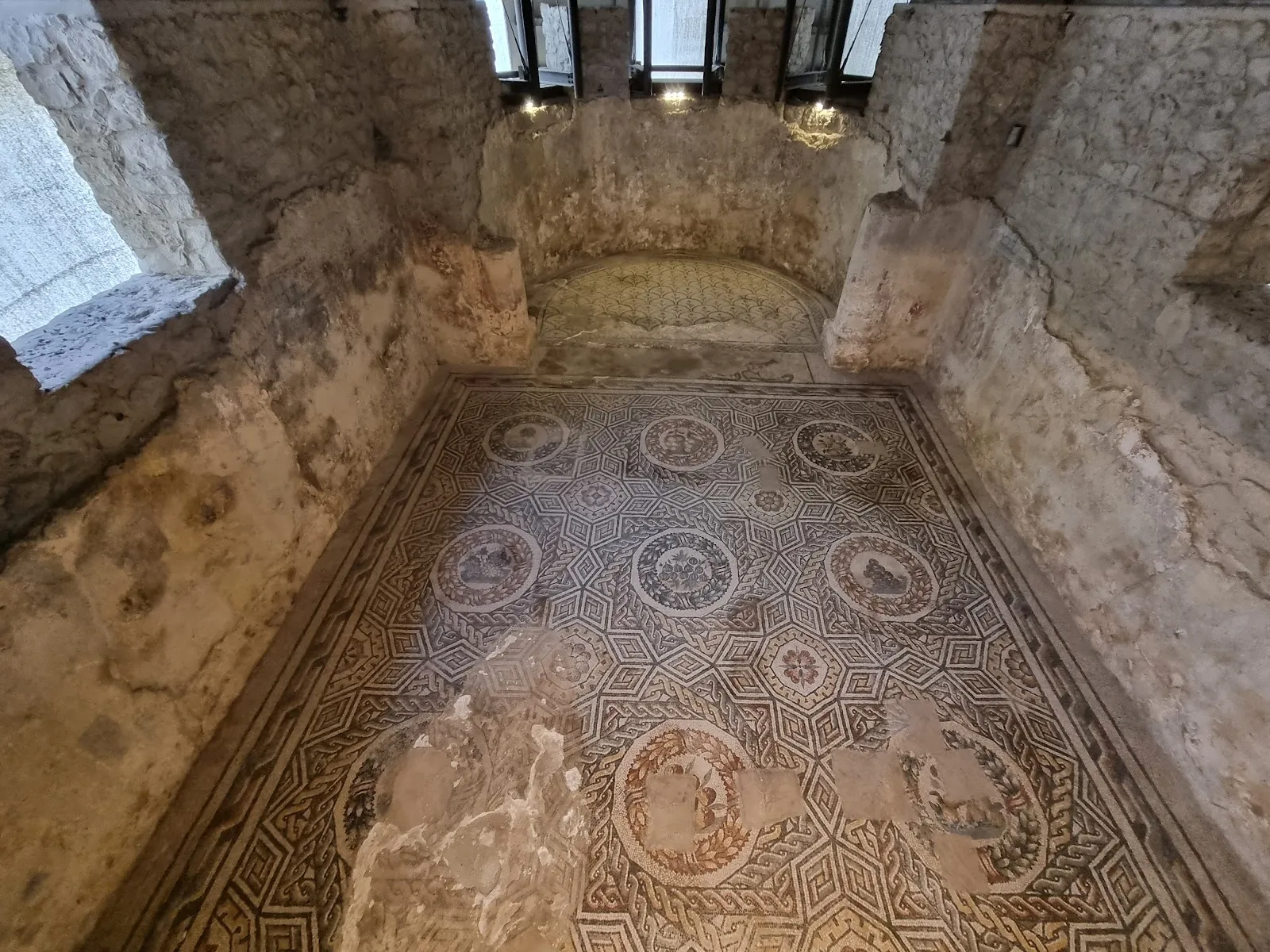
The villa’s floors hold more than 3,500 square metres of mosaics. Their subjects range from hunting and daily activities to mythical figures and decorative designs. The broad range makes the rooms worth taking slowly: details change from one floor to the next, and the images offer a glimpse of the interests and status associated with the household.
The Great Hunt is among the most extensive scenes. It runs along a corridor for about 60 metres and shows armed hunters with exotic animals, including elephants, tigers, ostriches and a rhinoceros. Another well-known panel depicts female athletes exercising and playing sports. Together, these scenes show how varied the villa’s decoration is, from elaborate displays of hunting to images of physical activity.
How to explore the site
A suspended walkway and signs guide visitors through the villa, giving a clear route between its rooms. From above, you can look down on the mosaic floors without walking over them. The route takes in spaces such as the baths, the peristyle and the trichora, as well as decorated rooms across the complex.
The villa was covered by a mudslide in the twelfth century. Although some uncovering took place over the centuries, a sustained excavation began in the 1950s, and the site remains a major archaeological area. Allow a few hours to follow the route and look closely at the floors. An audio guide or some reading beforehand can help put the rooms and their imagery in context.
The site is outside Piazza Armerina, so arrange your journey before setting out. The material available here notes that buses serve the route, but that public transport can be infrequent and inconvenient. An early arrival can also help you explore before larger tour groups reach the villa.
Preguntas frecuentes
How long do you need at the Roman Villa of Casale?
Allow about two to three hours to follow the route and look at the mosaics.
What is the Roman Villa of Casale known for?
It is known for its extensive fourth-century Roman mosaics, including the Great Hunt and a panel of female athletes.
How do you get to the villa from Piazza Armerina?
The villa is outside Piazza Armerina. Buses are noted as an option, but public transport can be infrequent, so plan your journey ahead.
Is there a set route through the villa?
A signed suspended walkway guides visitors through the rooms.