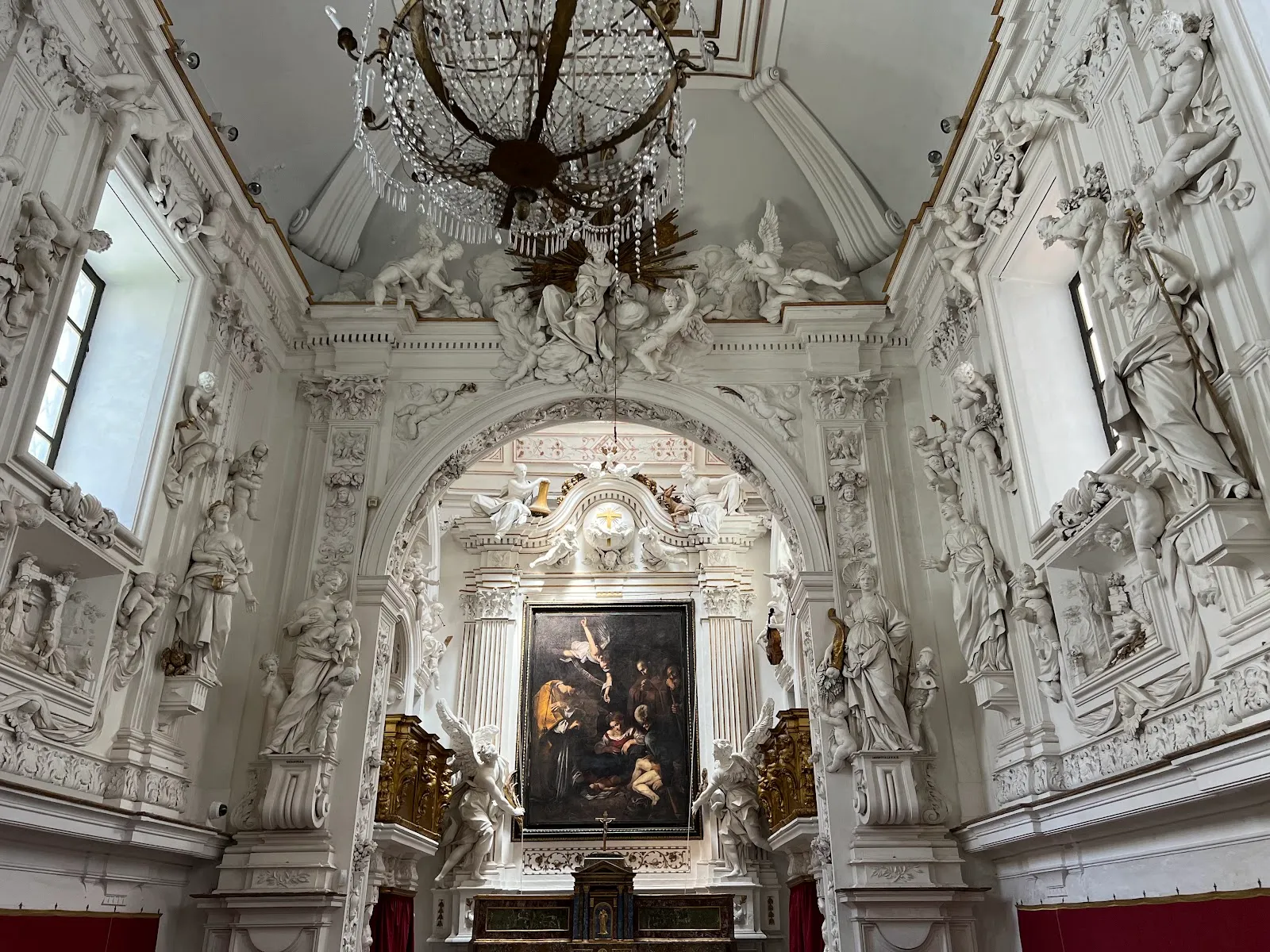
In Palermo’s historic centre, the Oratorio di San Lorenzo is a small Baroque chapel known for Giacomo Serpotta’s elaborate white stucco sculpture. Look closely at the figures and decoration covering the walls, then see the reproduction of Caravaggio’s Nativity, whose original was stolen in 1969. The oratory was once a meeting place for members of business guilds. Its quieter setting makes it a thoughtful stop for anyone interested in Palermo’s art and history. Guided tours can add context to the details inside.
Serpotta’s stucco work
Giacomo Serpotta decorated the oratory with detailed white stucco sculpture. The figures along the upper walls have wooden cores covered with stucco made from marble dust. Take time to look closely at the sculpted details across the interior.
The benches are also worth a closer look. They are made from local hardwood and inlaid with mother-of-pearl and other materials.
The Nativity and the oratory’s past
The altar once held Caravaggio’s Nativity with St. Francis and St. Lawrence. The original was stolen in 1969 and has not been recovered; a reproduction is now associated with the oratory.
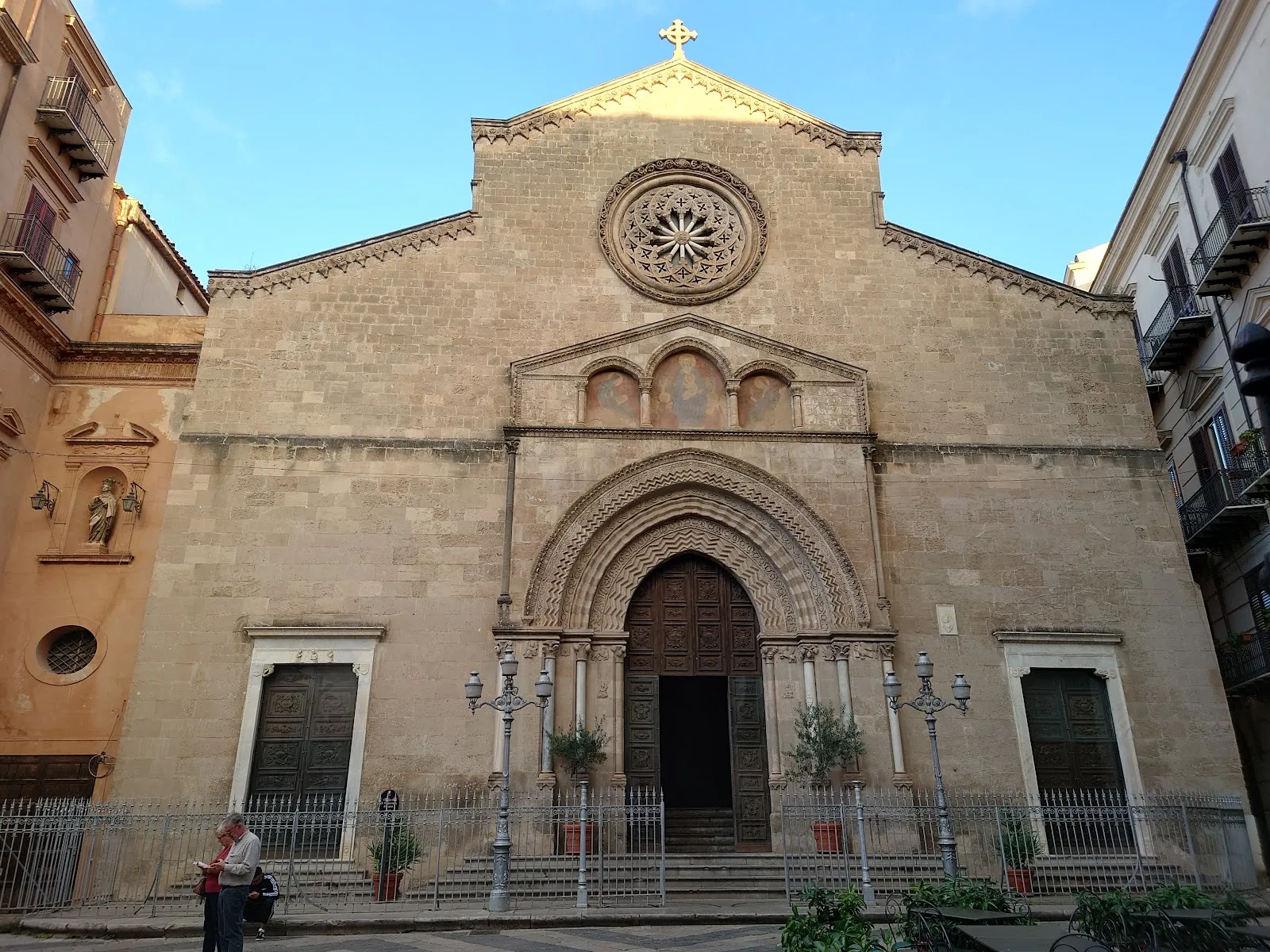
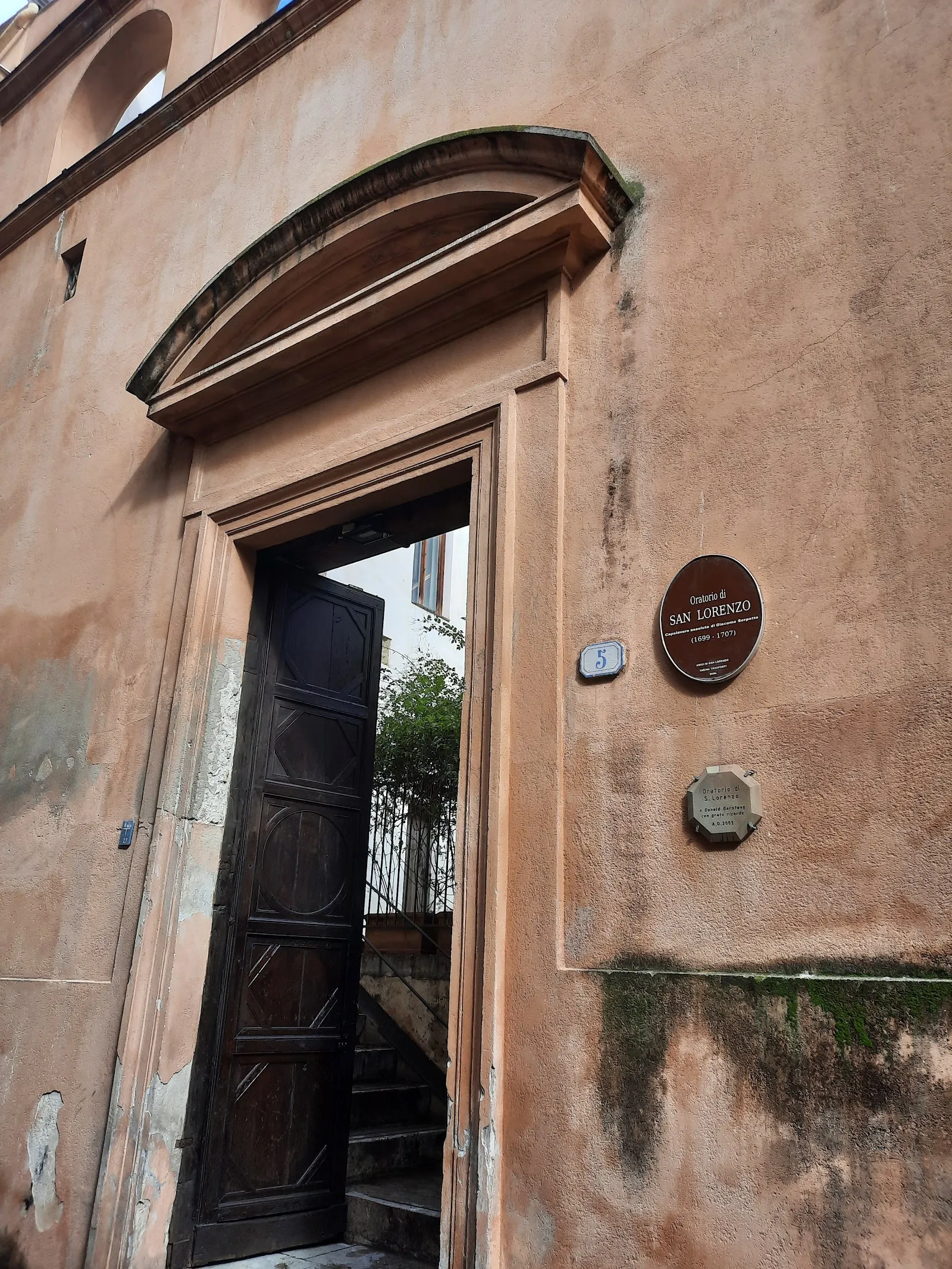
The building was originally a meeting place for members of business guilds, rather than a church. It stands opposite the church of San Francesco d’Assisi, in Palermo’s historic centre.
Preguntas frecuentes
What can you see inside the Oratorio di San Lorenzo?
The interior is decorated with Giacomo Serpotta’s white stucco sculptures. You can also see a reproduction of Caravaggio’s Nativity.
Is Caravaggio’s original Nativity still there?
No. The original was stolen in 1969 and has not been recovered. A reproduction is associated with the oratory.
Can you take a guided tour?
Guided tours are available and can explain the oratory’s history and artwork.
Is the Oratorio di San Lorenzo wheelchair accessible?
The entrance is listed as wheelchair accessible.