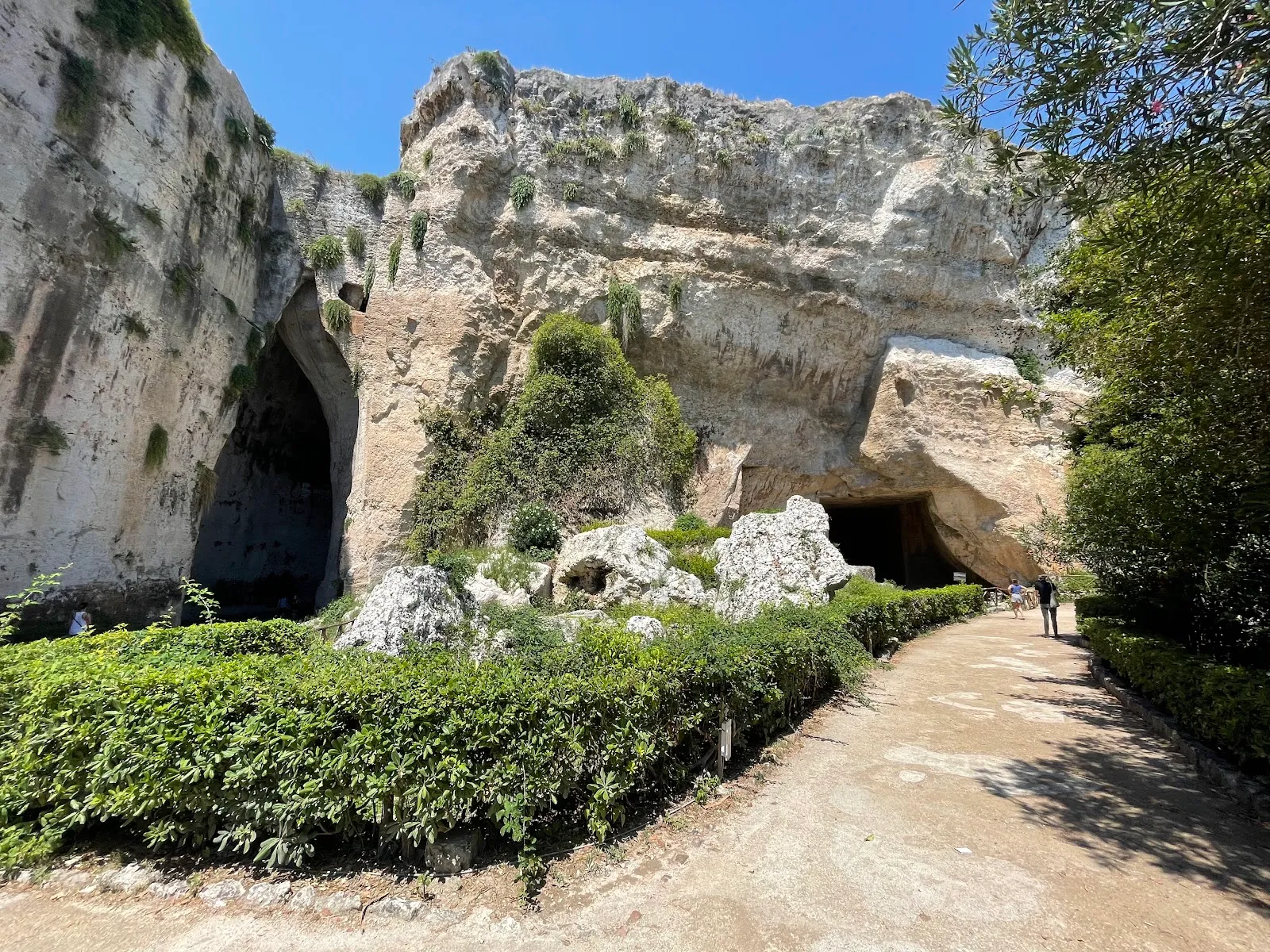
The Ear of Dionysius is an artificial limestone cave in the Latomia del Paradiso, inside the Neapolis Archaeological Park in Syracuse, Sicily. Its tall, curving opening gives the cave its name, while its shape carries sound through the interior. Look up into the rock face, then listen from inside as voices echo. The cave was cut from an ancient quarry, and a legend links its acoustics to Dionysius I, the ruler said to have listened to prisoners from above. The archaeological area also brings Greek and Roman remains together.
A cave cut from the quarry
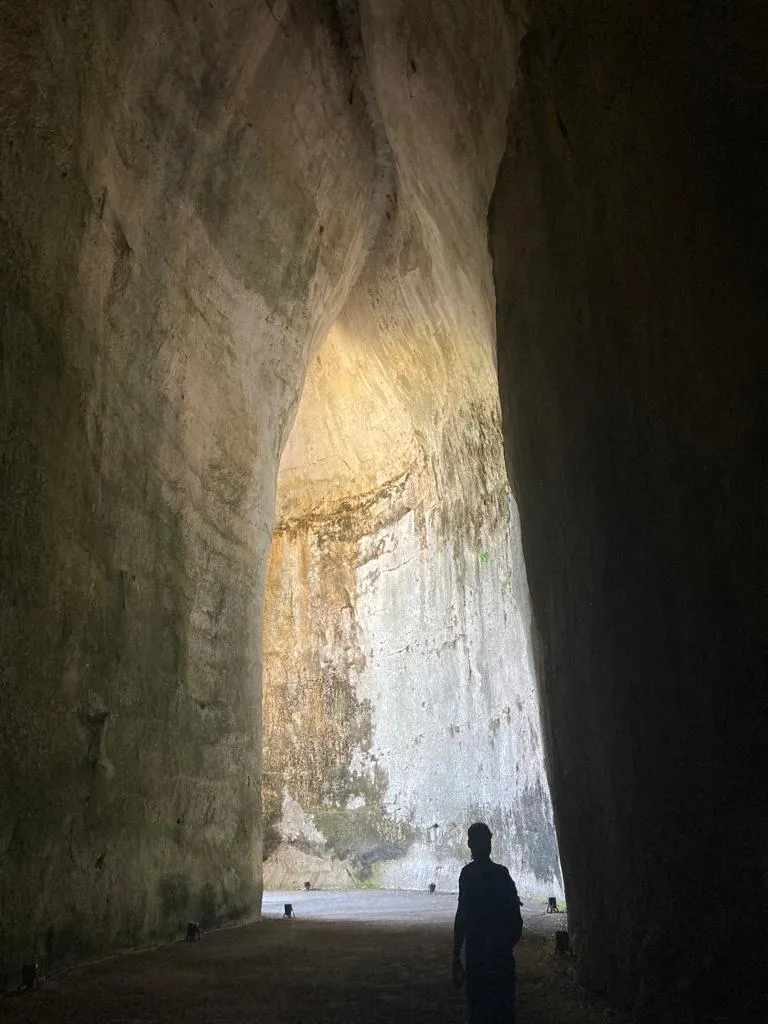
The Ear of Dionysius lies in the Latomia del Paradiso, an ancient quarry within the Neapolis Archaeological Park. The latomie supplied stone for buildings in ancient Syracuse. This cave was carved from limestone, and its scale is striking: it rises about 23 metres, extends more than 60 metres into the rock and reaches around 11 metres across at its widest point.
Its narrow, curving shape gives the entrance an ear-like outline. The name is associated with the painter Caravaggio, who is said to have been struck by the form when he visited Syracuse. The cave is also known by its Italian name, Orecchio di Dionisio.
Why the cave echoes
Sounds carry unusually well inside the cave. Speak or sing from within and listen as the voice reverberates through the space. The cave's shape is central to this effect, which is one reason it draws visitors beyond its dramatic entrance.
A legend connects the acoustics to Dionysius I, the tyrant of Syracuse. In the story, he kept prisoners in the cave and listened to their conversations from an opening high above. The tale adds a darker layer to the site, but the cave also has a practical history as part of the quarry. It may have been used as a place for the chorus during performances at the nearby Greek Theatre; that possible use is separate from the legend.
Exploring the archaeological area
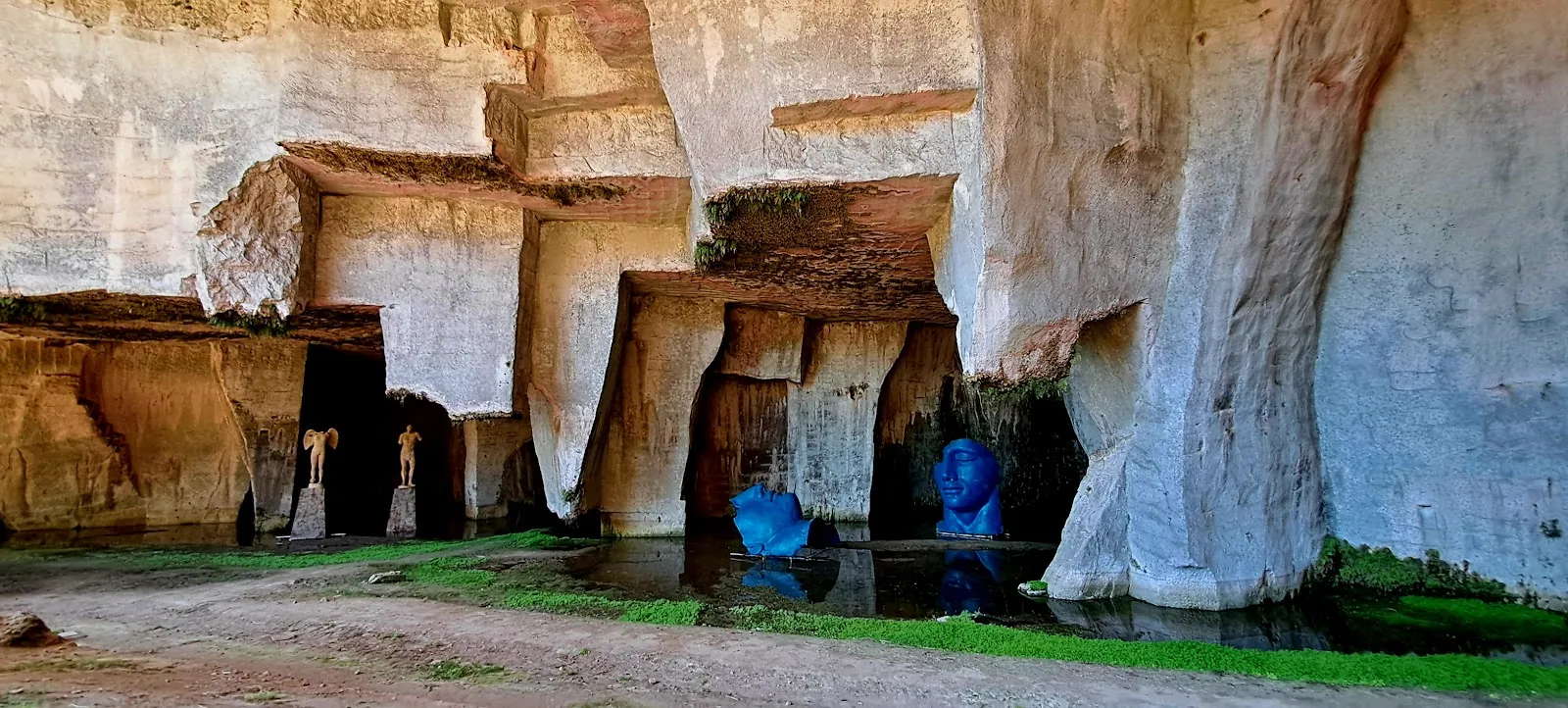
The Ear of Dionysius is one of the best-known sights in the Neapolis Archaeological Park, alongside the Greek Theatre. The wider area includes Greek and Roman remains, statues and ancient stone workings. Start on the Greek side of the site, then explore the upper and lower areas for a fuller visit.
The paths pass through a historic park, with trees providing shade along parts of the route. Signage may not explain every feature clearly, so reading about the site's history before arriving can help put the cave and quarry in context. Bring water for the walk, and check ticket arrangements ahead of your visit, as advance booking is recommended.
Preguntas frecuentes
Where is the Ear of Dionysius?
It is in the Latomia del Paradiso, inside the Neapolis Archaeological Park in Syracuse, Sicily.
Why is it called the Ear of Dionysius?
The cave's curved entrance resembles an ear, and its acoustics are linked by legend to Dionysius I. The name is associated with Caravaggio.
How long should I spend there?
The input does not give a typical visit duration. The cave is part of a wider archaeological area with Greek and Roman remains.
Can you hear echoes inside the cave?
Yes. The cave amplifies voices, so sounds spoken inside reverberate through the space.