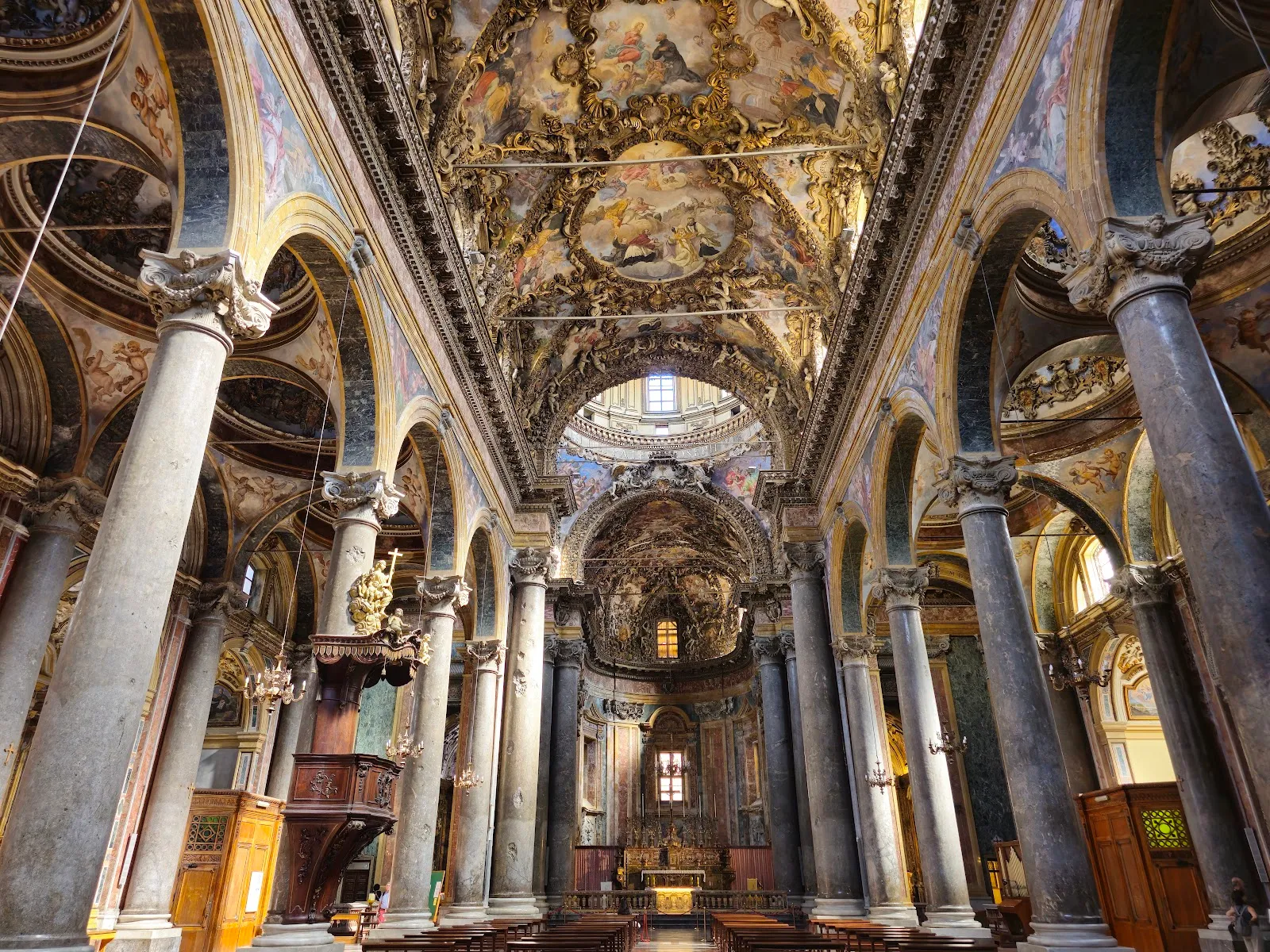
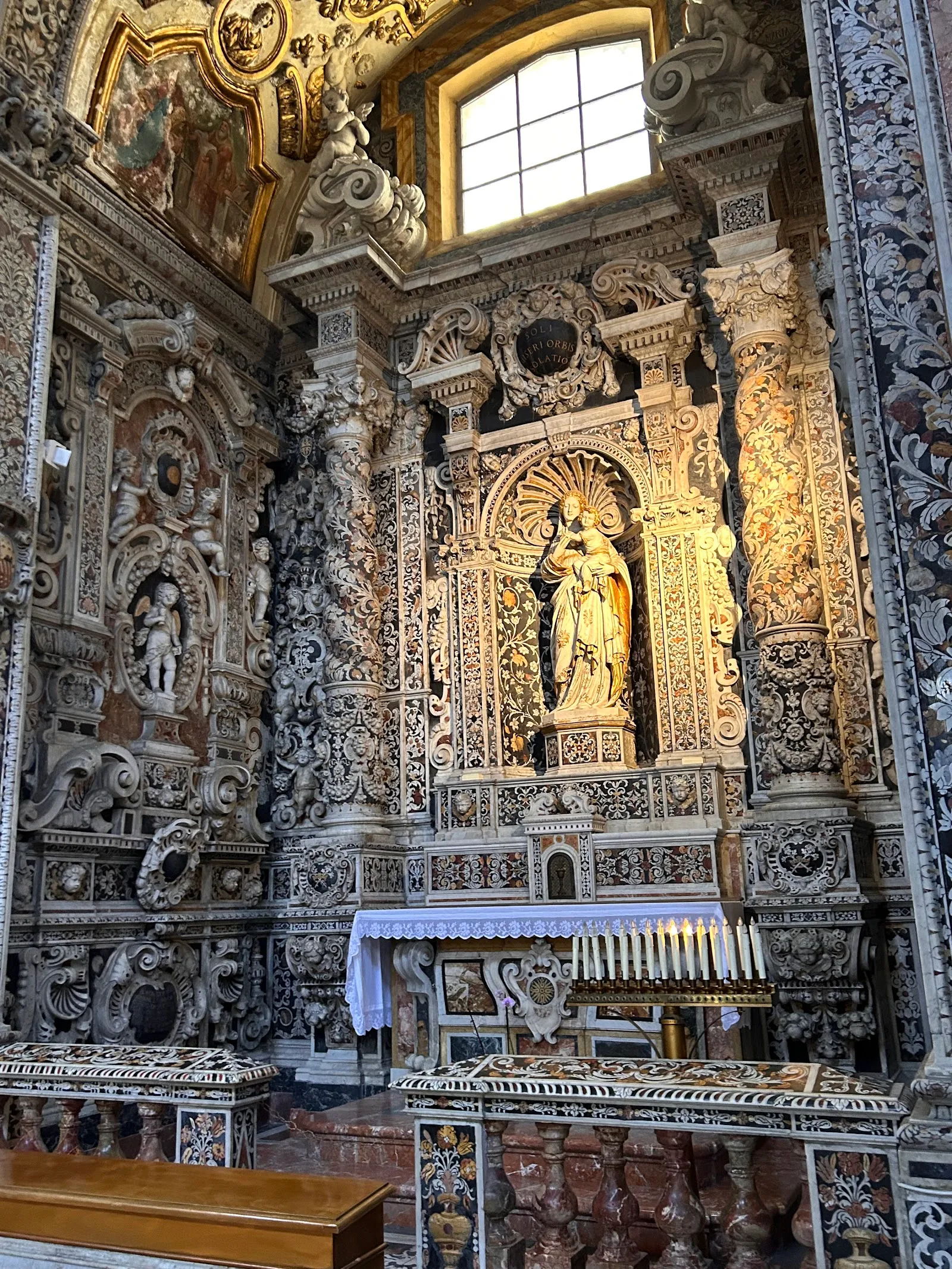
At the southwest corner of Quattro Canti in central Palermo, San Giuseppe dei Padri Teatini is a 17th-century Catholic church with an elaborate Sicilian Baroque interior. Look for polychrome marble, gilded details and frescoes depicting the life of Saint Cajetan. Near the entrance, bronze angels support large marble holy water fonts. The church also has a lower-level crypt, and rooftop access gives a view over the city after a climb of 139 stairs; rooftop entry costs extra.
A Baroque church at Quattro Canti
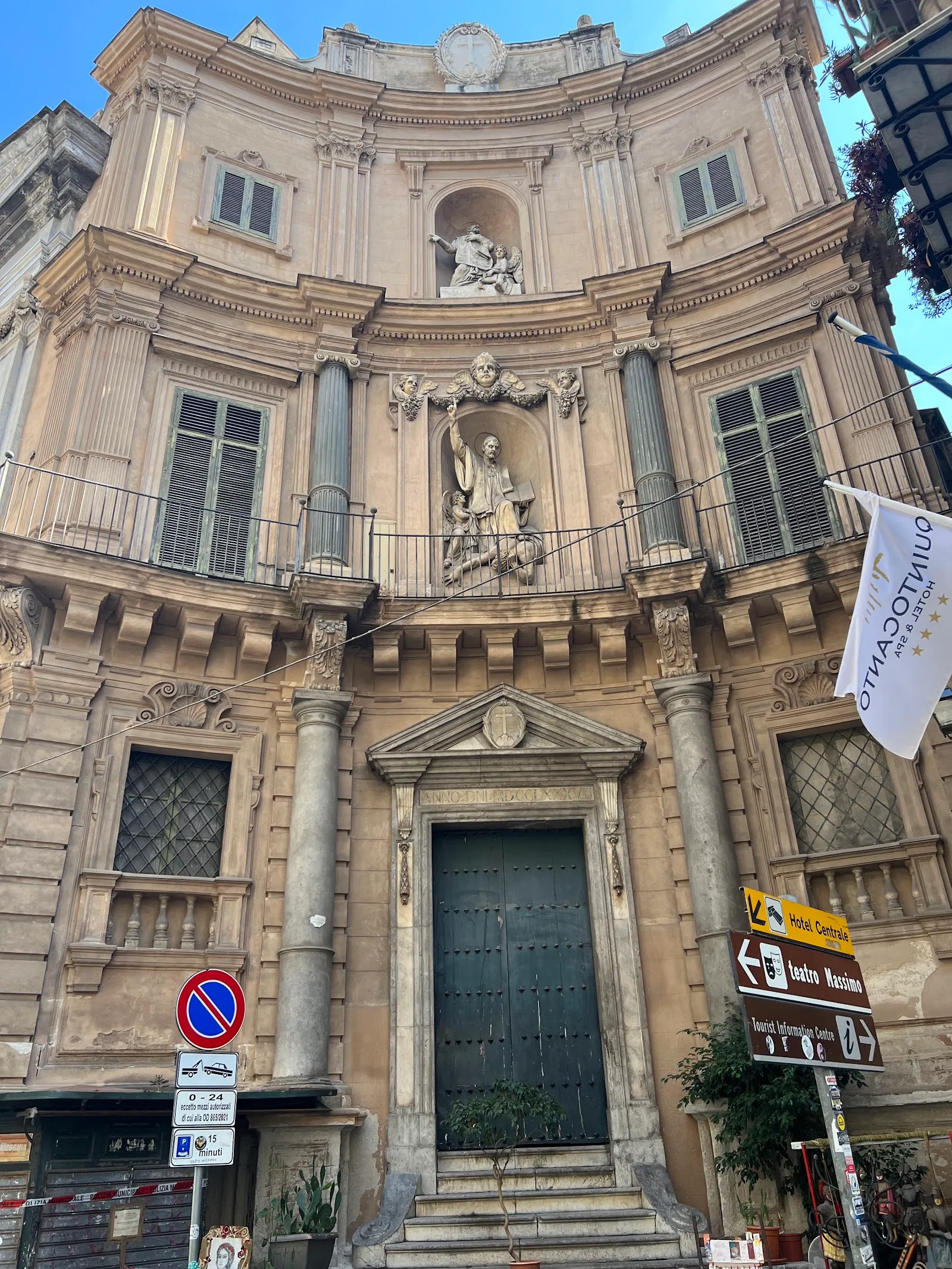
San Giuseppe dei Padri Teatini stands on Via Vittorio Emanuele, at the southwest corner of Quattro Canti in Palermo’s historic centre. Its position makes it easy to pass during a walk through the old town. The church is an example of Sicilian Baroque architecture and dates to the 17th century.
The exterior gives way to an interior marked by coloured marble, gilded details and intricate decoration. Frescoes include scenes from the life of Saint Cajetan. The church’s frescoes were badly damaged during the Second World War, and restoration work has preserved much of the interior.
The crypt and rooftop
The church has two levels, including a lower-level crypt where parts of an ancient church remain. Take time to look at the space as well as the decorated nave. A wooden crucifix by Fra’ Umile of Petralia is also among the church’s notable works.
Rooftop access is available for an additional fee. Reaching it involves climbing 139 stairs, so allow for the ascent when deciding whether to include it in your visit. Ask about the extra charge before heading up.
Preguntas frecuentes
Where is San Giuseppe dei Padri Teatini?
The church is on Via Vittorio Emanuele in Palermo, at the southwest corner of Quattro Canti.
Is there a crypt inside the church?
Yes. The church has a lower level where parts of an ancient church are preserved.
Can you go onto the roof?
Rooftop access is available for an extra fee and involves climbing 139 stairs.
What should I look for inside?
Notice the polychrome marble, gilded details, frescoes depicting Saint Cajetan’s life and the marble holy water fonts near the entrance.