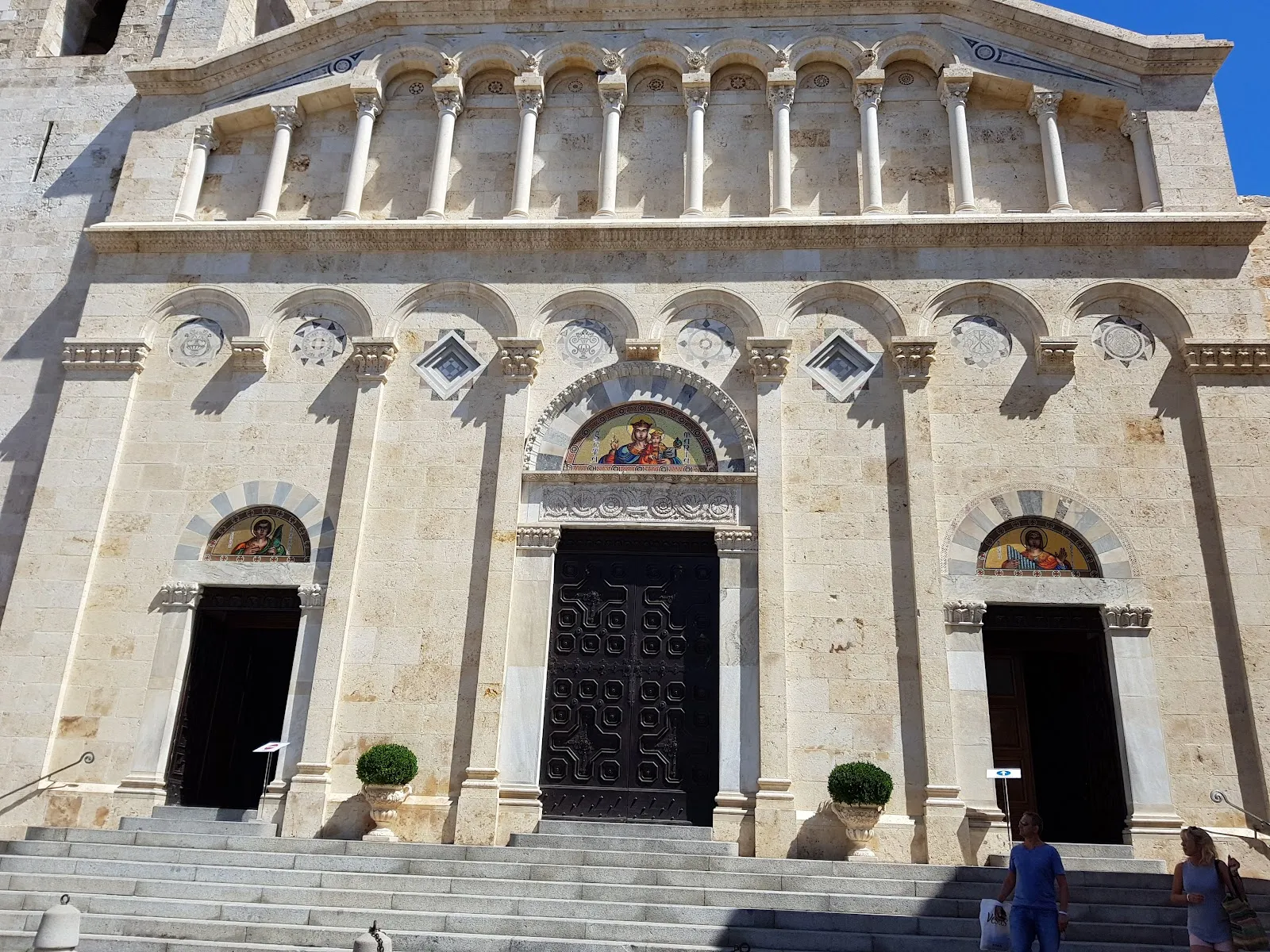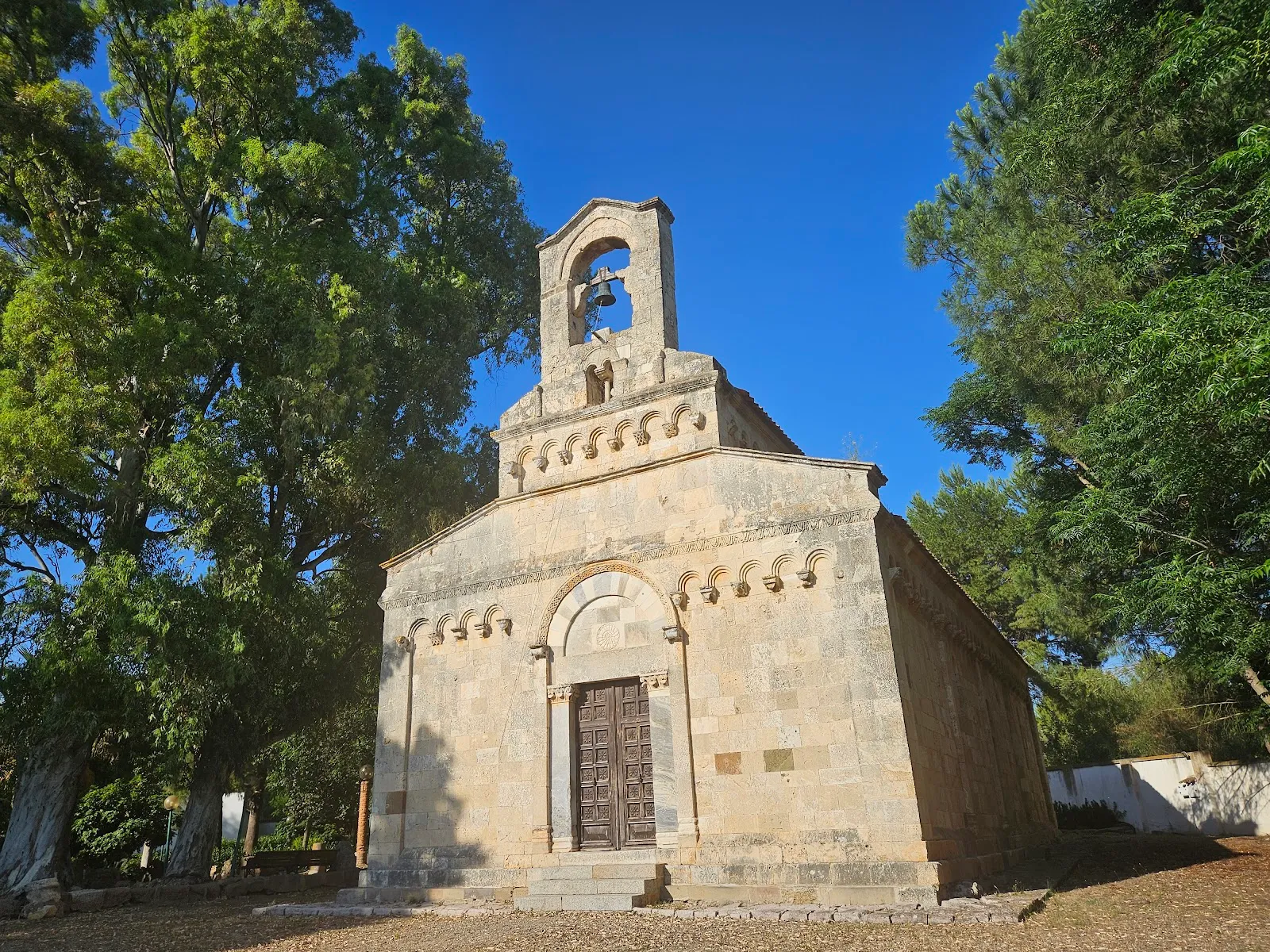
On the rural outskirts of Uta, the Church of Saint Mary is a Romanesque church dating to the 12th century, set in a large green park. Its original layout survived later restoration, and details to look for include double-ring arches and carved capitals. The church is dedicated to Santa Maria di Monserrat, whose feast is celebrated on September 8 and the days around it. A visit can also take in the church’s history with several religious orders and the reputed remains of a monastery nearby.
A church shaped by several religious orders
The church is dedicated to Santa Maria di Monserrat. Its history is tied to a succession of religious bodies, although the account of its early use is not certain. Tradition identifies it as the parish church of upper Uta and associates it with monks, often named as Victorines.
The written record cited for the church’s title dates to 1363. In that year, Peter IV of Aragon specified its connection to the Hospitallers of Jerusalem and granted it to the Knights of Saint George of Alfama. The knights did not take possession of the church. It later passed to the Franciscans, who transferred it to the Archbishop’s Mensa of Cagliari at the end of the 16th century in exchange for Saint Barbara’s church in Capoterra.
Remains believed to belong to a monastery were reported near the church into the last century. A well was traditionally placed at the centre of its cloister, and its water was credited with healing properties. These are local traditions, rather than features to assume are accessible today.
Romanesque construction and an earlier church
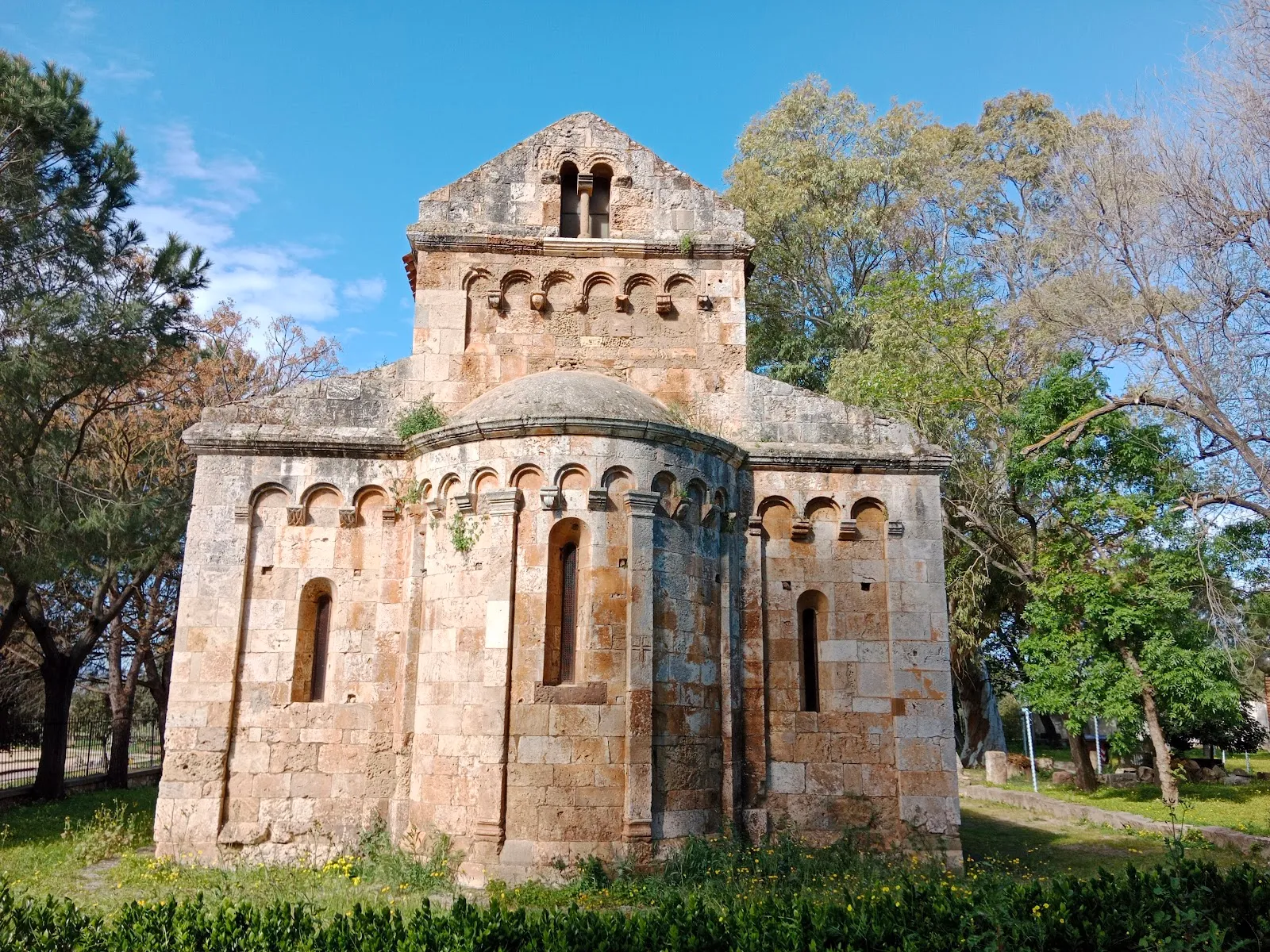
The present building was constructed by Tuscan workers active in the second half of the 12th century. Its walls use medium-sized blocks of limestone and sandstone, with inserts of trachyte and different marbles. The mix of stone gives the exterior a varied finish without changing the building’s Romanesque character.
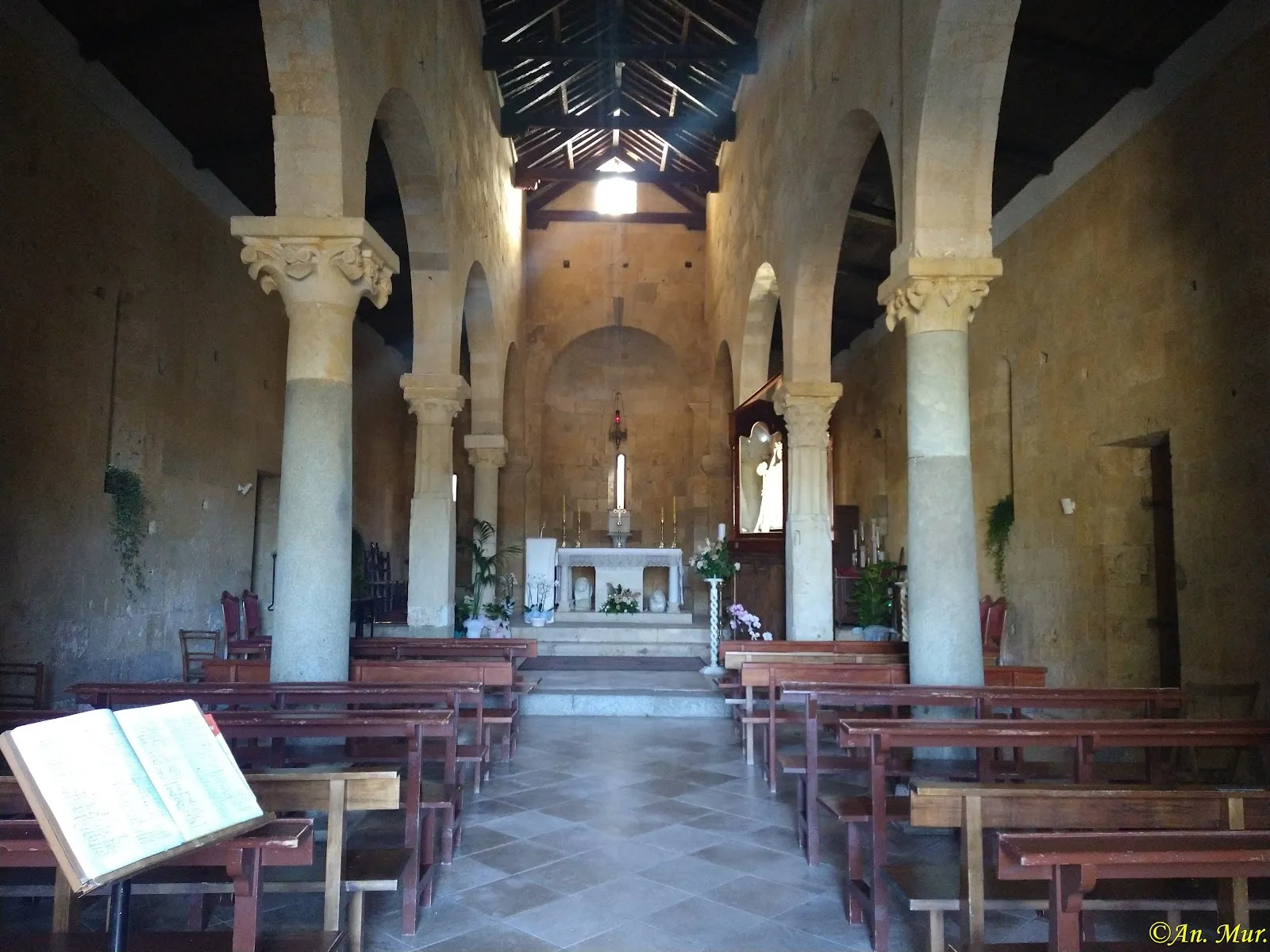
The church’s layout holds evidence of an earlier structure. A two-aisled hall with apses facing north-east is understood to belong to a pre-existing church. The later building was set against its northern side, keeping the same orientation but using three aisles and a single apse. Restoration work over time retained the original plan, so the building’s present form preserves this layered arrangement.
Details to look for inside
The hall’s divisions began with arches resting on plain columns. The capitals were made specifically for the church and imitate classical Corinthian forms, with acanthus or water-leaf designs. Double-ring arches and decorative details are also among the architectural features to notice during a visit.
The building’s historic interiors may not be open whenever you arrive. If the doors are closed, the visit can still include the exterior and the park around the church. The September feast brings the site into focus as a place of worship and local celebration, with events on September 8 and the days immediately before and after.
Preguntas frecuentes
Where is the Church of Saint Mary?
It is on Via Santa Maria on the rural outskirts of Uta, Sardinia, in a large park.
When is the feast of Santa Maria di Monserrat?
Celebrations take place on September 8 and the days immediately before and after.
What architectural details can you see?
Look for double-ring arches, plain columns and capitals inspired by Corinthian forms, including acanthus or water-leaf designs.
Can you visit the church interior?
The church may be closed when you arrive, so access inside is not guaranteed.