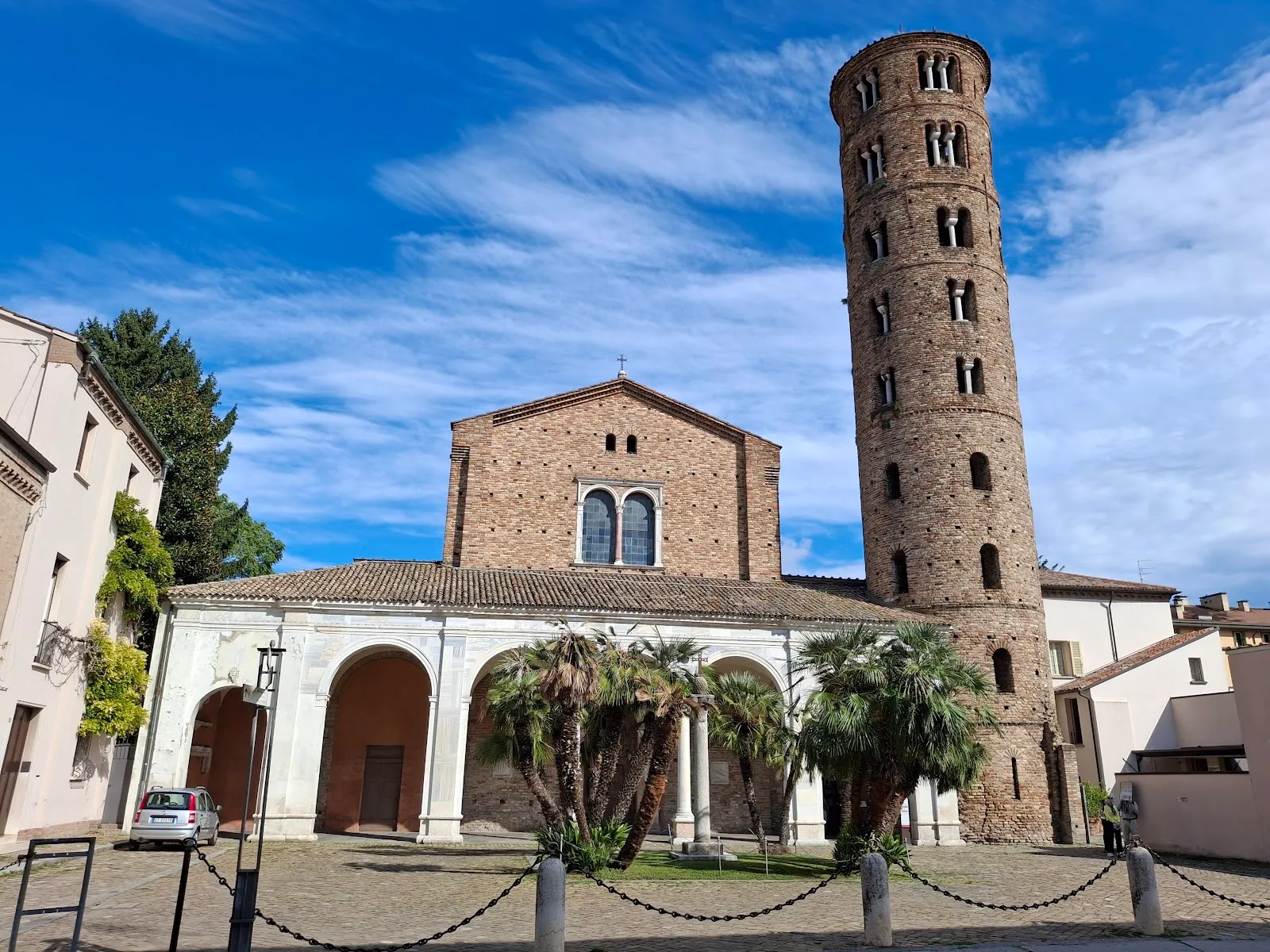
On Via di Roma in Ravenna, this sixth-century basilica was built under Ostrogothic king Theodoric as a palace church. Its plain exterior gives little hint of the mosaics inside: long rows of saints and martyrs move along the nave walls towards Christ and the Virgin Mary. Look closely at the columns for hands left from figures removed when the church’s decoration was altered. The basilica is part of Ravenna’s UNESCO-listed early Christian monuments and is a rewarding stop for anyone interested in mosaics, art or the city’s layered religious history.
A palace church with a changing identity
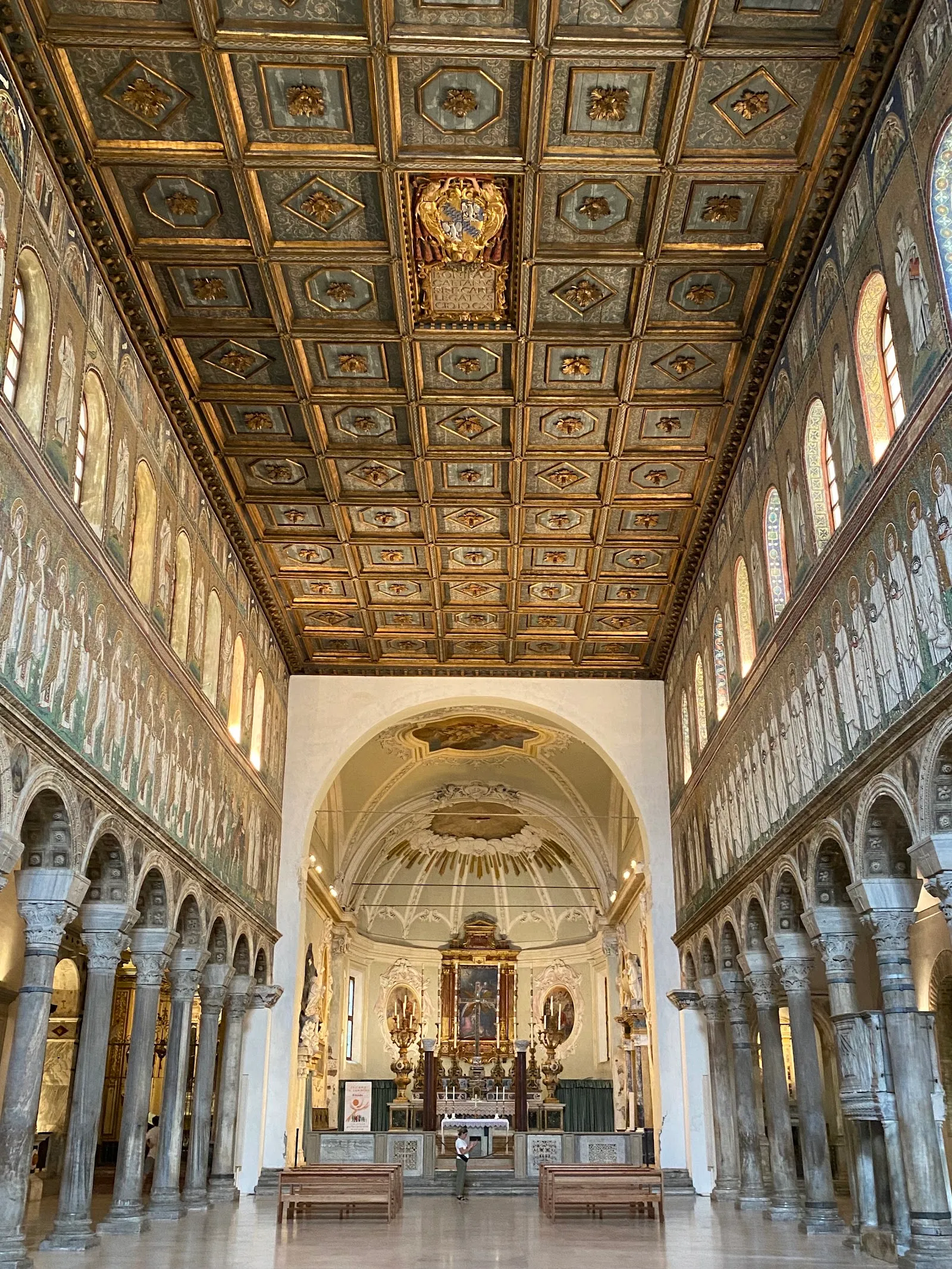
The basilica was built in the early sixth century under Theodoric, king of the Ostrogoths, as a church connected to his palace. It was first dedicated to Christ the Redeemer and served the Arian Christian community. After Byzantine rule began, the church was reconsecrated to Catholic worship and dedicated to Saint Martin of Tours. It received its present name in the ninth century, when the relics of Apollinaris, Ravenna’s first bishop, were brought here from the basilica outside the city at Classe.
The changes in ownership and religious practice are visible in the decoration. Theodoric’s palace church became a Catholic basilica, and parts of the mosaics were altered to remove figures associated with the earlier court and Arian faith. Ravenna’s surviving monuments preserve evidence of this period of political and religious change, which is one reason the city’s early Christian buildings are recognised together as a UNESCO World Heritage site.
Reading the mosaics
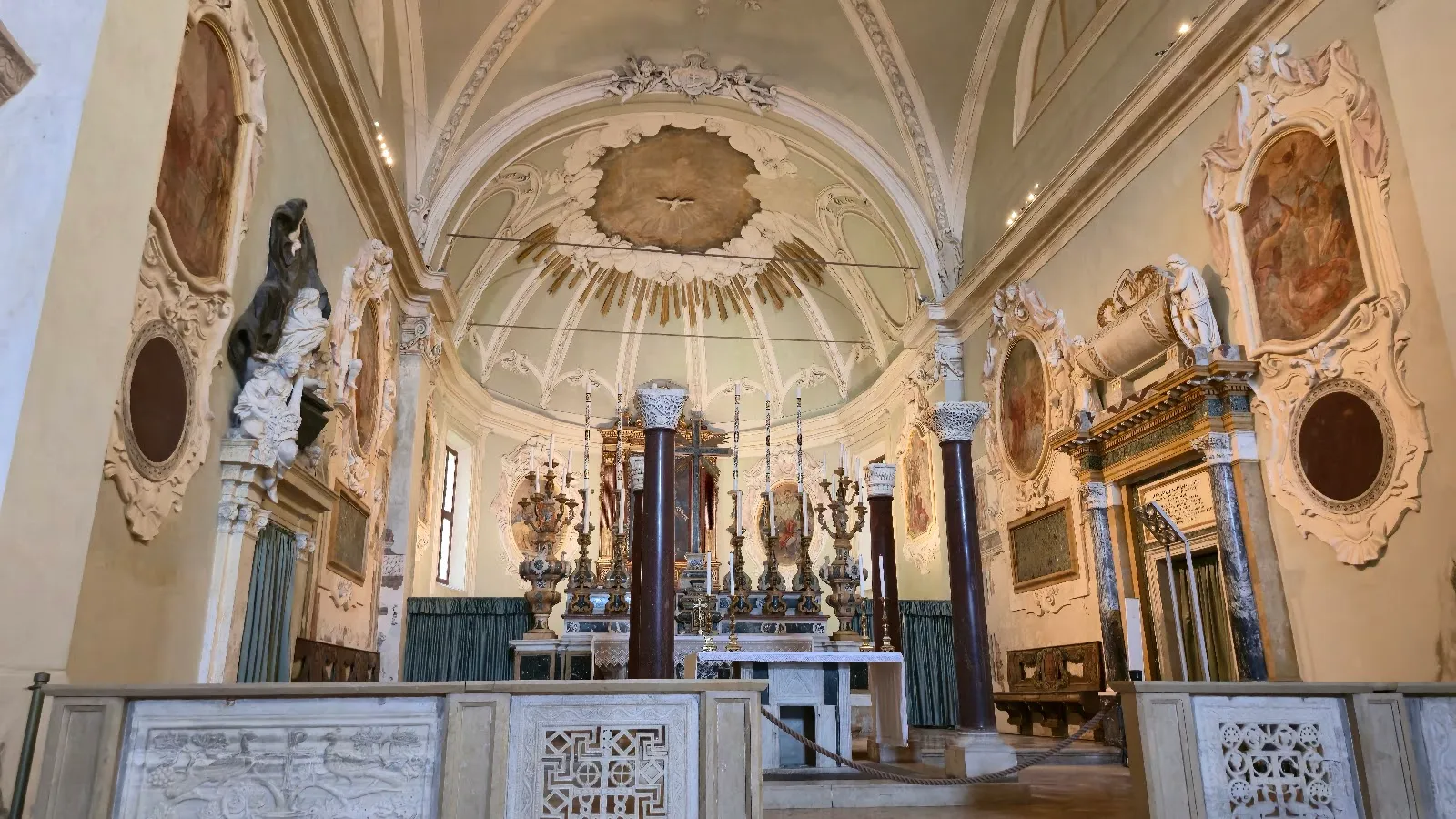
The central nave is flanked by two side aisles and divided by rows of marble columns. Above them, mosaics run along the long walls. One side shows female saints and martyrs in procession towards the Virgin Mary and the Christ child. The opposite wall carries a procession of male martyrs approaching Christ. The figures are set against brilliant backgrounds, with gold tesserae helping create the luminous effect associated with Ravenna’s mosaics.
Look for the differences between the two processions, as well as the architectural scenes that represent Ravenna and the port of Classe. The images connect the city’s local landscape with Christian devotion. They also reveal how the decoration was revised: on columns near the depiction of Theodoric’s palace, hands remain where figures were removed. These traces are a striking detail to seek out as you walk along the nave.
How to plan your visit
The basilica is on Via di Roma, a short walk from Ravenna’s historic centre and close to the train station. Allow about 40 minutes to look through the nave and study the mosaic walls. The church is one of several Ravenna monuments with early Christian mosaics, so it can fit into a wider visit to the city’s churches, baptisteries and museum.
A combined ticket for several monuments is mentioned in available visitor information, but prices and conditions can change. Check current details before setting out if you plan to visit more than one site. The basilica recommends advance ticket purchase. If you are interested in the mosaics’ changing appearance, a visit closer to sunset may let you see the light fall differently across the walls.
Preguntas frecuentes
How long should I spend at the Basilica di Sant'Apollinare Nuovo?
Allow about 40 minutes to see the interior and study the mosaic walls.
What should I look for inside the basilica?
Look for the processions of female and male saints, the scenes of Ravenna and Classe, and the hands left on columns where figures were removed.
Can I use a combined ticket for the basilica?
Combined tickets covering several Ravenna mosaic sites are mentioned, but prices and terms can change. Check current ticket information before your visit.
When is a good time to visit?
Closer to sunset, when the changing natural light can shift the appearance of the mosaics.