
On Piazza del Plebiscito, the Royal Palace of Naples is a former royal residence turned museum. Its grand staircase leads to rooms decorated with frescoes, paintings, tapestries and gilt stucco, including the throne room, Royal Chapel and court theatre. Look for the statues of Neapolitan rulers set into the palace façade, then take time to notice the details inside. An optional extra ticket gives access to the rooftop garden, with views towards Mount Vesuvius and across Naples.
A palace built for a royal visit
The palace stands on Piazza del Plebiscito, opposite the Basilica of San Francesco di Paola. Work began in 1600, when Naples was under Spanish rule. Architect Domenico Fontana designed the residence for Philip III of Spain, who never came to Naples. The building was completed in the 1610s and became the home of the Count of Lemos.
The palace’s role changed as rulers changed. Under the Bourbons, it was one of four royal residences used by the family. Naples rose to prominence as a European capital during their rule, which began in 1734. Many of the rooms visitors see today were completed in the 18th century, when Charles III of Bourbon took up residence. Later restoration work included the contributions of architect Luigi Vanvitelli.
The rooms and their decoration
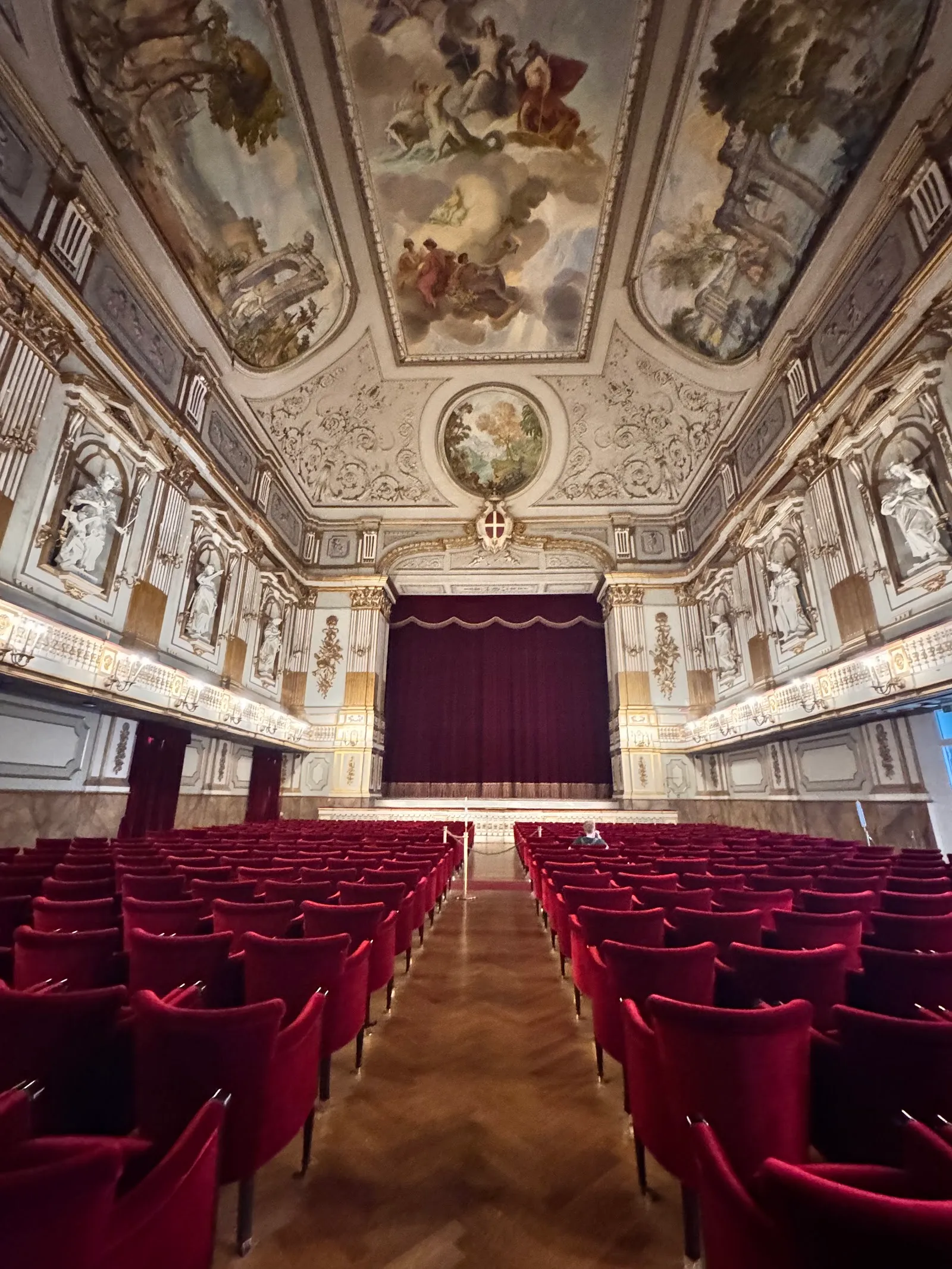
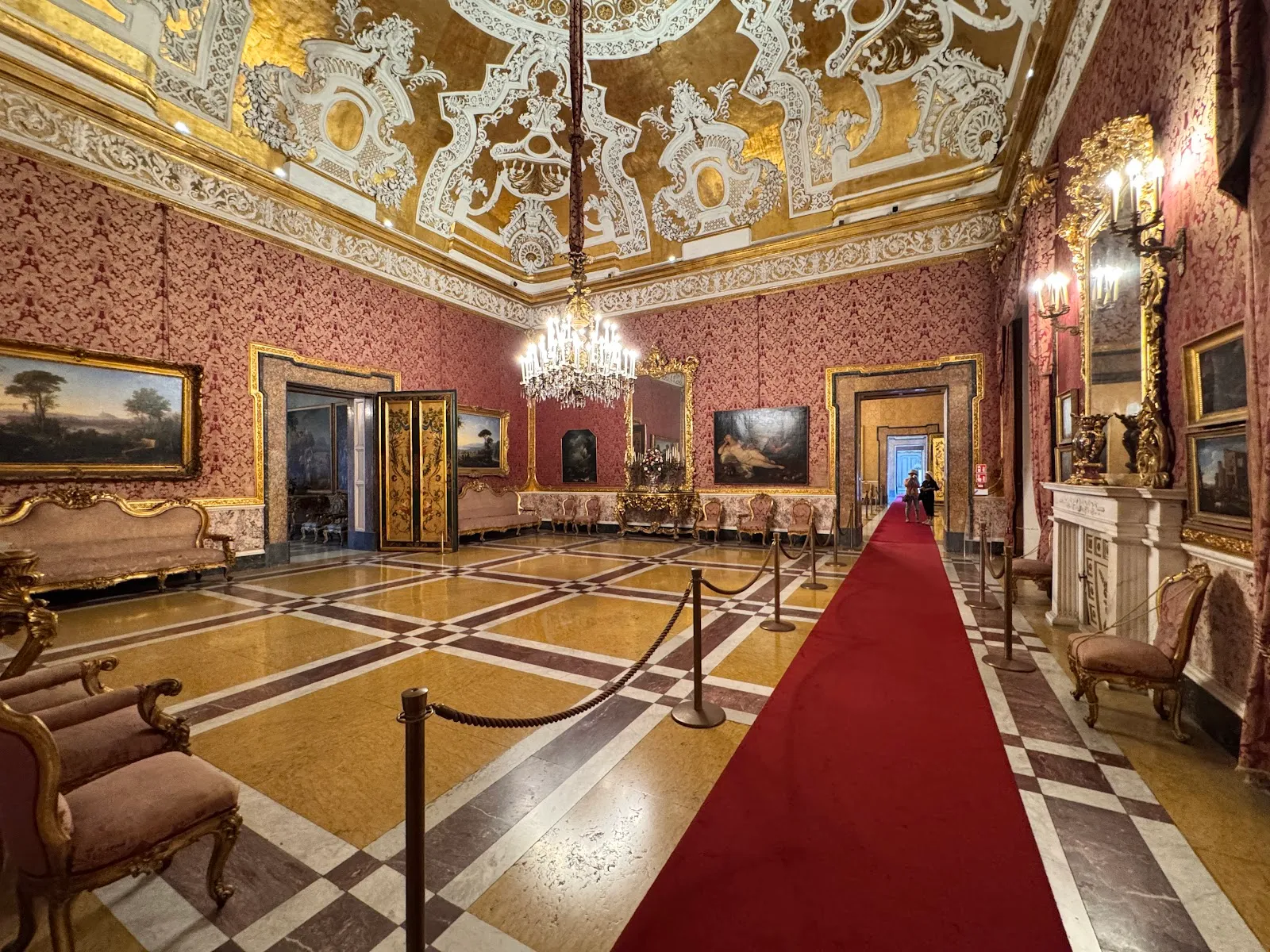
The visitor route takes you through the historic apartments. Among the rooms are the Royal Chapel, court theatre, Hall of Hercules and rooms used for official occasions. The throne room and royal bedrooms give a sense of how the palace was used as a residence and seat of royal life.
Look closely at the interior decoration: frescoes, tapestries, paintings, marble sculpture and gilt stucco appear throughout the rooms. The collection also includes portraits, porcelain and period furnishings. Some rooms have little original furniture, but their painted surfaces and decorative details remain central to the visit. Take your time with the ceilings, wall coverings and painted details rather than moving quickly from one chamber to the next.
The façade, courtyards and garden
Eight statues of rulers associated with Naples stand in niches on the palace façade. They span the city’s ruling history from the 12th to the 19th century, giving the exterior a clear historical focus. The palace complex also includes large courtyards and a garden.
Access to the rooftop garden requires an extra ticket. From there, you can see Mount Vesuvius and parts of Naples. The palace grounds and the paid route through the royal apartments are distinct parts of a visit, so check what your ticket covers before entering.
Finding your way around
The palace is a large complex, and locating the visitor entrance can take some care. Check the official palace website for current visitor information before you go. Once inside, room information is available to read, and audio tours are also provided. Free Wi-Fi is available in the palace.
The museum route can be explored at a measured pace, with time to stop in the rooms that interest you. If you want to see both the interiors and the rooftop garden, allow time for the additional garden visit as well.
Preguntas frecuentes
Where is the Royal Palace of Naples?
It is at Piazza del Plebiscito, opposite the Basilica of San Francesco di Paola.
How much time should I allow for a visit?
Allow about 1 to 1.5 hours to visit the palace.
Can you visit the rooftop garden?
Yes. Access to the rooftop garden requires an extra ticket, and the garden has views towards Mount Vesuvius and parts of Naples.
What can you see inside the palace?
The route includes the royal apartments, Royal Chapel, court theatre and throne room, with frescoes, paintings, tapestries and other decorative details.


