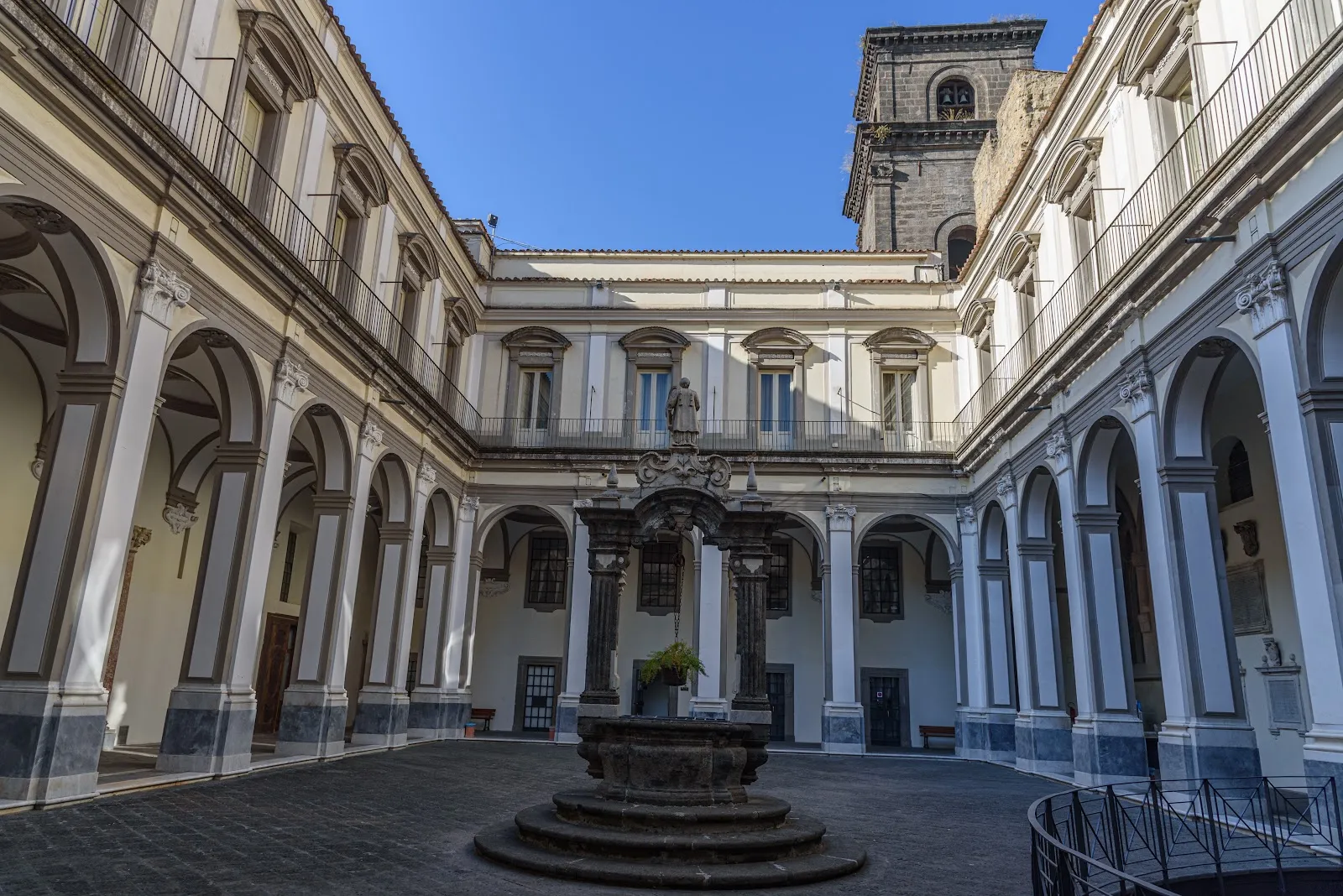
At Piazza San Gaetano in Naples’ old centre, San Lorenzo Maggiore brings a medieval basilica together with excavated Greek and Roman remains beneath it. The church, built in the 13th century, is known for its French Gothic circular apse and a quieter interior with tombs connected to important Neapolitan families. Below, a guided visit takes you through parts of ancient Neapolis, including the remains of a two-storey market. The museum adds works from Greek and Roman times through the 19th century. Take a tour to understand the archaeological layers.
A medieval basilica above ancient Neapolis
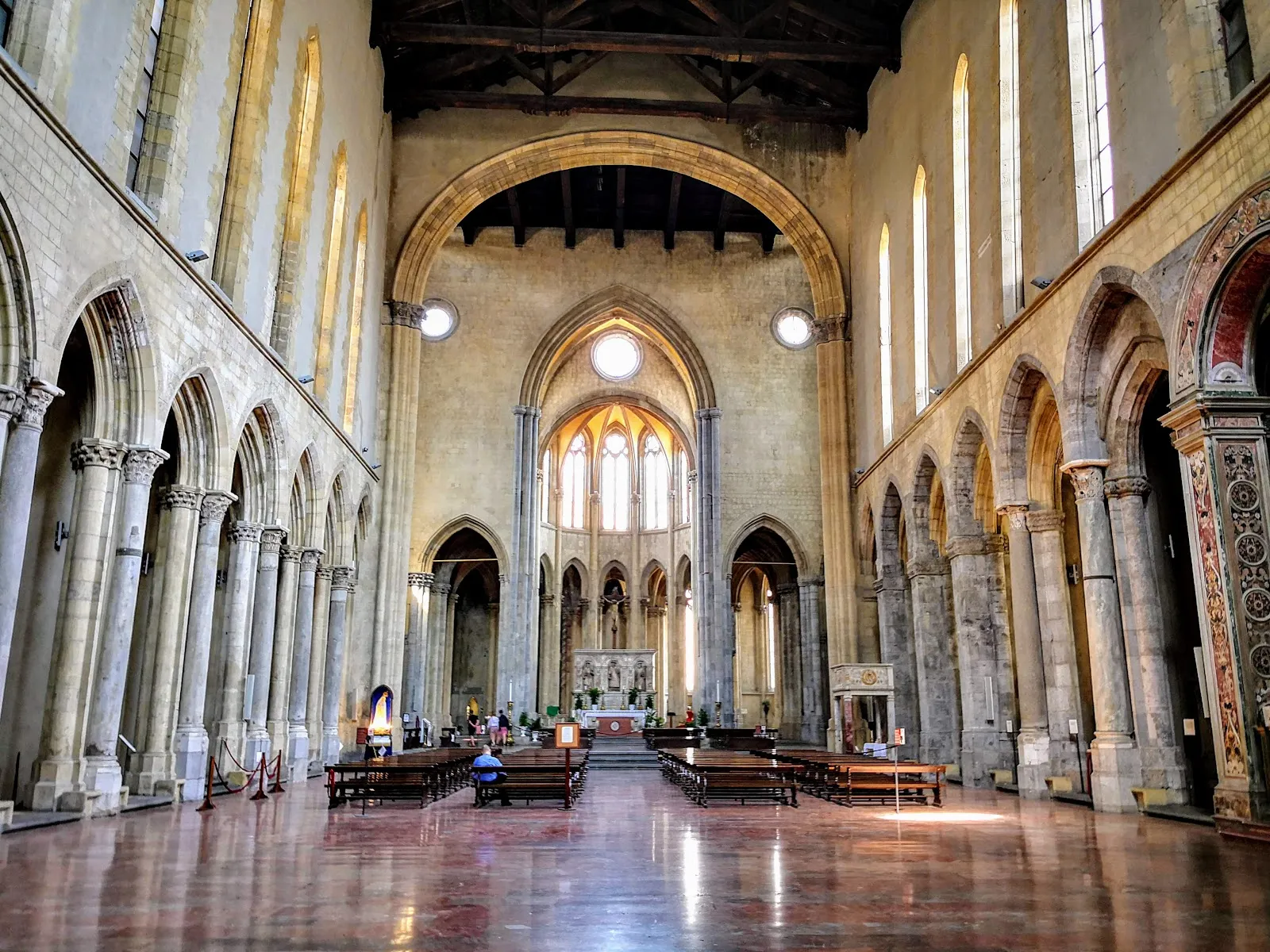
The complex stands in Piazza San Gaetano, in Naples’ old centre, on the site of the ancient city. The basilica was built in the 13th century under Charles I of Anjou, over an earlier Christian church. Its architecture includes French Gothic elements, most clearly seen in the circular apse. Baroque additions once changed the church’s appearance; their removal revealed a more restrained Gothic interior.
The complex also shows how successive periods shaped this part of Naples. Greek and Roman remains lie beneath the medieval church, while later changes can be seen in the building above. The Sanfelice façade reflects the complex’s later architectural history.
The excavations beneath the church
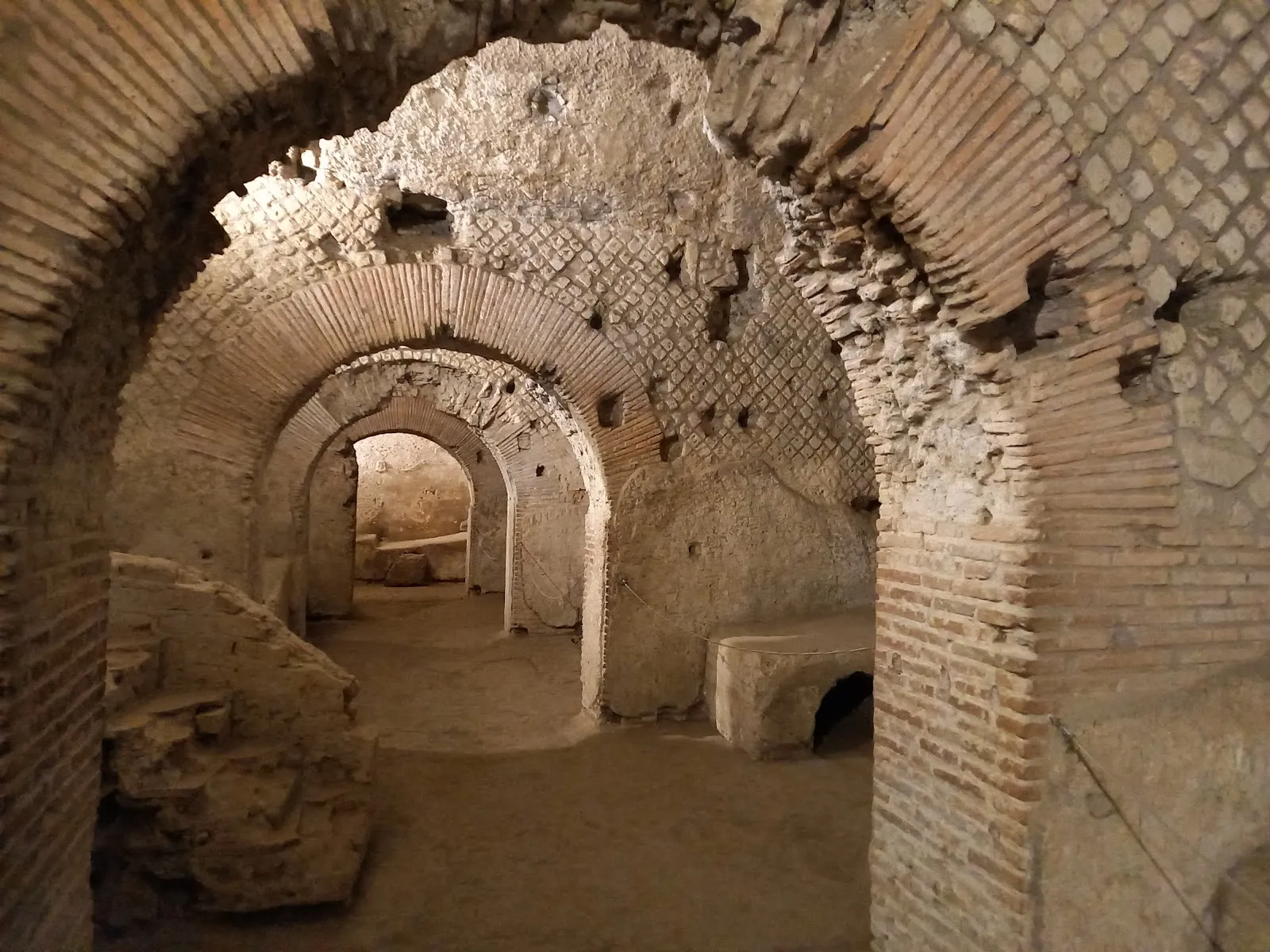
The underground area, known as La Neapolis Sotterrata, preserves part of the ancient city. Excavations uncovered Greek and Roman structures, including the remains of a two-storey market. The site also includes an area believed to have been part of the Roman forum. Walking through the excavated spaces gives a sense of how the ancient city was built and how its remains sit below the present-day centre.
Archaeological work began in the 1980s and concluded in May 2009. The excavation layers helped reveal different phases in the city’s history. A central structure with columns is thought to have held a fountain.
Church interiors and museum rooms
Inside the basilica, look for the circular apse and the tombs associated with families from Naples’ early history. The complex includes the Cappella al Rosario and the Cappellone di Sant’Antonio, as well as the Opera Museum. Its collection covers works from Greek and Roman periods through the 19th century. The Capitolare and Sisto V rooms are noted for their frescoed ceilings.
A guided visit is useful for connecting the underground structures with the city’s different historical phases. Tours are mostly conducted in Italian, so ask about an English-language option before setting out. The underground tour is described as taking about an hour.
Preguntas frecuentes
What can you see underground at San Lorenzo Maggiore?
La Neapolis Sotterrata preserves parts of ancient Greek and Roman Neapolis, including the remains of a two-storey market and an area believed to have been part of the Roman forum.
How long does the underground tour take?
The guided tour of the archaeological area takes about an hour.
Are tours available in English?
Most tours are in Italian. Ask on site whether an English-language tour is available.
What is worth seeing inside the basilica?
Look for the French Gothic circular apse, tombs linked to important Neapolitan families, and the Cappella al Rosario and Cappellone di Sant’Antonio.


