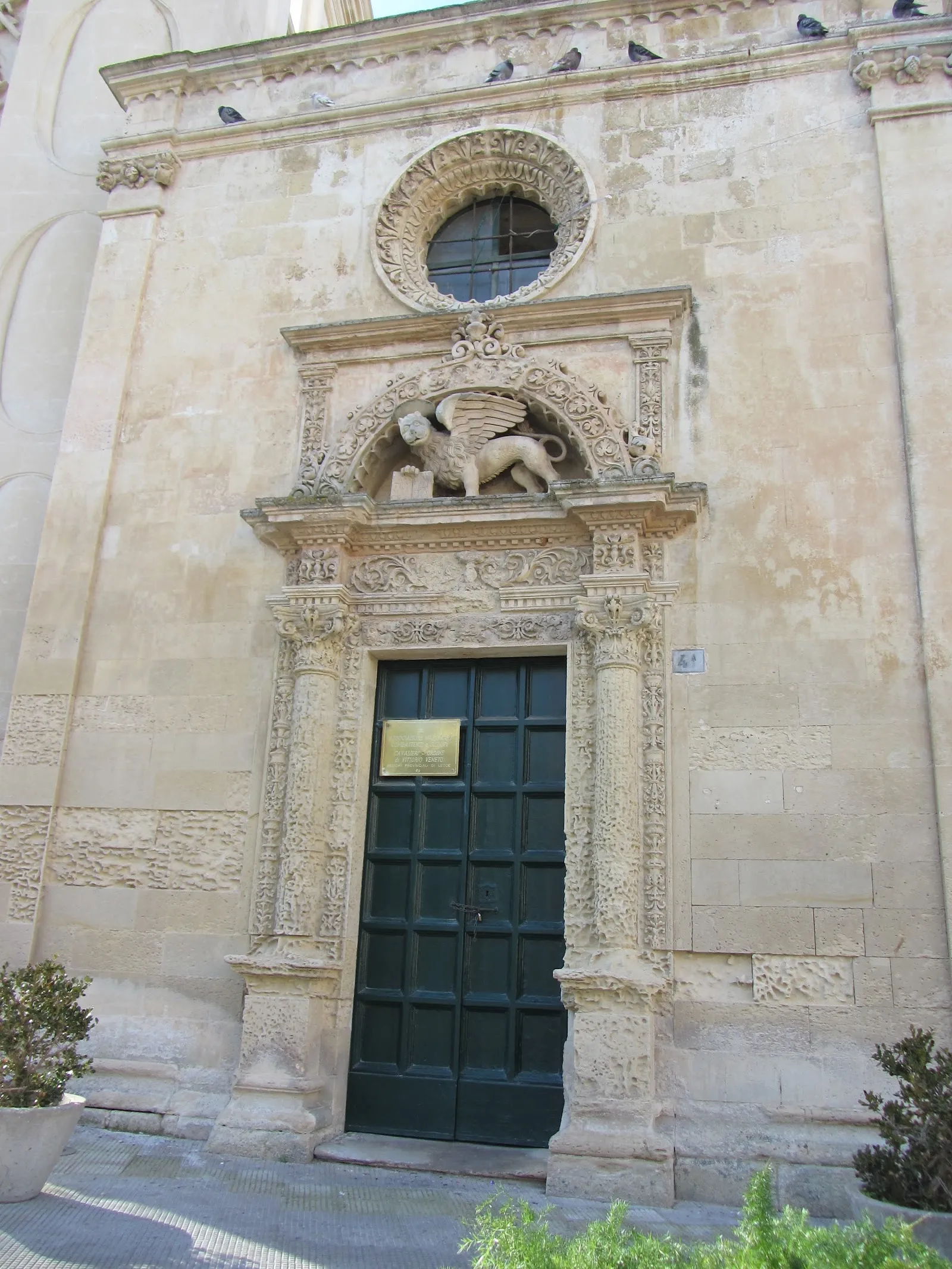
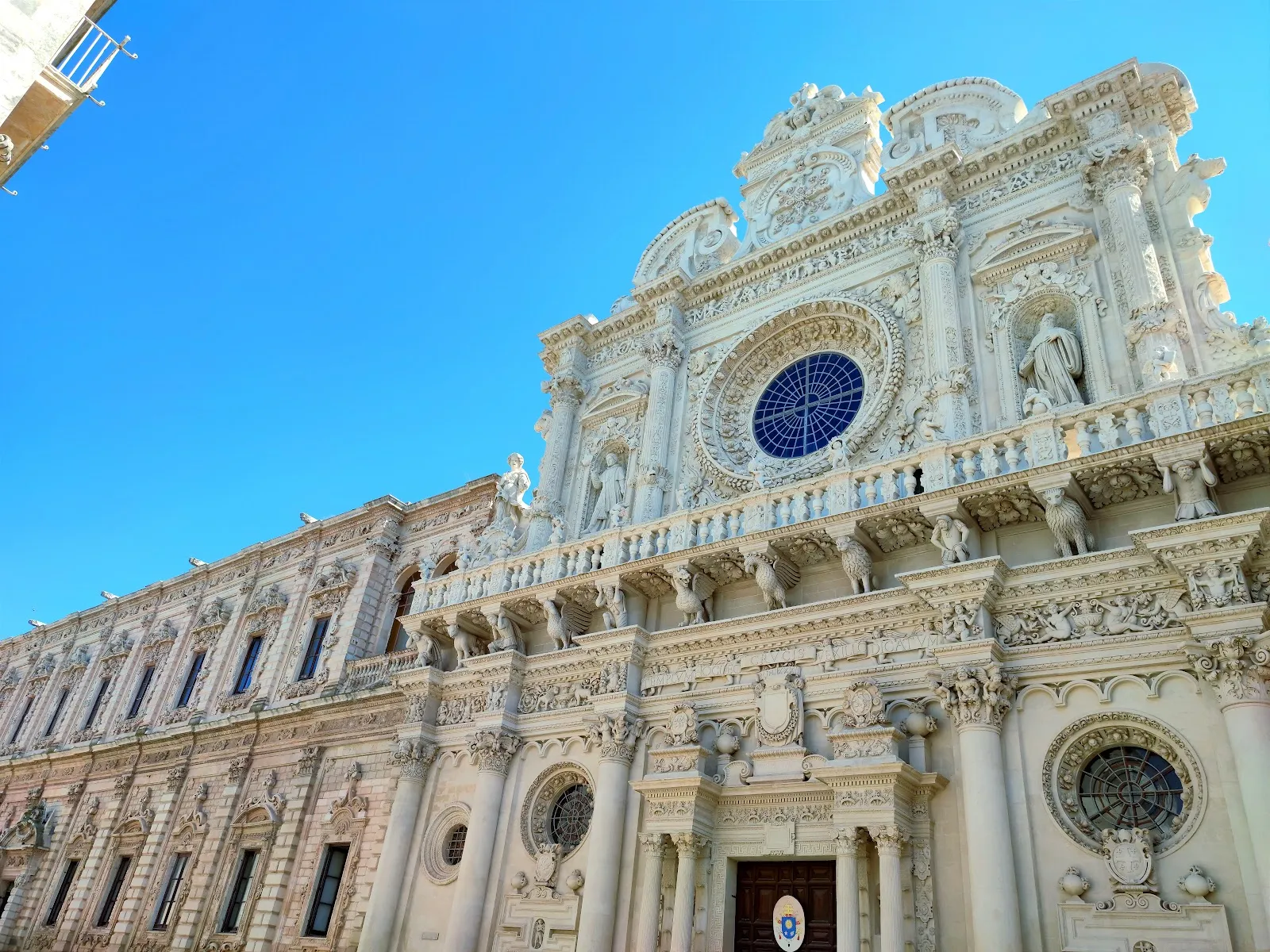
The Cathedral of Saint Mary of the Assumption and Saint Orontius, usually called the Duomo, is the main church of Lecce and anchors Piazza del Duomo. Its Baroque facade is the first thing most visitors notice, with saints, apostles and carved symbols across the stone. Inside, the paintings and decorated chapels reward a slow walk, and the crypt below holds skeletal remains among its columns. Entry requires a ticket, and a combined pass covers several nearby churches. Go early or on a weekday for a quieter visit.
Origins and the Baroque rebuild
The cathedral has been the centre of religious life in Lecce for centuries. The first church on the site is usually dated to 1144. It was rebuilt in the middle of the 1600s under Bishop Luigi Pappacoda, and the work that gives the building its look today is Baroque.
The architect Giuseppe Zimbalo is regarded as the leading figure of Lecce Baroque, and his design shapes both the facade and the bell tower. The cathedral is the city's most important church and the reference point for the local Baroque style.
The facade and the square
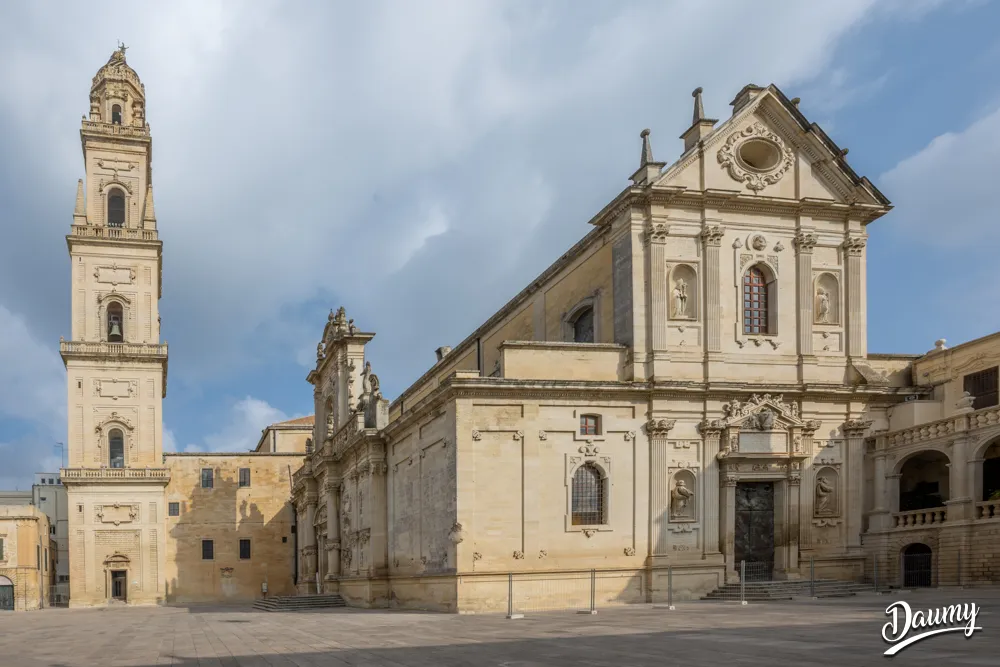
The main facade has two entrances. Carved statues of the saints Gennaro and Ludovico stand on the front, alongside the apostles Peter and Paul.
The cathedral faces Piazza del Duomo, which also holds the seminary building from the late 1600s. The seminary now houses the Diocesan Museum. The Archbishop's Palace is on the square too.
The bell tower stands beside the cathedral. It has five floors and is about 70 metres tall. From the top, the view runs over the rooftops of the city toward the sea.
Inside the cathedral
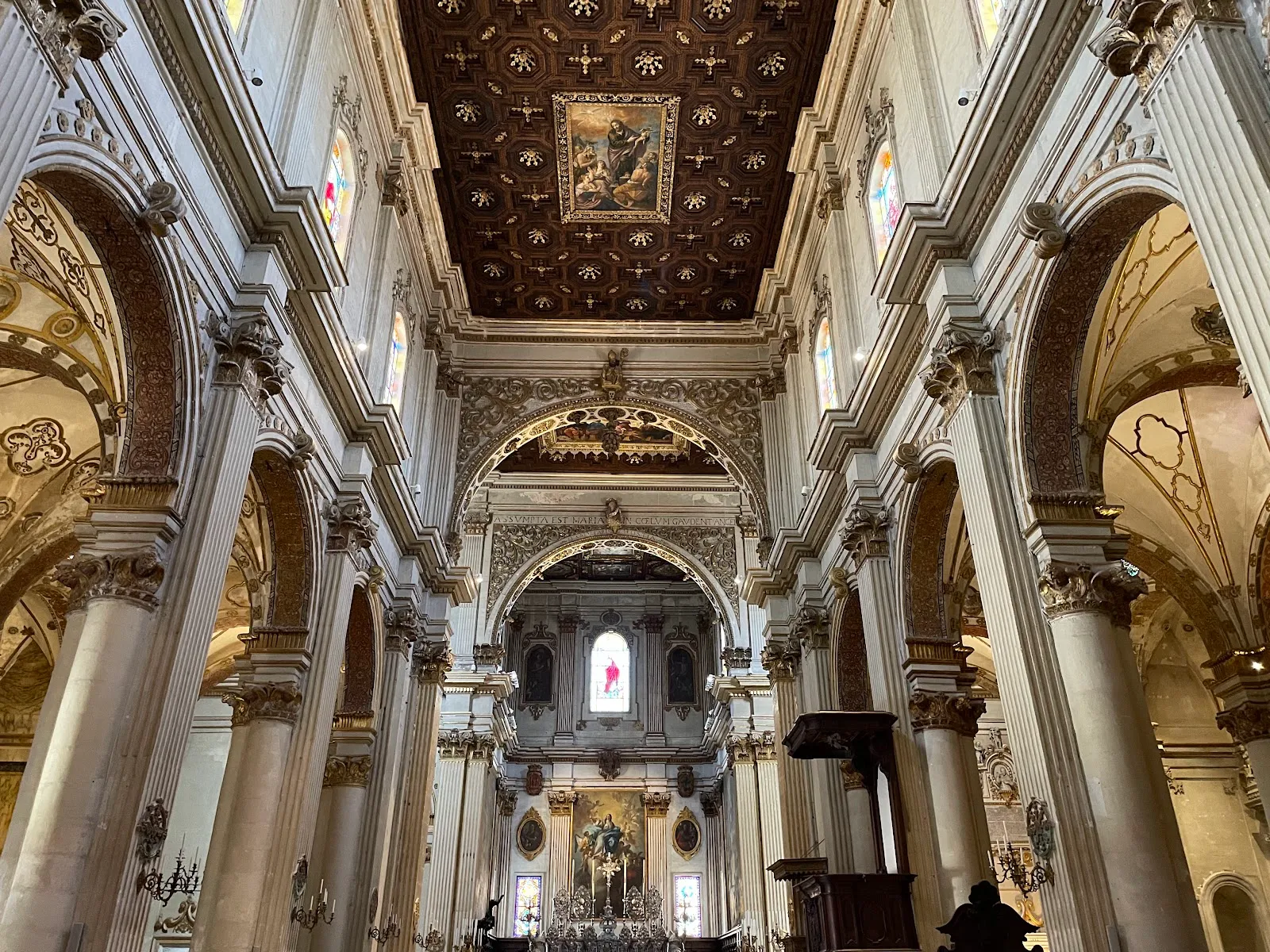
Visitors enter a church decorated with paintings and chapels finished in lavish detail. The stonework is intricate from the floor to the ceiling, and the interior is quiet and calm compared with the busy streets outside.
The church is a place of worship. Keep voices low and move slowly, especially near people who are praying.
The crypt
Inside the cathedral entrance, stairs lead down to the crypt. The crypt dates to the 12th century and has 92 columns. Skeletal remains are kept there, so the space calls for a quiet, respectful visit.
Many visitors place the crypt among the highlights of the cathedral, even though the remains can be unsettling to see.
Tickets and the wider visit
A single ticket covers the cathedral and the bell tower, the Basilica of Santa Croce, the Church of Santa Chiara, the Church of San Matteo, the Ancient Seminary and the Museum of Sacred Art (MuDAS). The combined ticket is listed at 11 euros. The basilica alone is listed at 7 euros.
The tickets cover several churches in the old town, so the cathedral works well as the starting point for a route through the city. The cathedral's entrance is wheelchair accessible, and there is a restroom on site. The church is open every day of the week.
Preguntas frecuentes
Is there an entry fee?
Yes. A ticket is needed to go inside. A combined ticket covering the cathedral and several other churches is listed at 11 euros, and the bell tower is sold separately at 21 euros.
Where do you buy tickets?
Tickets are sold at the seminary building on the other side of Piazza del Duomo.
Is the cathedral wheelchair accessible?
Yes. The entrance is wheelchair accessible, and there is a restroom on site.
Is the crypt worth seeing?
The crypt is a separate part of the visit, with 92 columns and skeletal remains. It can be unsettling, so keep the visit quiet and respectful.
When is the cathedral least crowded?
Early in the morning or on a weekday is the quieter choice.