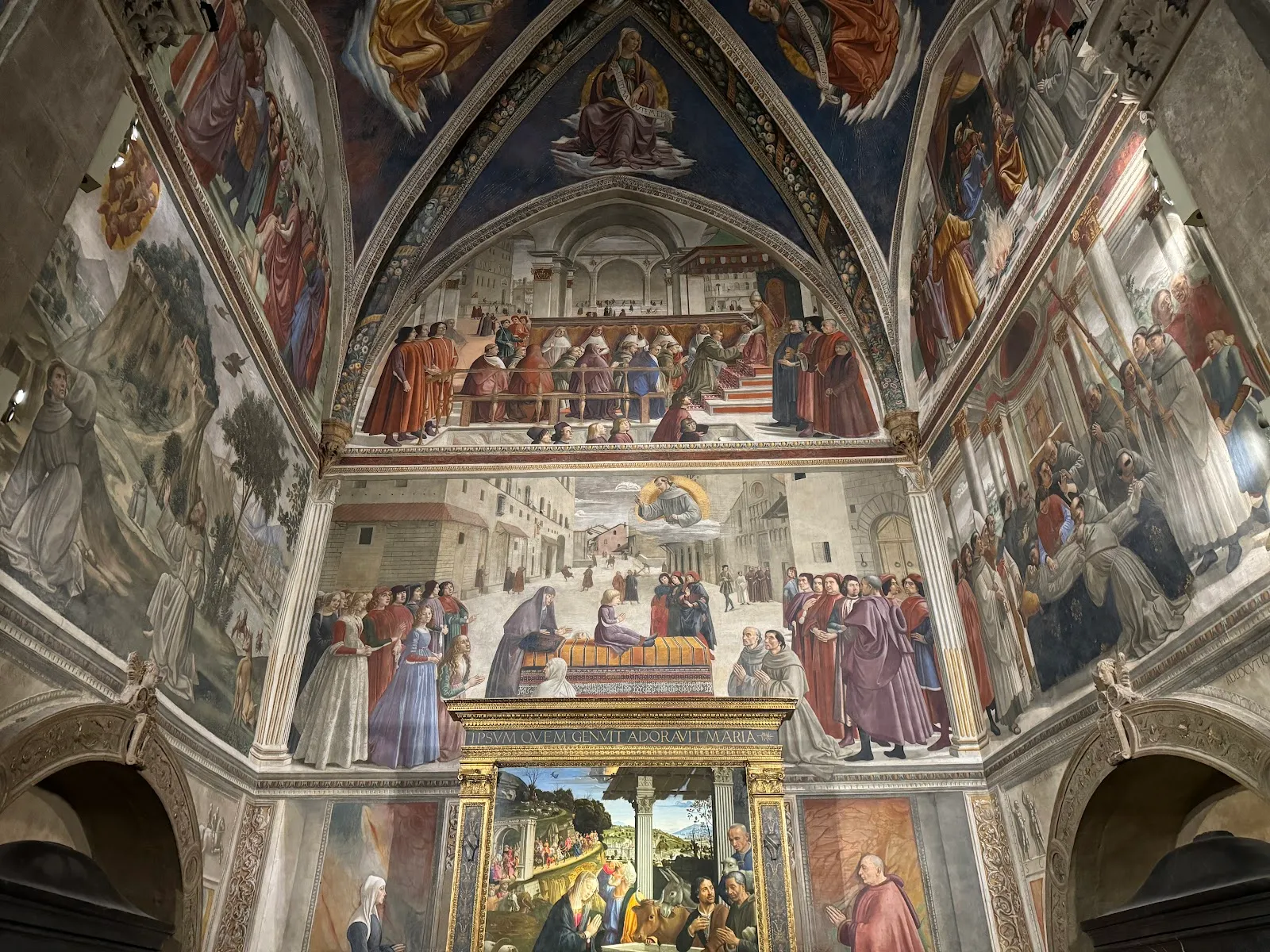
The Basilica della Santissima Annunziata is a 13th-century church on Piazza della Santissima Annunziata in Florence, founded by the Servants of Mary in 1250. Its main draw is a revered Annunciation fresco, linked to a tradition that an angel completed the painting while its artist slept. Inside, look for chapels and works by Andrea del Sarto, Pontormo and Rosso Fiorentino. The visit begins in the Chiostrino dei Voti, whose painted lunettes make the entrance a worthwhile stop in its own right.
A Servite church and Marian sanctuary
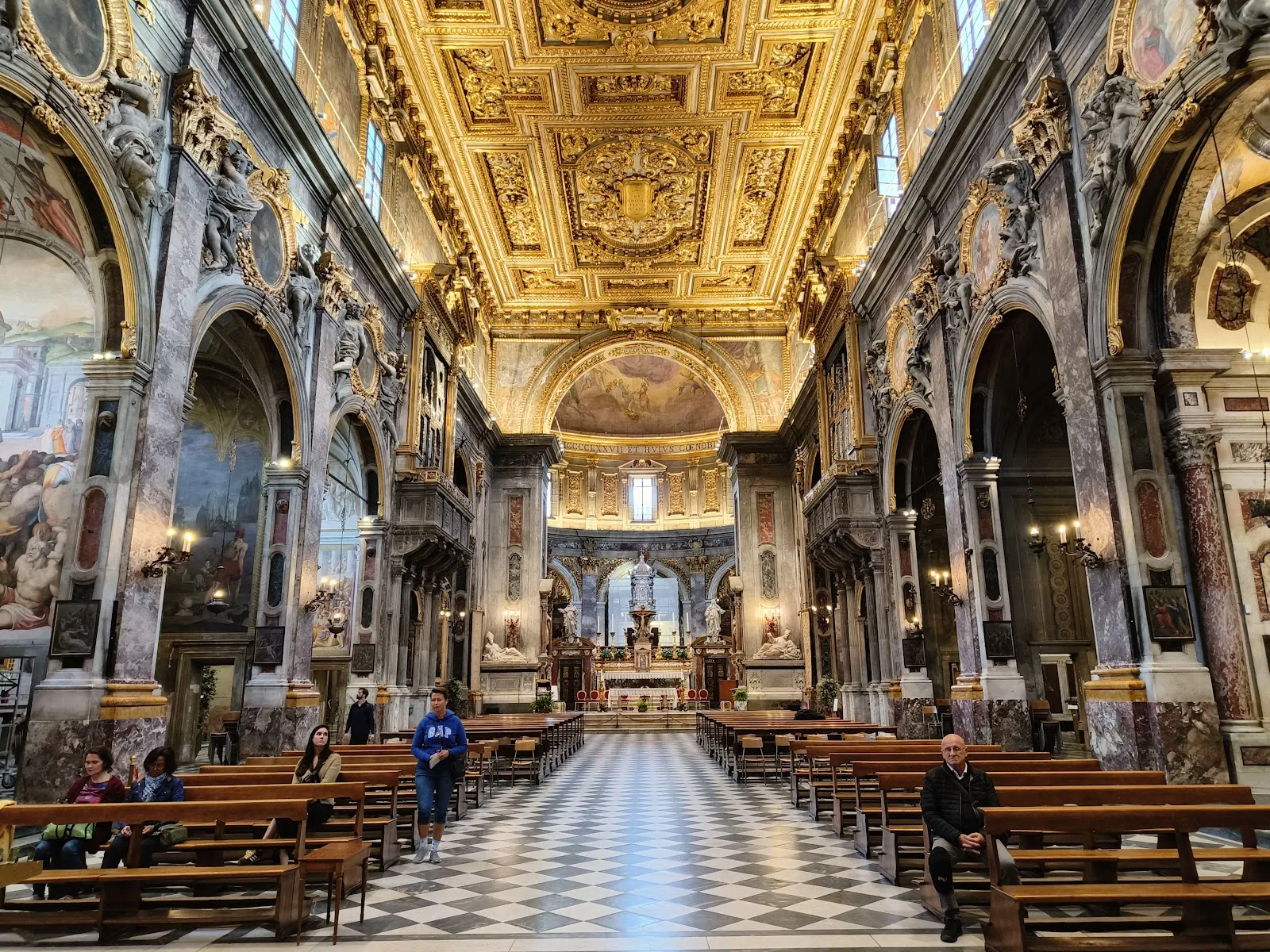
The Servants of Mary founded the church in 1250. The basilica became a major Marian sanctuary, centred on an image of the Annunciation that drew pilgrims and patronage over the centuries. Tradition holds that the artist fell asleep before finishing the image and that an angel completed it. This is a devotional story attached to the fresco, not a documented account of its making.
The piazza outside is part of the approach. Its balanced design is associated with Brunelleschi, and the church occupies its north side. The calm proportions of the square offer a moment to take in the setting before entering the richly decorated interior.
The Chiostrino dei Voti
Visitors enter through the Chiostrino dei Voti, built in 1516 as a space for offerings. Wax votive objects once filled the forecourt; they were later melted down in 1786. The lunettes around the cloister hold paintings by Andrea del Sarto, Pontormo and Rosso Fiorentino, bringing several major Florentine artists together in a small part of the complex.
Pause here to look at the painted scenes before moving into the church. The cloisters and adjoining spaces also provide a quieter counterpoint to the main interior.
The Annunciation and the church interior
The Annunciation fresco is the basilica’s central devotional image. Its story helped establish the church’s importance as a place of Marian pilgrimage. In 1444, the Gonzaga funded a tribune for the image. The design is associated with Michelozzo and later Alberti, and the work was completed by 1481.
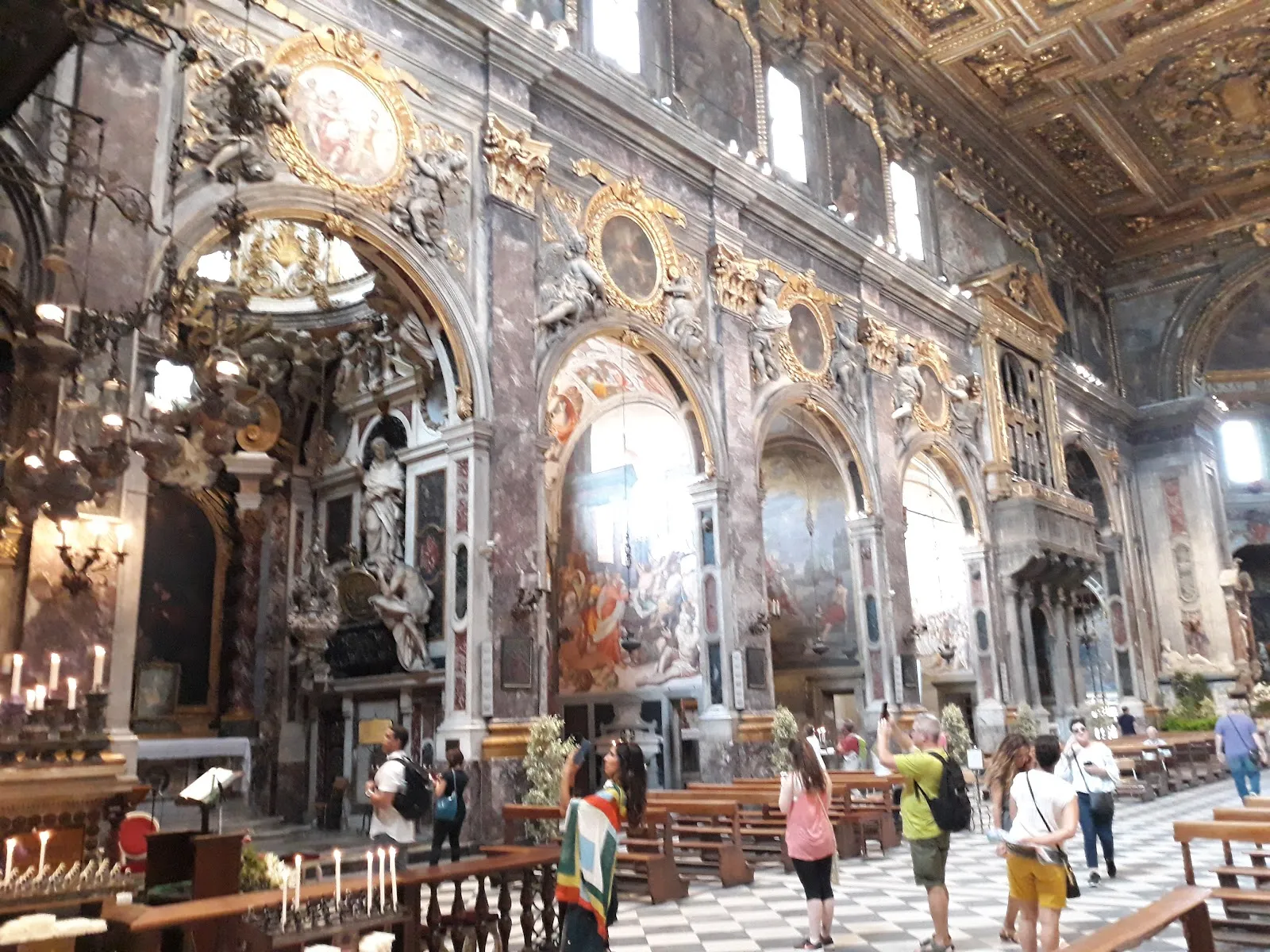
The basilica has a Latin-cross plan, with chapels decorated by artists from the Renaissance and Baroque periods. Andrea del Sarto, Pontormo and Rosso Fiorentino are among the names to look for. Marble details, frescoes and votive offerings add to the interior’s layered appearance; take time to notice the smaller works as well as the main sanctuary.
Finding the passage behind the altar
A small passage gives access to the space behind the main altar. To find it, go to the confession chapel on the left when you are facing the altar. The route is short, only a few metres before a right turn, but it is easy to miss if you stay in the central nave.
The basilica remains an active religious site, with services taking place there. If worship is in progress, allow the congregation space and wait until the service has ended before exploring. The church was designated a Jubilee church for the 2025 Jubilee.
Preguntas frecuentes
Is there an entry fee for the Basilica della Santissima Annunziata?
The available information describes entry as free.
What is the main artwork in the basilica?
The central work is a revered fresco of the Annunciation. Tradition says an angel completed it while the artist slept.
Can you go behind the altar?
Yes. Find the confession chapel on the left as you face the main altar; a short passage there leads behind it.
Is the basilica accessible to wheelchair users?
The entrance and restroom are listed as wheelchair accessible. Wheelchair-accessible parking is also listed.