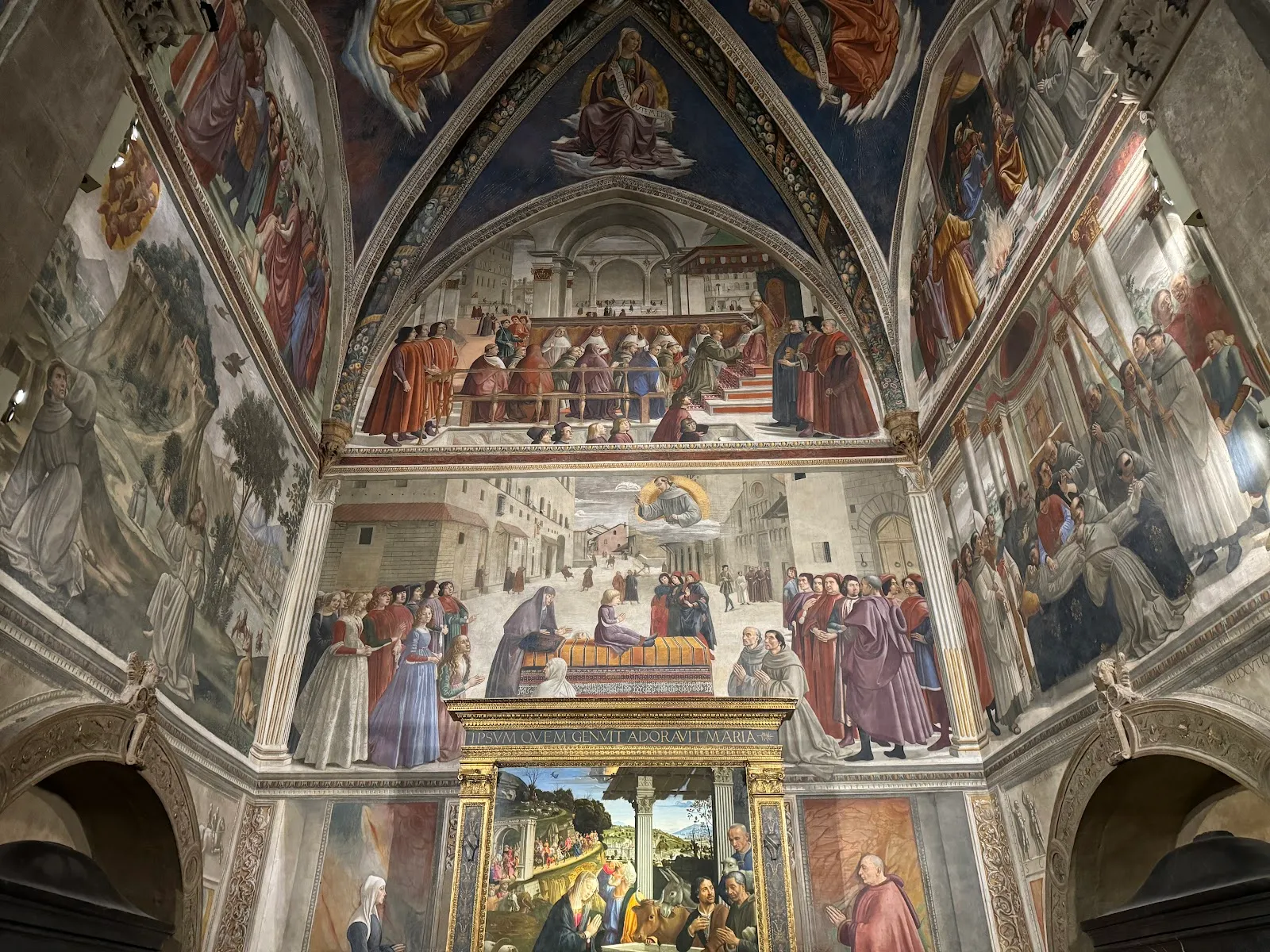
Loggia dei Lanzi is a roofed, open-sided sculpture gallery on Piazza della Signoria, beside the Uffizi and Palazzo Vecchio in Florence. Built in the 14th century for public ceremonies, it now displays Roman and Renaissance works in the middle of the city. Look up at Giambologna’s spiralling marble group, then take in Cellini’s bronze Perseus with the Head of Medusa and the Roman figures along the back wall. You can visit without an entry ticket, and the open arches let you see the art alongside the daily life of the square.
A ceremonial gallery on the piazza
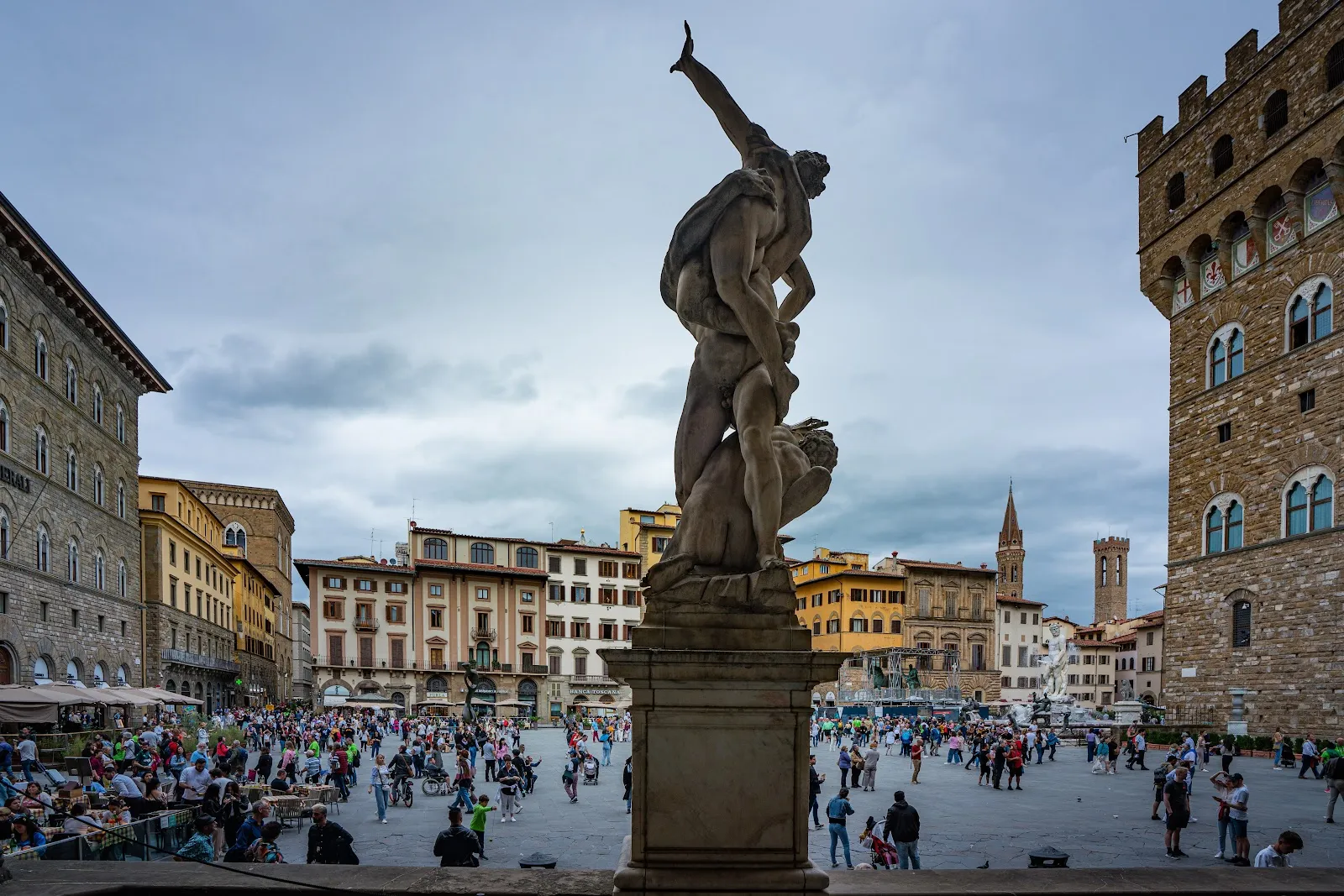
Loggia dei Lanzi stands on Piazza della Signoria, beside the Uffizi and to the right of Palazzo Vecchio. Its open arches face the square, placing the sculptures within the everyday movement of central Florence. The building was constructed between 1376 and 1382 in a late Gothic style. It was made for public ceremonies of the Florentine Republic, and the gallery’s broad, arched bays suited gatherings held in the piazza.
The loggia’s civic role changed in the 16th century, when the Republic ended. The Medici turned the space into an outdoor sculpture gallery. Its formal architecture still frames the artworks, but the open sides keep the square in view as you move through it. The gallery can be visited without an entry ticket.
Sculpture in marble and bronze
Giambologna’s Rape of the Sabine Women is one of the central works. Carved from a single block of marble, it draws the eye upward through three intertwined figures. Its twisting arrangement, known as figura serpentinata, gives the group a sense of movement as you view it from different sides. The subject is violent, so approach the work as a depiction of a mythological episode rather than a simple decorative scene.
Cellini’s bronze Perseus with the Head of Medusa stands nearby. The Medici commissioned the sculpture as political theatre, using the mythological figure to send a message to their rivals. The statue dates to the 16th century and shows Perseus holding Medusa’s severed head. Together, these works reveal how sculpture in the loggia could carry both artistic and political meaning.
Roman statues and the Medici lions
Look along the back wall for Roman marble figures installed in the loggia in 1789. Their more restrained forms provide a contrast with the dramatic Renaissance groups in the main space. The collection includes classical works as well as later sculptures, so it is worth scanning the full length of the gallery instead of stopping at the largest statue.
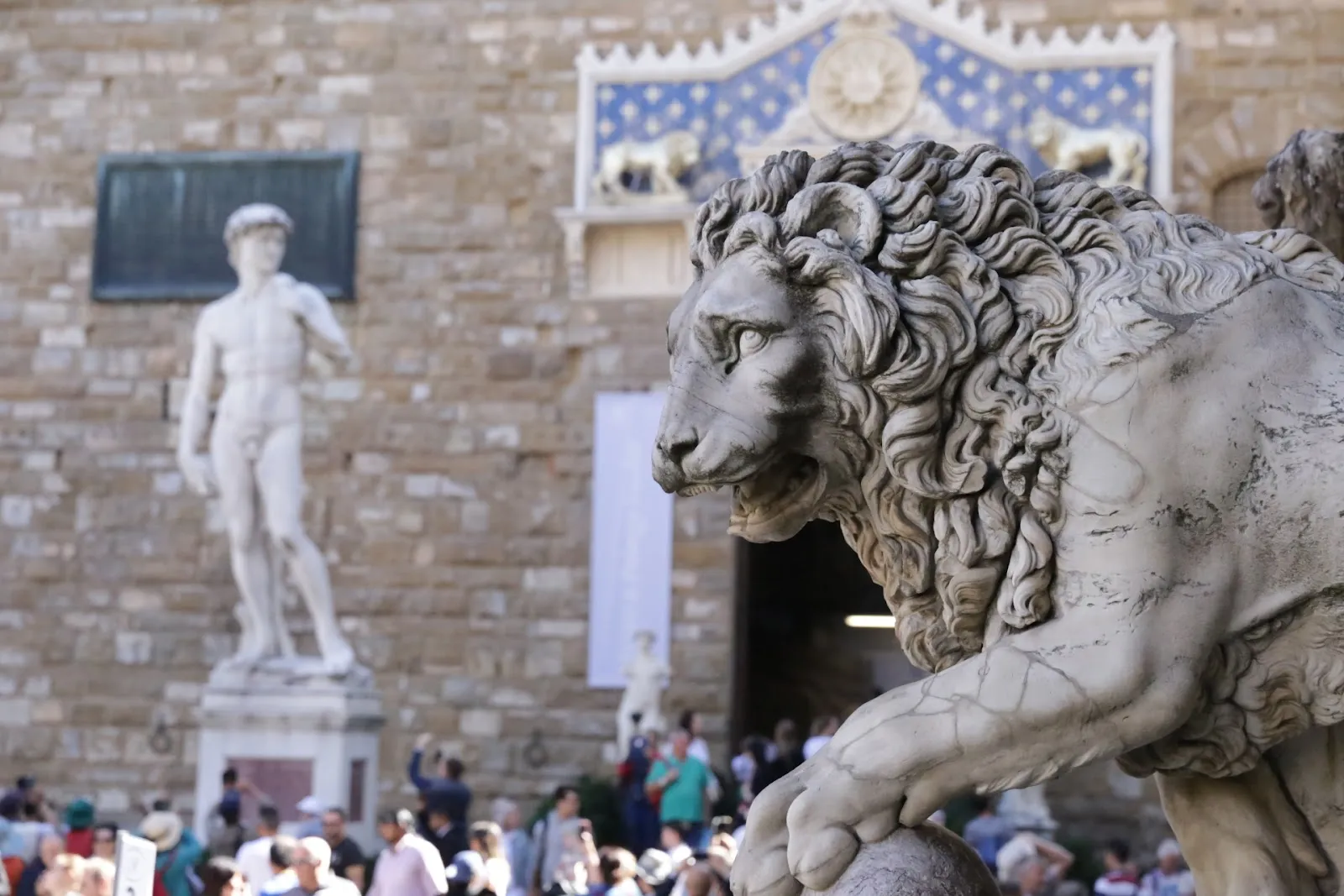
At the entrance are two marble Medici lions. One is a Roman sculpture from the second century AD; the other was made by Flaminio Vacca in the 16th century to match it. Both rest a paw on a sphere, and the pair is closely associated with Medici power. The figures have guarded the entrance since 1789.
Preguntas frecuentes
Is Loggia dei Lanzi free to visit?
Yes. The gallery is free to enter, though access can be restricted at times.
How long should I spend at Loggia dei Lanzi?
Allow about 30 to 60 minutes to look over the Roman and Renaissance sculptures.
Which sculptures should I look for?
Look for Giambologna’s Rape of the Sabine Women, Cellini’s Perseus with the Head of Medusa, the Roman figures along the back wall and the Medici lions at the entrance.
Where is Loggia dei Lanzi?
It is on Piazza della Signoria, beside the Uffizi and to the right of Palazzo Vecchio.