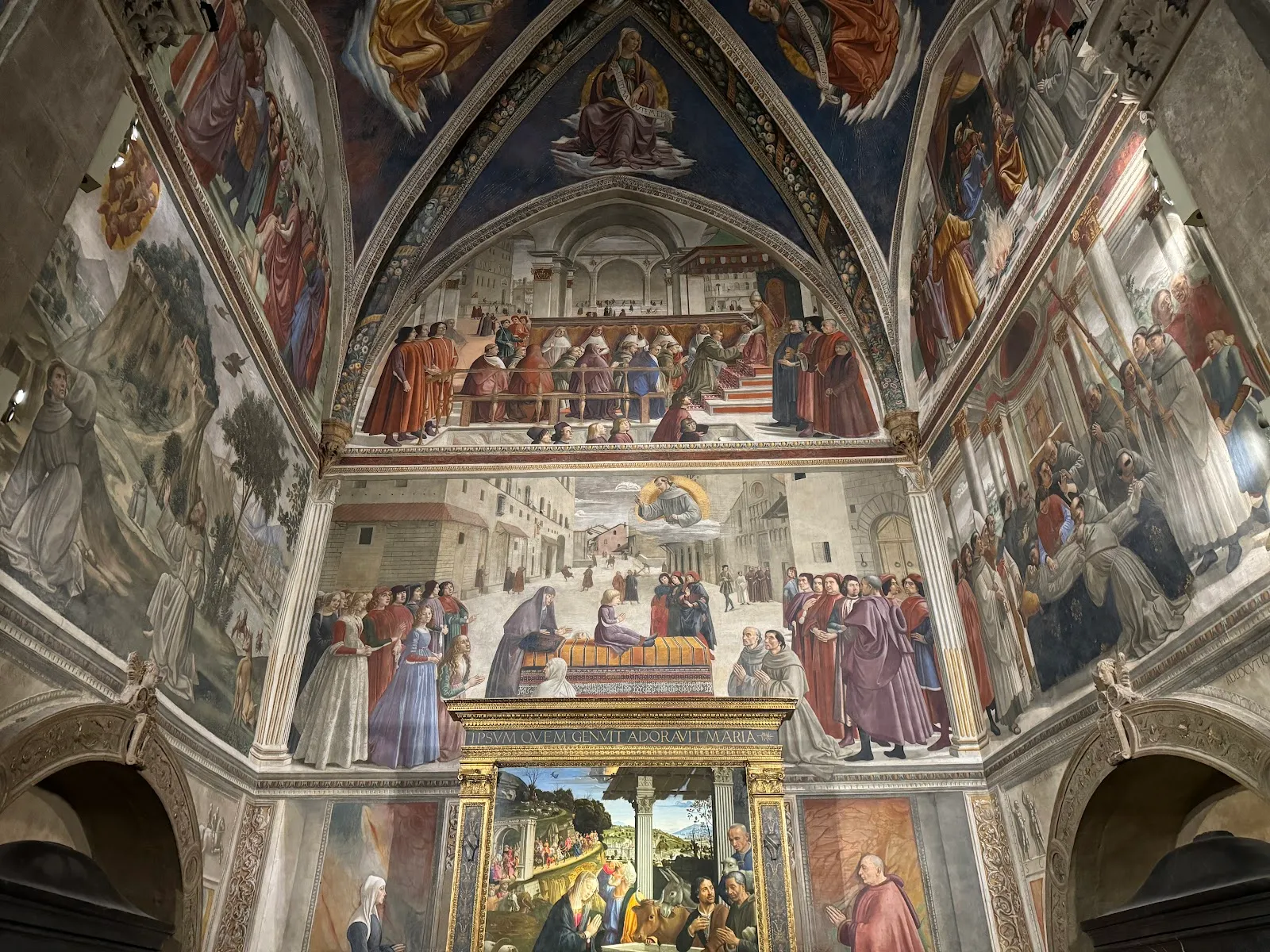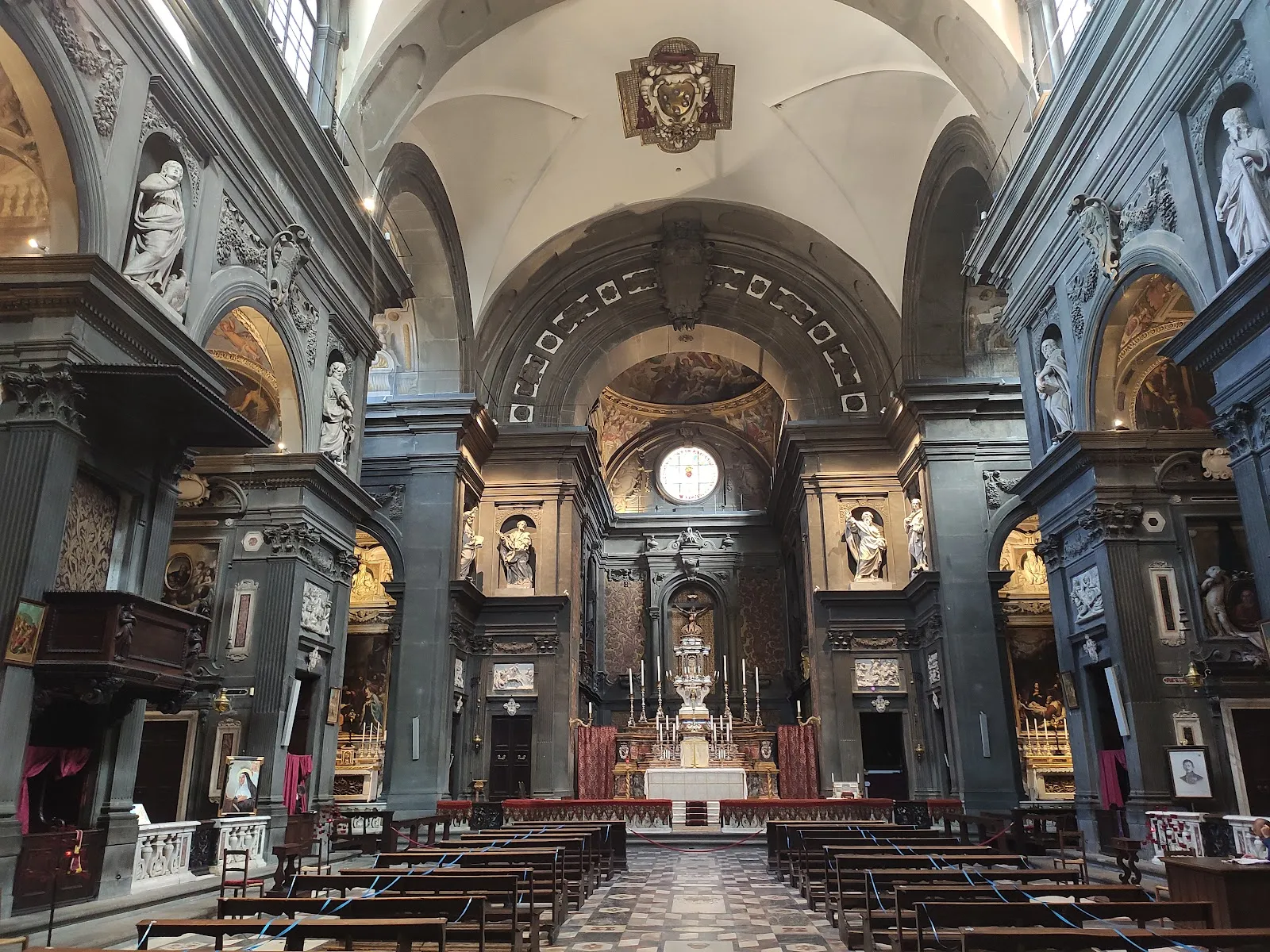
On Piazza degli Antinori in central Florence, the Church of Saints Michele and Gaetano is a 17th-century Baroque church built in 1648. Its sculpted facade and dome stand apart from the city’s better-known Renaissance architecture. Inside, look for the dark stone and gilded decoration, the ornate altars and the painted dome. The chapel dedicated to Saint Gaetano Thiene contains an altarpiece by Giovanni Battista Paggi and relics of the saint. It is a calm stop for church art or a moment of prayer while exploring this part of the city.
A Baroque church in Renaissance Florence
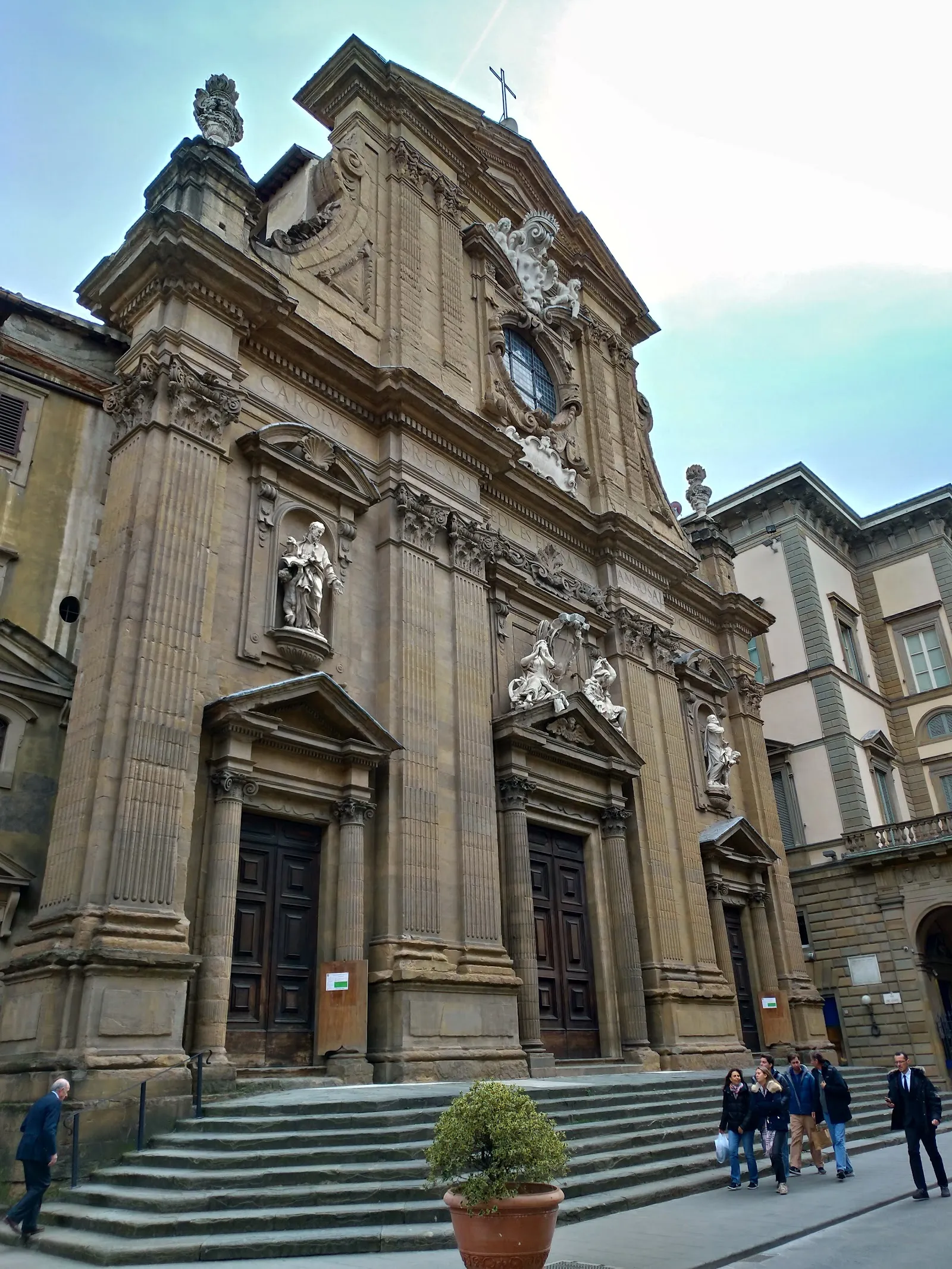
Built in 1648, the Church of Saints Michele and Gaetano brings a strongly Baroque presence to a city often associated with Renaissance forms. Its facade uses columns, pilasters and statue-filled niches to create a vertical, monumental effect. A dome crowns the building.
The church’s elaborate exterior and interior make it a useful stop for seeing how Baroque design appears in Florence. The contrast is especially clear against the city’s more restrained Gothic and early Renaissance architecture.
Dark stone, gilding and the Saint Gaetano chapel
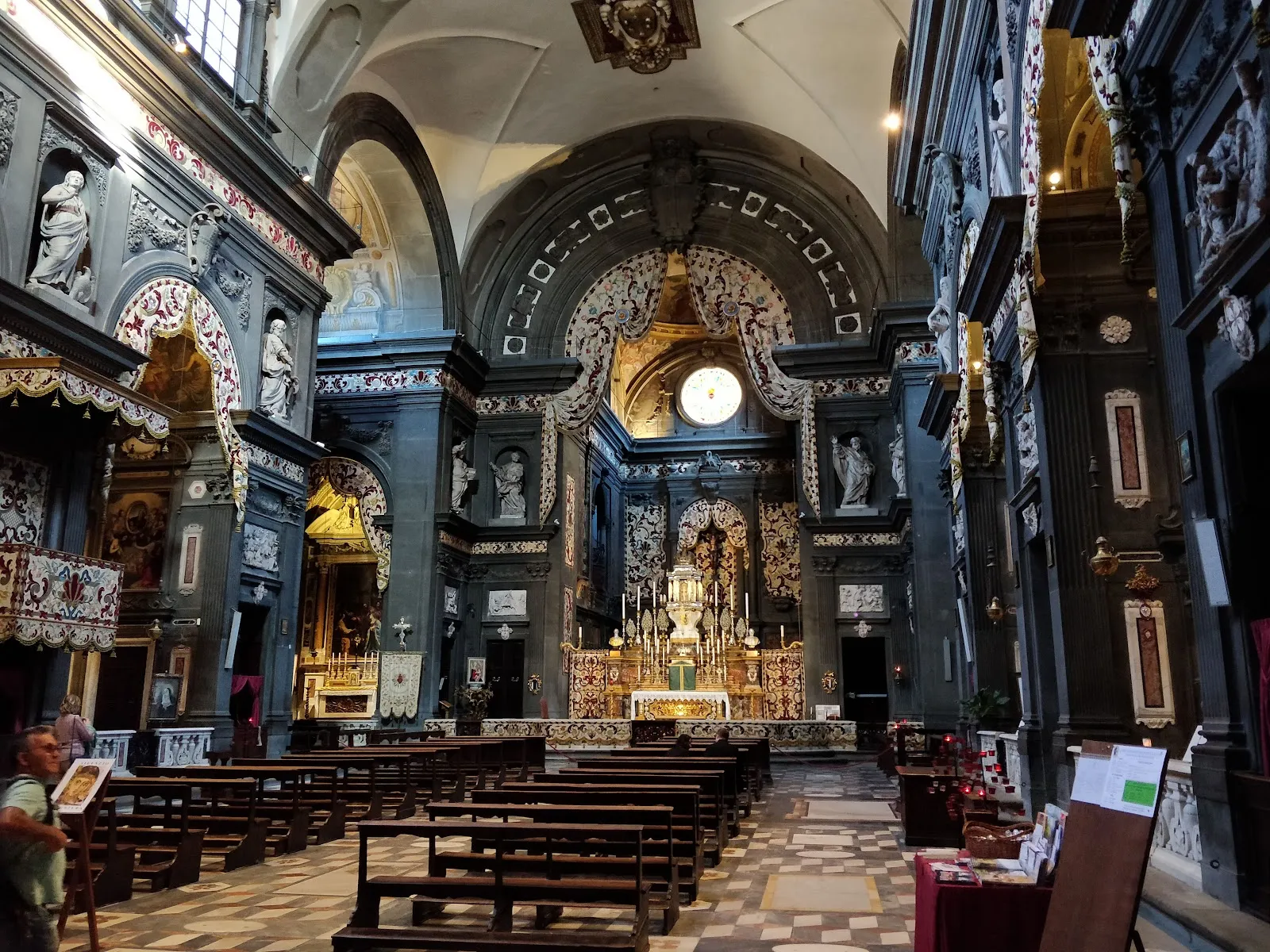
Inside, dark stone and marble meet gilded stucco in the nave and side chapels. The high altar draws the eye with its decorated tabernacle, dark columns and painted dome. Statues of the apostles line the nave, while the side chapels contain paintings and other artworks.
In the chapel dedicated to Saint Gaetano Thiene, look for an altarpiece by Giovanni Battista Paggi. Relics of the saint are also preserved there. The church is used for worship as well as sightseeing; the Institute of Christ the King cares for it, and Latin Masses are celebrated here.
Preguntas frecuentes
Is there an entrance fee?
The entrance is reported to be free.
When is Sunday Mass?
Sunday Mass is held at 11am and 7pm. Check ahead in case services or events affect your visit.
What should I see inside the church?
Look for the high altar, painted dome, statues along the nave and the Saint Gaetano chapel, which contains a Paggi altarpiece and the saint’s relics.