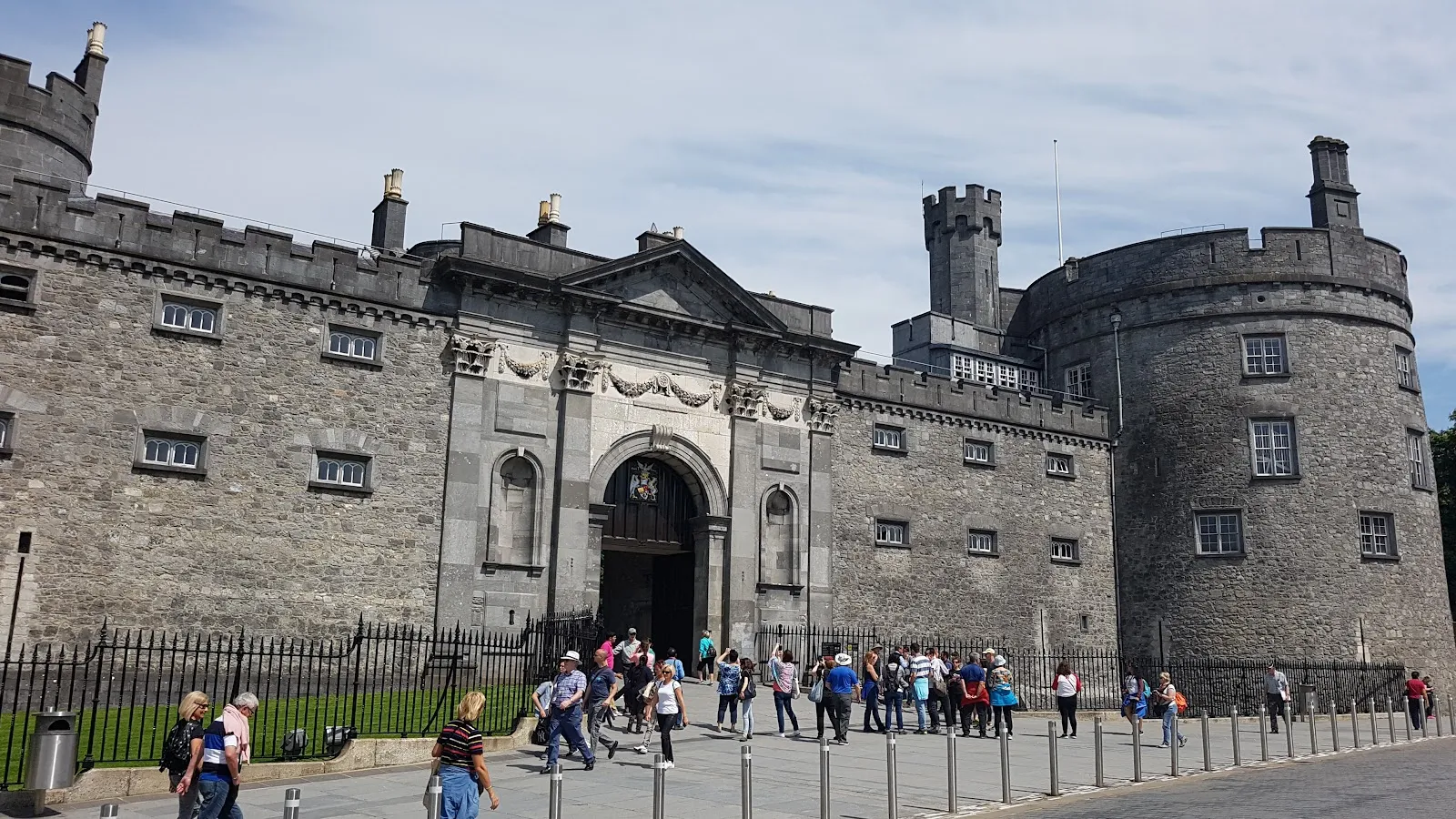
Kilkenny Castle stands above the River Nore in the centre of Kilkenny city, on a site first fortified by the Normans in the 12th century. The Butler family made it their home from 1391 until 1967, and the rooms today mix medieval walls with Victorian interiors. The Long Gallery, with its carved oak ceiling and family portraits, is one of the highlights. The castle has about 50 acres of grounds with a rose garden, an ornamental lake and woodland, and it is open every day.
From a Norman fort to a family home
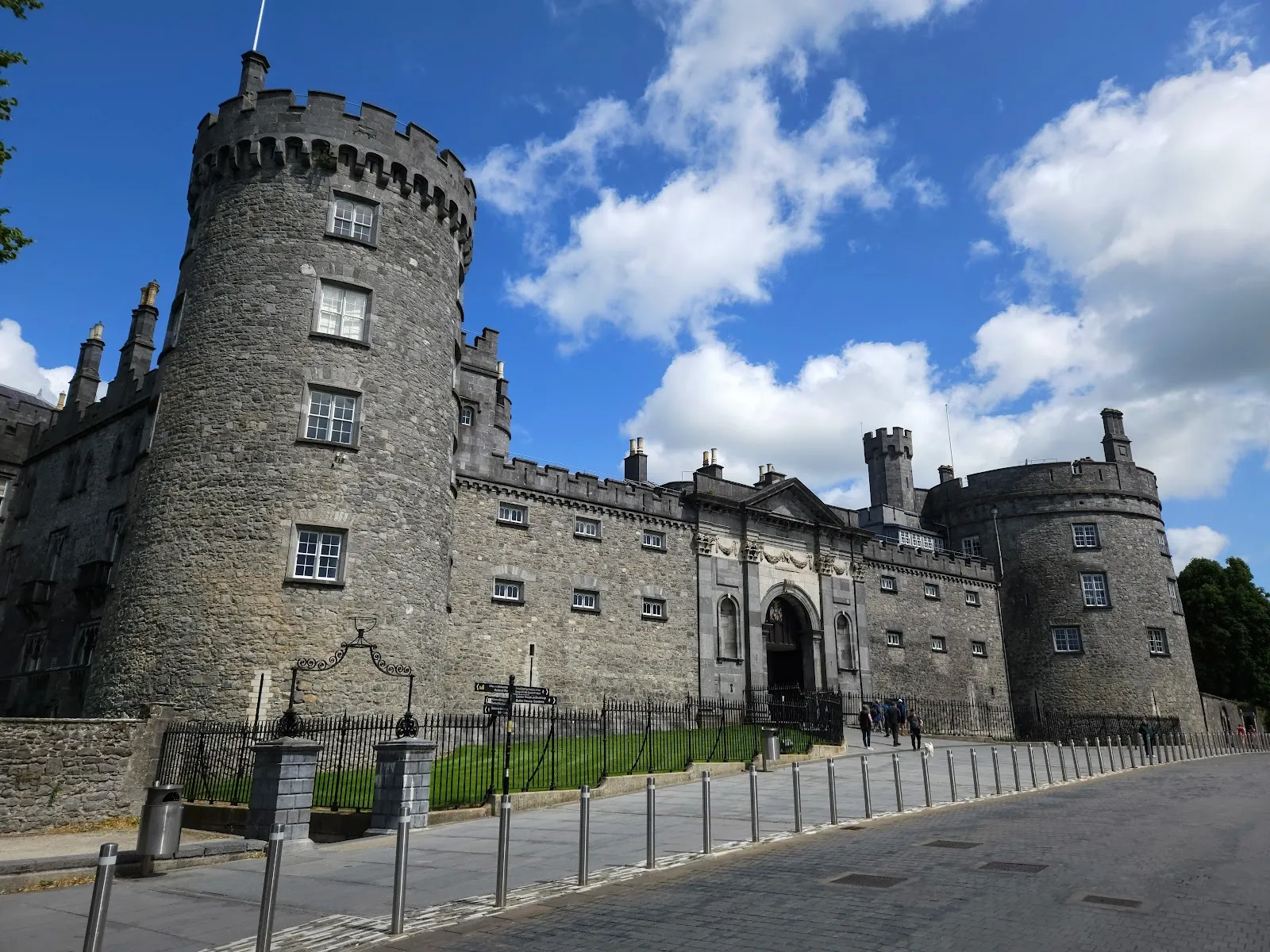
The first defences on this rise above the River Nore were built by the Normans in the 12th century. Richard de Clare, known as Strongbow, is linked to the early wooden fort, and his son-in-law William Marshal built the stone castle in the early 13th century. The original structure had four large round corner towers and a wide ditch, and part of that ditch can still be seen on the Parade.
From 1391 the castle was the seat of the Butler family, who were later made Earls and Dukes of Ormonde. They held it for almost six centuries. Around 1820, William Robert, son of the first Marquess of Ormonde, overhauled the castle in the Victorian Feudal Revival style. In 1859 John Pollen redid the Long Gallery.
In 1967 Arthur, 6th Marquess of Ormonde, gave the castle to the people of Kilkenny for £50.
Inside the castle
The Long Gallery is one of the highlights of the interior. Its walls are hung with a large collection of family portraits and old tapestries, and its ceiling has oak beams carved with Celtic lacework and painted animal heads.
Two wings of the castle have been restored. The tour includes a drawing room, a library and bedrooms decorated in the style of the 1830s. The restored rooms hold period furniture and hand-painted Chinese wallpaper.
The stableyards across from the castle were where the owners kept their horses, and they also held the servants' rooms. Seeing these next to the family rooms shows how the household was run.
How a visit works
The type of visit depends on the month. From November to January the interior is seen on 40-minute guided tours only. From February to October you can move through the rooms on a self-guided visit, with staff ready to answer questions.
Guided tours go deeper into the castle's history. The interior is visited on a paid tour, while the grounds can be walked for free. Booking online in advance helps you get in faster, especially in peak season.
Self-guided visitors can use the QR code in each room to get more information on their phone.
The grounds
The castle sits in about 50 acres of parkland with mature trees, woodland, a formal rose garden and an ornamental lake, and the area has wildlife among the trees. Vintage cars are displayed on the grounds outside the castle.
A field on the grounds holds graves of past residents, so walk that area with respect. The parkland also has a children's playground and space for a picnic, which suits a family visit.
The castle is one of the most visited heritage sites in Ireland, and the grounds are a good place to spend time before or after going inside.
Around the castle
The former castle kitchens now house a tearoom. The west wing, known as the Parade Tower wing, has two areas used for civil and humanist wedding ceremonies.
The castle sits at the southern end of the Medieval Mile. The route runs past the Medieval Mile Museum and Rothe House to St Canice's Cathedral and its round tower, so the castle works well as the start of a walk through the old town.
Preguntas frecuentes
Is there an entry fee for Kilkenny Castle?
You can walk the grounds for free. The interior is visited on a paid tour, and booking online in advance helps you get in faster in peak season.
How long do you need at Kilkenny Castle?
Allow about 40 minutes for the interior guided tour in winter, and extra time for the grounds, which cover about 50 acres.
Is Kilkenny Castle open every day?
Yes, the castle is open every day of the week. The type of visit changes with the season, with guided tours only from November to January.
Is Kilkenny Castle suitable for children?
Yes. The grounds have a playground and space for a picnic, and the tearoom is in the former castle kitchens.